
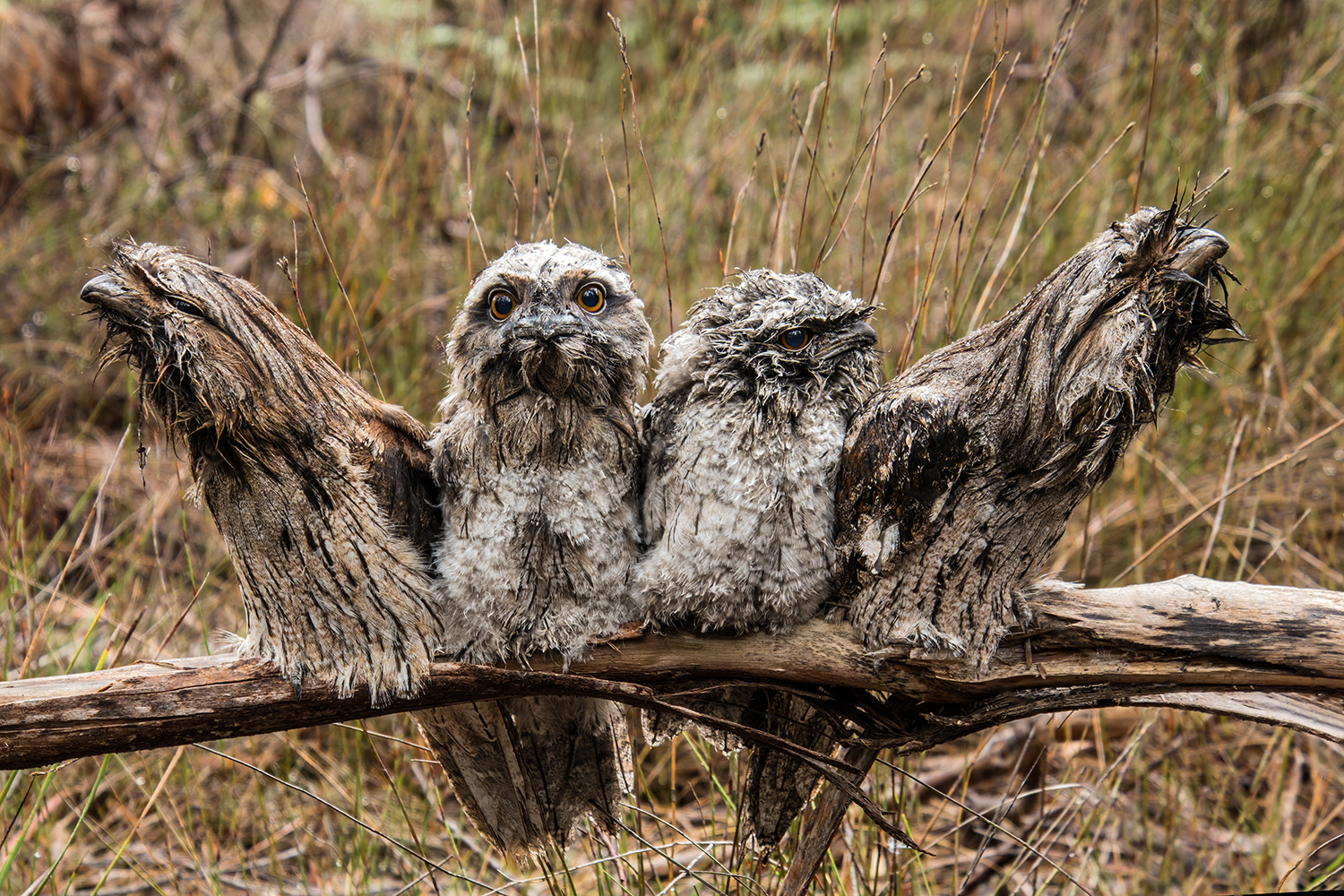
Masters of Disguise: Meet the Tawny Frogmouth
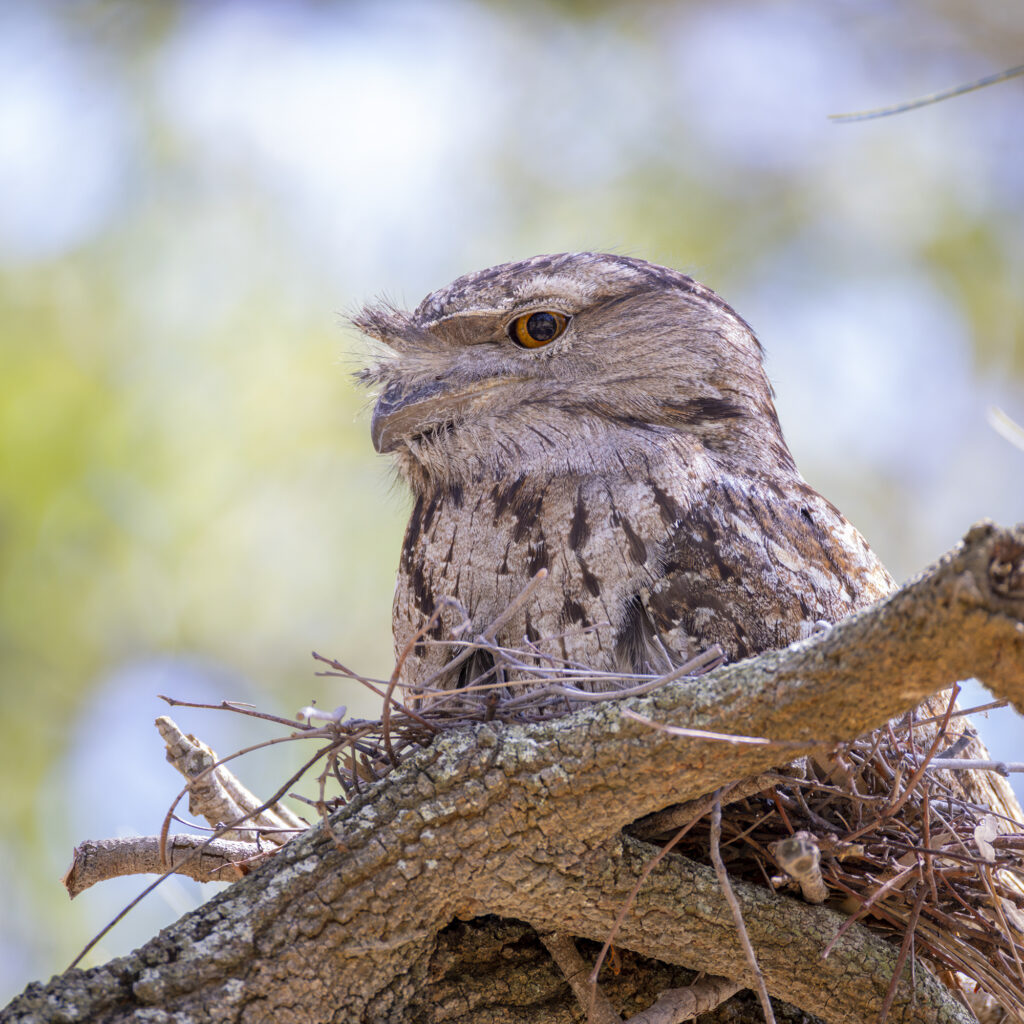
Australian tawny frogmouths are masters of disguise, often mistaken for broken tree branches as they sit motionless during the day. Despite their owl-like appearance, they’re more closely related to nightjars, and unlike owls they lack strong talons for catching prey. These nocturnal birds rely on stealth and patience, swooping down from low perches to snatch insects, small reptiles and even mice. Tawny frogmouths are famously devoted parents, with pairs often staying together for life and sharing nesting duties, sometimes even returning to the same nest year after year.
Funny Facts About Tawny Frogmouths
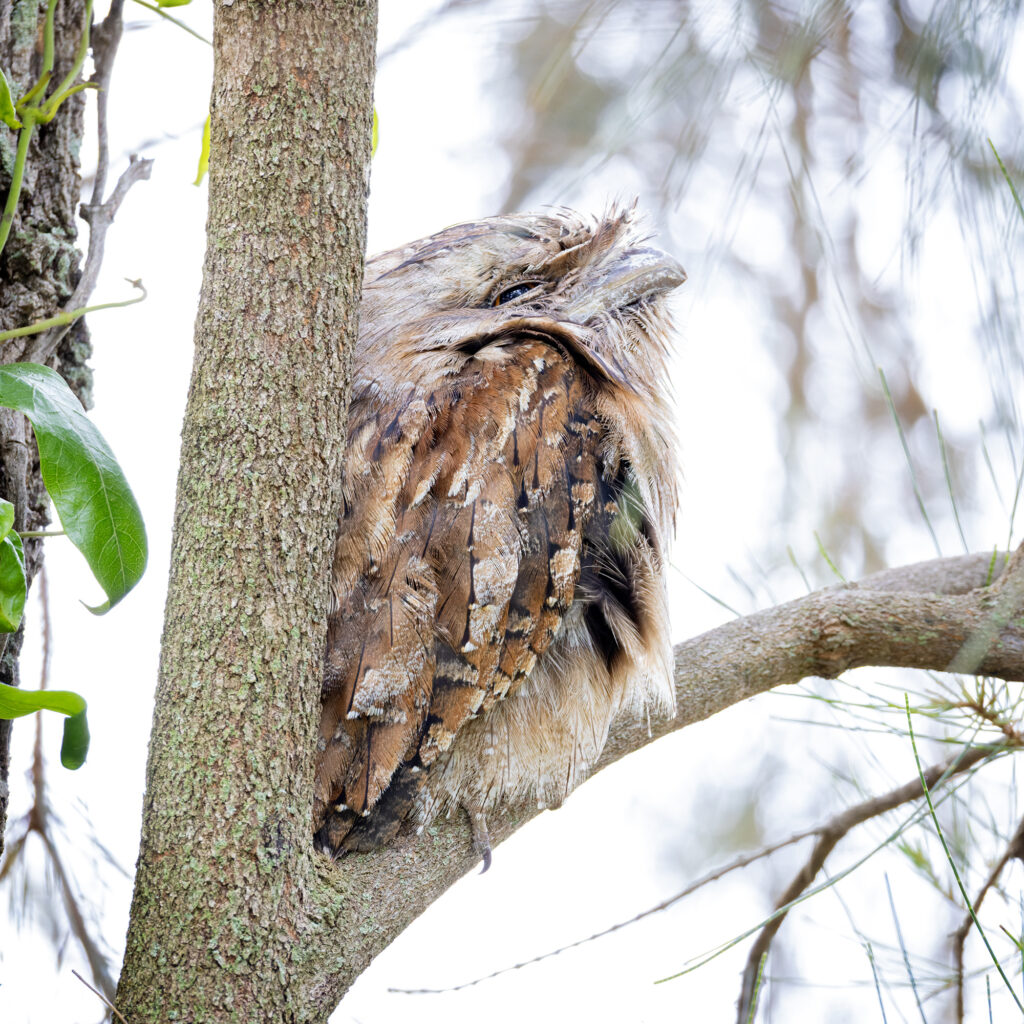
- Their camouflage is so good that people often walk past them for years without realising a bird lives in their backyard.
- Despite looking like owls, they’re basically owl imposters and aren’t even closely related.
- When threatened, they freeze with their head pointed straight up, committing fully to the “I am a stick” performance.
- Baby tawny frogmouths start out fluffy and wide-eyed, then slowly grow into their grumpy old-man expressions.
- They don’t build fancy nests — more like a casual pile of sticks that somehow works every year.
- Their resting face permanently looks unimpressed, as if everything mildly annoys them.
- If disturbed, they sometimes open their mouths wide to show off a bright interior as a dramatic scare tactic.
- They’re nocturnal hunters but spend daylight hours napping in plain sight like they pay no rent.
- Tawny frogmouth couples often stay together for life, making them one of Australia’s most romantically committed birds — even if they look like they argue silently all day.
- Tawny frogmouths yawn so dramatically that it looks like they’re trying to swallow the whole forest 🌳
Camouflage So Good It’s Rude
At dusk, their camouflage gives way to character. As the light fades, tawny frogmouths become alert and expressive, using a range of low grunts, soft hoots and sharp warning calls to communicate. They’re found across most of Australia, from open forests and woodlands to suburban parks and backyards, making them one of the few native birds many people unknowingly live alongside. Their tolerance of human-modified landscapes has helped them persist, though habitat loss and vehicle strikes remain ongoing threats.
A Night-Time Rescue
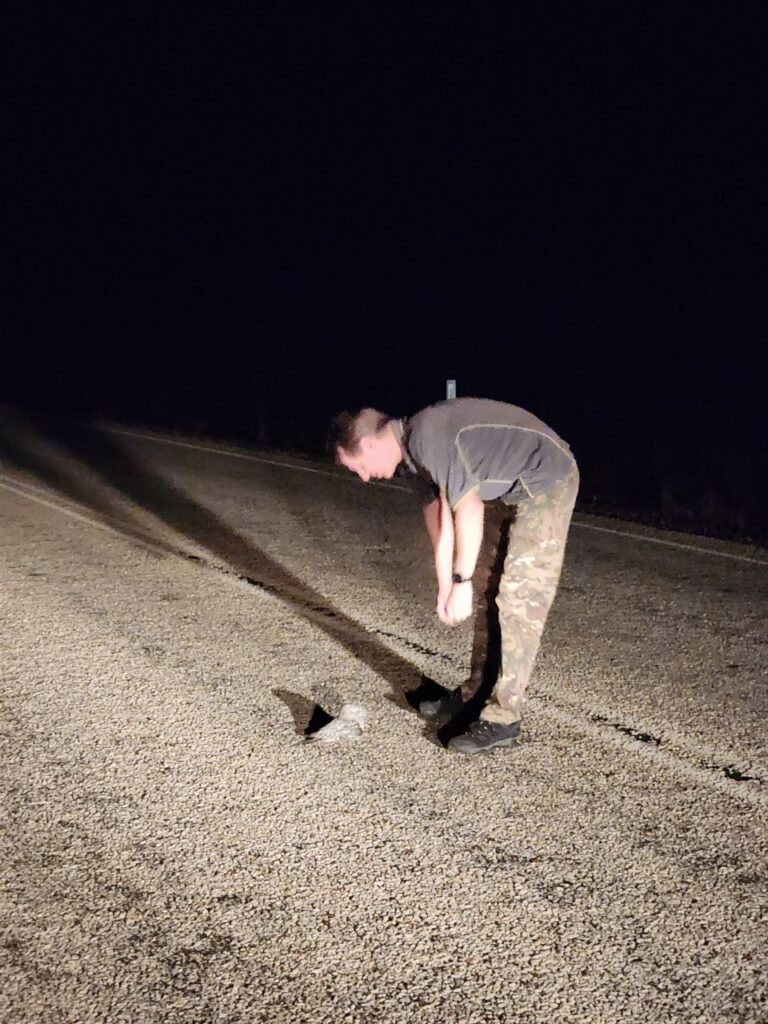
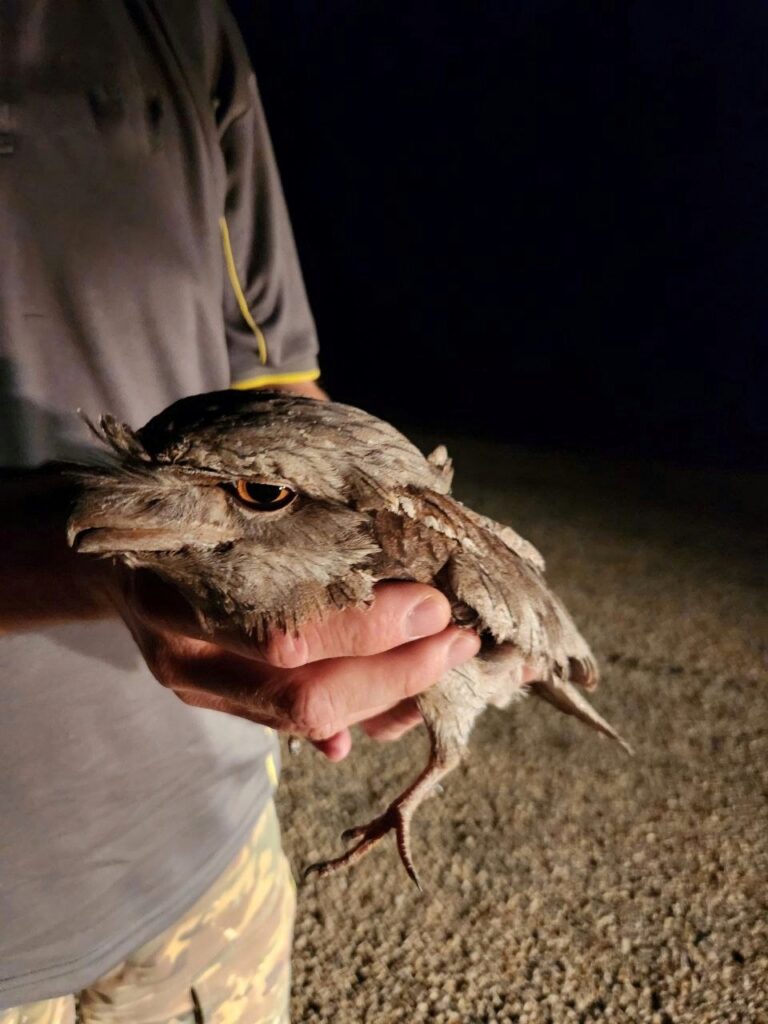
One night while driving, I noticed a tawny frogmouth sitting right in the middle of the lane. I slowed right down and edged closer, expecting it to move — but it didn’t. I got out of the car and waved my hands in front of it. Still nothing. True to form, it was relying entirely on its camouflage and refusal to budge. In the end, I had to gently pick it up and carry it off the road, away from danger. My good deed for the day — sorry, night.
Learning to See What Isn’t Supposed to Be Seen
When I was first learning how to find tawny frogmouths during the daytime, I was told not to look for the bird itself, but for the tail. The rest of the bird can be almost impossible to see as it pretends to be a broken branch, while the tail often sticks out below at an angle completely opposite to what the branch should be. I’ve worked with these birds on multiple occasions, as they’re very widespread and generally easy to approach, but surprisingly hard to catch doing anything at all. I find them almost every time I’m out looking for owls — owls are rare, while frogmouths can be found in just about every park and observed daily. I even have a pair roosting and nesting in a local park just 100 metres from where I live.
Photographing Stillness, Silence and Patience
For wildlife photographers, tawny frogmouths offer a rewarding challenge. Their stillness allows for careful composition, but their cryptic plumage demands close attention to light, texture and background. They fly completely silently, and if one turns its head away, you may never spot it again. Early morning and late afternoon light can reveal subtle feather details, especially when side lighting brings out the bark-like patterns that make them such extraordinary subjects. Capturing a frogmouth mid-yawn, wing stretch or feeding run can turn a quiet perch into a powerful storytelling image — one that celebrates both their mystery and their place in Australia’s natural landscape. After seeing one yawn up close, I’ve set myself the long-term goal of photographing the full interior of that massive mouth front-on. We’ll see how long it takes to get that shot.


Leave a Reply to Michael K Cancel reply