
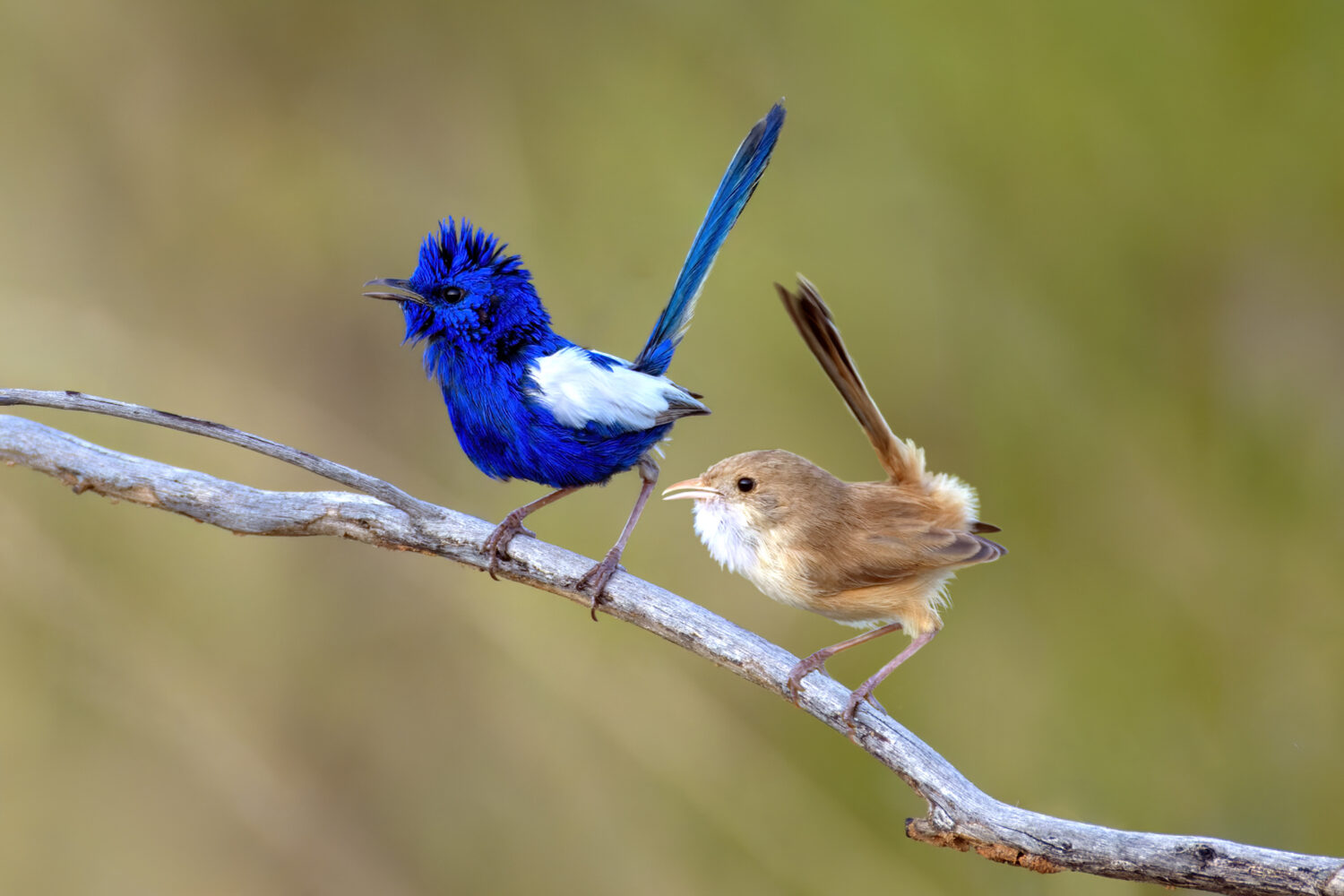
As a wildlife photographer, few birds enchant me quite like the fairywrens. They’re small, quick, and full of personality—flitting about in a blur of blues, reds and soft earth tones. Capturing them through the lens is a challenge I never tire of, and in this article, I want to share five of my favourite species I’ve had the joy of photographing in the wild.
Tiny Comedians of the Bush
Before I dive into the individual species, let me tell you a bit about fairywrens in general. These birds are bursting with energy, constantly on the move—darting between twigs, bouncing through grass, and flicking their tails upright like tiny peacocks. Despite their bold colours, they’re not always easy to spot. They’re some of the smallest birds in Australia, weighing just 8 to 13 grams—about the same as a $2 coin.
Fun Facts
- Male fairywrens sing to eggs before they hatch—scientists think it helps chicks recognise their parents’ calls.
- Fairywrens are cooperative breeders—offspring from previous years often stay around to help raise their younger siblings.
- They have surprisingly large brains for their body size, which helps with their complex social lives.
- Fairywrens live in tight-knit family groups, with one male often surrounded by a harem of several females and juvenile helpers. They’re incredibly social and seem to gossip nonstop in high-pitched chatter. Photographing them is like trying to snap a photo of a ping-pong ball in a wind tunnel—but that’s part of the fun.
- And here’s a cheeky fact: male fairywrens are notorious flirts. During breeding season, they’ve been known to pluck bright flower petals and present them to females as part of their courtship rituals. It’s the bird equivalent of showing up with a bouquet.
🐦Red-backed Fairywren (Malurus melanocephalus)
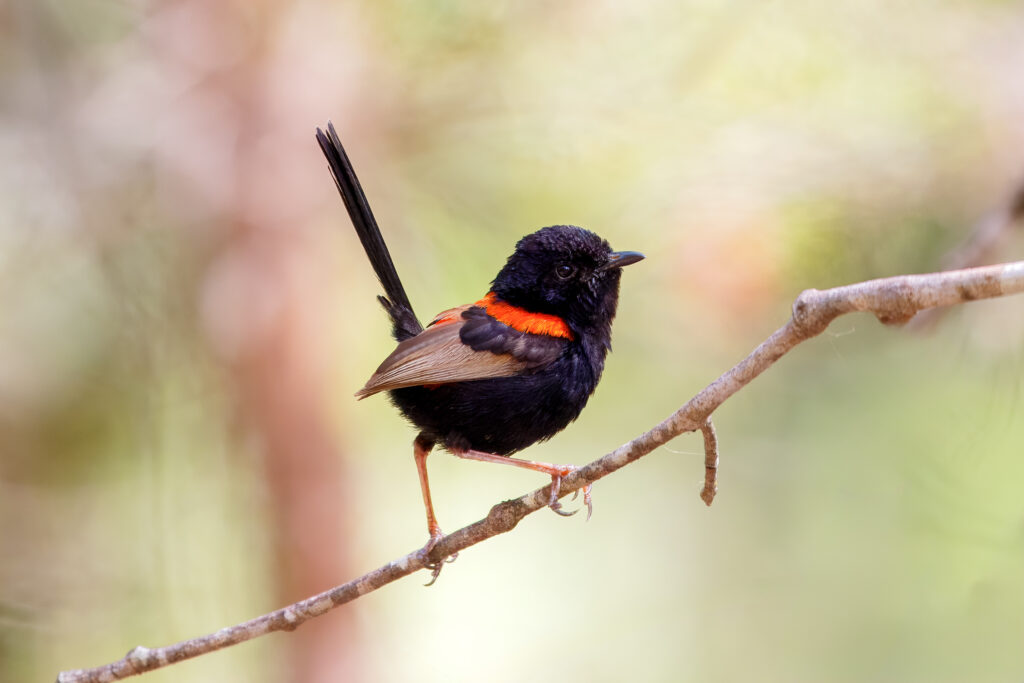
Red-backed Fairywren
Male
Red-backed Fairywren
Female
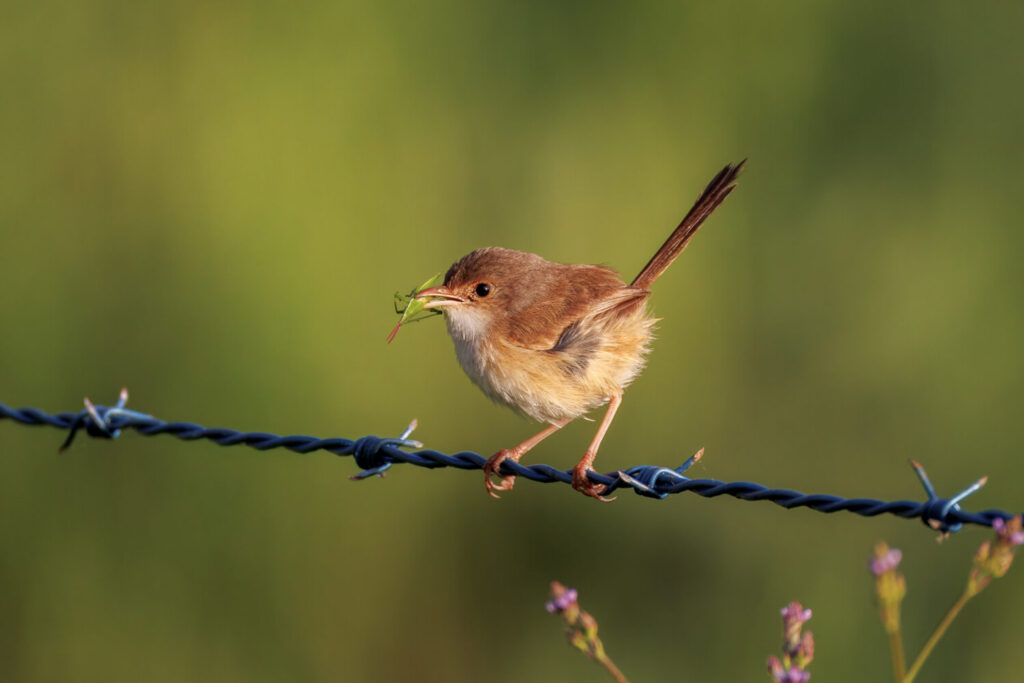
I came across this pair of red-backed fairywrens in the grasslands of northern Queensland. The male, in the first image, looks like a spark in motion—jet-black plumage set off by that brilliant crimson patch across his back. He was darting from stalk to stalk, tail cocked, putting on a bold display.
The female, shown in the second image, was nearby and much harder to spot. Her warm, cinnamon-brown feathers let her disappear into the dry vegetation—a perfect example of nature’s camouflage at work. Despite the differences in appearance, they moved as a pair, calling softly to one another as they foraged.
🐦Superb Fairywren (Malurus cyaneus)
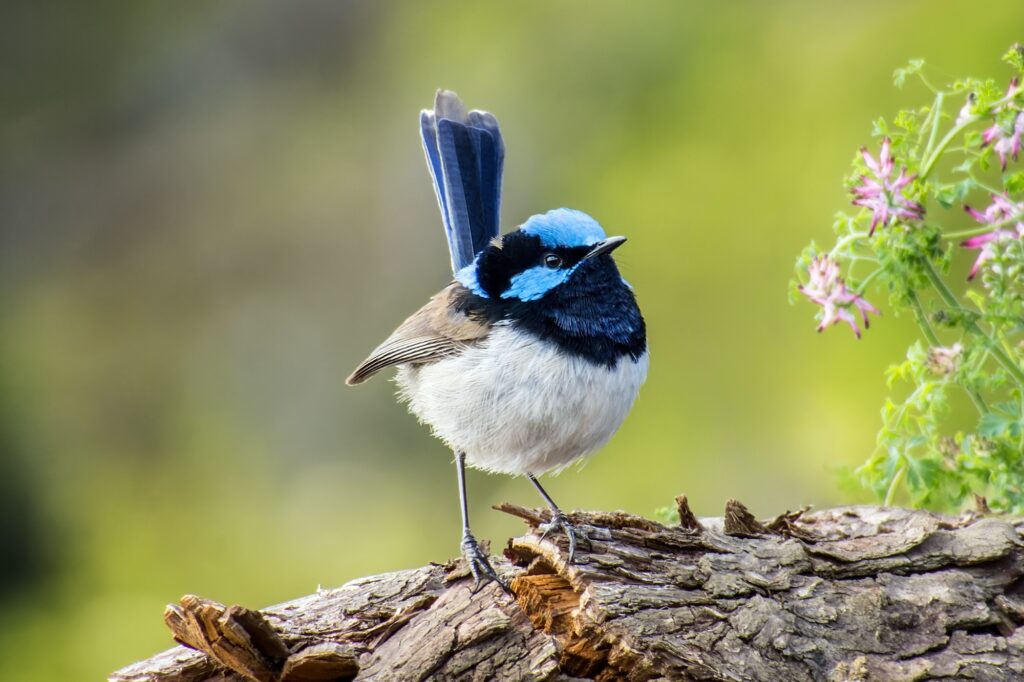
Superb Fairywren
Male
Superb Fairywren
Female
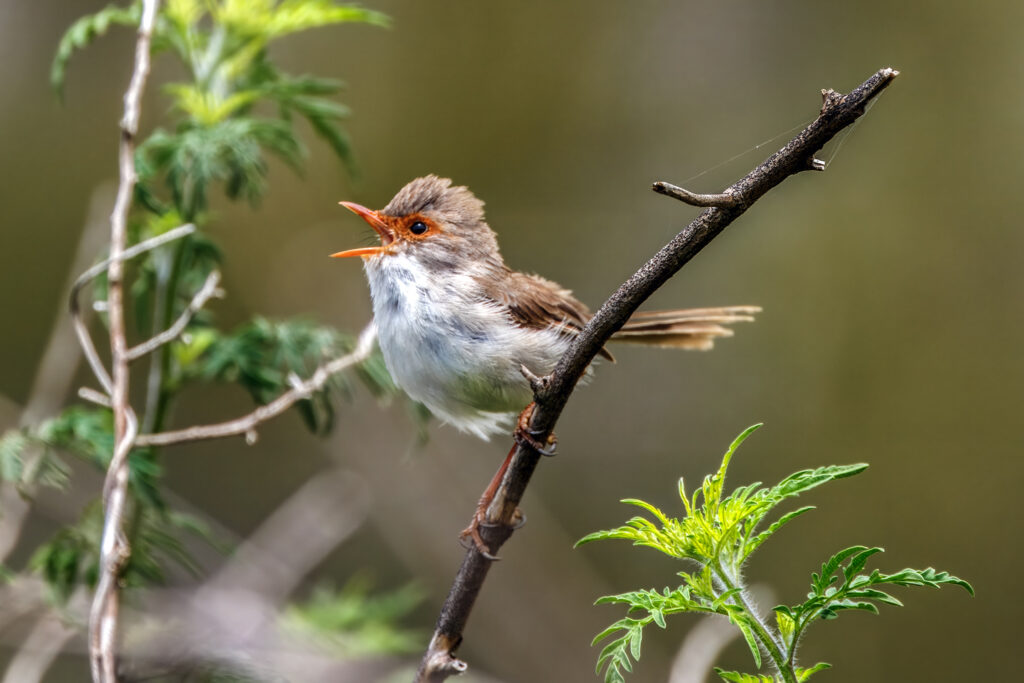
In the above image, a male superb fairywren stands proudly amongst a burst of wildflowers. That vivid cobalt blue never fails to catch the eye—especially when set against the delicate petals of native blooms. His upright tail, cocked like a tiny banner, is typical of the species and part of what makes them so endearing to watch (and photograph!).
Although they look regal, they’re full of mischief—often seen bouncing around your ankles in campsites or picnic areas, barely stopping long enough for a photo. I spent a good half hour following this one as he zipped from bloom to bloom, his tail flicking constantly like he had something to prove.
But don’t let their tiny size and sweet songs fool you — fairy-wrens have scandalous secrets. Female superb fairywren, while males strut around in their dazzling electric-blue plumage to woo a mate, females are quietly rewriting the rules of bird relationships. Despite forming long-term pair bonds, many females sneak off to mate with other, often flashier males. The result? A nest full of chicks that may look nothing like the loyal partner helping to feed them. It’s the avian version of a daytime soap opera — complete with drama, deception, and a surprisingly progressive approach to parenting. In the world of wrens, fidelity is optional, but teamwork is everything.
🐦Purple-backed Fairywren (Malurus assimilis)
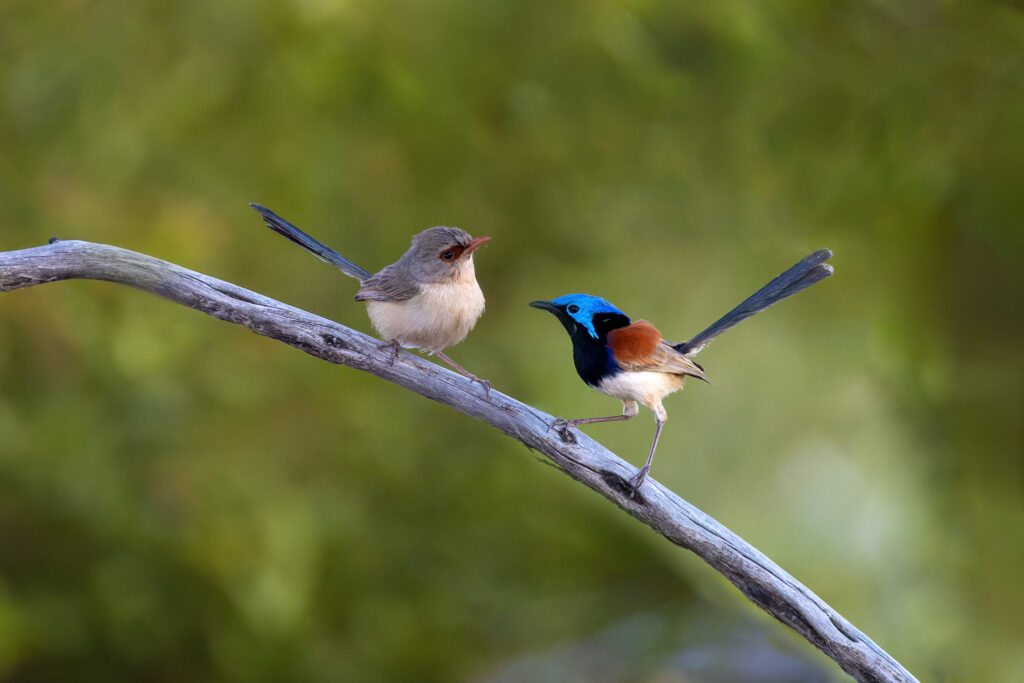
Male and female Purple-backed Fairywren playfully perched on a branch
This next moment was a delight to witness. A pair of purple-backed fairywrens, playfully perched on a thin branch, seemed almost to pose for the shot. The male, with his subtle violet sheen, moved with a mix of elegance and energy. The female, less flashy but just as cheeky, kept close by.
These birds are great fun to watch—they’re full of curiosity, often hanging upside-down from a twig or bouncing between branches like feathered acrobats. They never sit still for long, and that’s half the challenge when photographing them.
🐦Variegated Fairywren (Malurus lamberti)
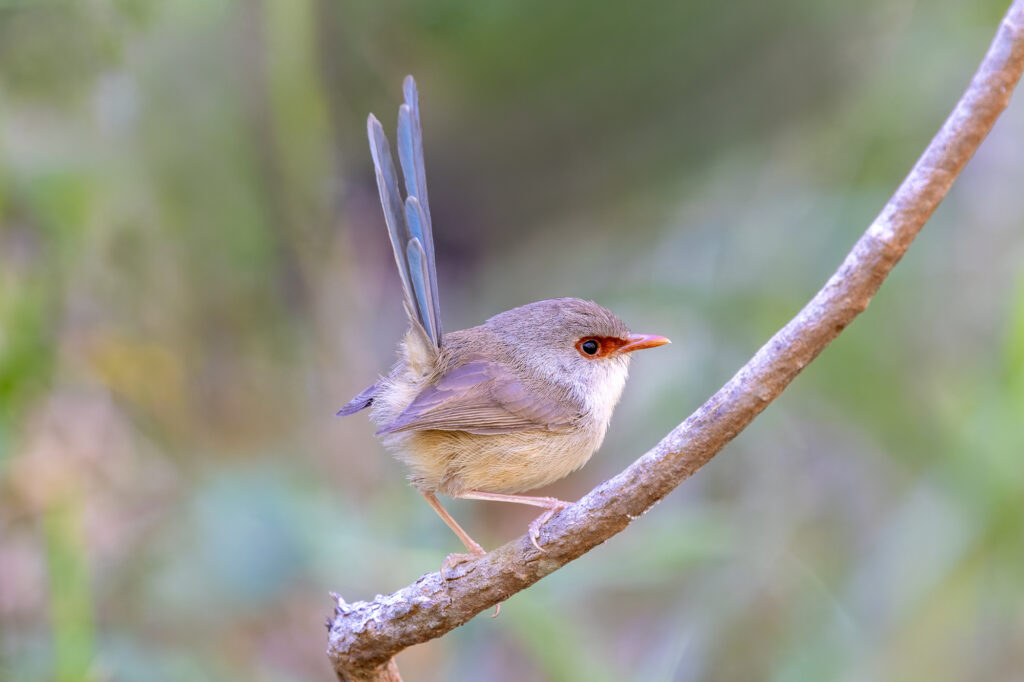
Variegated Fairywren
Female
Variegated Fairywren
Male
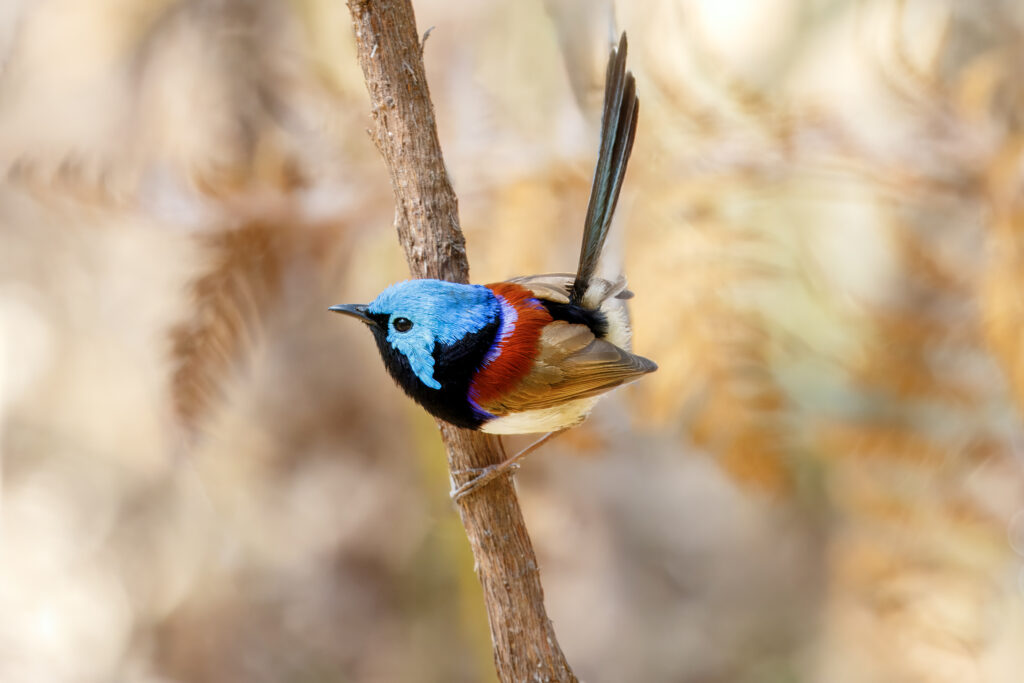
The variegated fairywren in this photo was spotted early one morning, flitting through dense undergrowth. He paused just long enough among the leaves for me to frame this shot. His plumage is a painter’s palette—blue crown, chestnut shoulders, and a black chest.
These birds are wonderfully adaptable, found in all sorts of bushland from coastal scrub to mountain forests. The males are particularly territorial—often seen puffing themselves up and doing their best “tough guy” impression against rivals twice their size. All show, no bite—but very entertaining.
🐦White-winged Fairywren (Malurus leucopterus)
Male and female White-winged Fairywrens playfully perched on a branch
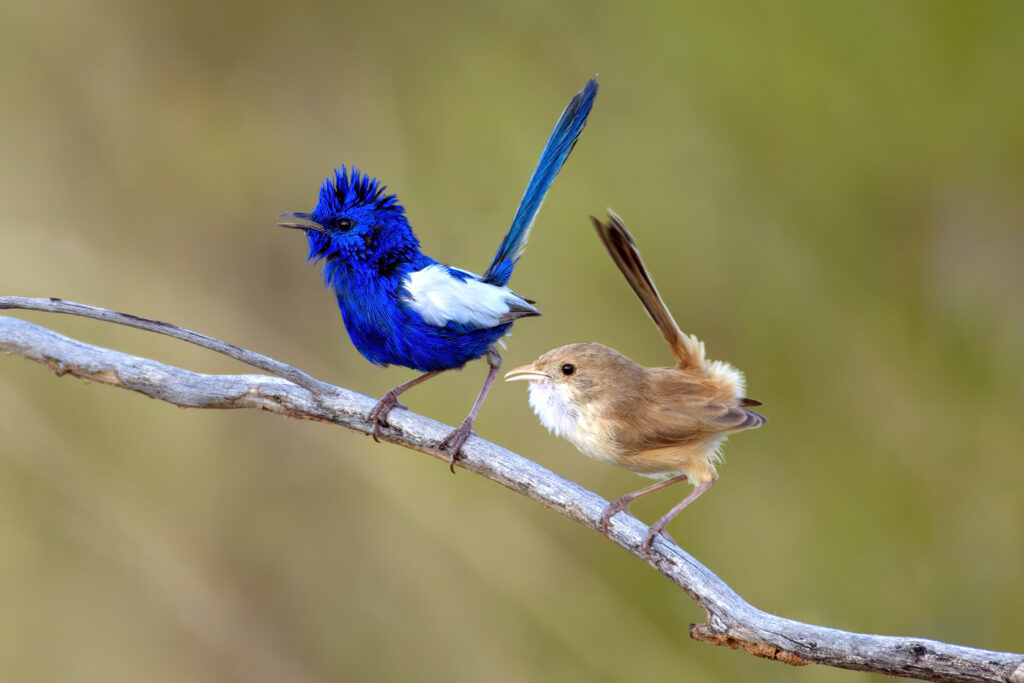
This image captures a pair of white-winged fairywrens, engaging in playful behaviour on a low branch. The male, with his striking all-over royal blue plumage and brilliant white wings, looked almost surreal against the arid backdrop. The female, in soft sandy hues, was just as active, hopping from twig to twig.
These birds often live in dry inland areas, and spotting them feels like stumbling upon a little secret in the desert. Their social groups are full of chatter and high-speed chases—like watching a feathered soap opera unfold in miniature.
Final Thoughts
Fairywrens might be tiny, but they pack a huge amount of character into a few grams of fluff and feathers. Photographing them takes patience, a quick shutter, and often a sense of humour. But once you’ve spent time watching a family group bounce and chirp their way through the bush, it’s hard not to fall in love with them.
There’s still one dazzling species that’s eluded my lens so far: the Splendid Fairywren. With its electric blue plumage and outback charisma, it’s right at the top of my must-photograph list. I can’t wait to one day share those images and stories with you—hopefully from deep in the red heart of Australia.
Let me know what you think in the comments—and if you’ve had your own fairywren encounters and which species is your favourite? I’d love to hear your stories.
Leave a Reply