
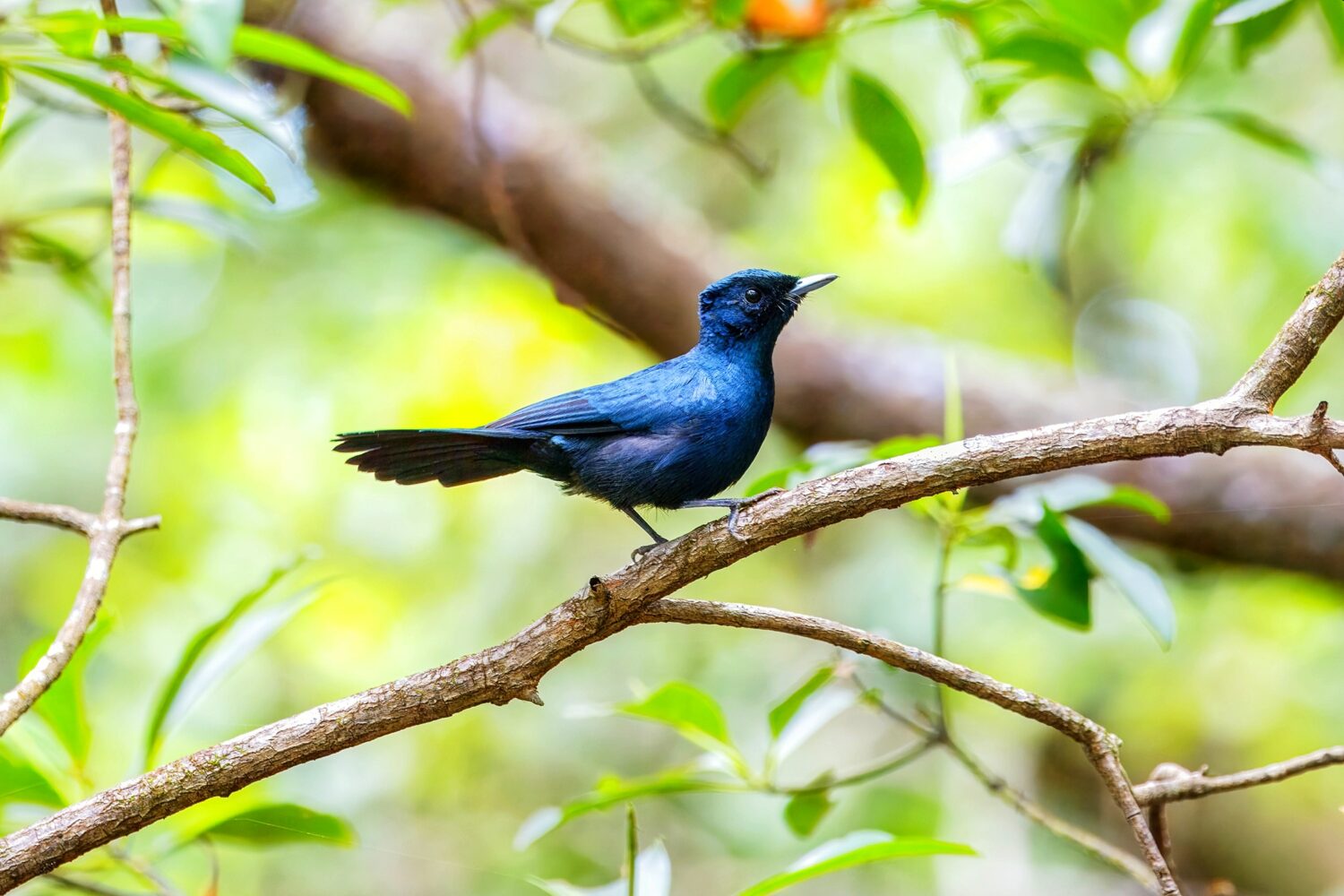
Among Australia’s most captivating birds, the Shining Flycatcher (Myiagra alecto) lives up to its name in every way—especially the male, whose deep, metallic-blue plumage can appear almost liquid in the right light. This iridescence, however, is a blessing and a curse for photographers. The brilliant sheen reflects so much light that exposing for the shiny parts throws the rest into shadow, while exposing for the darker areas causes the highlights to blow out completely. Capturing them well is not just a matter of luck—it’s a true test of timing, patience, and lighting conditions.
Fascinating Facts About the Shining Flycatcher
📸 1. Iridescent Males
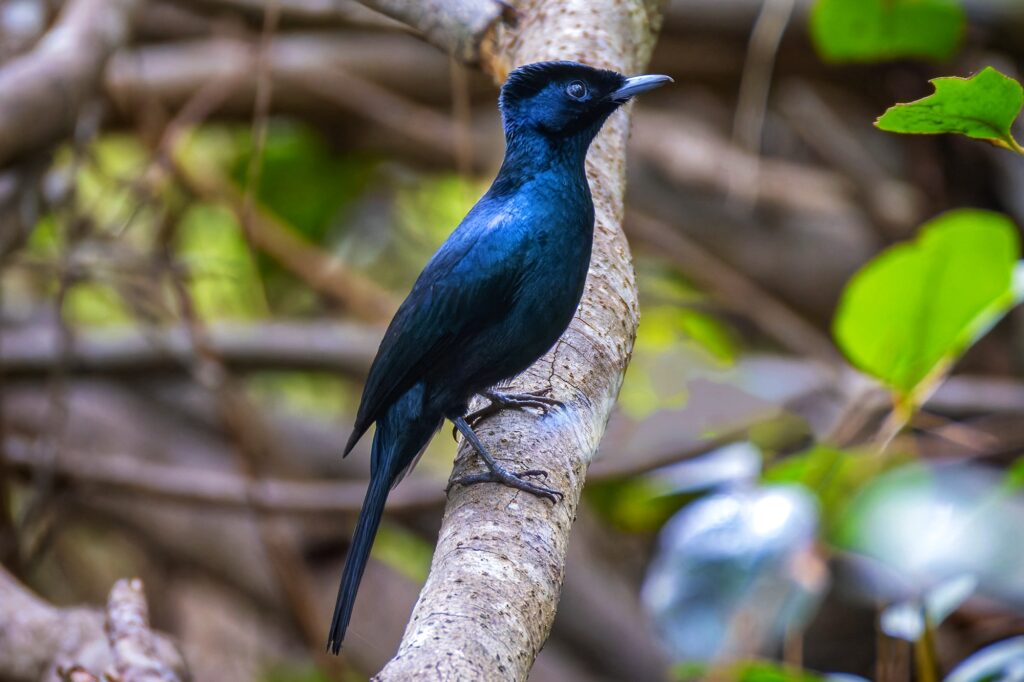
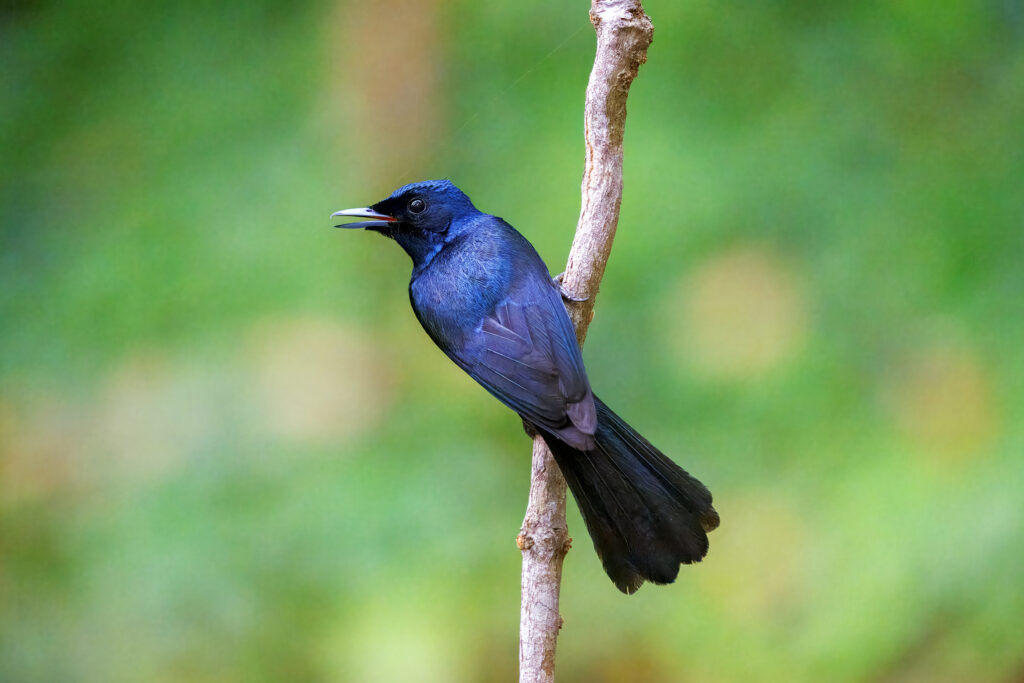
Only the male Shining Flycatcher sports the dazzling, metallic blue-black plumage. This glossy sheen is not a pigment, but a result of structural colouration—microscopic structures in the feathers reflect light in a way that creates that shimmering effect.
🧡 2. Subtle Females
In contrast, the female is chestnut brown with a white underside, a classic example of sexual dimorphism. Her more muted colours help her stay hidden while nesting.
🌿 3. Mangrove Specialist
They are most often found in mangroves, wetlands, and tropical woodlands across northern Australia, New Guinea, and parts of Southeast Asia. Their preference for dense, tangled vegetation can make them very difficult to spot.
🎶 4. Not-so-Vocal
Unlike many flycatchers, the Shining Flycatcher has a soft, whistling call and isn’t particularly vocal, especially during nesting. This can make them hard to locate if you’re relying on sound alone.
🐛 5. Insect Hunters
They are insectivores, catching insects mid-air or picking them off leaves. They use quick, darting flights to grab prey and often return to the same perch.
🪺 6. Tiny Nests, Big Effort
Their cup-shaped nests are built with spider webs and plant fibers, placed on branches over water. The location provides both camouflage and protection from ground predators.
My first encounter with this species was in the mangroves near Cairns on an overcast day—a stroke of luck, as the soft light let me capture the full range of plumage detail without harsh shadows or overblown highlights. Unfortunately, my next sightings, on Groote Eylandt, were less fruitful. Between the tangled environment and strong tropical sun, it was nearly impossible to get a clean, well-exposed frame.
Then came the moment I’ll never forget.
It was storm season, and a low-pressure system was sweeping across the heart of Groote Eylandt when I came across a Shining Flycatcher nest delicately balanced on a branch above a narrow creek. At first, the weather seemed far from ideal for photography—but I soon realized I was positioned right in the eye of the system, where the winds drop to almost zero. The result? Calm, quiet conditions with soft, overcast skies and a gentle drizzle—creating the kind of evenly diffused light wildlife photographers dream of. I spent the next five days quietly observing the nest and the flycatcher family as they carried out their daily routine.
To avoid disturbing such a sensitive stage in the birds’ life cycle, I positioned myself at a respectful distance, concealed behind a cluster of trees. From there, I gradually managed to capture intimate portraits of both the male and female Shining Flycatchers.
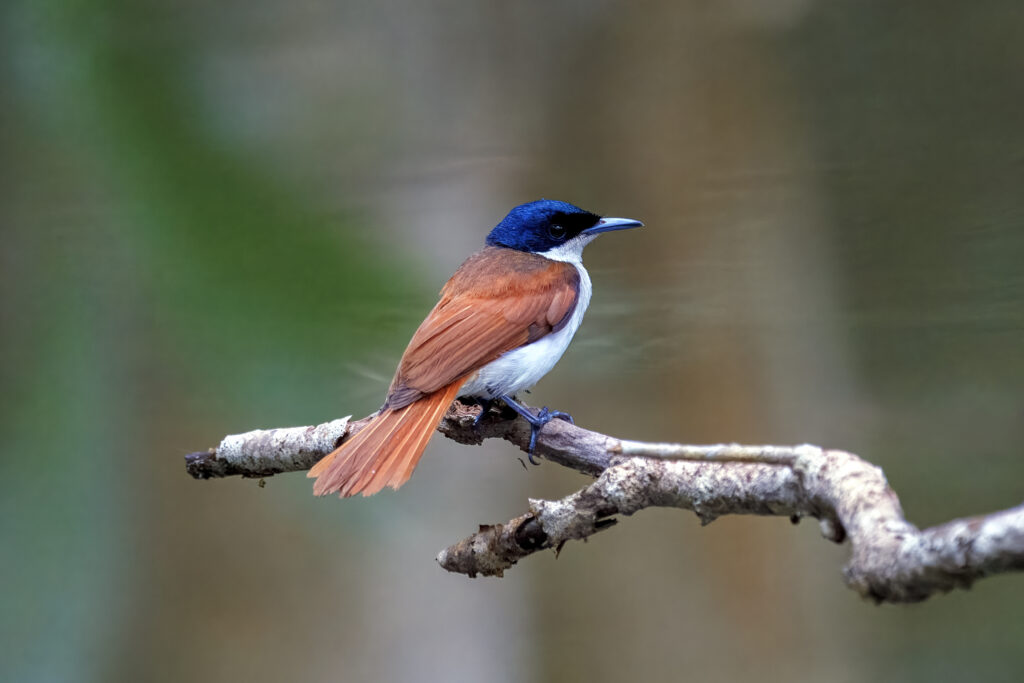
Female shining flycatcher
Myiagra alecto
Male shining flycatcher
Myiagra alecto
Without a tripod, I had to handhold my camera, bracing myself against a tree trunk for support. The adult birds returned to the nest to feed the chick roughly once every 15 minutes—a rhythm dictated by the time it took them to hunt down and catch suitable insects in the dense surrounding habitat. That meant when birds came to feed the chick I had, at best, just a few seconds to get the shot—if I missed it, I’d have to wait another full quarter hour for the next chance. After 45 minutes of holding the camera ready—often without taking more than one or two frames—fatigue started to set in. My arms were aching, and opportunities were slipping by simply because I was knackered after holding the camera that long.
One afternoon, the female flew in to feed the chick and struck a pose I could never have anticipated. She spread her wings and opened her beak—completely silent, as though in mid-song—and for a split second, the underside of her wings and the vivid red of her open mouth were perfectly framed and lit. My position was just right. Everything—the tail, the wing, the beak, and the chick—fell into the same focal plane. I didn’t even have to think. I just pressed the shutter.
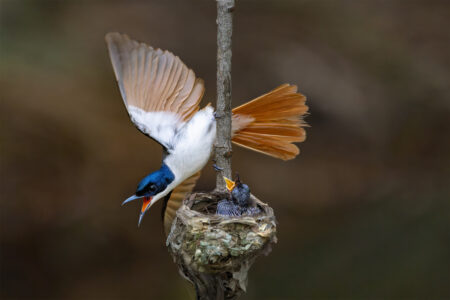
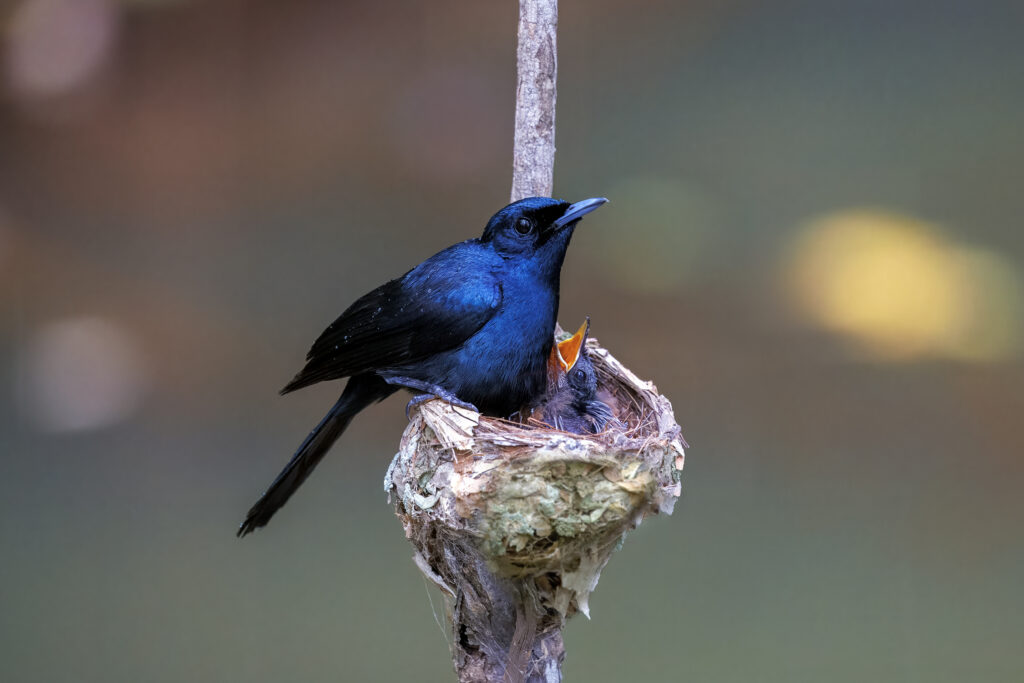
By the next day, the chick had grown finer feathers, now with a soft brown tone. I watched the male stand over the nest in the rain, shielding the chick with his body. In this image, you can see that the chick has already developed some fine brown feathers.
Then came the turning point. When I arrived, I saw not one, but two female-coloured birds on the nest. It took me a moment to realise—the chick had moulted into its juvenile plumage, identical to the adult female’s. (Young males and females look the same until the male eventually transforms into the striking metallic black-and-blue adult.)
Soon after, I watched the chick flap its wings and climb out of the nest. It perched on the same branch and beat its wings—its very first flight attempt! Minutes later, I saw it launch itself into the air, wobbling to a tree nearby. Both parents were close, offering food and encouragement, alternating feeding and letting the chick rest between movements. I stood there in awe, witnessing not just the growth, but the moment life literally took off.
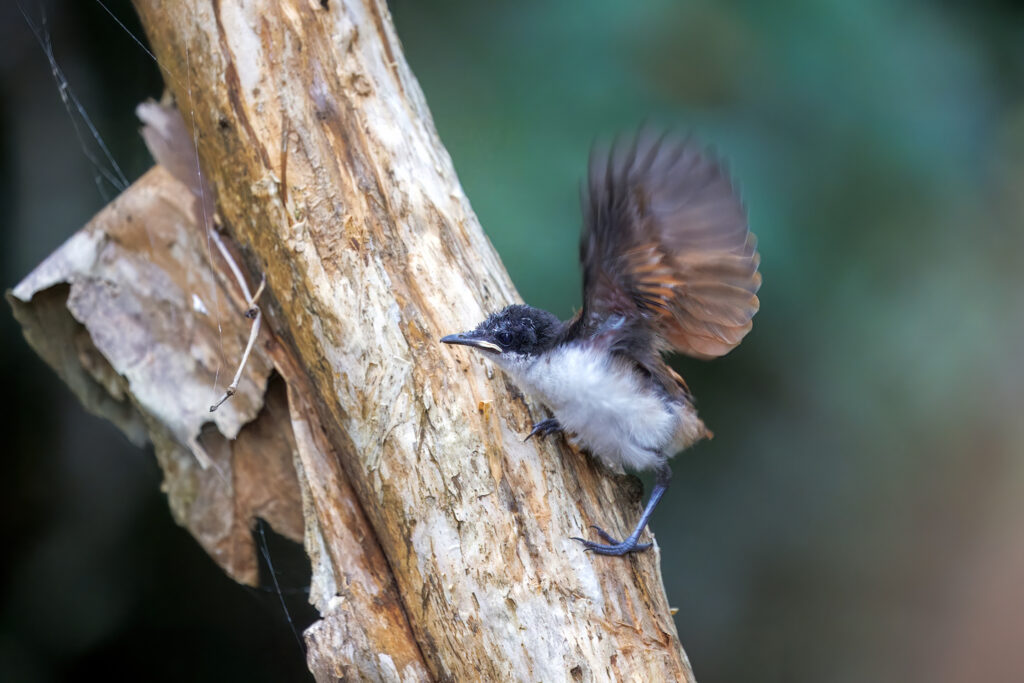
What caught my attention was that it had no tail at all. Until now, I’d always assumed that tailless birds I’d seen had somehow lost their feathers, but this encounter taught me something new. It turns out that fledglings often leave the nest before their tails have fully developed, and they grow in just a few days after fledging. Witnessing this rare stage of life was a reminder of how much there is still to learn, even after years in the field.
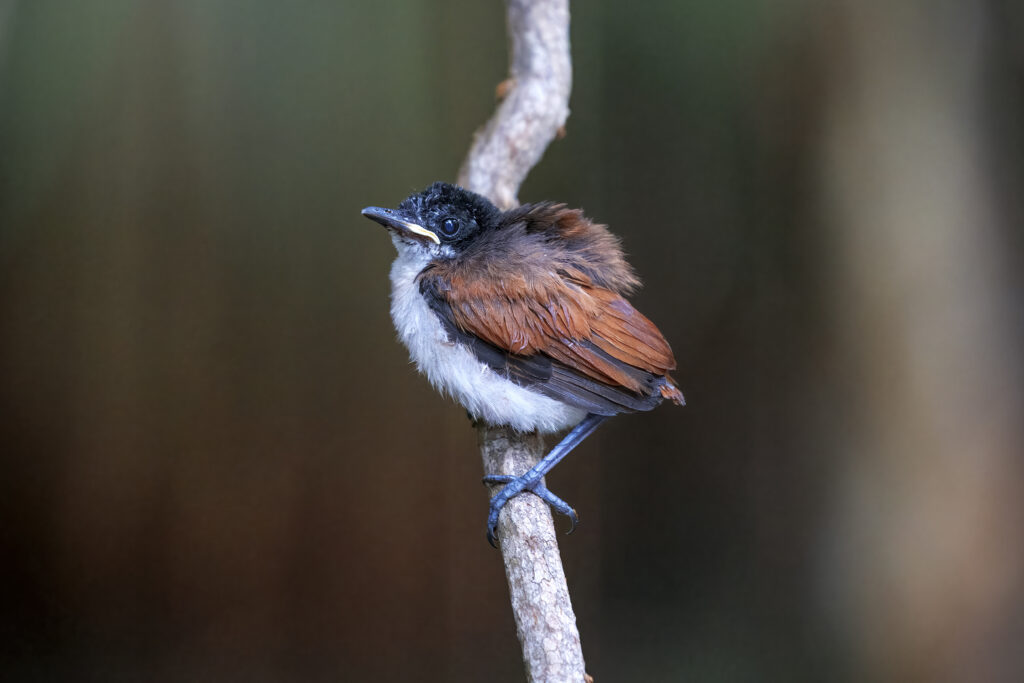
That evening, as dusk settled in, I left quietly and never saw the family again. But that’s exactly as it should be—a sign of success. A life begun. A story completed. And for me, a rare and personal insight into the wild world I feel so privileged to document. These photos, now among the most treasured in my collection, serve as a lasting memory of a journey I was lucky to be part of—and will never forget.
Leave a Reply