Category: Birds

  • In Search of Shadows: My Encounters with Australian Owls

    In Search of Shadows: My Encounters with Australian Owls

    Australian owls are unlike their counterparts elsewhere in the world. Most species spend the day hidden inside tree hollows, rarely seen roosting in the open. They are entirely nocturnal, emerging only under the cover of darkness to hunt. This secretive behavior makes seeing them — and especially photographing them — both difficult and deeply rewarding.I’ve spent countless hours wandering through forests and national parks across Australia, searching for signs of nocturnal life. Along the way, I’ve been lucky enough to encounter and photograph some of Australia’s most remarkable owls.

    🦉 Southern Boobook (Ninox boobook)

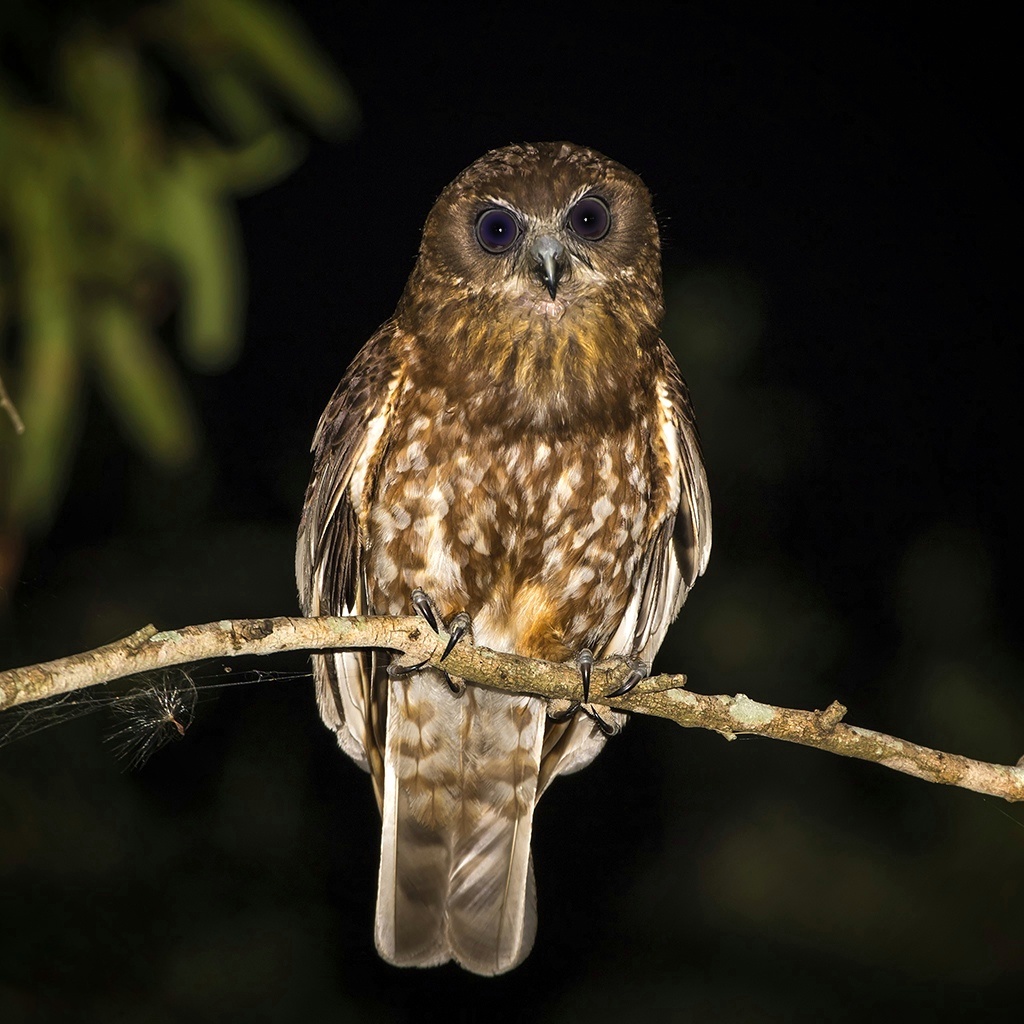
    The first owl I’d like to share is the Southern Boobook, the smallest of Australia’s owls. Despite their size, they are fierce little hunters with a haunting, melodic call that echoes through the night. This small but fierce hunter is the most widespread owl in Australia, found from rainforests to suburban backyards. Its familiar “boo-book” call echoes through the night and is often mistaken for a distant cuckoo.

    😷 Masked Owl (Tyto novaehollandiae)

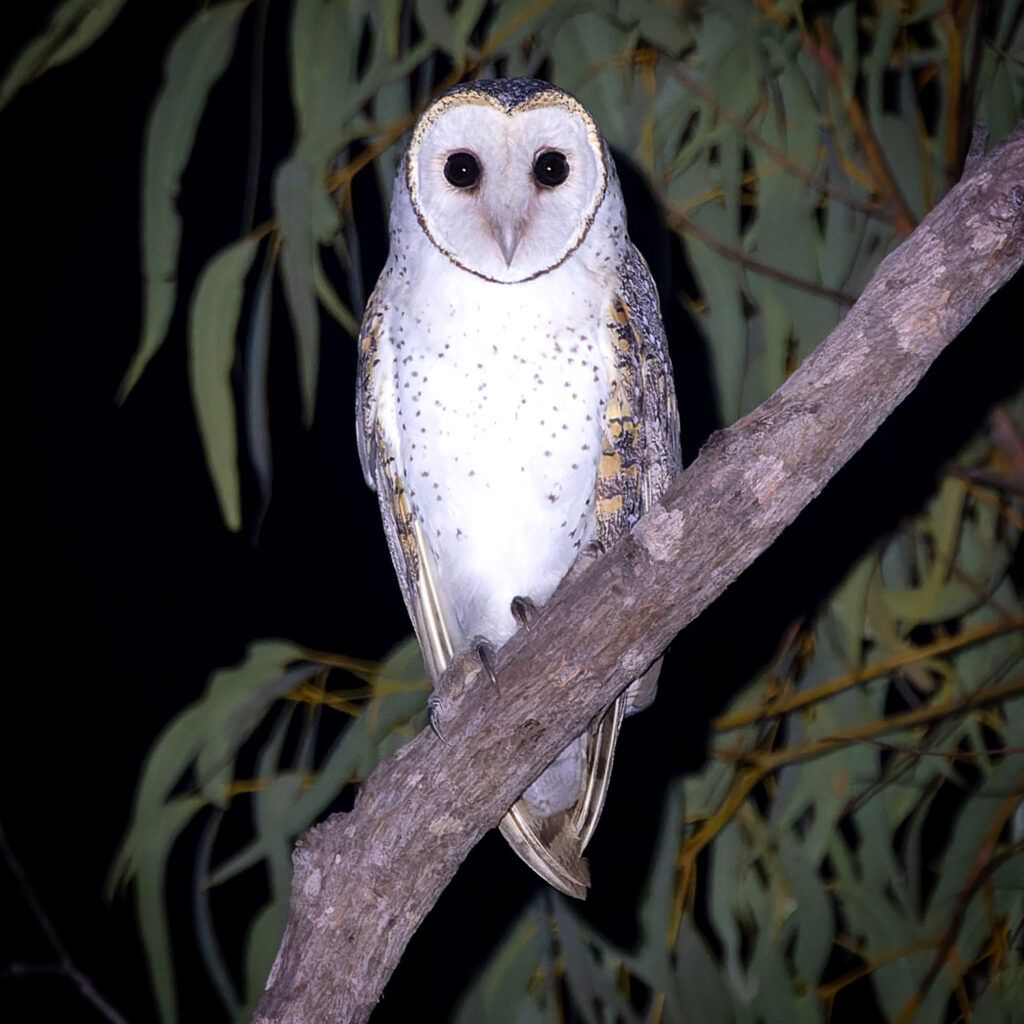
    The ghost of the forest.With their heart-shaped faces and dark eyes, Masked Owls look like forest phantoms. They have one of the largest facial discs of any owl, helping them detect prey by sound alone — even under thick leaf litter. Sadly, their dependence on large old trees makes them vulnerable to habitat loss.

    The Masked Owl is a rare and striking species, particularly around the Brisbane region. I was fortunate to spend time photographing them while living on Groote Eylandt in the Northern Territory, where their ghostly faces and silent flight make them unforgettable.

    🐶 Barking Owl (Ninox connivens)

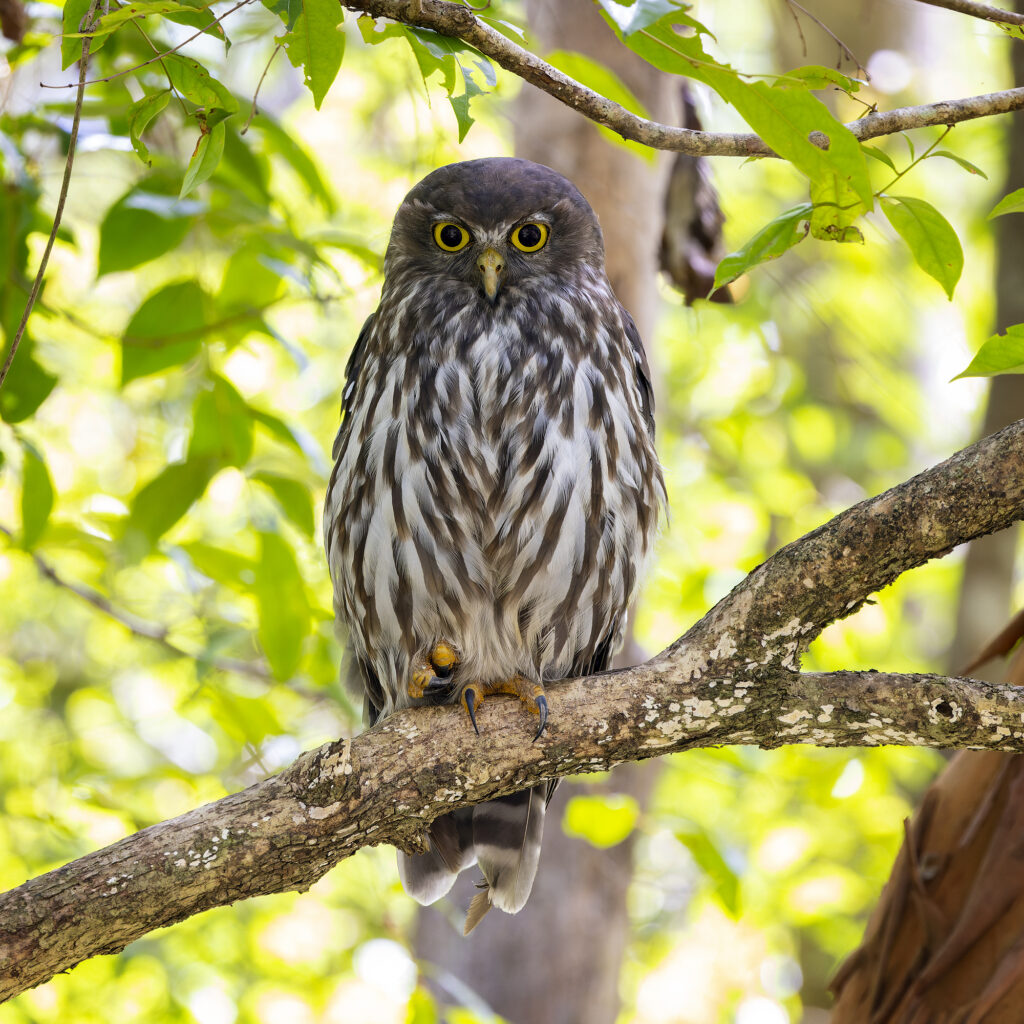
    The owl that barks — and screams.Famous for its dog-like “woof-woof” call, the Barking Owl can also produce a chilling scream that’s earned it the nickname “the screaming woman owl” in bush folklore. They’re highly social, often calling in pairs as part of their nightly duet.

    The Barking Owl is as endearing as it sounds. Named after its dog-like bark, it’s known to confuse — and sometimes infuriate — local dogs that can’t quite locate the source of the sound. Their expressive eyes and rounded faces make them a joy to photograph.

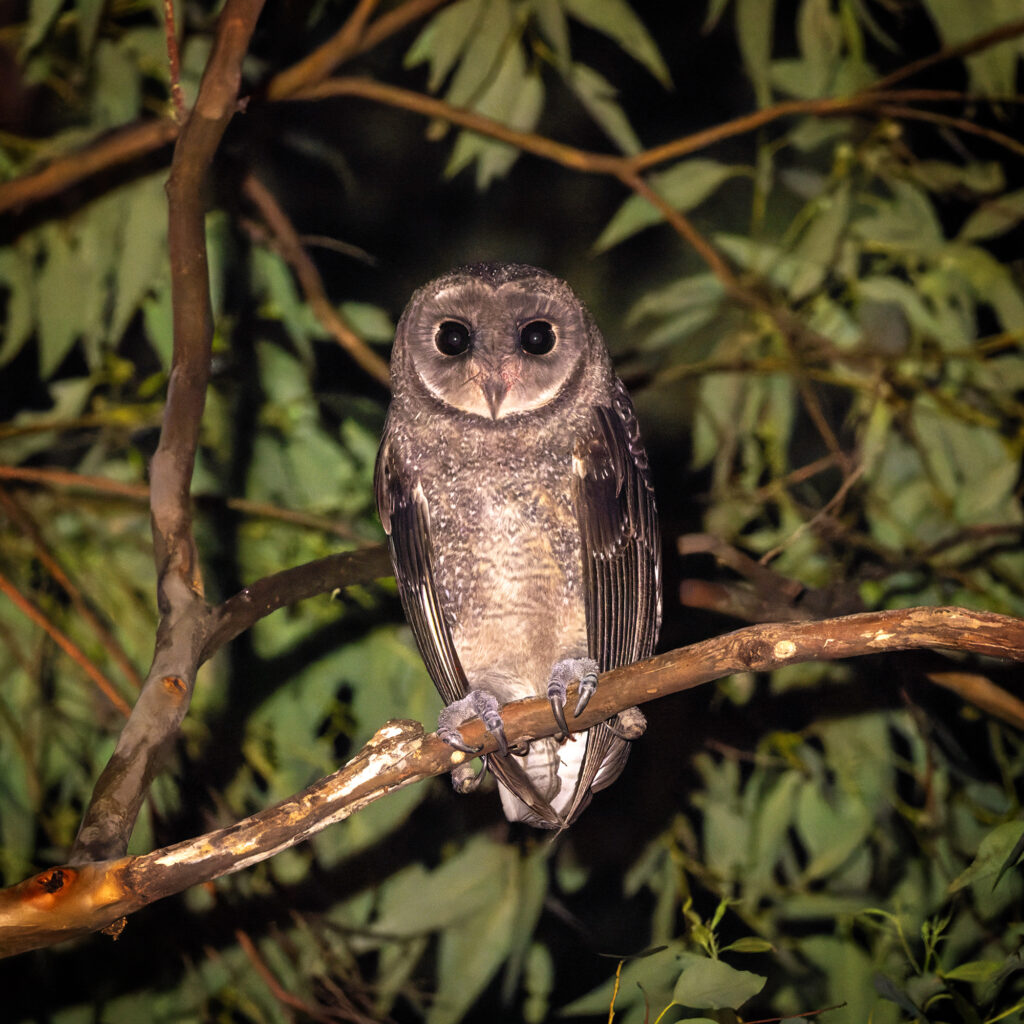
    🌌 Greater Sooty Owl (Tyto tenebricosa)

    A shadow with wings.These stunning owls haunt the dark rainforests of eastern Australia, their plumage a velvety mix of silver, grey, and black. Their eerie, falling-bomb screech can echo through the forest at night, startling anyone unfamiliar with their presence.

    Of all the owls I’ve seen, the Greater Sooty Owl is perhaps the most beautiful. With dark, velvety plumage and large, black eyes, they look almost otherworldly. Their eerie, rasping scream in the night is unforgettable once heard.

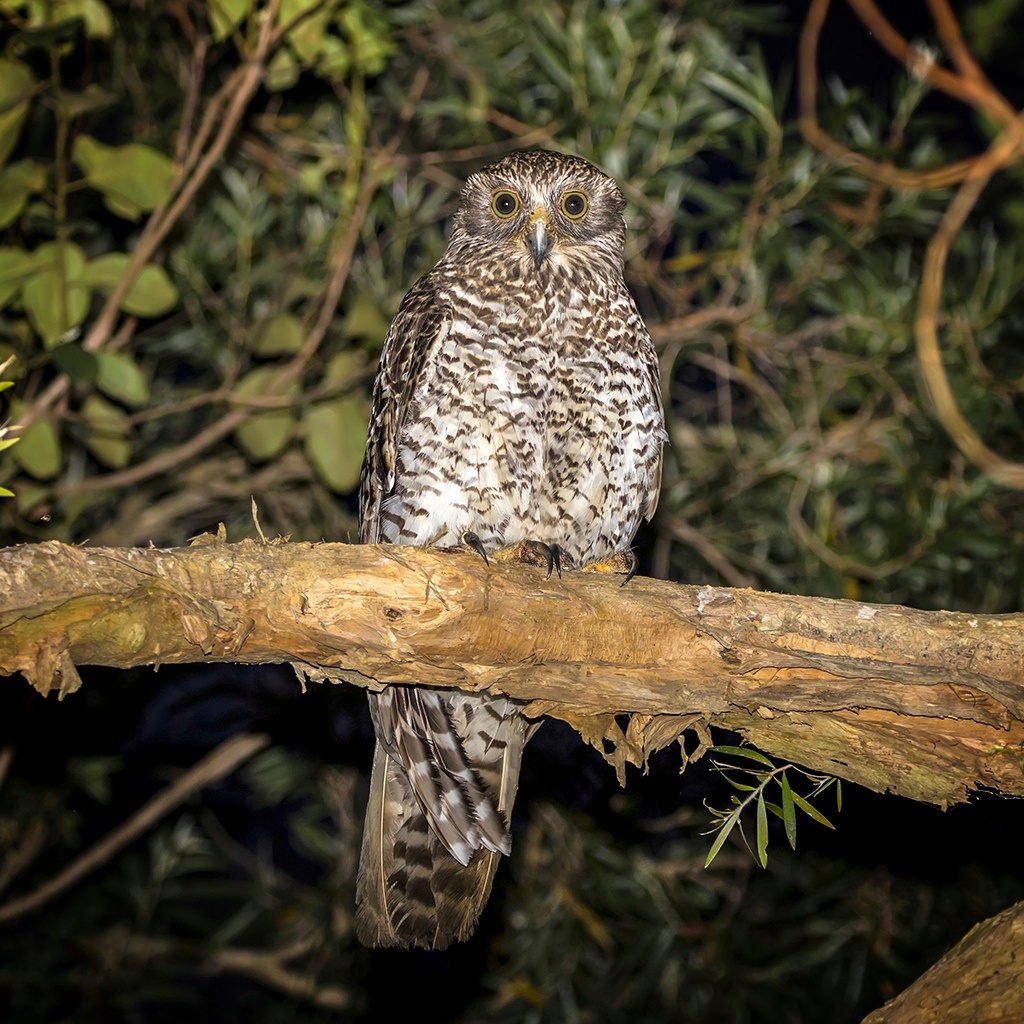
    💪 Powerful Owl (Ninox strenua)

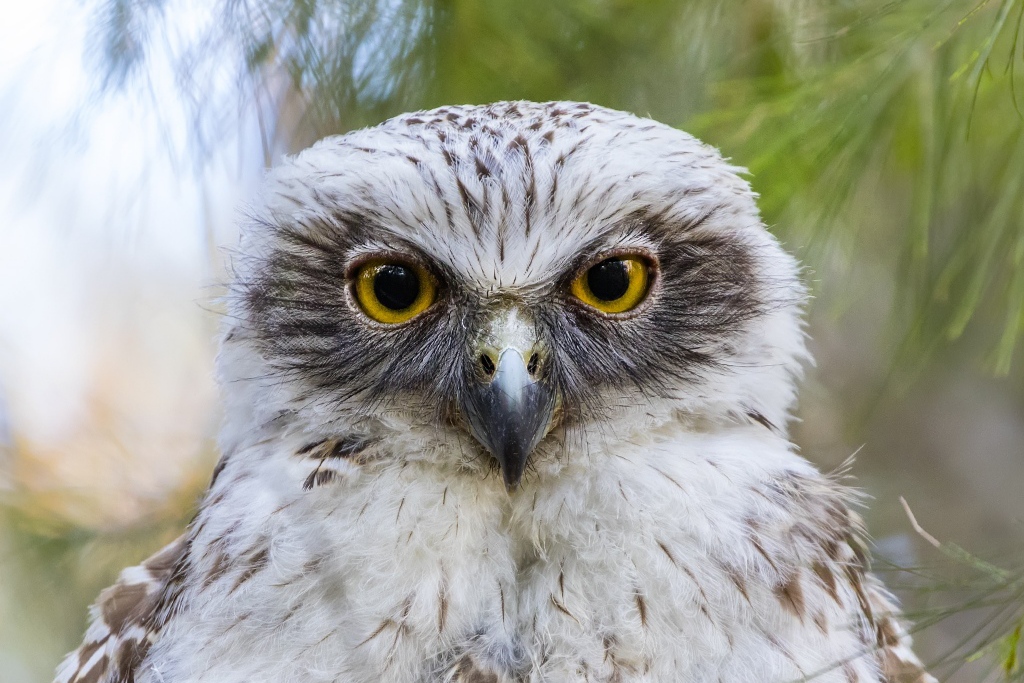
    And then there’s the Powerful Owl — the largest of them all, growing up to 65 cm tall. Australia’s top nocturnal predator, the Powerful Owl lives up to its name. With immense talons and strength, it can take prey as large as a flying fox or small wallaby. Despite their fearsome hunting skills, these owls form lifelong bonds and tenderly care for their chicks during the breeding season.

    Finding possums often means Powerful Owls are nearby. Their deep, resonant hoots can carry for over a kilometre through the forest.One year, I set myself a challenge: to photograph a Powerful Owl in daylight. This became one of the most rewarding — and demanding — projects I’ve ever attempted.

    Here’s a glimpse of how that journey unfolded:

    Night 1: Found chicks calling, marked the area, and left them undisturbed.

    Day 1: No sign of owls.

    Night 2: Located them again.

    Day 2: Found them too high for good photos.

    Night 3–4: On and off sightings, missed opportunities due to rain.

    Night 6: Found them again.

    Day 6: Thick trees blocked my view.

    Night 8: More searching, more near misses…

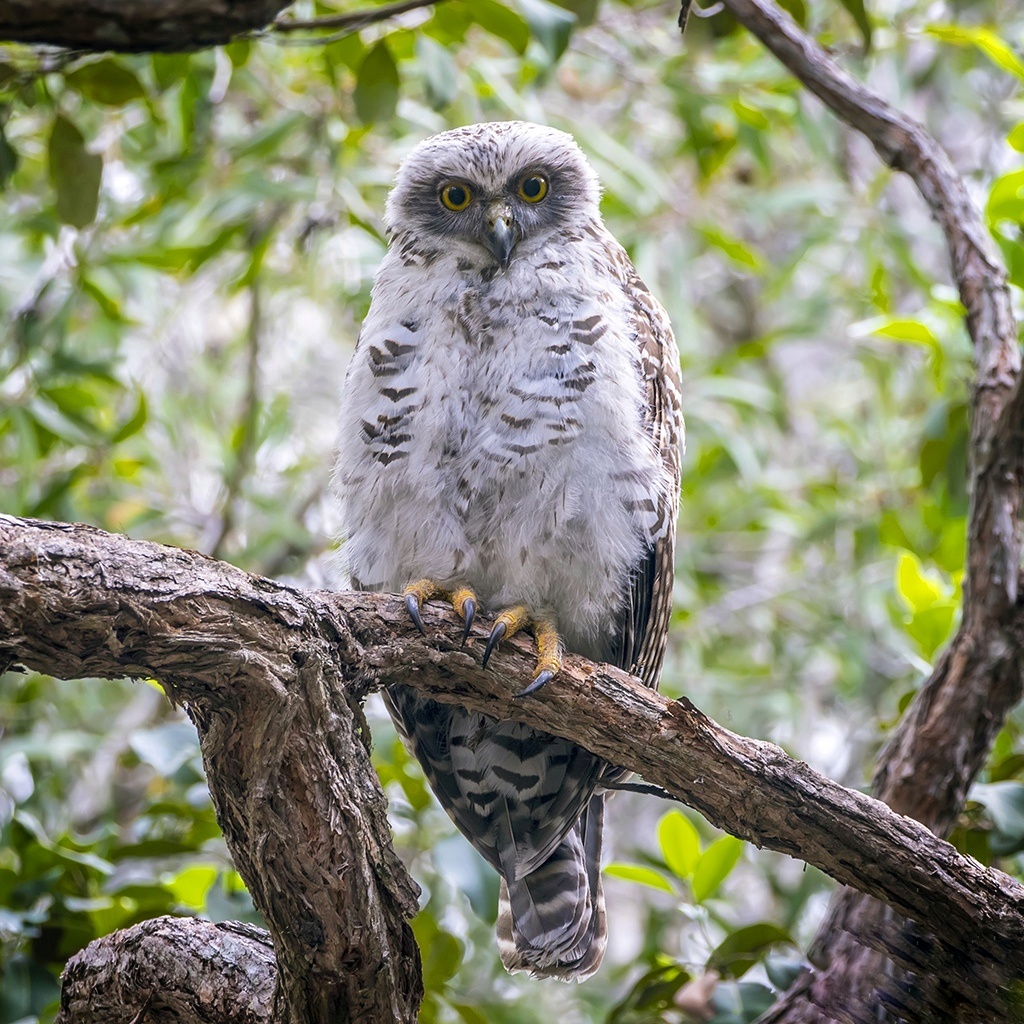
    And so it went, night after night. For nearly a month, I searched. But persistence paid off. One morning, I finally found a Powerful Owl chick, perched right above a walking track — beautifully exposed in the soft morning light. The parents stayed hidden, but I’m sure they were watching me closely the entire time.The photos I captured that day remain among my proudest achievements. They remind me that patience, respect, and perseverance are the true keys to wildlife photography.

    I’m delighted to share these images with you here. Let me know in the comments below — which Australian owl captures your heart?

  • Wing-Dryers and Deep Divers: The Cormorants of Australia

    Wing-Dryers and Deep Divers: The Cormorants of Australia

    Fun Facts About Cormorants

    🪶 Waterbirds with soggy feathers

    Unlike ducks and many other waterbirds, cormorants don’t have fully waterproof feathers. This might seem like a design flaw, but it actually helps them dive deeper and move more efficiently underwater. After a good fishing session, they’ll be seen perched with wings spread out, drying off like feathered scarecrows.

    🐟 Underwater acrobats

    Cormorants are phenomenal swimmers — they use their webbed feet to propel themselves underwater while steering with their tails. Some species can dive as deep as 40 metres in pursuit of fish!

    📦 They nest in colonies that smell… unforgettable

    Many cormorants nest in large colonies, often on islands or cliffs. These nesting sites are loud, chaotic, and pungent — thanks to all the fish-rich guano. Not ideal for the nose, but perfect for the lens.

    🌍 Globally widespread, locally unique

    Cormorants are found all over the world, but Australia is home to a unique mix of species — including the coastal Black-faced Cormorant, which you won’t see anywhere else on Earth.

    🐣 Chicks with prehistoric vibes

    Young cormorants hatch naked and awkward-looking, resembling little dinosaurs. As they grow, they develop downy feathers before taking on the sleek, glossy plumage of adults.

    🛶 Fishermen’s helpers (and rivals)

    In parts of Asia, trained cormorants have been used by traditional fishermen for centuries. A snare is tied around the bird’s neck to stop it from swallowing larger fish, which the fisherman retrieves when the bird returns to the boat. (Don’t worry — they still get rewarded with smaller fish!)

    🔭 The “wing-drying” mystery

    There’s still some debate among scientists about why cormorants spread their wings to dry. Yes, it’s to dry off — but some research suggests it may also help regulate body temperature or aid digestion.

    🎯 Visual hunters

    Cormorants rely heavily on sight when hunting underwater. Their eyes can adjust quickly between air and water vision — a handy trick when you spend your life darting between the two.

    Masters of Air and Water: The Unique World of Cormorants

    Cormorants are fascinating birds — sleek, sharp-eyed, and built for life in the water. What makes them truly interesting is their mastery of both air and water: with their long necks and powerful wings, they can soar overhead just as easily as they vanish beneath the surface, chasing fish with uncanny agility. Unlike many waterbirds, cormorants don’t have fully waterproof feathers. You’ll often see them perched with wings spread wide, drying off after a dive — a signature pose that’s both iconic and a little eerie.

    A Personal Journey: Photographing Every Australian Cormorant

    I have seen and photographed all of the Australian cormorants, which is a cool achievement, as they all inhabit different parts of the country, but also sad, as there is no birds of this genus left for me to “hunt”. It’s been a journey across wetlands, coastlines, rivers and remote headlands — and each encounter has been special in its own way.

    Little Pied Cormorant (Microcarbo melanoleucos)

    The Little Pied Cormorant is a common sight around inland lakes, rivers, and even urban wetlands. It’s easily recognised by its striking black and white plumage — a small, elegant bird with a bit of attitude. It tends to hunt alone, often floating quietly before diving for small fish or aquatic insects. Their versatility has allowed them to thrive in a wide range of habitats, from city parks to remote bush billabongs.

    Little Black Cormorant (Phalacrocorax sulcirostris)

    Sleek and uniformly black, the Little Black Cormorant is often seen in large flocks, especially on inland freshwater bodies. When they gather in numbers, the spectacle of synchronised diving is something to behold. Their social nature sets them apart from the more solitary species, and they’re often found roosting together in long lines on tree branches or rocks near water. Adult birds have an incredible eye colour — a vivid turquoise blue — which contrasts beautifully against their glossy black feathers and really stands out in good light.

    Pied Cormorant (Phalacrocorax varius)

    The Pied Cormorant is one of Australia’s more striking waterbirds, with bold black-and-white plumage and a strong, yellow-orange facial patch that stands out against its pale face. Larger than the Little Pied but smaller than the Great Cormorant, it’s most commonly found along the coast, especially in estuaries, bays, and sheltered inshore waters, though it does venture inland in some regions. It’s a powerful diver and often seen fishing alone or in loose groups. When perched, its bright eyes and contrasting colours make it especially photogenic — a real favourite among bird photographers. Their heavy, slightly curved bill is another good field mark to pick them out in a mixed cormorant roost. The portrait below was taken on a jetty where the bird was having a siesta. I don’t think it was possible to get any closer, so the photo is full of fine detail, and the breeding colours are simply phenomenal — with the dark blue sea perfectly complementing the scene.

    Great Cormorant (Phalacrocorax carbo)

    As its name suggests, the Great Cormorant is the largest of the Australian species. With its powerful build and commanding presence, it’s often found in coastal environments, though it also ventures inland. The plumage is mostly black with a distinctive white throat and yellowish facial skin. It’s a formidable hunter, capable of chasing down larger prey, and its deep, heavy flight makes it easy to pick out against the sky.

    Black-faced Cormorant (Phalacrocorax fuscescens)

    This species is a true coastal specialist, found mainly along the southern shores of Australia and Tasmania. It’s one of the more range-restricted cormorants, preferring the cold, rough waters of rocky coasts and offshore islands. The white underparts contrast sharply with its darker upper body and the characteristic black face mask. They nest in large colonies and are a bit harder to approach than their inland cousins — a reward for the more adventurous photographer.

    Australasian Darter (Anhinga novaehollandiae)

    While not technically a cormorant, the Australasian Darter is closely related and often found in similar habitats. Also called the “snakebird” due to its long, slender neck and swimming style, the darter hunts with a rapid, spearing motion of its sharp bill. Its silhouette is more slender and graceful than a cormorant’s, and in flight, it shows a long tail and narrow wings. Darters also perch with wings spread, drying off after a dive, making them easy to mistake for a cormorant at first glance.

    Taxonomically, darters belong to the family Anhingidae, while cormorants fall under Phalacrocoracidae. Both families sit within the order Suliformes, making them close cousins in the bird world. Their diving behaviour and general appearance are quite similar, but there are subtle differences in posture, feeding style, and anatomy that set them apart — something birders and photographers alike grow to notice with experience.

    The Australasian Darter hunts by using its sharp, pointed beak to spear fish underwater. Once it emerges, it needs to skillfully manoeuvre the catch off its beak and into its mouth — a tricky feat it accomplishes by repeatedly tossing and flipping the fish in a smooth, practiced motion.

    Patience, Pursuit, and Memories: My Cormorant Adventure Complete

    Each of these species has challenged me in different ways — whether it was the patience needed to photograph the elusive Black-faced Cormorant on a windswept southern cliff, or the joy of finding a Great Cormorant sunning itself on a riverbank. Now that I’ve seen them all, it’s a satisfying milestone, but also a little bittersweet. There are no more cormorants left in Australia for me to “hunt” with the lens — but the photos, and the memories behind them, will always remind me of the journey.

  • Willy Wagtails: Small Birds, Big Personalities

    Willy Wagtails: Small Birds, Big Personalities

    Fun facts about the Willy Wagtail

    • Name Origin: The name “Willy Wagtail” comes from the bird’s distinctive behavior—its tail wags or “flirts” constantly. The “willy” part is an old British term for a lively, excitable character, fitting perfectly with the bird’s energetic personality.
    • Tail Tricks: The Willy Wagtail’s tail isn’t just for show. It’s a key part of their communication. They use it for displays of aggression or to attract mates. In flight, their tail is fanned out beautifully, making them one of the most striking birds to watch mid-air.
    • Incredible Flycatchers: Willy Wagtails are expert flycatchers. They dart through the air at incredible speeds, snatching insects mid-flight. They can even fly backwards for a split second while trying to catch an insect—an impressive acrobatic feat!
    • Territorial and Brave: Willy Wagtails are incredibly territorial. They will fiercely defend their area, even against much larger birds or animals. Some have even been known to dive-bomb humans who come too close to their nests—yet another example of their brave (sometimes cheeky) character.
    • Not Really a “Wagtail”: Despite their name, Willy Wagtails aren’t actually true wagtails, which belong to a different family. They belong to the flycatcher family (Muscicapidae), but they share some behaviors and physical traits with wagtails, hence the name.
    • Rapid Growth: The chicks of Willy Wagtails grow at an astonishing rate. Within just a few weeks of hatching, they can take their first flight. Their parents are extremely attentive and constantly bring them food, ensuring the little ones are strong and ready to leave the nest quickly.
    • Famous for Their Calls: Willy Wagtails have a distinctive, melodious call, which sounds like a high-pitched “pip-pip-pip” or sometimes a more complex “whee-wee.” These calls are often heard echoing through Australian parks and gardens. They’re also one of the few birds to make a sound that seems to match their active, bouncing nature.
    • Cultural Significance: The Willy Wagtail holds cultural importance for many Indigenous Australian groups. Its call and behavior have inspired stories and totemic representations, as it’s often seen as a messenger or a symbol of vitality and energy.
    • Adaptable to Humans: One of the most remarkable things about Willy Wagtails is their ability to adapt to human environments. You’ll often find them in backyards, parks, and even cities. In some places, they’ve become almost domesticated, hopping around near people without much fear.
    • “Punk” Hairstyle: Willy Wagtails have a distinct “punk-rock” look, with a spiky crest on their head when they’re in display mode, which can give them an almost mohawk-like appearance. It’s a subtle yet charming part of their appearance that adds to their character.

    Australia’s Most Iconic Little Flycatcher

    Willy Wagtails are one of the most beloved and iconic flycatchers in Australia, and it’s easy to see why. These small, agile birds are a common sight across the country, from bustling urban parks to remote deserts and wetlands. Known for their playful antics and striking tail movements, Willy Wagtails are found in a variety of habitats, from coastal scrublands to open woodlands, farmlands, and even the fringes of urban areas. They thrive in both natural and human-modified environments, often seen flitting about yards, gardens, and public spaces, bringing a sense of vitality wherever they go.

    A Bird That Thrives Nearly Everywhere

    Their habitat preferences are diverse: while they can often be found near water, including creeks, swamps, and wetlands, they are just as comfortable in dry, inland areas. They are often seen perched on fences, power lines, and even low branches, constantly on the lookout for insects, which they snatch mid-air with remarkable precision.

    A Simple Look, a Complex Personality

    Though the Willy Wagtail is a small bird with a simple colour palette—its black-and-white plumage is striking yet understated—its personality is anything but simple. Though the Willy Wagtail’s plumage is simple—its striking black-and-white feathers might remind you of a gentleman in a sharp tuxedo, elegant and timeless. With its bold, contrasting colors, it’s as if the bird is always dressed to impress, whether perched on a fence or mid-flight, bringing a touch of class to any scene it graces.

    These birds are exceptionally active, darting around with rapid, erratic movements that make them a challenge to capture on camera. For me, photographing them has always been a thrill. I never grew bored of their antics, even from my very first encounter. There’s something endearing and lively about the way they move, and it keeps me coming back for more.

    The Quiet Magic of a Familiar Bird

    Though the Willy Wagtail can be found across most parks in all Australian states and territories, it’s more than just a ubiquitous bird—it has a quiet charm that reveals itself over time. Whether it’s perched serenely on a branch or mid-flight, it always seems to have something new to offer. Even in urban environments, where nature often feels distant, these birds bring a sense of simplicity and purity. There’s something quietly humble about them that’s easy to overlook at first, but once you start paying attention, you realize they have a way of connecting us to the natural world.

    From Picture-Perfect to Storytelling Shots

    When I first started my photography journey, my early images of Willy Wagtails were more traditional—shots of them perched neatly on sticks or branches against uniform, “postcard-perfect” backgrounds. These images were beautiful, but they didn’t quite capture the essence of the bird’s energy. Over time, I wanted to breathe more life into my photographs—telling a story, rather than simply documenting the bird’s form. The Willy Wagtail, with its bold personality, was more than willing to oblige.

    Chasing the Unpredictable: A Photographer’s Challenge

    The challenge, of course, was their unpredictability. These birds never follow a script. You can’t predict when or how they’ll fly, or what moment they’ll decide to hunt for insects. At first, I could never quite capture the shot I had in mind. But with the advent of pre-capture technology in modern cameras, I’m getting closer to that elusive, perfect shot. One of my long-term projects has been capturing a Willy Wagtail in flight, its tail and wings fanned out mid-air—a breathtaking display of acrobatic grace. Although I haven’t nailed the perfect shot just yet, I’m getting closer, and I can’t wait to share the final image when it comes together.

    Of course, capturing these fast and feisty birds in action is no easy feat. Sometimes, the bird decides to leave its perch just as I press the shutter button. The result? A blur of feathers and a lot of missed opportunities! I like to imagine the Willy Wagtail is just too quick for me, like it’s playing a game of ‘catch me if you can’ with the camera. You know it’s not intentional, but the bird sure seems to be making a statement: ‘Nice try, but I’m faster than your lens!’ It’s these moments of near-misses that add an extra layer of fun to the challenge of photographing them—after all, it’s not just about getting the perfect shot, but about enjoying the chase itself!

    Celebrating the Spirit of the Willy Wagtail

    In the meantime, I hope you enjoy this collection of photos that capture the spirit of the Willy Wagtail—its elegance, its energy, and its humble charm.

    Now that you’ve had a glimpse of these lively Willy Wagtails, I’d love to hear what you think! Drop a comment below and let me know which photo is your favorite, or share any fun stories you’ve had with these energetic little birds!

  • Shooting in the Rain: Madness or Magic?

    Shooting in the Rain: Madness or Magic?

    As you’ve probably guessed by now, my favourite weather for taking photos isn’t what most people would call ideal. Give me an overcast sky and a bit of drizzle any day. While others might be heading indoors, I’m heading out—camera in hand, raincoat zipped up.

    If you’re not into photography, you might be wondering: Why on earth would someone willingly go out in miserable weather and risk their gear like that?

    Simple answer? The results are absolutely worth it.

    Cloud cover acts like a giant softbox, diffusing the light evenly and removing harsh shadows—perfect for capturing the delicate beauty of our feathered friends. And then there’s the rain itself. Raindrops can become a magical extra layer—like nature’s own special effects—something you just can’t fake or replicate in post-production.

    Every now and then, I get lucky and capture a bird covered in tiny droplets. To me, it’s like looking at diamonds set into a golden piece of art—mesmerising, timeless, and endlessly satisfying.

    Here are a few examples of what you might see if you ever decide to brave the wet:

    A stunning Sunbird in Papua New Guinea, where the rain never really stops.

    An Eastern Spinebill giving itself a good shake—doggy style—sending water flying everywhere.

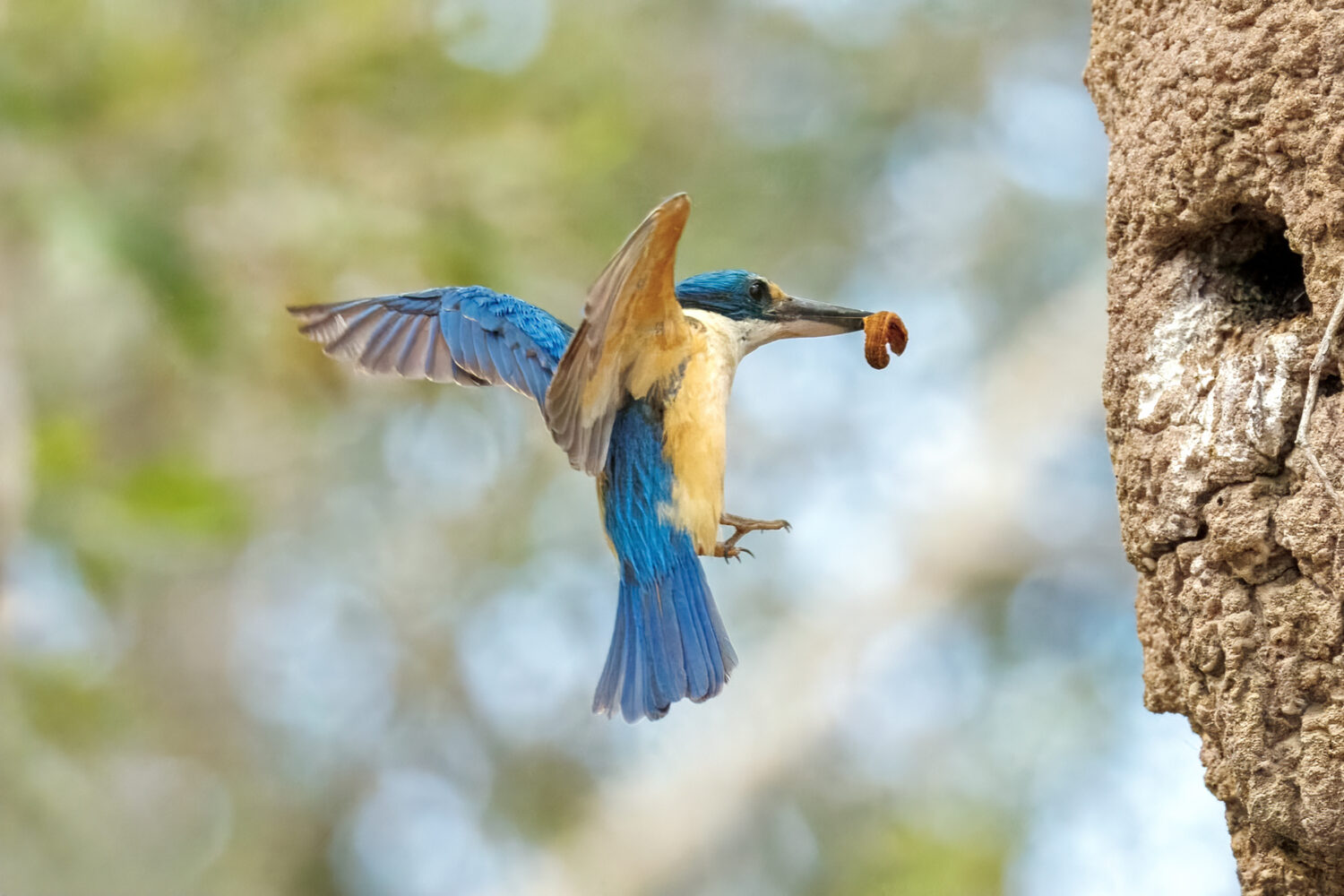
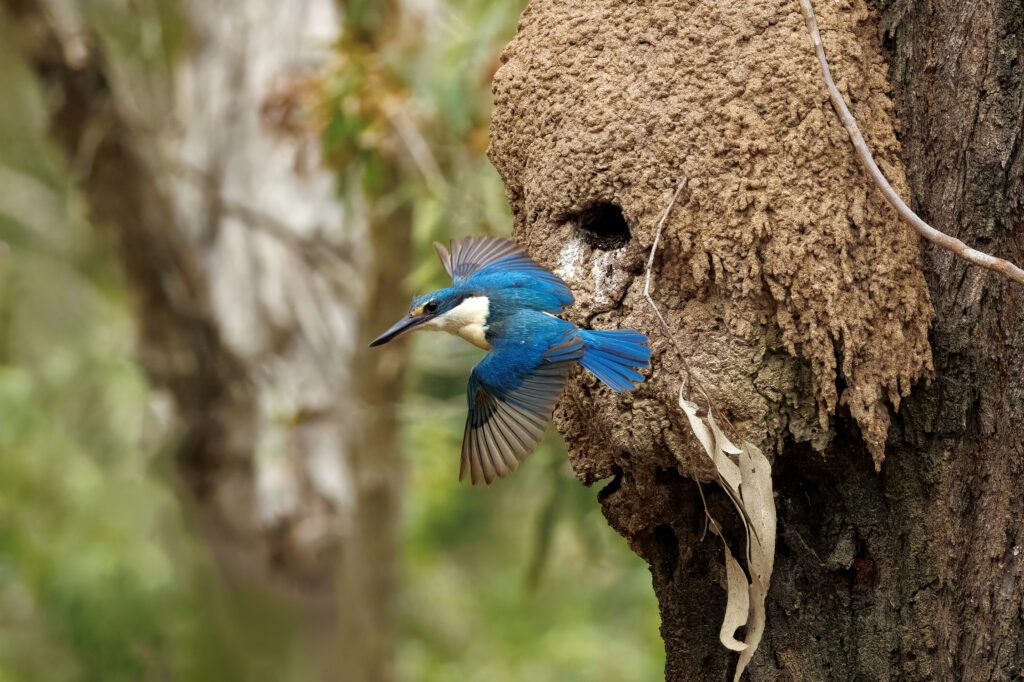
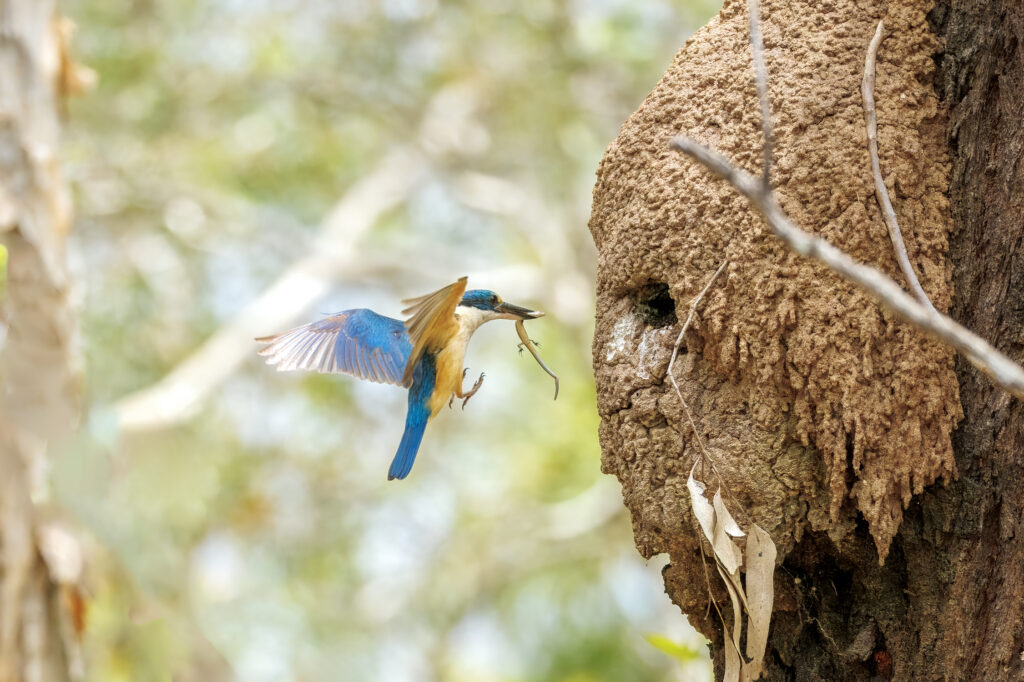
    A Sacred Kingfisher stoically facing the downpour… and another one delicately covered in sparkling droplets.

    A Boobook Owl right after the rain, looking nothing like its usual sleek self—honestly, it’s hilarious.

    A baby Masked Lapwing grazing in rain-drenched grass—absolutely adorable. You can enjoy reading a full article about these birds >>here<<.

    A male Shining Flycatcher shielding his tiny chick from the falling rain—parenting goals. A story about taking this photo can be found by visiting this >>link<<.

    And probably my favourite rainy photo so far: a Noisy Pitta, nestled amongst soaked ferns. You can read the full story behind that shot here: >>link<<.

    These photos hold something special for me. Now you know why I’m always keen to get out in the rain, even when it seems like madness to most.

    Let me know in the comments if you’re the same—willing to risk your gear for that one unforgettable shot. Who knows, maybe I’ll see you out there one rainy day.

    Fun Facts About Photo Gear in the Rain

    • Some Pro Cameras Are Basically Weatherproof Tanks. High-end camera bodies (like Canon’s R5, Nikon Z9, or Sony A1) have weather-sealed designs that can survive light to moderate rain. They’re not waterproof, but they can take a bit of a splash—just don’t go swimming with them!
    • Lens Hoods: Not Just for Sunlight. Lens hoods aren’t just for blocking glare. In the rain, they act like tiny umbrellas, keeping droplets off your front element. Bonus: they also help prevent accidental fingerprints when you’re fumbling around in wet conditions.
    • Plastic Bags = Poor Photographer’s Rain Cover. In a pinch, a plastic shopping bag and a rubber band can be your best friends. Punch a hole for the lens and voilà—instant DIY rain cover. Not glamorous, but it works!
    • Rain Covers: The Unsung Heroes. There are actual purpose-built rain covers for camera gear—some even have arm holes and clear windows so you can operate everything without getting drenched. A good one can save your gear and your day.
    • Memory Cards Handle Rain Better Than You Think. Most SD and CF cards are surprisingly durable—even if they get wet, they’ll usually survive as long as you dry them thoroughly before putting them back in the camera. Your photos are safer than you’d expect!
    • Fogging Happens—But There’s a Trick. Going from cold rain to a warm car or house? Your lens might fog up inside. To avoid this, seal your gear in a ziplock bag before coming indoors. Let it warm up slowly and avoid the dreaded internal condensation.
    • Some Lenses Have Water-Repellent Coatings. High-end lenses (especially from Canon and Nikon) often have fluorine coatings on the front element that repel water, making it easier to wipe off raindrops or mist. They don’t advertise it much—but it’s real!
    • Rubber Weather Seals Look Cool… and Actually Work. That little rubber gasket around your lens mount? It’s not just decoration—it’s a weather seal that helps prevent moisture from sneaking into your camera body. Still, it’s not 100% waterproof… just “weather-resistant”.
    • Umbrellas Can Be Tripod-Mounted! With a bit of ingenuity (or a clamp), you can mount an umbrella on your tripod to protect your gear while you shoot hands-free. Just don’t try this in strong wind unless you enjoy chaos.
    • Some Photographers Use Shower Caps on Their Lenses. Sounds silly, but a shower cap stretched over your lens or camera is a quick way to keep it dry between shots. Lightweight, cheap, and surprisingly effective!
  • Quail Tales: A Moment to Remember

    Quail Tales: A Moment to Remember

    Funny Facts About Brown Quail

    • The “Hop-and-Sprint” Dance. Brown Quails don’t really fly much—they prefer to “run” for cover. But when they do decide to take to the air, it’s more of a comical, short burst of flight. Imagine a chicken trying to take off—it’s more of a “hop-and-sprint” move than a graceful glide. Yet, despite their awkward takeoff, they can cover quite a distance in that short burst.
    • Master of the Stealth Mode. These quails have perfected the art of stealth. When threatened, they will often freeze in place, blending seamlessly into the undergrowth, almost like they’ve mastered the ninja technique of “if I can’t see you, you can’t see me.” It’s uncanny how well they can hide in plain sight. You might think they’re just a pile of leaves until one suddenly hops up with a “surprise, I’ve been here all along!” moment.
    • Social Media Stars in the Making. If Brown Quails had Instagram, their feed would be full of selfies from the grass. They’re very social birds and love to hang out in groups, often interacting with each other like a quirky, little bird gang. You might catch them in the wild, huddling together in a “circle of trust” or squabbling over snacks like they’re competing for the last chip at a party.
    • The “Peekaboo” Master. Brown Quails love to play peekaboo. Their heads bobbing up and down over small mounds or tall grass is like the bird version of playing hide-and-seek. If you’re lucky enough to catch one of these curious little creatures peering out at you, it feels like you’re the subject of their secret wildlife game.

    The Elusive Quail

    Photographing quails is no easy task. These birds are masters of stealth—rarely flying, and instead quietly moving through dense vegetation, almost invisible to the eye. If they spot you first, they freeze in place, blending seamlessly into their surroundings and making them incredibly hard to detect. More often than not, they explode into flight from right under my feet just as I’m about to step on them. After a short, noisy burst through the air, they land again and vanish into the grass, sprinting away before I can even raise my camera.

    Missed Shots and Blurry Backsides

    Capturing photos of quails—especially the rarer species—often comes down to instinct, luck, and a bit of pre-planning. My usual method involves pre-focusing about 20 metres ahead and firing from the hip the moment they flush. As you might imagine, this approach typically results in shots of blurry backsides disappearing into the distance. Not exactly a gallery-worthy result—but sometimes it’s all you get.

    They Came to Me

    But on the day I captured the following images, something truly special happened. I first spotted a small group of Brown Quails wandering toward me from about 50 metres away. Without hesitation, I dropped to the ground, hoping to become just another lump in the landscape. To my amazement, the quails kept coming. They were busy doing their little bird business—picking at the ground, socialising, and seemingly unaware of my presence.

    Hidden in Plain Sight

    Lying there, completely still, I found myself with a front-row seat to their natural world. They interacted with each other calmly and casually, behaving as if I wasn’t there at all. It was the kind of moment every wildlife photographer hopes for—when your presence goes unnoticed, and the animals simply live their lives around you.

    Quail Romance Unfolds

    Then, something even more extraordinary happened. One of the males fluffed up his feathers and began a hilarious little performance—stomping rapidly in place and inching his way toward a nearby female. His antics were accompanied by soft, rhythmic calls. It was a Brown Quail’s mating display, and I was lucky enough to witness it from just metres away.

    The image below captures the moment: a fluffed-up, determined male in the foreground, with the outline of the unimpressed female watching from the background. A quirky, rare scene from the secret lives of these shy birds.

    Just Out of Focus

    But the encounter didn’t end there. The group continued its slow, deliberate march toward me until they were only about 10 metres away… and still coming. Eventually, they wandered so close they were inside the minimum focusing distance of my lens—just four metres. At that point, I couldn’t shoot anymore without backing up, which I didn’t want to risk.

    So I did the only thing that felt right—I slowly lowered my camera and watched.

    Eye to Eye with Quails

    By now, the birds had clearly noticed me. But instead of panicking, they did something completely unexpected—they climbed a small rise just in front of me and started peering at me with their quirky little heads. One by one, they popped up over the mound, tilting their heads side to side with what looked like genuine curiosity.

    I nearly laughed out loud. The situation was so surreal, I even found myself gently nudging my lens forward, trying to coax them back into focus range—like that would work! But the quails had other plans.

    Gone Like Ghosts

    After a brief but thoughtful inspection of the strange human in the grass, the little family turned and sprinted off into the vegetation with astonishing speed and precision. In the blink of an eye, they were gone—vanished back into the wild as quickly as they had appeared.

    A Memory to Keep Forever

    Moments like these are what make wildlife photography so endlessly rewarding. It’s not always about the perfect photo. Sometimes, it’s about the connection—the shared moment, however brief, between you and the animal. This encounter is now one of those treasured memories I’ll carry with me forever.

    Your Turn!

    Have you ever had a surprising or magical wildlife encounter like this? I’d love to hear your stories—feel free to share them in the comments below!

  • Chasing Red in the Desert: Painted Finches of the Tanami

    Chasing Red in the Desert: Painted Finches of the Tanami

    🎨 Painted by Nature

    The name painted finch is no exaggeration — the males look like they’ve been hand-painted, with crimson red splashes on the face, chest, and rump, contrasting dramatically against their black-and-white spotted body. Even their beak is a striking red.

    🌵 Desert Survivors

    Painted finches thrive in harsh environments, particularly Australia’s central and northwestern deserts. They’re commonly found near rocky outcrops, spinifex grasslands, and dry creek beds — always close to a source of water.

    👂 Hard to Hear

    Their call is a soft, high-pitched tsee-tsee that can be incredibly hard to detect in the wild, especially with desert winds and background noise. This quiet nature often makes them difficult to locate, even when nearby.

    🐣 Tiny but Tough

    Despite their delicate appearance, painted finches are tough little birds. They feed mostly on grass seeds and can survive on very little water, extracting moisture from their food and visiting water sources only occasionally.

    👨‍👩‍👧‍👦Loyal Pairs

    They usually form monogamous pairs and can be seen foraging or drinking together. Breeding is often timed after rainfall when seed abundance is high. Both sexes help build the nest, and both share incubation duties.

    🏡 Architects of the Outback

    Their nests are built low in shrubs or grasses, made of fine twigs and grass stems, and often lined with feathers. Interestingly, they sometimes use old zebra finch nests or build their own close to zebra finch colonies.

    🧬 A Finch With Many Names

    Besides “painted finch,” they’re sometimes referred to as “painted firetail” — a nod to their brilliant red rump. Their scientific name Emblema pictum literally means “painted emblem.”

    📉 Not (Yet) Endangered

    While their habitat is remote and relatively undisturbed, their dependence on water sources and grass seed means they’re vulnerable to changes in fire regimes, grazing pressure, and climate variability.

    📷 A Photographer’s Dream — and Nightmare

    Their stunning plumage makes them highly sought-after by bird photographers. But their shy behavior, quiet call, and tendency to hide in dense grass make them one of the more challenging subjects in the outback.

    My Story

    Ever since I first set foot in the Tanami Desert, I knew there was a chance — however slim — to encounter the elusive painted finch (Emblema pictum). For a wildlife photographer, any bird with a touch of red is an automatic invitation to frame. But painted finches? These birds don’t just have a touch. They are so vividly patterned — crimson splashed across jet black and earthy browns — that the first time you see one, it can feel almost unreal. Like a child’s drawing that somehow came to life. Or as I often say, they’re so colorful it might just make your eyes bleed.But knowing a bird exists and actually finding it are two very different things — especially in the vastness of central Australia. It took nearly a year before I had my first real encounter. Ironically, it wasn’t even in person.

    A Ghost in Pixels

    It was my trail camera that first picked one up — a fleeting glimpse in the corner of a frame. That image changed everything. I finally had a clue: a general area, a pattern, a hope. Still, unlike zebra finches, which flock in dozens and fill the desert air with their constant chatter, painted finches are subtle. Solitary. Quiet.

    Their call is a soft, high-pitched whisper — almost impossible to pick out against the ever-present drone of the desert wind. And they move low in the grasses, blending perfectly into the ochres and silvers of the landscape.

    The First Photograph

    One morning, while checking a waterhole, I caught sight of them — a pair, just briefly, drinking alongside some diamond doves. The male vanished almost immediately into the spinifex. I was left with only a single shot of the female. But even she, in her muted tones, made my eyes twitch. Painted finches truly are striking, even when they’re not wearing their Sunday best.That single image carried me through the next few months. I kept returning, kept scanning the low bushes, kept listening for whispers in the wind.

    A Desert Reward

    Then, one morning just before sunrise, it happened. A pair of male painted finches — one adult, one juvenile — appeared, seemingly out of nowhere. The golden hour light had just begun to warm the red sands, and for a few precious minutes, everything lined up. The juvenile bird posed, still for just long enough for me to get the shot. His feathers catching that soft dawn light, red face vibrant against the blue-grey desert background.

    Below is that photo — the only clear image I have so far of an adult male painted finch. A perfect mix of fresh plumage and curiosity, captured just as the desert was waking up.

    The adult male, of course, was less cooperative. He dodged the lens with precision honed by a lifetime in the desert. I didn’t get the perfect pose from him — not yet. But that’s the way it goes. The desert never gives up all its secrets at once.

    Still Hunting

    And so, the hunt continues. For the perfect pose. For the perfect light. For another chance to witness these desert jewels in their element. Painted finches don’t come easy — but maybe that’s exactly why they’re so rewarding when they do.