Fun Facts About Cormorants
🪶 Waterbirds with soggy feathers
Unlike ducks and many other waterbirds, cormorants don’t have fully waterproof feathers. This might seem like a design flaw, but it actually helps them dive deeper and move more efficiently underwater. After a good fishing session, they’ll be seen perched with wings spread out, drying off like feathered scarecrows.
🐟 Underwater acrobats
Cormorants are phenomenal swimmers — they use their webbed feet to propel themselves underwater while steering with their tails. Some species can dive as deep as 40 metres in pursuit of fish!
📦 They nest in colonies that smell… unforgettable
Many cormorants nest in large colonies, often on islands or cliffs. These nesting sites are loud, chaotic, and pungent — thanks to all the fish-rich guano. Not ideal for the nose, but perfect for the lens.
🌍 Globally widespread, locally unique
Cormorants are found all over the world, but Australia is home to a unique mix of species — including the coastal Black-faced Cormorant, which you won’t see anywhere else on Earth.
🐣 Chicks with prehistoric vibes
Young cormorants hatch naked and awkward-looking, resembling little dinosaurs. As they grow, they develop downy feathers before taking on the sleek, glossy plumage of adults.
🛶 Fishermen’s helpers (and rivals)
In parts of Asia, trained cormorants have been used by traditional fishermen for centuries. A snare is tied around the bird’s neck to stop it from swallowing larger fish, which the fisherman retrieves when the bird returns to the boat. (Don’t worry — they still get rewarded with smaller fish!)
🔭 The “wing-drying” mystery
There’s still some debate among scientists about why cormorants spread their wings to dry. Yes, it’s to dry off — but some research suggests it may also help regulate body temperature or aid digestion.
🎯 Visual hunters
Cormorants rely heavily on sight when hunting underwater. Their eyes can adjust quickly between air and water vision — a handy trick when you spend your life darting between the two.
Masters of Air and Water: The Unique World of Cormorants
Cormorants are fascinating birds — sleek, sharp-eyed, and built for life in the water. What makes them truly interesting is their mastery of both air and water: with their long necks and powerful wings, they can soar overhead just as easily as they vanish beneath the surface, chasing fish with uncanny agility. Unlike many waterbirds, cormorants don’t have fully waterproof feathers. You’ll often see them perched with wings spread wide, drying off after a dive — a signature pose that’s both iconic and a little eerie.
A Personal Journey: Photographing Every Australian Cormorant
I have seen and photographed all of the Australian cormorants, which is a cool achievement, as they all inhabit different parts of the country, but also sad, as there is no birds of this genus left for me to “hunt”. It’s been a journey across wetlands, coastlines, rivers and remote headlands — and each encounter has been special in its own way.
Little Pied Cormorant (Microcarbo melanoleucos)
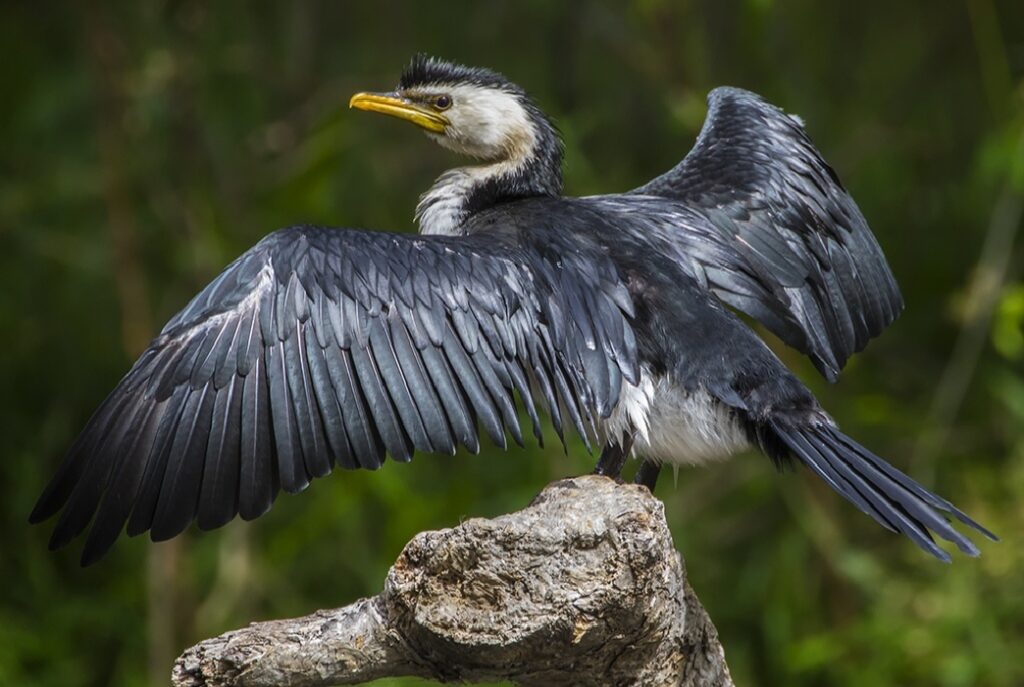
The Little Pied Cormorant is a common sight around inland lakes, rivers, and even urban wetlands. It’s easily recognised by its striking black and white plumage — a small, elegant bird with a bit of attitude. It tends to hunt alone, often floating quietly before diving for small fish or aquatic insects. Their versatility has allowed them to thrive in a wide range of habitats, from city parks to remote bush billabongs.
Little Black Cormorant (Phalacrocorax sulcirostris)
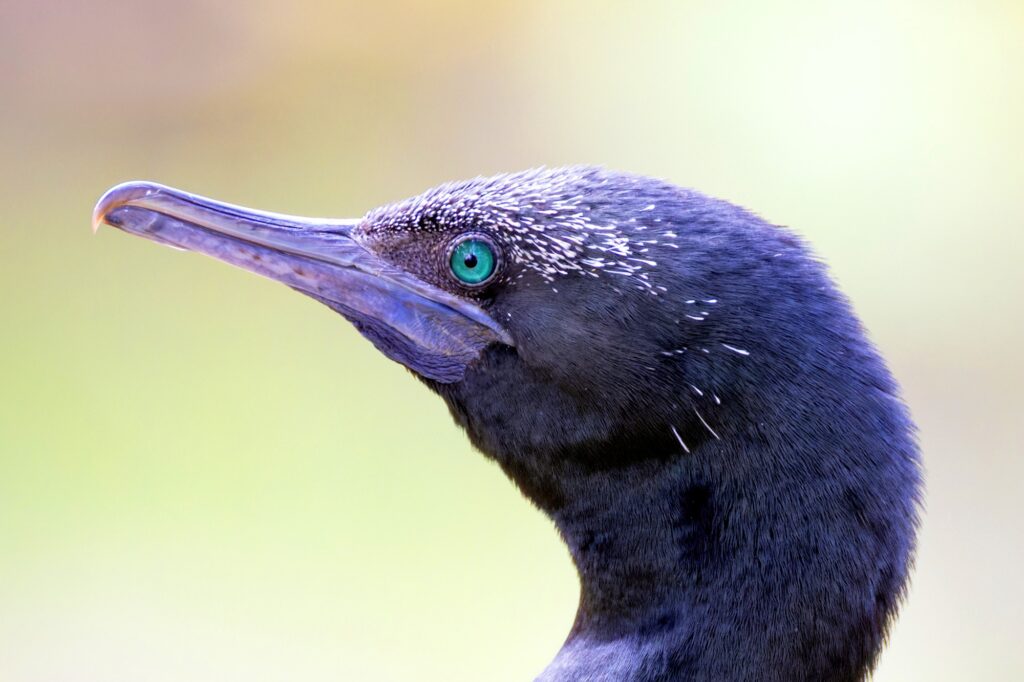
Sleek and uniformly black, the Little Black Cormorant is often seen in large flocks, especially on inland freshwater bodies. When they gather in numbers, the spectacle of synchronised diving is something to behold. Their social nature sets them apart from the more solitary species, and they’re often found roosting together in long lines on tree branches or rocks near water. Adult birds have an incredible eye colour — a vivid turquoise blue — which contrasts beautifully against their glossy black feathers and really stands out in good light.
Pied Cormorant (Phalacrocorax varius)
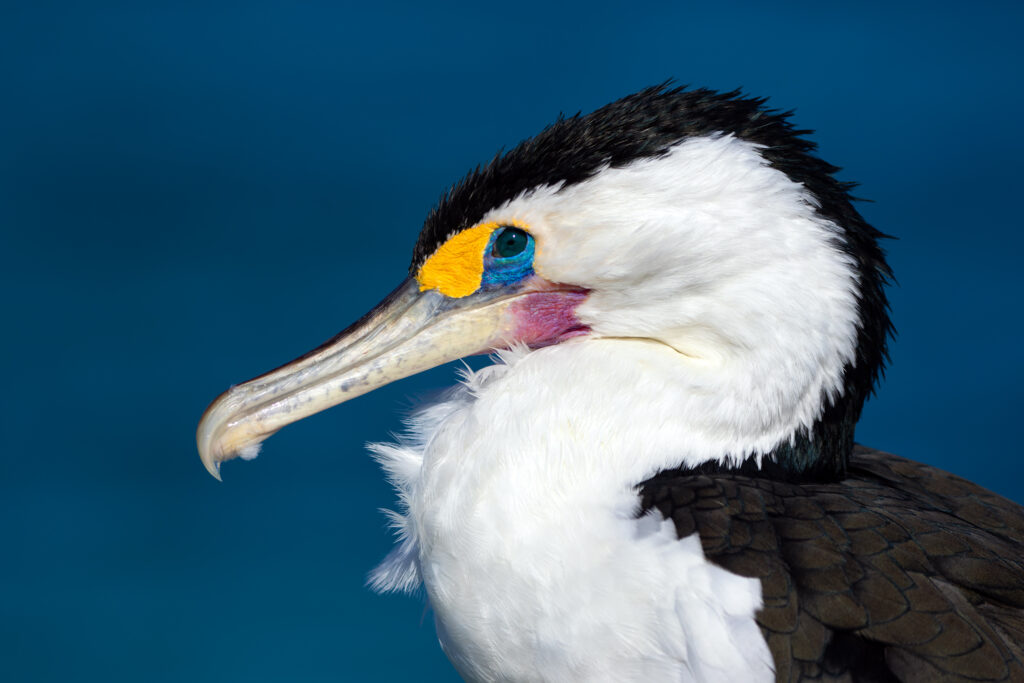
The Pied Cormorant is one of Australia’s more striking waterbirds, with bold black-and-white plumage and a strong, yellow-orange facial patch that stands out against its pale face. Larger than the Little Pied but smaller than the Great Cormorant, it’s most commonly found along the coast, especially in estuaries, bays, and sheltered inshore waters, though it does venture inland in some regions. It’s a powerful diver and often seen fishing alone or in loose groups. When perched, its bright eyes and contrasting colours make it especially photogenic — a real favourite among bird photographers. Their heavy, slightly curved bill is another good field mark to pick them out in a mixed cormorant roost. The portrait below was taken on a jetty where the bird was having a siesta. I don’t think it was possible to get any closer, so the photo is full of fine detail, and the breeding colours are simply phenomenal — with the dark blue sea perfectly complementing the scene.
Great Cormorant (Phalacrocorax carbo)
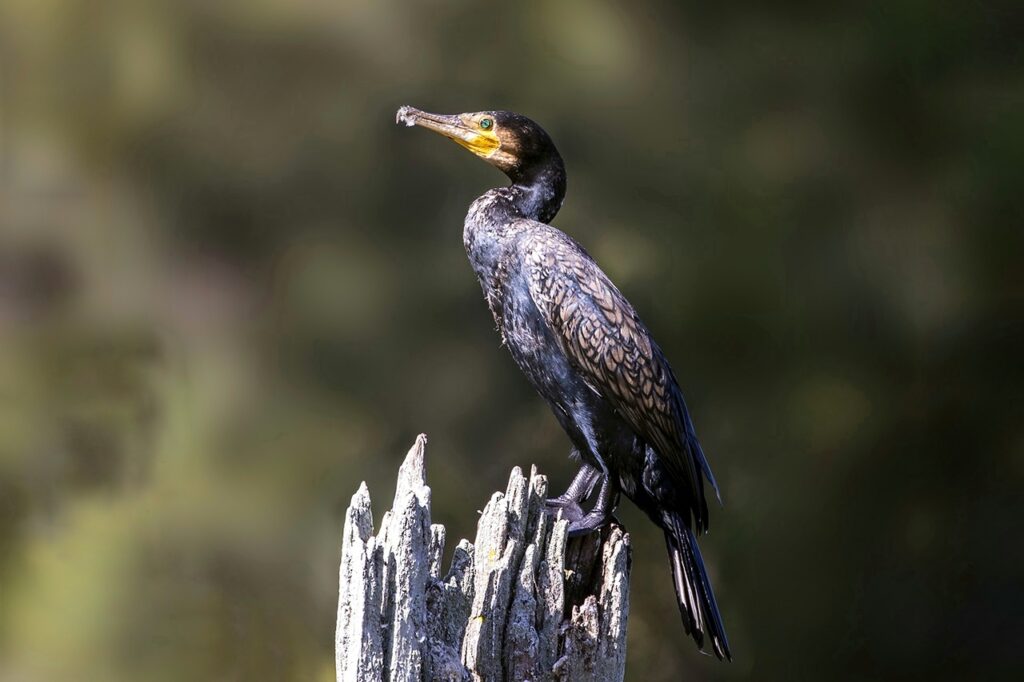
As its name suggests, the Great Cormorant is the largest of the Australian species. With its powerful build and commanding presence, it’s often found in coastal environments, though it also ventures inland. The plumage is mostly black with a distinctive white throat and yellowish facial skin. It’s a formidable hunter, capable of chasing down larger prey, and its deep, heavy flight makes it easy to pick out against the sky.
Black-faced Cormorant (Phalacrocorax fuscescens)
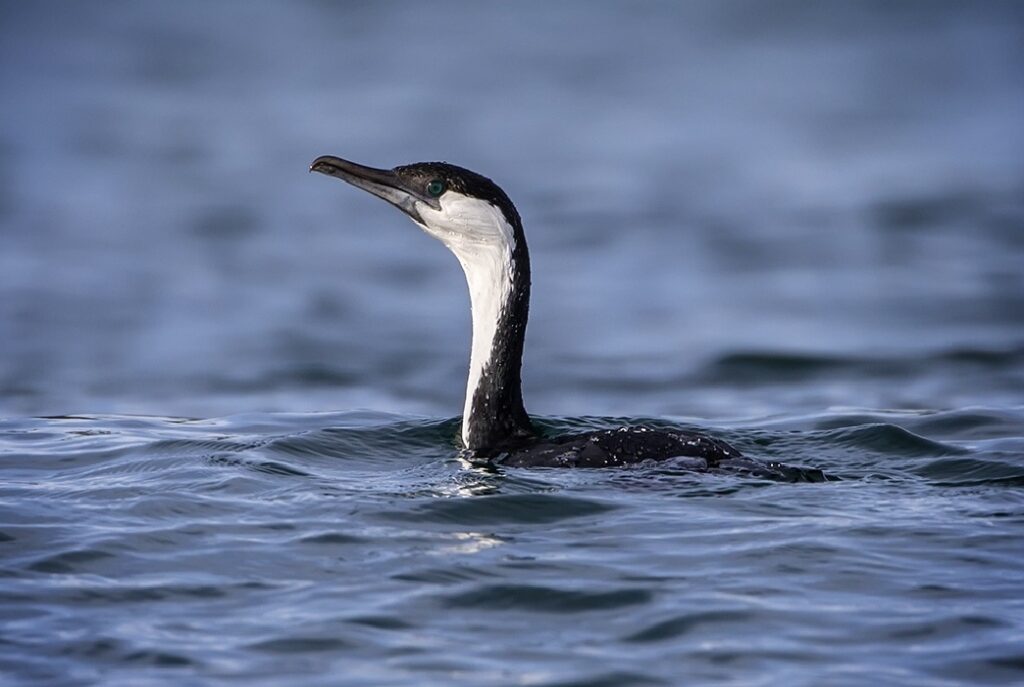
This species is a true coastal specialist, found mainly along the southern shores of Australia and Tasmania. It’s one of the more range-restricted cormorants, preferring the cold, rough waters of rocky coasts and offshore islands. The white underparts contrast sharply with its darker upper body and the characteristic black face mask. They nest in large colonies and are a bit harder to approach than their inland cousins — a reward for the more adventurous photographer.
Australasian Darter (Anhinga novaehollandiae)
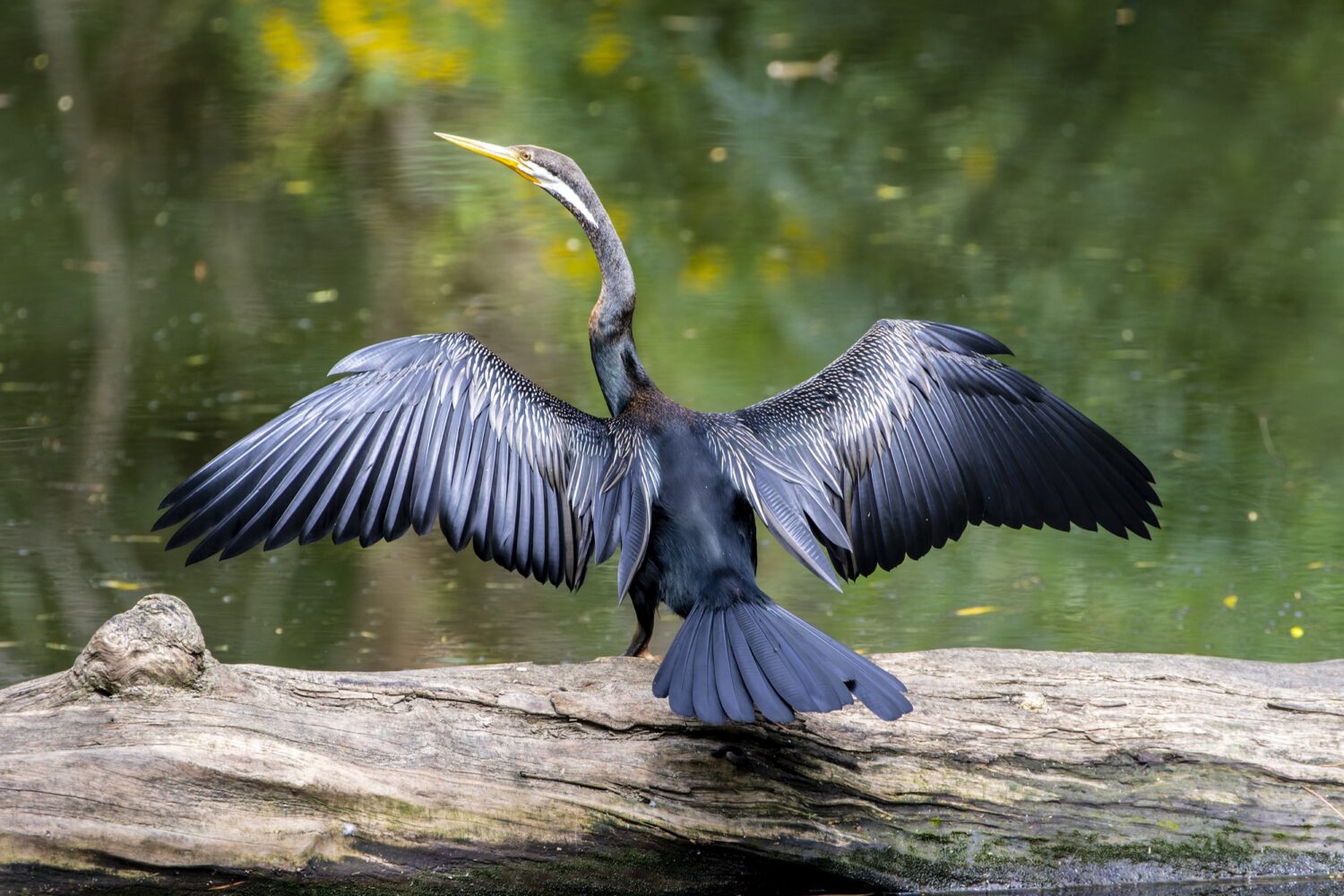
While not technically a cormorant, the Australasian Darter is closely related and often found in similar habitats. Also called the “snakebird” due to its long, slender neck and swimming style, the darter hunts with a rapid, spearing motion of its sharp bill. Its silhouette is more slender and graceful than a cormorant’s, and in flight, it shows a long tail and narrow wings. Darters also perch with wings spread, drying off after a dive, making them easy to mistake for a cormorant at first glance.
Taxonomically, darters belong to the family Anhingidae, while cormorants fall under Phalacrocoracidae. Both families sit within the order Suliformes, making them close cousins in the bird world. Their diving behaviour and general appearance are quite similar, but there are subtle differences in posture, feeding style, and anatomy that set them apart — something birders and photographers alike grow to notice with experience.
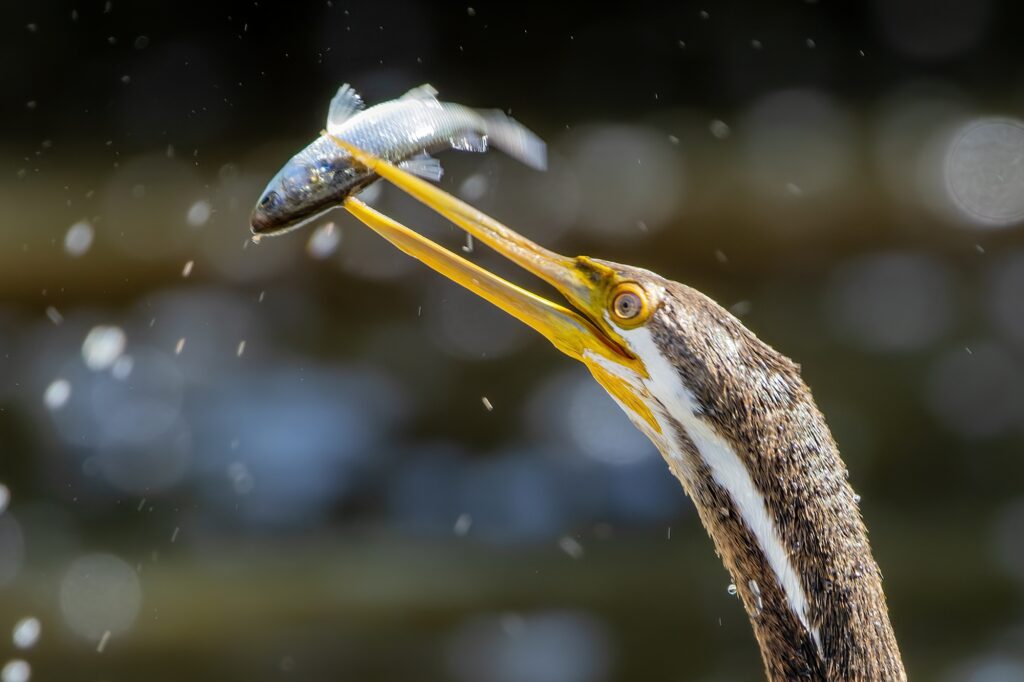
The Australasian Darter hunts by using its sharp, pointed beak to spear fish underwater. Once it emerges, it needs to skillfully manoeuvre the catch off its beak and into its mouth — a tricky feat it accomplishes by repeatedly tossing and flipping the fish in a smooth, practiced motion.
Patience, Pursuit, and Memories: My Cormorant Adventure Complete
Each of these species has challenged me in different ways — whether it was the patience needed to photograph the elusive Black-faced Cormorant on a windswept southern cliff, or the joy of finding a Great Cormorant sunning itself on a riverbank. Now that I’ve seen them all, it’s a satisfying milestone, but also a little bittersweet. There are no more cormorants left in Australia for me to “hunt” with the lens — but the photos, and the memories behind them, will always remind me of the journey.