
Discovering the Colony
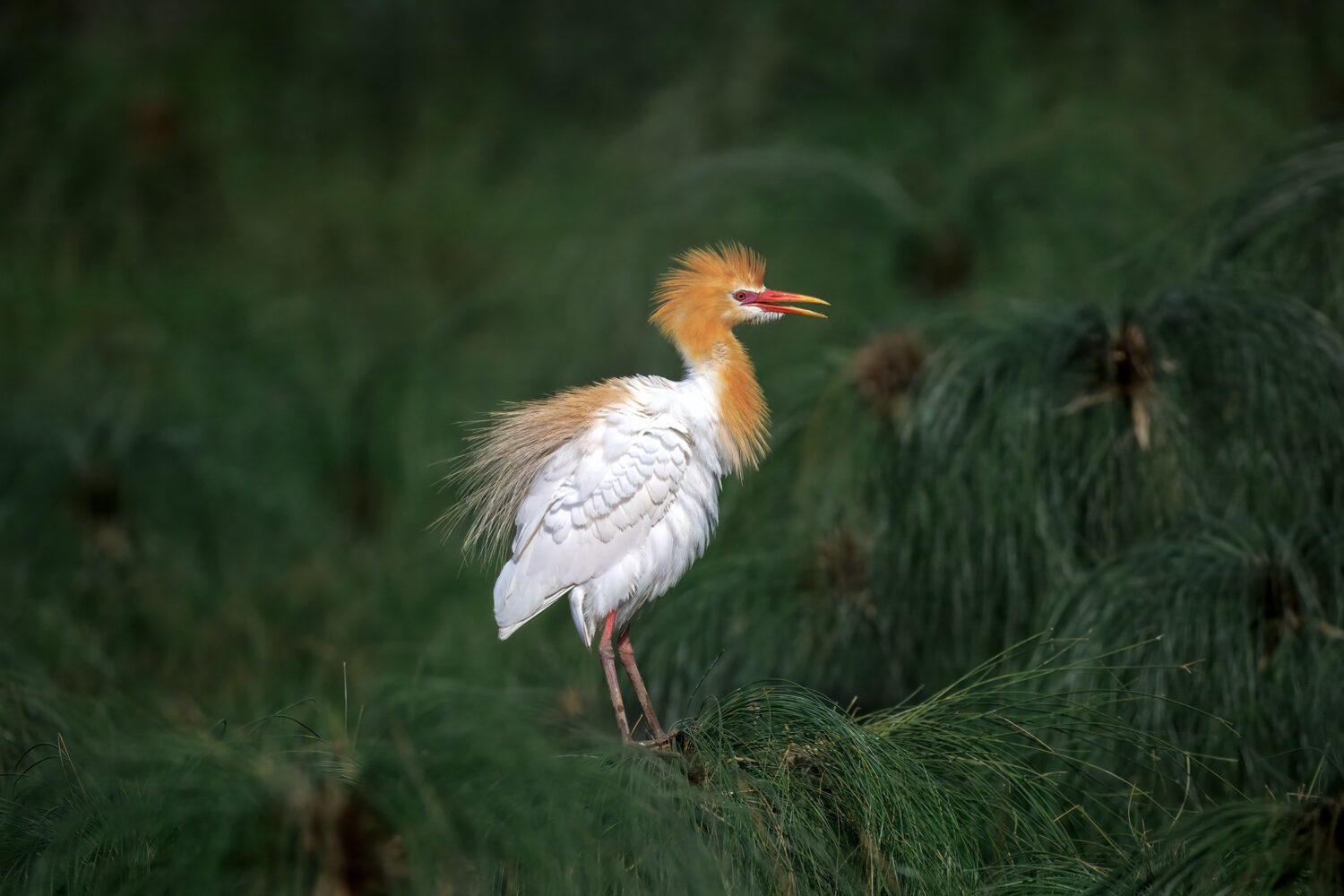
About six years ago, when I first discovered a cattle egret colony nesting in papyrus right next to my house, I saw a rare opportunity. With such close access, I decided to focus on photographing the birds in their breeding blush—the reddish or pinkish coloration that appears on certain parts of the plumage during the breeding season.
First Attempts at the Breeding Blush
This colouring typically develops on the face, throat and breast of males, and occasionally females, though it is most pronounced in males. One image from that first year became my strongest photograph of the species. You can find it in the story linked here.
Learning About the Lilac Phase
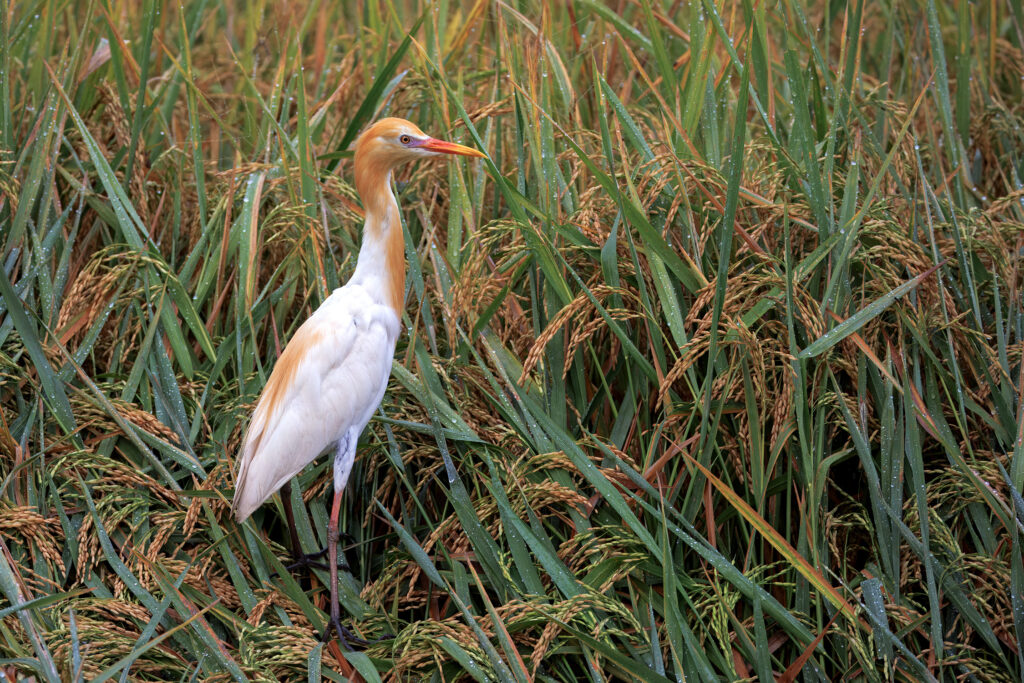
What I later learned, however, was that cattle egrets can display an even more striking and fleeting plumage condition. At the peak of the breeding season, the base of the bill, lores, orbital rings, and eyes can turn a vivid lilac-blue. These colours may last only a few days, making the condition rare and difficult to photograph. “Challenge accepted,” I thought, already beginning to mentally frame it as a photographic project.
Missing the Moment
I made annual attempts to observe the egrets, but it took a couple of years to realise that I was consistently missing this brief window and needed to begin my observations much earlier.
At the end of 2025, I returned to the egret colony with renewed determination.
Gaining Access to the Canopy
As the years passed, the papyrus grew ever taller, and my original method—using a three-metre A-frame ladder to reach the top of the colony—was no longer workable. A five-metre ladder was now required, and the only practical option was to lean it against a nearby tree.
I visited the site both in the morning and afternoon to study the direction and quality of light, eventually narrowing my options to several suitable trees. This is what the setup looked like. The position gave me access to the canopy and clear views into the daily life of the colony.
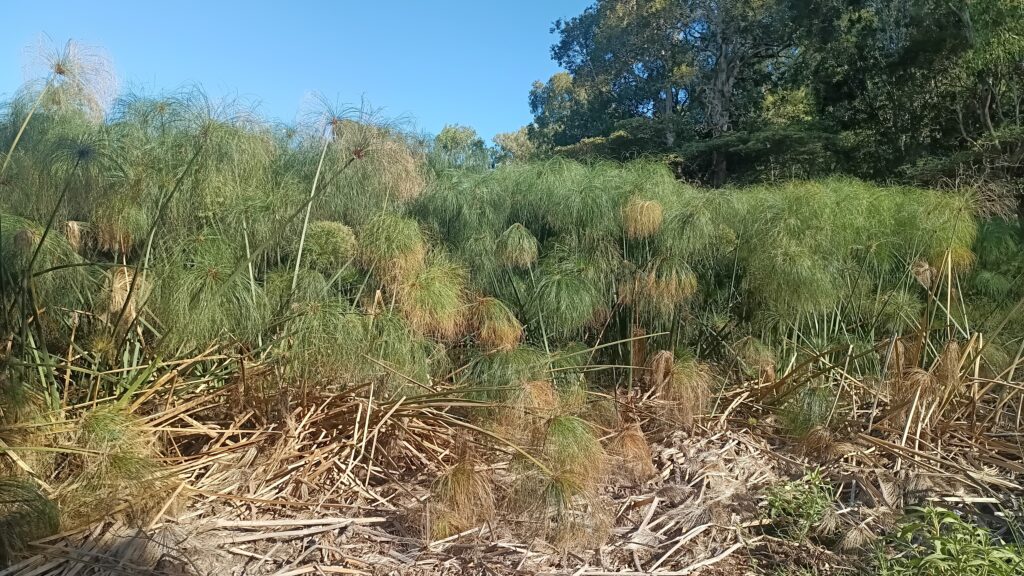
Papyrus plantation
This is what it looked like from the outside. No sign of egrets!
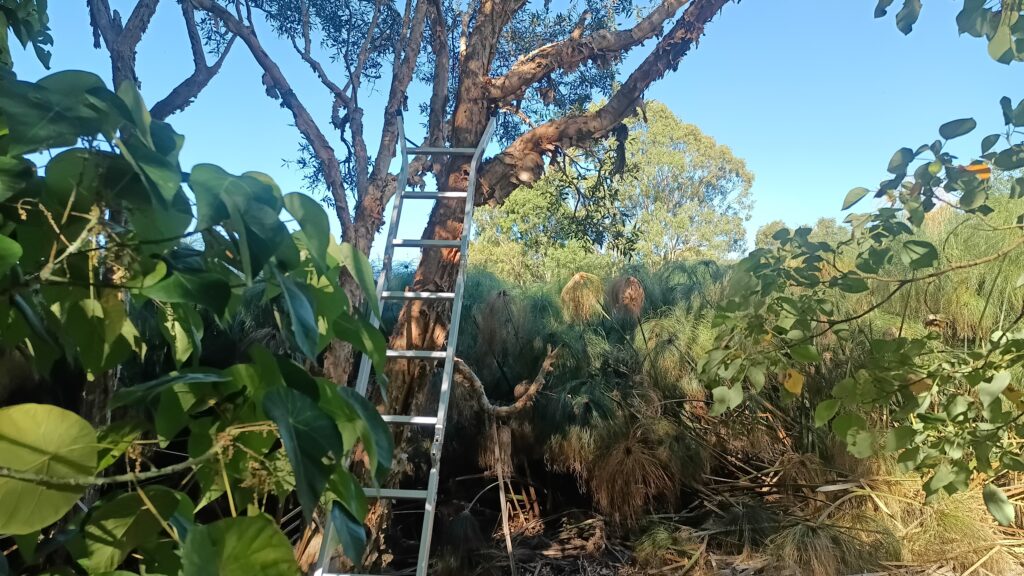
My setup
This is how I was spending best time of my day.
A Colony at Many Stages
It soon became apparent that the birds were at very different stages of breeding. Some were mating, while others already had chicks begging for food. As a result, some birds were only just developing breeding plumage, while others were likely already moulting. It is possible that this staggered breeding reflects an adaptive strategy, potentially reducing the risk of losing the entire breeding season to a single catastrophic event, such as a cyclone or other environmental disturbance.
Patience in the Field
At any given day, I could usually see only a single bird that matched my criteria—and because individuals didn’t remain in the colony continuously, this involved a lot of waiting.
Success at Last
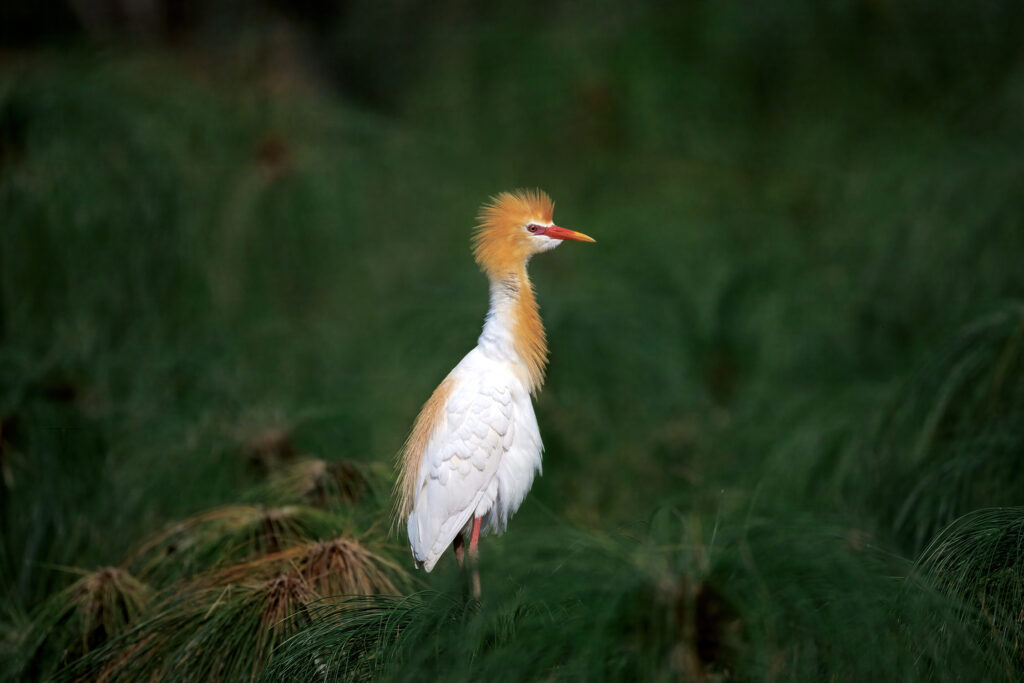
This time, I spent almost every morning in the tree for several weeks, from late December through to February. I’m happy to report that I believe I achieved my goal. I managed to find several birds showing the lilac-blue colouration I was hoping for.
An Unexpected International Chapter
Interestingly, I also encountered a couple of particularly bright individuals while photographing in Indonesia, turning this project into an unexpectedly international one. Below are the results of my efforts.
What Influences the Colouration
While working on this series, I also learned that this colouration is not only extremely short-lived, but can vary greatly depending on diet, environment and the hormonal condition of each individual bird. In some cases, it may be subtle—or entirely absent.
Looking Ahead
I’ll continue observing this colony in the hope that one day I’ll photograph an even brighter individual.
Your Experiences in the Field
Let me know in the comments below — have you had any luck photographing lilac cattle egrets? Have you ever seen them an even brighter blue?


Leave a Reply to Brian Russell Cancel reply