
While I set out with a single goal — to photograph the lilac hues of breeding cattle egrets — it quickly became clear that I was witnessing something far richer. The scenes unfolding around me offered enough material for an entire project: a visual record of the full life cycle of the cattle egret.
The cattle egret (Bubulcus ibis) is a migratory bird best known for its close association with livestock. It is often seen following cattle and other grazing animals, capitalising on insects disturbed by their movement. What follows is an overview of its remarkable life cycle, much of which I was fortunate enough to observe firsthand.
1. Egg Stage
- Breeding:
Cattle egrets typically breed in large colonies, nesting in trees, shrubs or reed beds, usually close to water. In Australia, breeding often coincides with the wet season, when food is abundant.
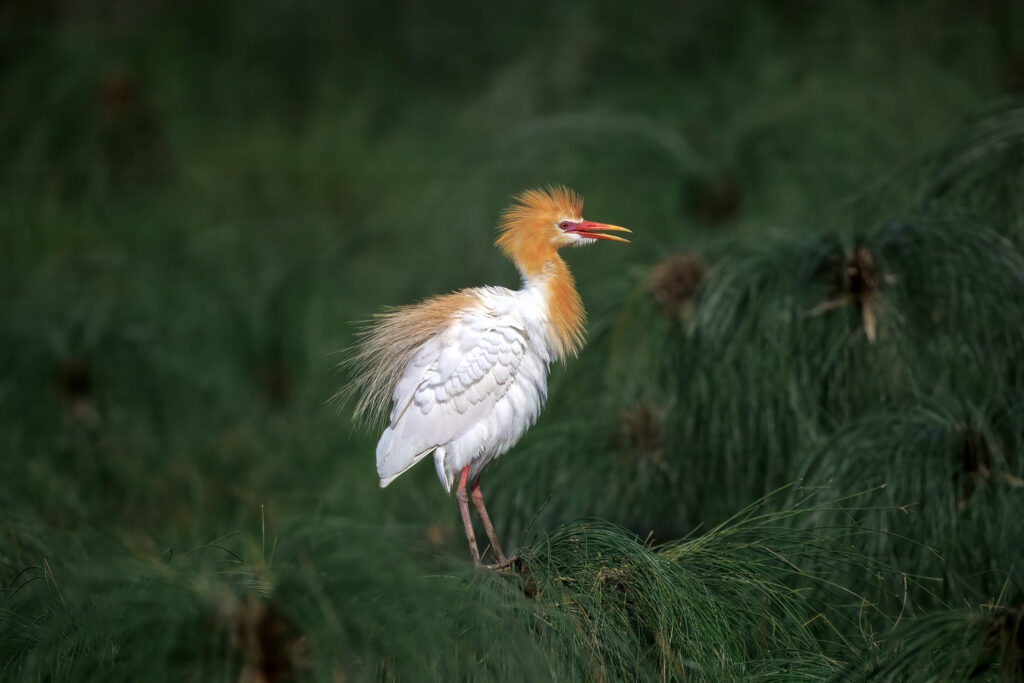
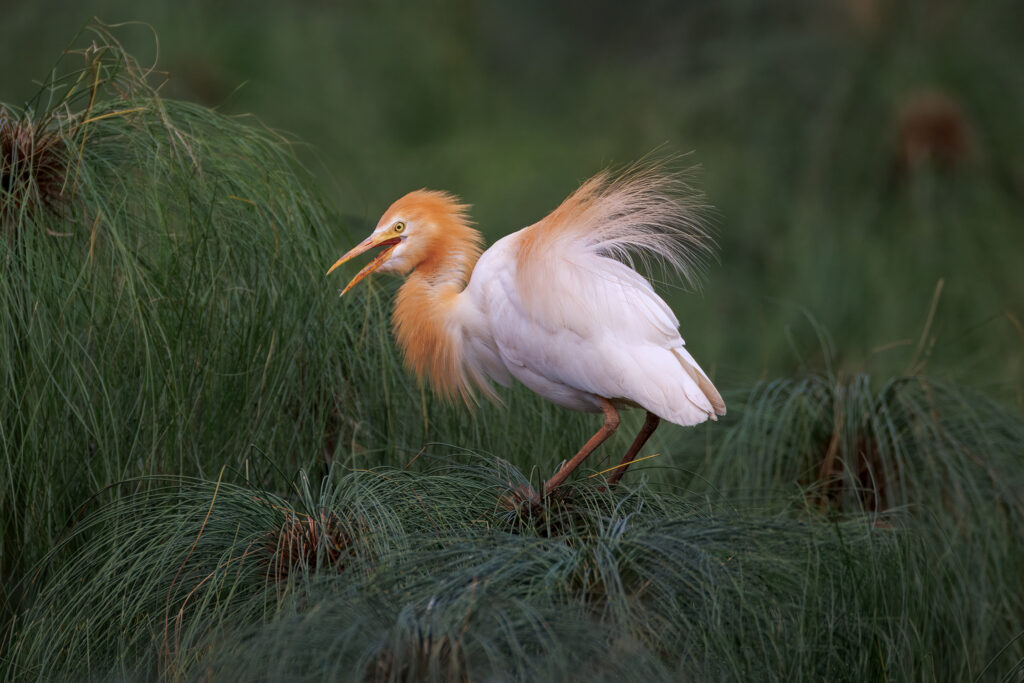
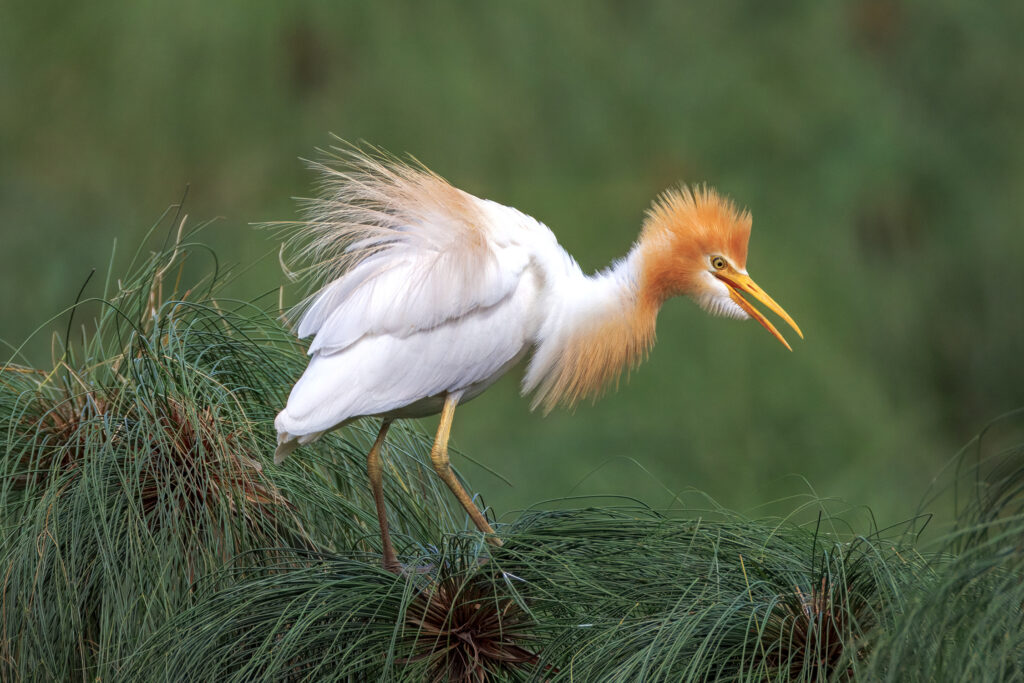
During the breeding season, cattle egrets undergo a dramatic transformation. Their usually understated white plumage is enlivened by soft lilac tones, while long plumes on the head, neck and back are raised and fluffed during elaborate courtship displays. At times, the birds resemble miniature birds-of-paradise, posturing and preening as they advertise their fitness to potential mates.
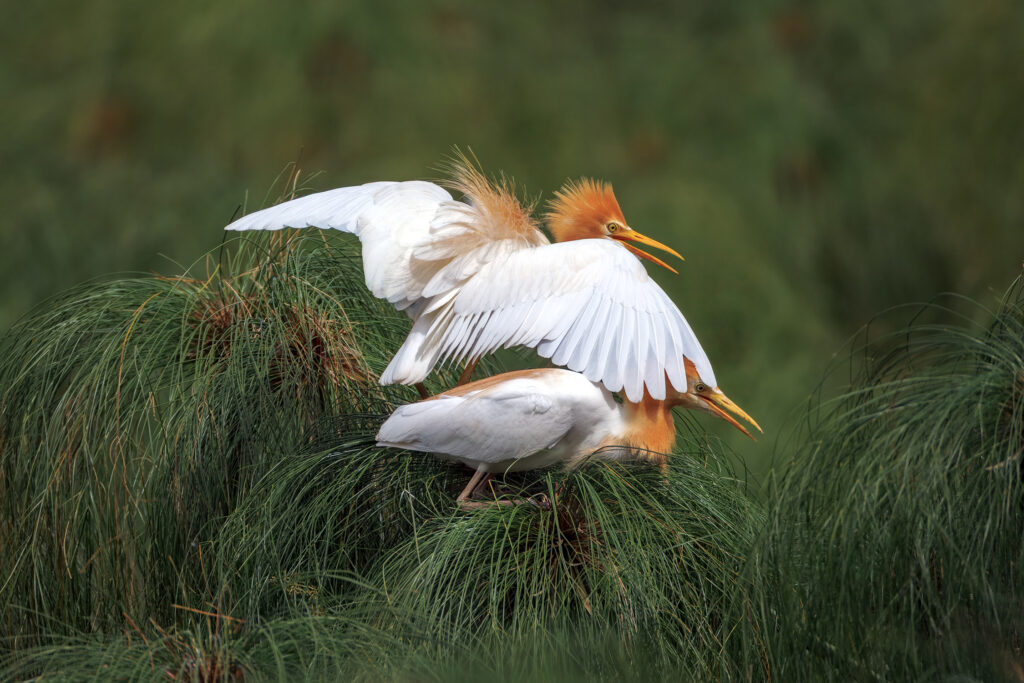
These displays are followed by brief but decisive mating interactions, often taking place on the nesting platform or nearby branches. Though the act itself is quick, it marks the beginning of a tightly coordinated partnership, with both birds sharing nesting, incubation and chick-rearing duties.
- Eggs:
The female lays between two and five eggs per clutch. The eggs are typically pale blue to greenish in colour. - Incubation:
Both parents share incubation duties, taking turns on the nest. This stage lasts around 21–25 days before the chicks hatch.
Although the chicks were never visible from my vantage point, concealed deep within the nests, their voices carried far. Their insistent begging transformed the colony into a constant chorus long before any young birds could be seen.
2. Chick Stage
- Hatching:
Newly hatched chicks are blind and covered in soft down. Completely dependent on their parents, they rely on them for warmth, protection and food. - Feeding:
Adults feed their young a steady diet of insects, small vertebrates and other invertebrates gathered while foraging.
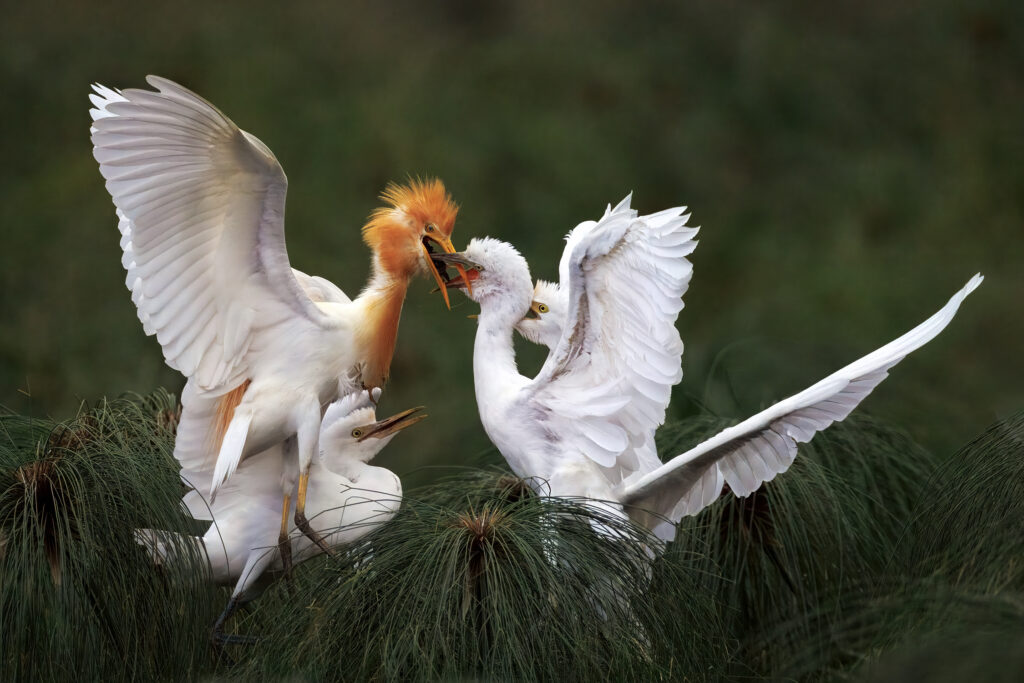
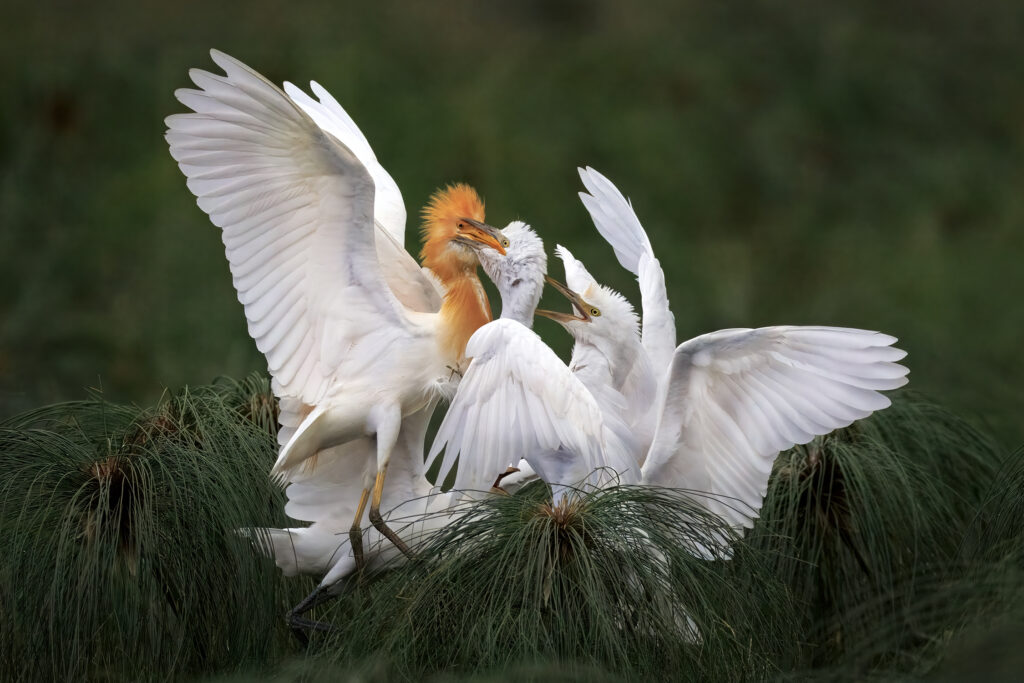
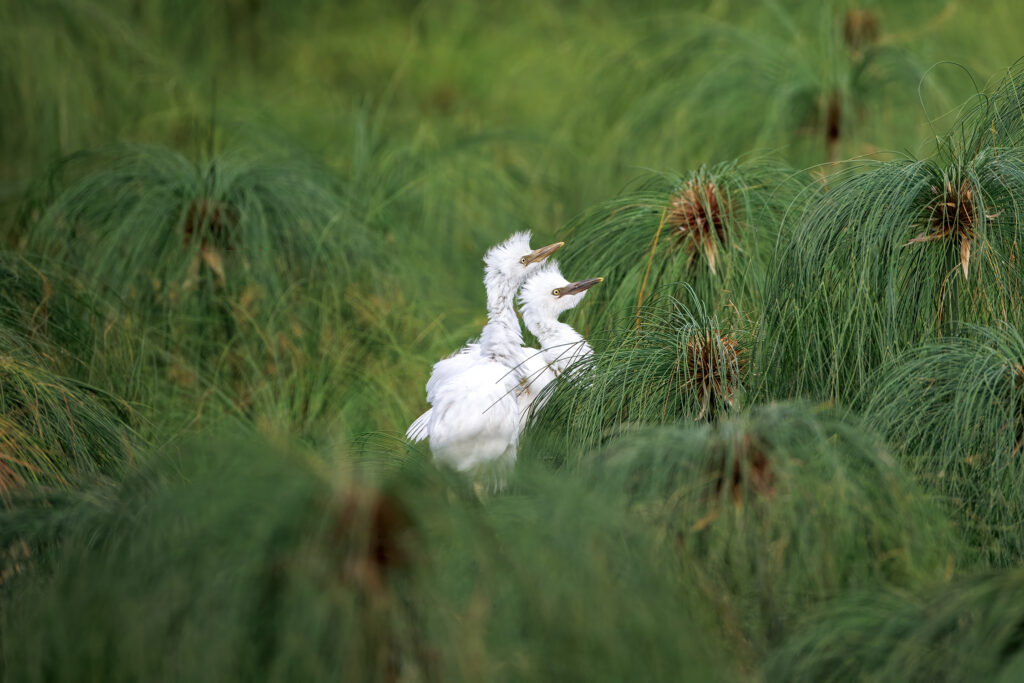
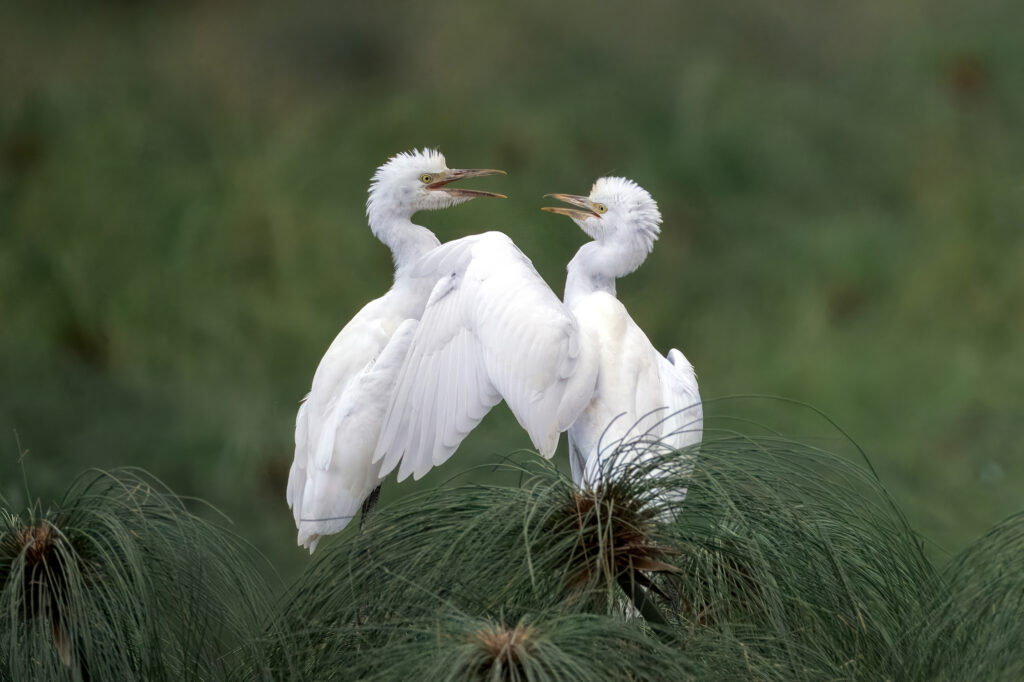
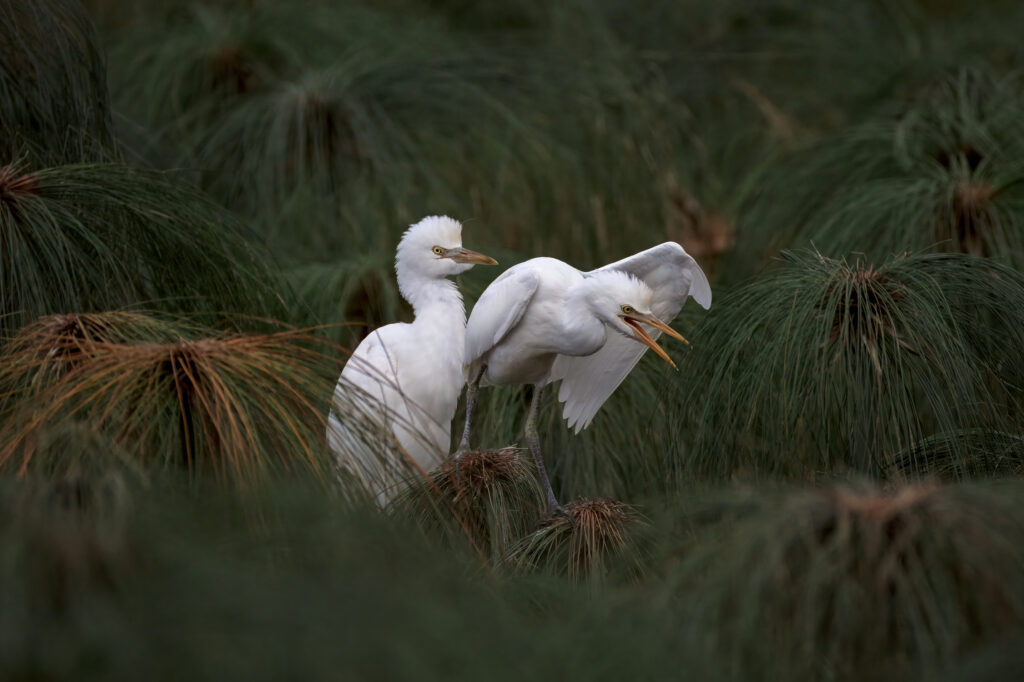
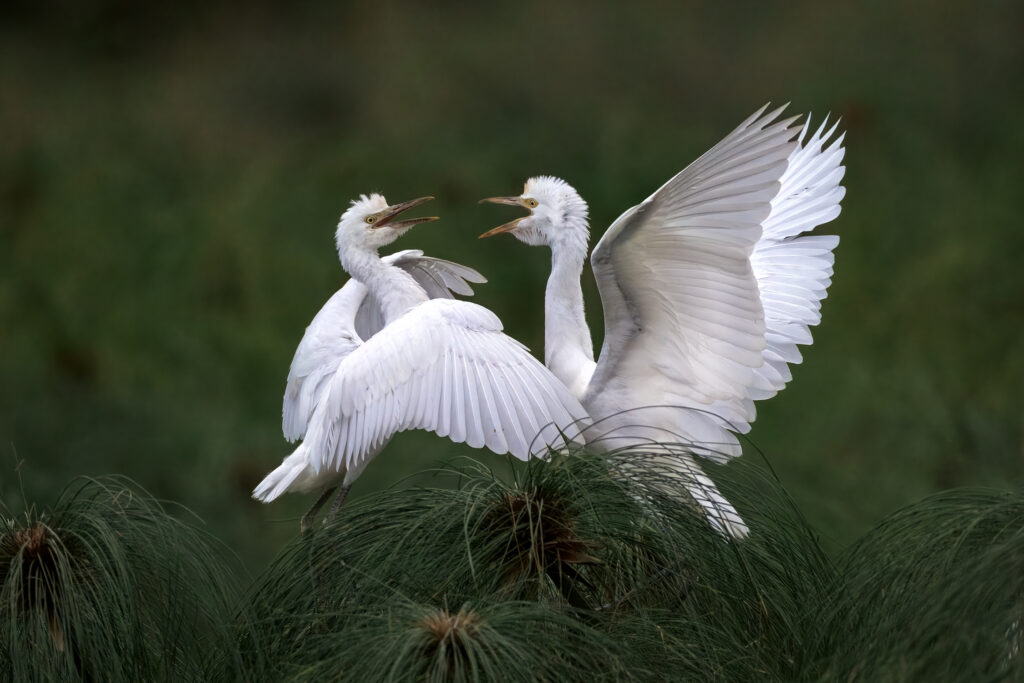
The colony I observed raised an estimated 25–30 chicks this season. Families ranged from one to three chicks, and the more mouths to feed, the more chaotic the process became. To receive food, a chick must grasp an adult’s beak — no easy task when the nest is perched on papyrus. Unlike sturdy tree branches, papyrus offers little stability. Picture one bird struggling to balance, then add two squabbling chicks lunging for food. In one case, a parent with three hungry offsprings made a hasty retreat when the situation became untenable.
- Growth:
Over the next three to four weeks, the chicks grow rapidly. Their eyes open, feathers develop, and they become increasingly active within the nest.
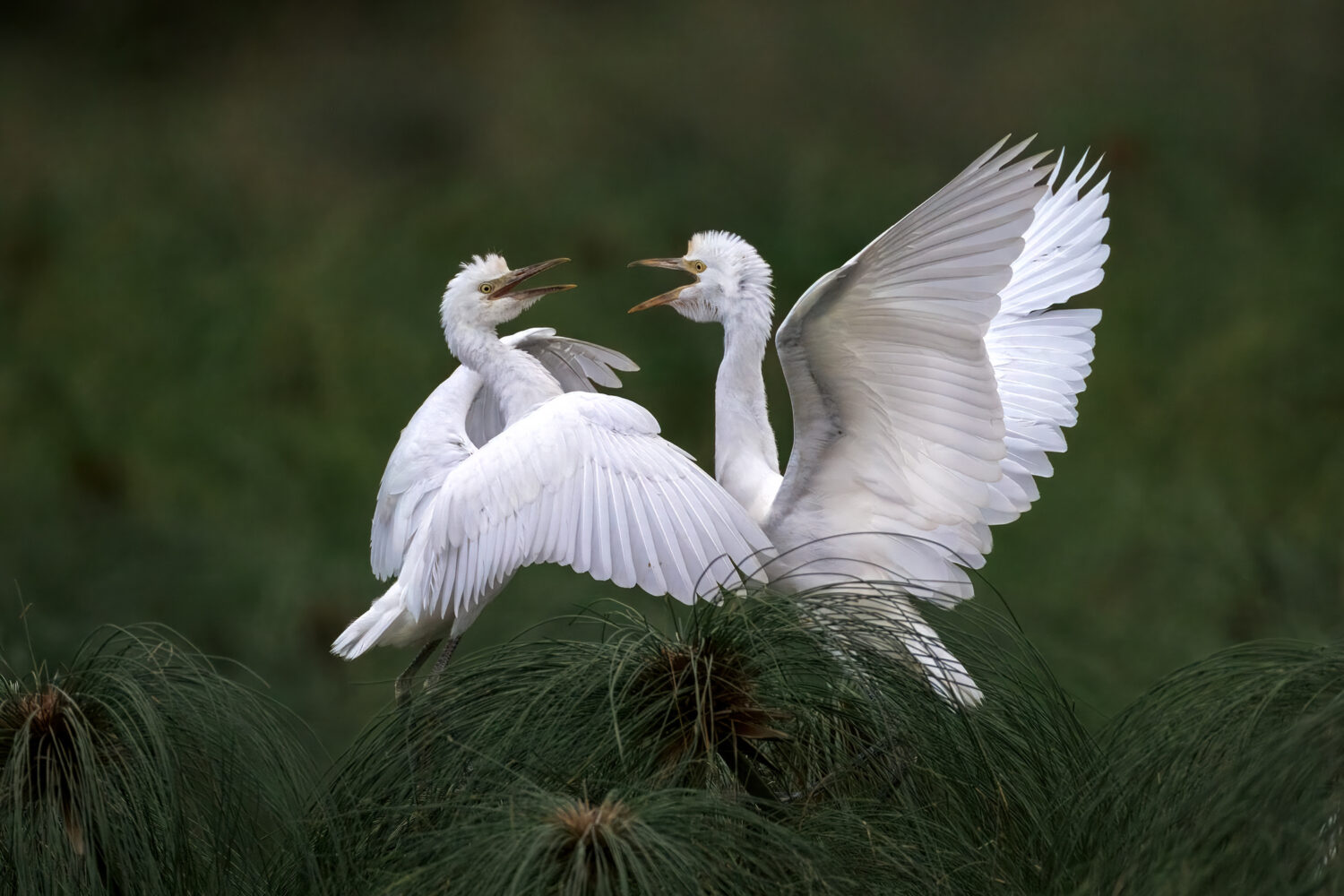
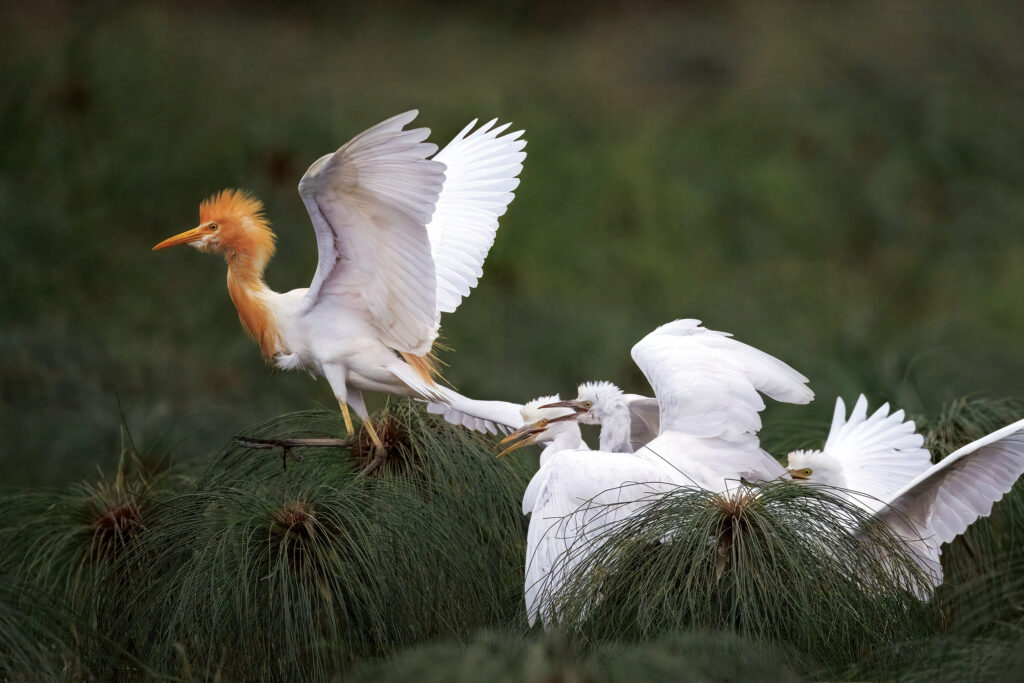
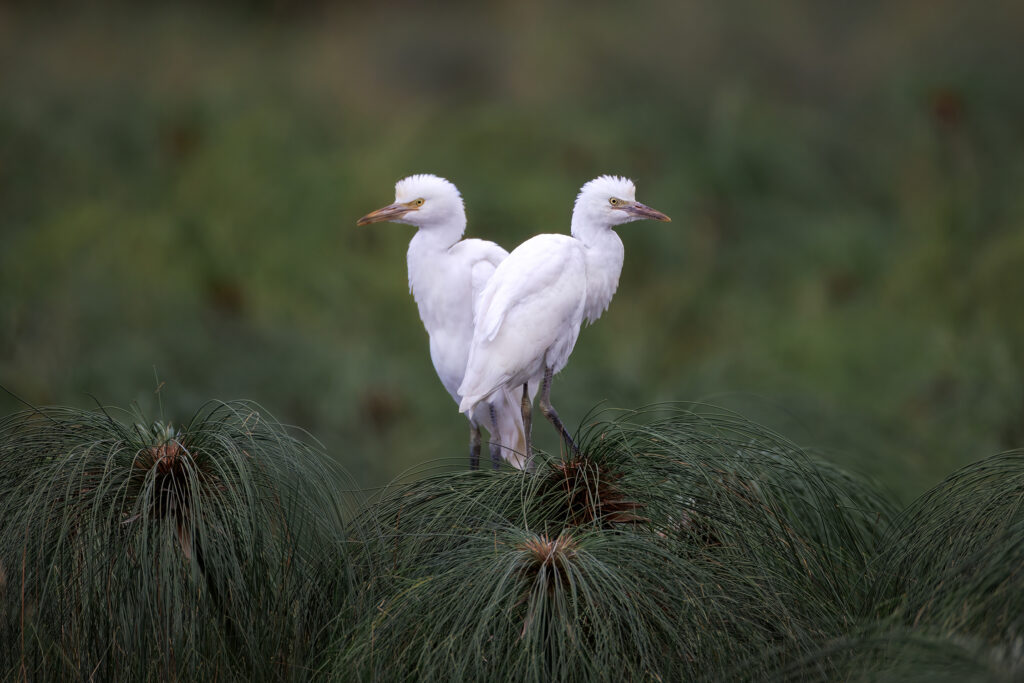
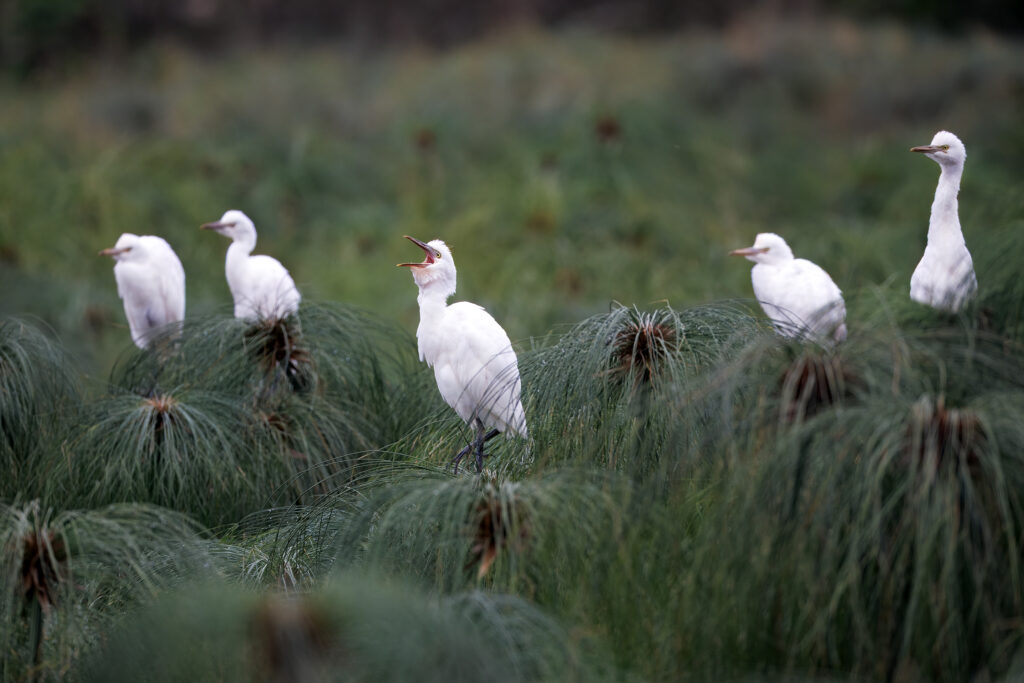
Once they are large enough to hop from one papyrus stalk to the next, the chicks begin venturing out while waiting to be fed. And there is plenty of waiting involved. This downtime gives siblings ample opportunity to play, squabble, preen and occasionally irritate one another.
- Fledging:
At around four to five weeks of age, young egrets take their first flights. Even then, they may continue to rely on their parents for food and guidance.
3. Juvenile Stage
- Independence:
After fledging, juveniles gradually learn to forage on their own, often shadowing adults as they refine their skills. - Social structure:
Young cattle egrets tend to remain in family groups or loose colonies, benefiting from safety in numbers. - Maturation:
By about six months, juveniles reach full physical size. Their adult white plumage, often with subtle yellowish tones, develops around this time.
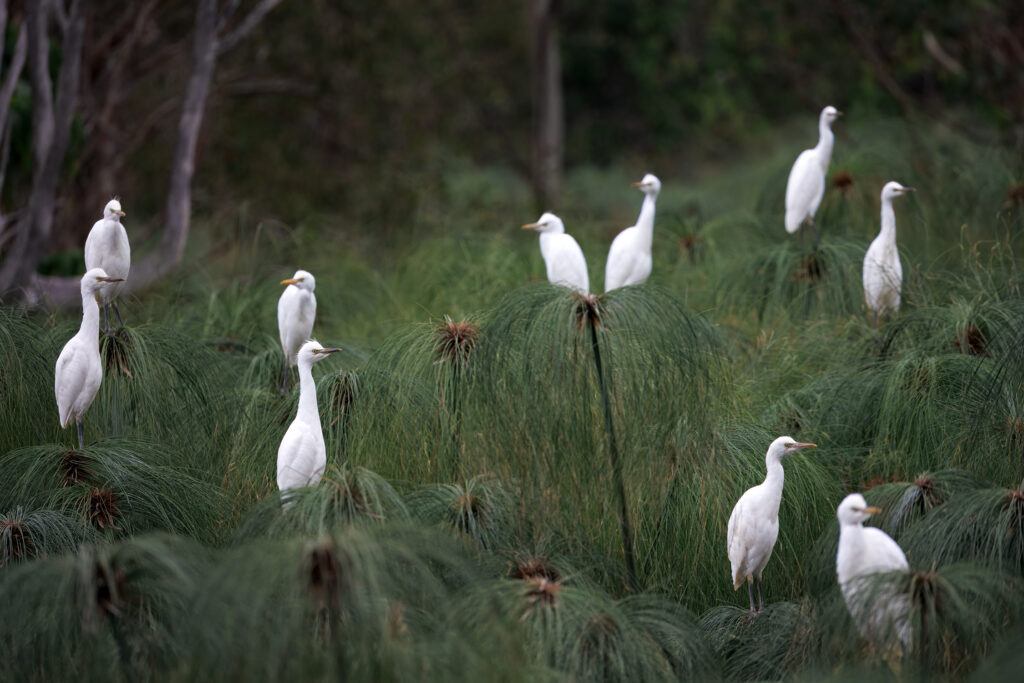
As the weeks passed, I noticed a fascinating shift within the colony. More and more young birds were waiting outside their nests for their parents, while the adults’ vibrant breeding colours began to fade. At this stage, the most reliable distinguishing feature was the beak: adults sported yellow beaks, while juveniles retained black ones. Can you spot the adult bird in the image below?
4. Adult Stage
- Breeding:
At roughly one year of age, cattle egrets are ready to breed. During the breeding season, adults — particularly males — once again develop striking yellow to orange colouring on the head, neck and back, standing in vivid contrast to their white plumage. And so the cycle repeats. - Lifespan:
In the wild, cattle egrets can live for 10–15 years, though many face threats from predation and increasing human pressures.


Leave a Reply