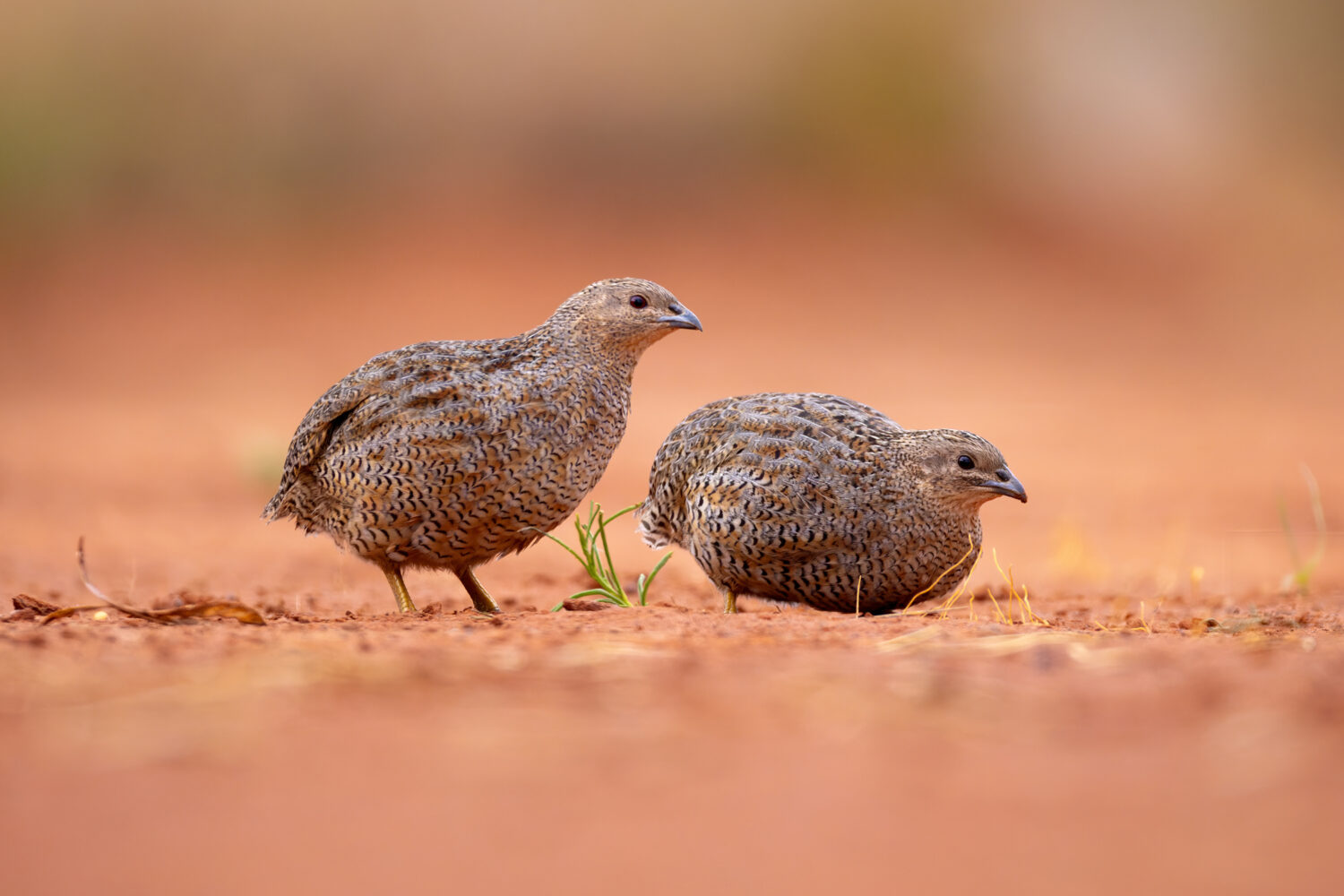
Funny Facts About Brown Quail
- The “Hop-and-Sprint” Dance. Brown Quails don’t really fly much—they prefer to “run” for cover. But when they do decide to take to the air, it’s more of a comical, short burst of flight. Imagine a chicken trying to take off—it’s more of a “hop-and-sprint” move than a graceful glide. Yet, despite their awkward takeoff, they can cover quite a distance in that short burst.
- Master of the Stealth Mode. These quails have perfected the art of stealth. When threatened, they will often freeze in place, blending seamlessly into the undergrowth, almost like they’ve mastered the ninja technique of “if I can’t see you, you can’t see me.” It’s uncanny how well they can hide in plain sight. You might think they’re just a pile of leaves until one suddenly hops up with a “surprise, I’ve been here all along!” moment.
- Social Media Stars in the Making. If Brown Quails had Instagram, their feed would be full of selfies from the grass. They’re very social birds and love to hang out in groups, often interacting with each other like a quirky, little bird gang. You might catch them in the wild, huddling together in a “circle of trust” or squabbling over snacks like they’re competing for the last chip at a party.
- The “Peekaboo” Master. Brown Quails love to play peekaboo. Their heads bobbing up and down over small mounds or tall grass is like the bird version of playing hide-and-seek. If you’re lucky enough to catch one of these curious little creatures peering out at you, it feels like you’re the subject of their secret wildlife game.
The Elusive Quail
Photographing quails is no easy task. These birds are masters of stealth—rarely flying, and instead quietly moving through dense vegetation, almost invisible to the eye. If they spot you first, they freeze in place, blending seamlessly into their surroundings and making them incredibly hard to detect. More often than not, they explode into flight from right under my feet just as I’m about to step on them. After a short, noisy burst through the air, they land again and vanish into the grass, sprinting away before I can even raise my camera.
Missed Shots and Blurry Backsides
Capturing photos of quails—especially the rarer species—often comes down to instinct, luck, and a bit of pre-planning. My usual method involves pre-focusing about 20 metres ahead and firing from the hip the moment they flush. As you might imagine, this approach typically results in shots of blurry backsides disappearing into the distance. Not exactly a gallery-worthy result—but sometimes it’s all you get.
They Came to Me
But on the day I captured the following images, something truly special happened. I first spotted a small group of Brown Quails wandering toward me from about 50 metres away. Without hesitation, I dropped to the ground, hoping to become just another lump in the landscape. To my amazement, the quails kept coming. They were busy doing their little bird business—picking at the ground, socialising, and seemingly unaware of my presence.
Hidden in Plain Sight
Lying there, completely still, I found myself with a front-row seat to their natural world. They interacted with each other calmly and casually, behaving as if I wasn’t there at all. It was the kind of moment every wildlife photographer hopes for—when your presence goes unnoticed, and the animals simply live their lives around you.
Quail Romance Unfolds
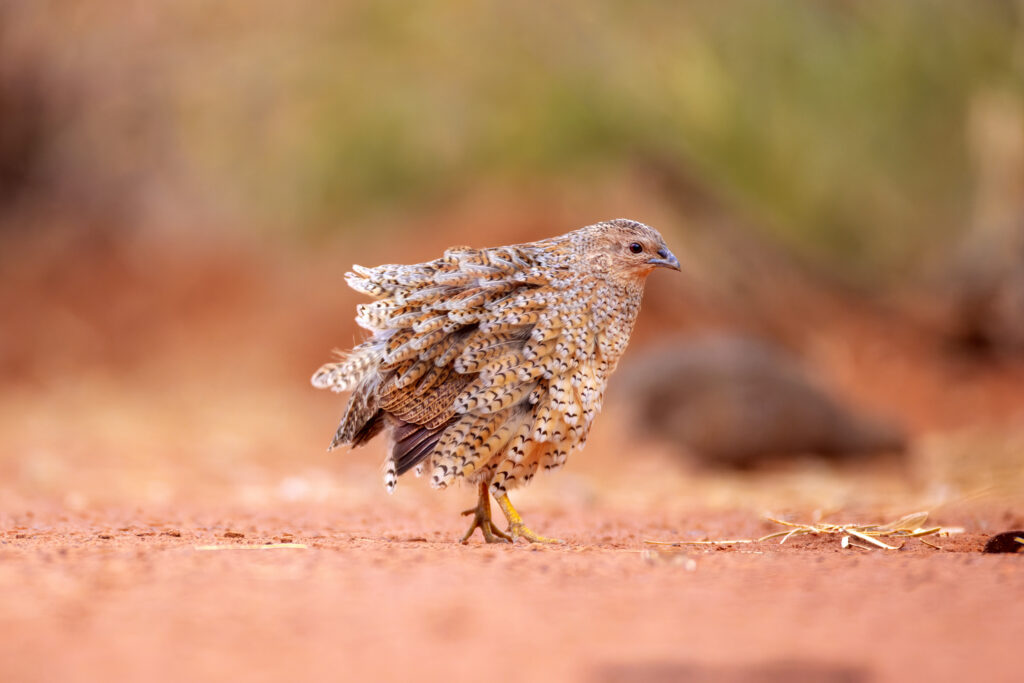
Then, something even more extraordinary happened. One of the males fluffed up his feathers and began a hilarious little performance—stomping rapidly in place and inching his way toward a nearby female. His antics were accompanied by soft, rhythmic calls. It was a Brown Quail’s mating display, and I was lucky enough to witness it from just metres away.
The image below captures the moment: a fluffed-up, determined male in the foreground, with the outline of the unimpressed female watching from the background. A quirky, rare scene from the secret lives of these shy birds.
Just Out of Focus
But the encounter didn’t end there. The group continued its slow, deliberate march toward me until they were only about 10 metres away… and still coming. Eventually, they wandered so close they were inside the minimum focusing distance of my lens—just four metres. At that point, I couldn’t shoot anymore without backing up, which I didn’t want to risk.
So I did the only thing that felt right—I slowly lowered my camera and watched.
Eye to Eye with Quails
By now, the birds had clearly noticed me. But instead of panicking, they did something completely unexpected—they climbed a small rise just in front of me and started peering at me with their quirky little heads. One by one, they popped up over the mound, tilting their heads side to side with what looked like genuine curiosity.
I nearly laughed out loud. The situation was so surreal, I even found myself gently nudging my lens forward, trying to coax them back into focus range—like that would work! But the quails had other plans.
Gone Like Ghosts
After a brief but thoughtful inspection of the strange human in the grass, the little family turned and sprinted off into the vegetation with astonishing speed and precision. In the blink of an eye, they were gone—vanished back into the wild as quickly as they had appeared.
A Memory to Keep Forever
Moments like these are what make wildlife photography so endlessly rewarding. It’s not always about the perfect photo. Sometimes, it’s about the connection—the shared moment, however brief, between you and the animal. This encounter is now one of those treasured memories I’ll carry with me forever.
Your Turn!
Have you ever had a surprising or magical wildlife encounter like this? I’d love to hear your stories—feel free to share them in the comments below!