Fascinating Facts About Sundews
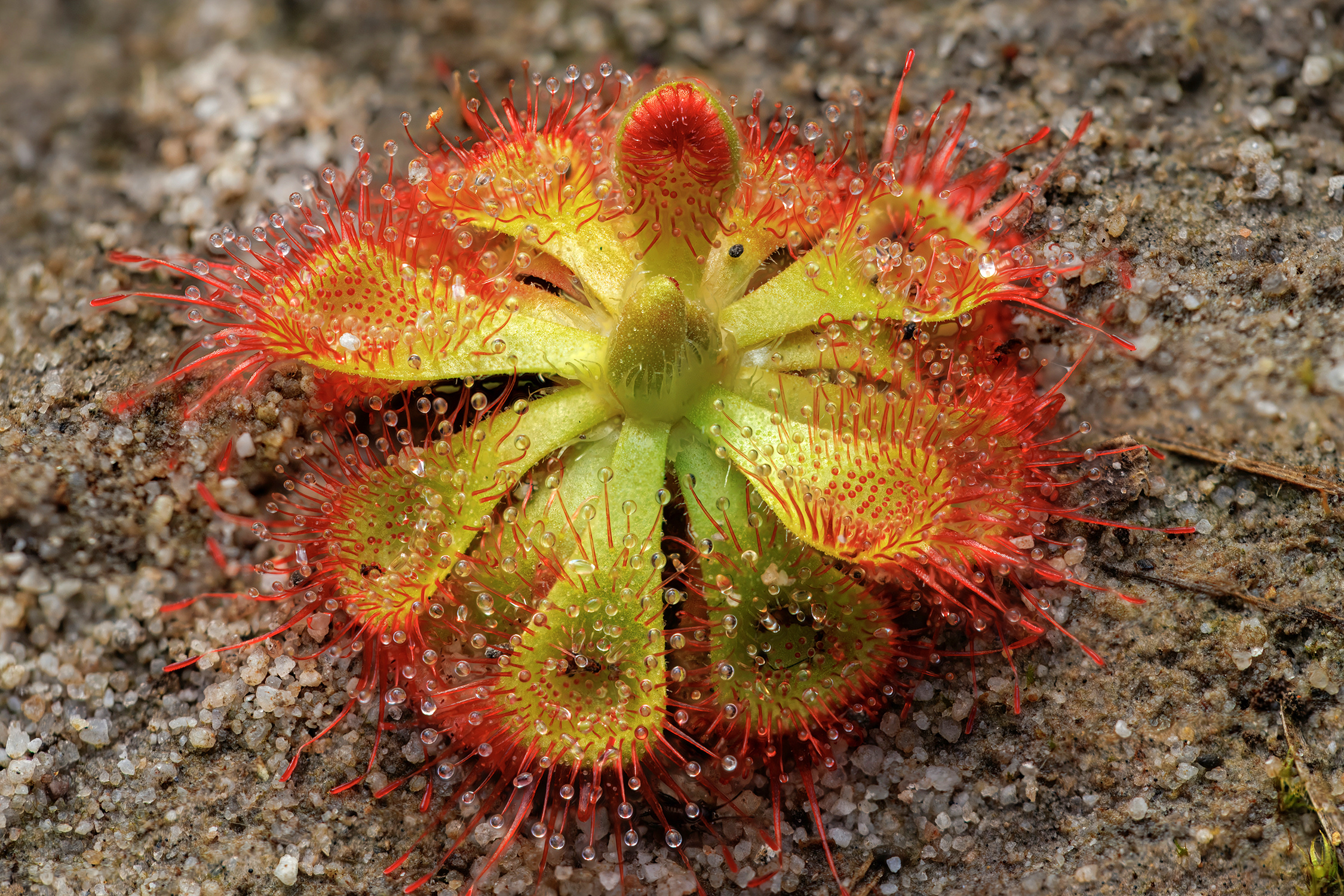
Sundews (genus Drosera) are some of the most intriguing and otherworldly plants found in Australia’s wild places. These carnivorous plants have evolved sticky, glistening leaves covered in glandular hairs tipped with mucilage — what looks like morning dew is actually a cunning trap. This “dew” lures insects in, only for them to become stuck and digested by the plant for essential nutrients, particularly in the nutrient-poor soils where sundews often grow.
Australia is home to the greatest diversity of sundews anywhere in the world, with over 100 native species. They range in form from tiny ground-huggers to taller, upright varieties, often hiding in plain sight among grasses and heathland.
Tiny But Deadly: Why I Turned My Lens on Sundews
Since adding a macro lens to my kit, I’ve been drawn to subjects that are both small and unique — and sundews tick both boxes in spades. But finding them? That was another story entirely.
After some local research, I came across a report mentioning that sundews were growing only 15 minutes from home. That was all the motivation I needed. I packed my gear and set out the very next day, eager for a macro adventure.
The first hour wasn’t easy. I had only a rough idea of the habitat they preferred and no clue what size I should be looking for. After a 2km hike, I finally found the first one. The moment of discovery was almost comical — I’d likely walked over dozens before spotting one. They’re extremely low to the ground, with their round, sticky leaves blending perfectly into the grassy environment.
Through the Lens: Photographing Carnivorous Jewels
Once I knew what I was looking for, I spotted them everywhere. I discovered two distinct species during the shoot — one was short and rounded, hugging the soil, while the other stood tall on delicate stems with tiny leaves dotted along them.
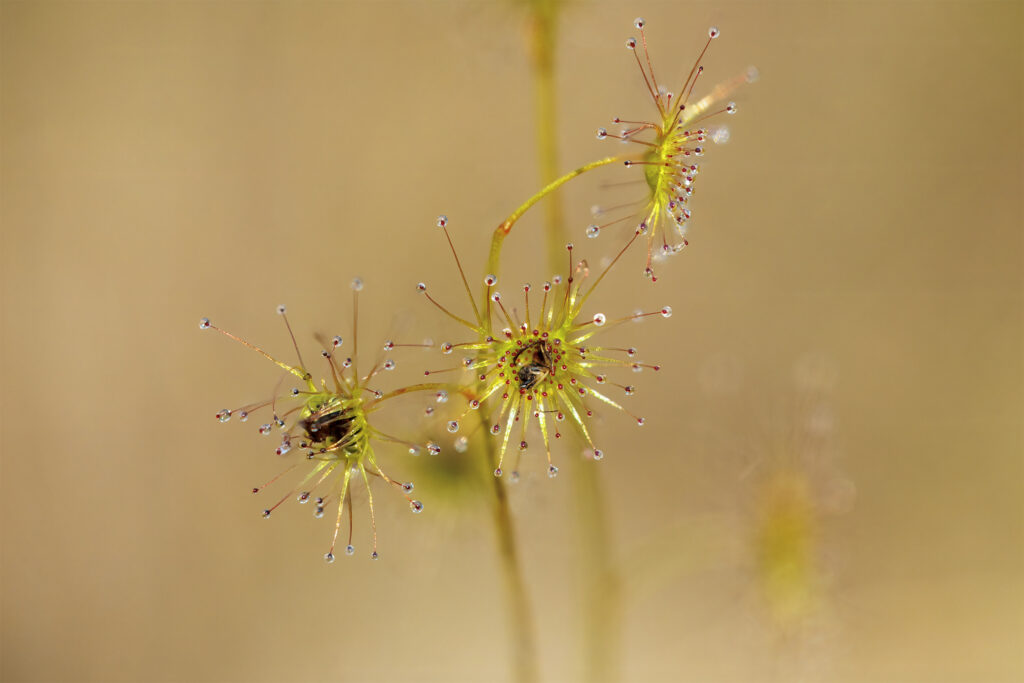
Using maximum magnification, I focused in on the intricate detail of the leaves, each covered in glistening droplets. At the time, I couldn’t tell whether they had any insects caught, but the detail revealed in the photos was reward enough. Only later, while reviewing the images on a larger screen, did I realise I had captured a tiny sundew in the process of digesting its prey — a fascinating and unexpected bonus.
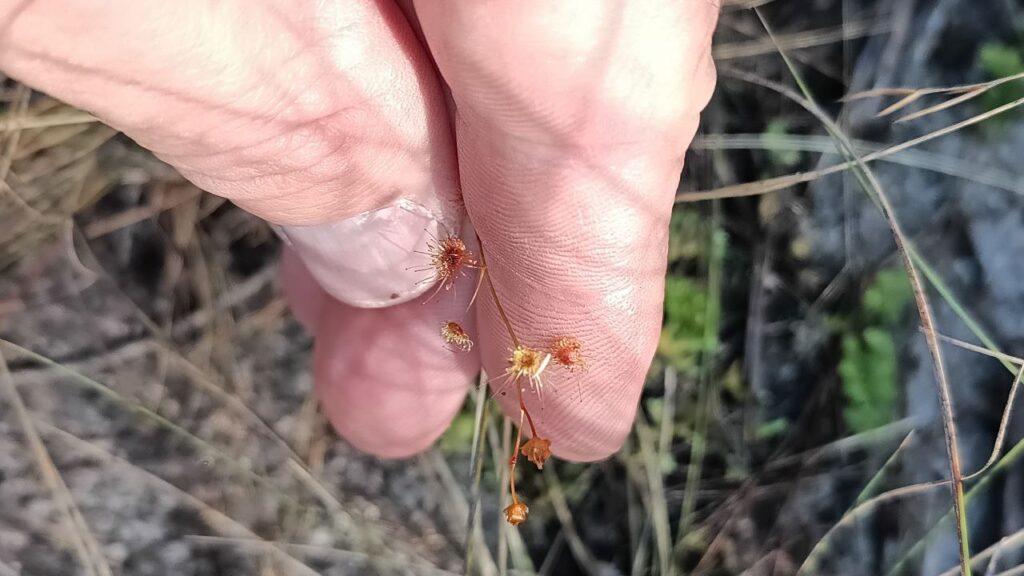
In one frame, I included my fingers for scale — and it’s staggering just how small these plants are. You’d never expect something so small to be such an efficient predator.
Sundews are best photographed in the early morning. As the sun rises, the dew drops begin to dry off, so that first light is your window for capturing them in their full, glistening glory.
Tips for Capturing the Best Sundew Shots
- Shoot early: The dew drops begin to vanish as the temperature climbs.
- Look closely: At first glance, they’re nearly invisible. Patience and careful scanning are essential.
- Try stacking: Focus stacking can produce stunning detail, especially with a macro lens.
- Think abstract: Even fragments of the plant — or a single dew-laden tentacle — can make for a striking composition.
- Play with light: The droplets reflect sunlight beautifully, adding natural sparkle and colour to your shots.
Final Thoughts
Photographing sundews wasn’t just about capturing their alien beauty — it was also about learning to slow down and observe the tiny dramas unfolding underfoot. In a world obsessed with the big and the bold, these micro predators remind us that some of the best stories in nature are written in miniature.
If you’re into macro photography and looking for your next subject, don’t overlook what’s beneath your boots. You might just find yourself walking on a wonderland.