Tag: Birds

  • Looking Back: My Favourite Bird Photos from 2019

    Looking Back: My Favourite Bird Photos from 2019

    2019 feels like a lifetime ago, yet it remains one of my most rewarding years as a nature photographer. I was fortunate to travel for work—and with my camera always by my side, I found myself in the right place at the right time, more than once.

    From the wild beaches of Tasmania to the towering rainforests of Papua New Guinea, here are some highlights from that unforgettable year—images that stir strong memories, capture rare moments, and tell stories I’ll never forget.

    Tasmania Adventures – Calm, Coastal, and Close-Up

    Hooded Plover – Up Close with the Endangered

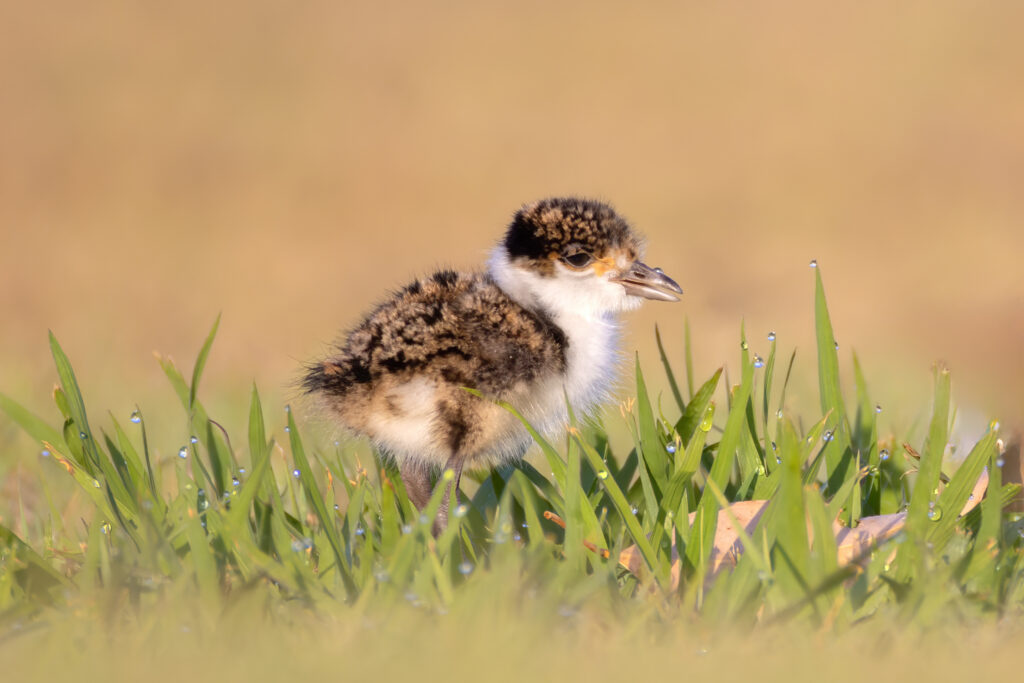
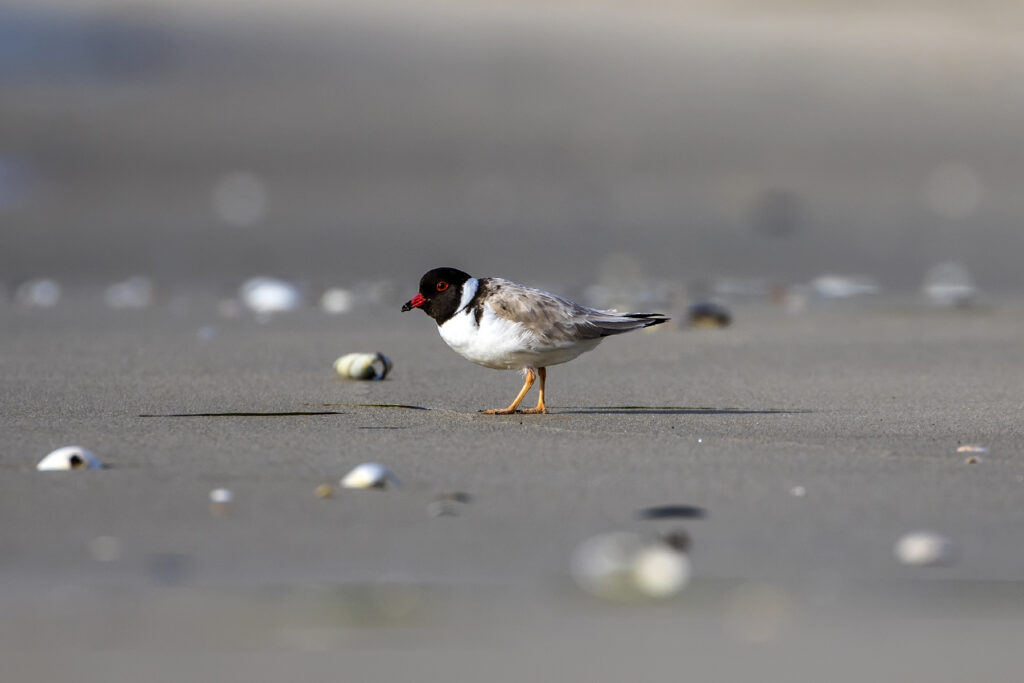
    In parts of mainland Australia, Hooded Plovers are endangered and notoriously hard to find. But in Tasmania—especially along its vast, untouched beaches—they were more common, yet just as captivating.

    I spent hours lying in the sand, camera ready, letting one bird get used to my presence. Eventually, curiosity got the better of it, and it wandered right up to me. A calm, intimate moment—exactly the kind I always hope to capture.

    Black Swan – A Peaceful Encounter in Margate

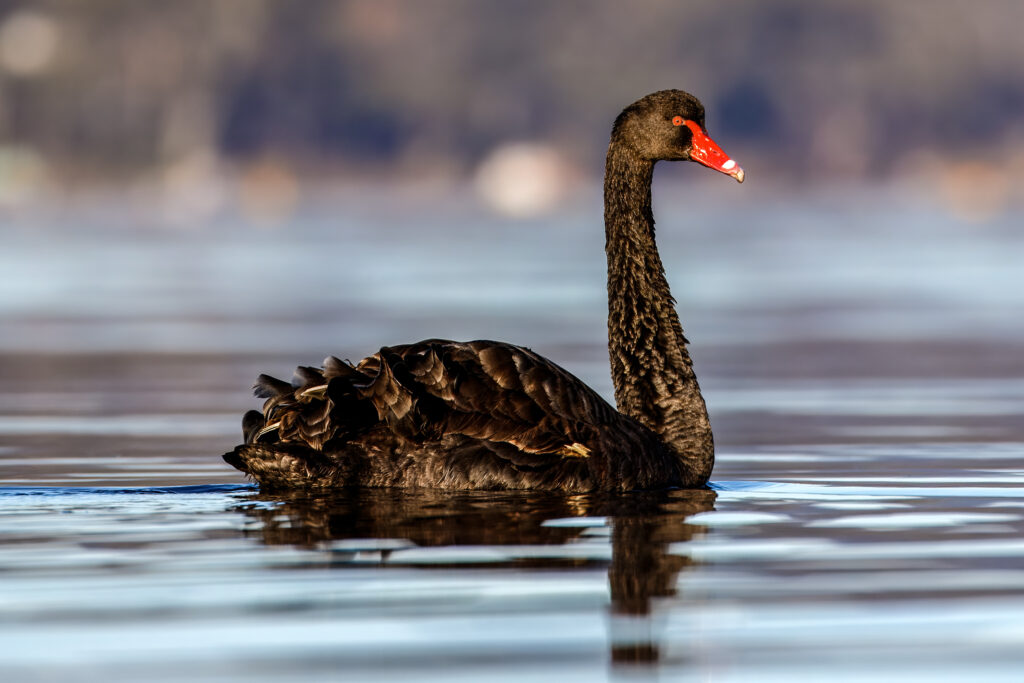
    Another memorable Tasmanian moment came in the quiet bays near Margate, where I spotted a Black Swan gliding through still water. Though the species is widespread, the setting and lighting made this image special to me—serene, minimal, and reflective in more ways than one.

    Northward Bound – Photographing Papua New Guinea

    After my time in Tasmania, I headed north to Papua New Guinea—and entered an entirely different world of birdlife. Towering trees, elusive species, and thick rainforest made every photo a challenge… and a thrill.

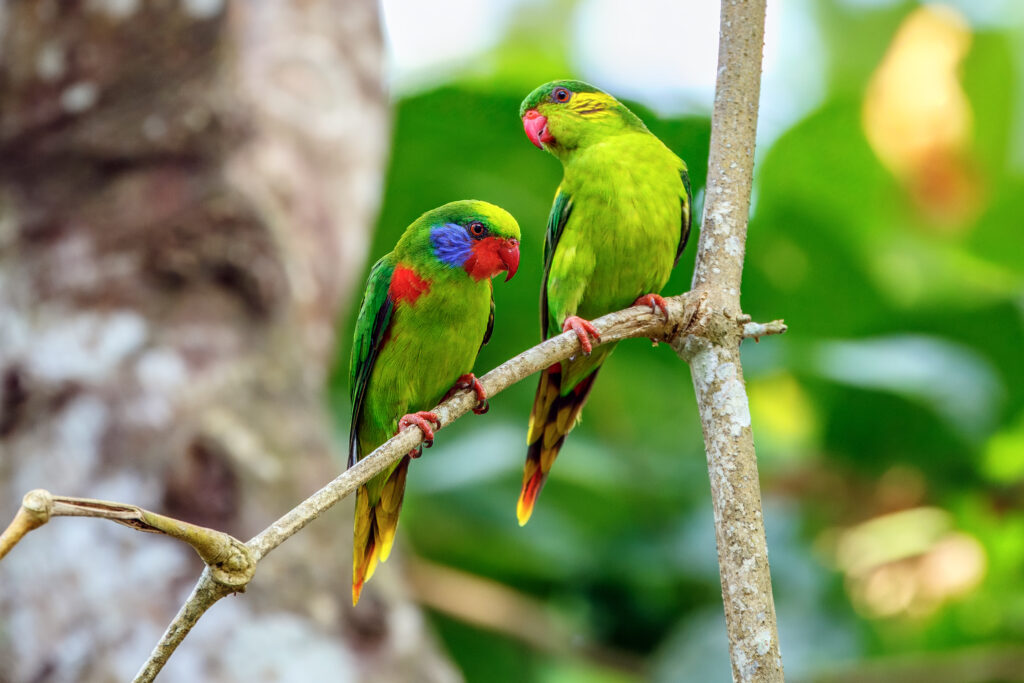
    Red-flanked Lorikeets – A One-Time Opportunity

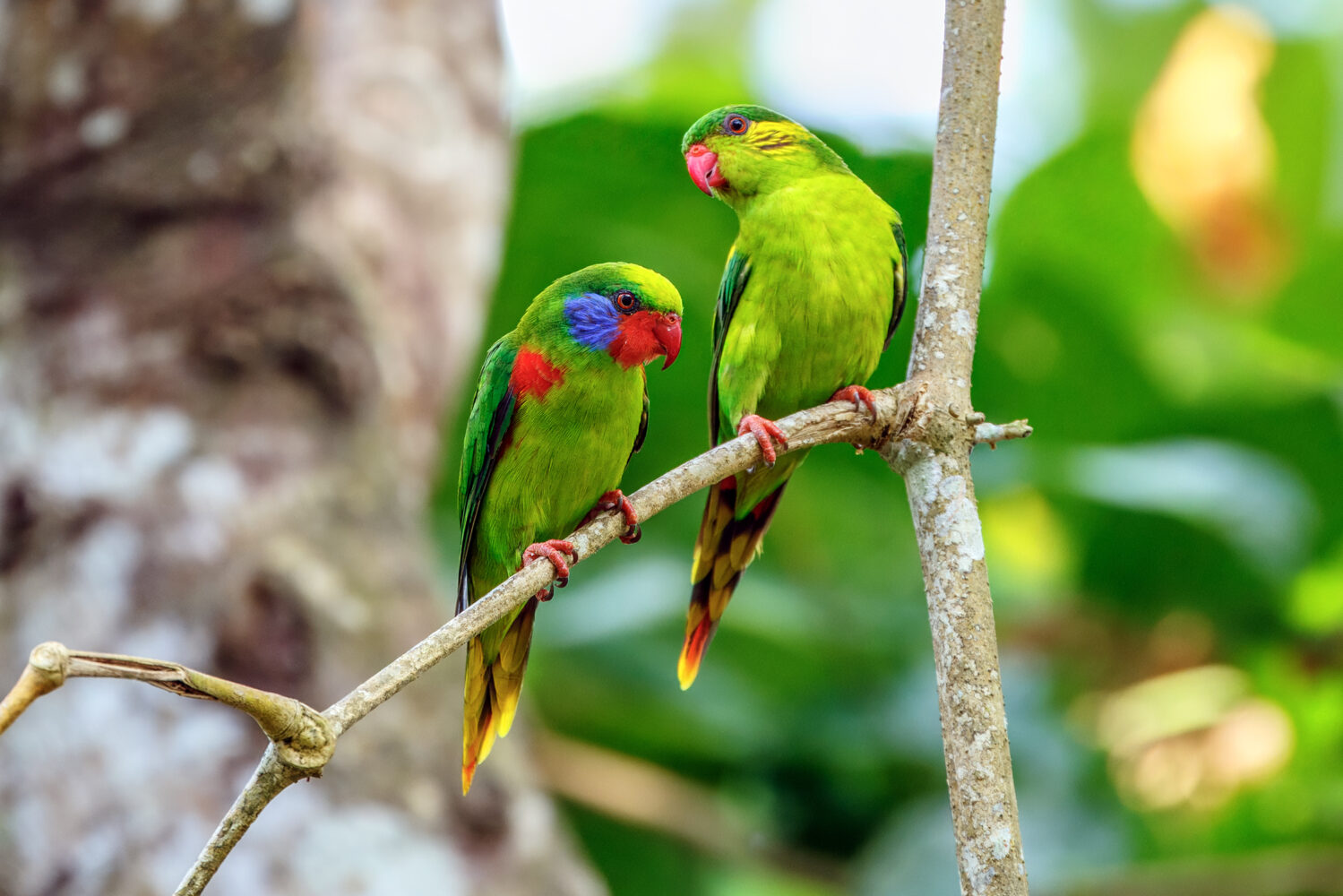
    These colourful birds were not uncommon in PNG, but they almost always perched at the tops of the tallest trees—and believe me, the trees in PNG are tall! That made them difficult to photograph, until one lucky day when I found two lorikeets checking out a probable nest site at eye level. It was a rare opportunity—one I was never given again.

    This particular photo even inspired an artist to create a beautiful watercolour painting based on the scene. Moments like these remind me why I always carry my camera.

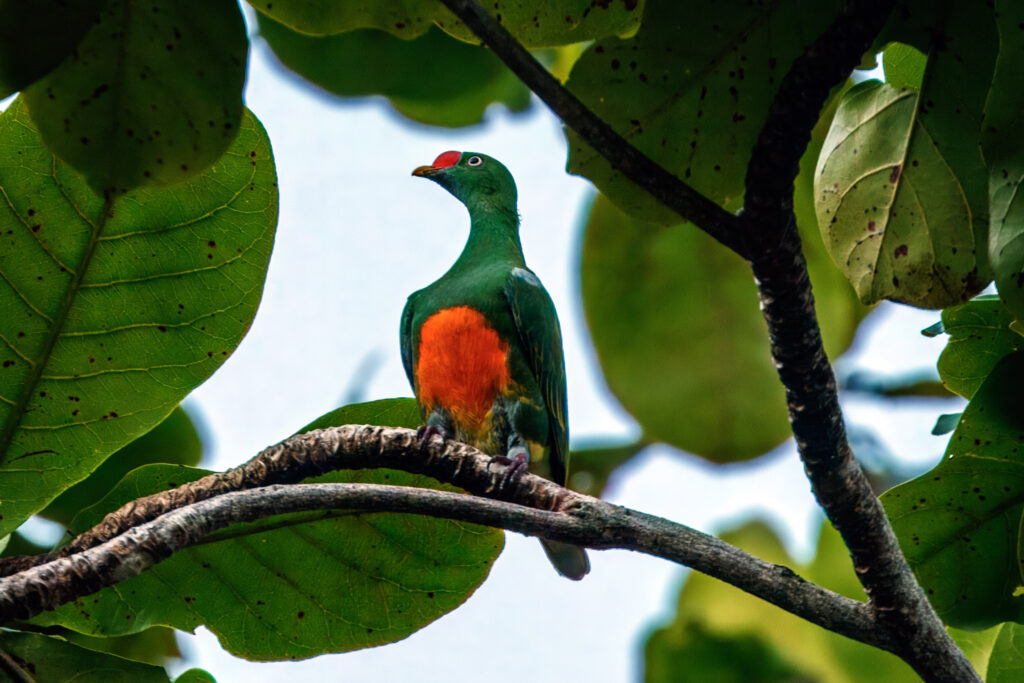
    Knob-billed Fruit Dove – A World-Class Find

    Now, this one truly was special. The Knob-billed Fruit Dove is so rarely seen that even Wikipedia uses an illustration for its species page. When I uploaded my photo to eBird, they chose it as the preview image for the species (they had to mirror it, of course, as eBird requires all birds to face right).
    You can see it here.

    At the time of my upload, I was one of only ten people in the world who had managed to photograph this elusive bird. It’s easily one of the rarest captures of my career.

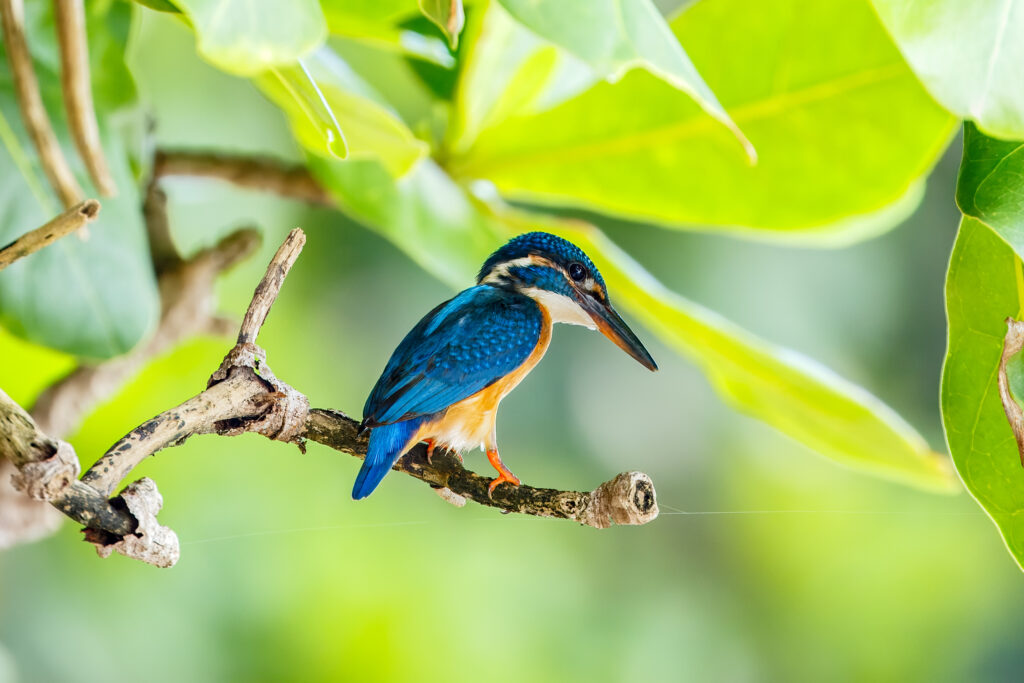
    Common Kingfisher – Not So Common After All

    Although it’s common in Europe, seeing a Common Kingfisher in PNG was a dream come true for an Australian photographer like me. It took several weeks of careful tracking before I was able to snap this image. The bird foraged along the beach and was incredibly wary—there was no way to approach it directly.

    Eventually, I managed to sneak up slowly and capture a few precious frames. A challenging but incredibly rewarding experience.

    Closer to Home – Birds Around My Local Area

    Not all great photos come from remote adventures. Some of my favourite captures from 2019 were taken close to home.

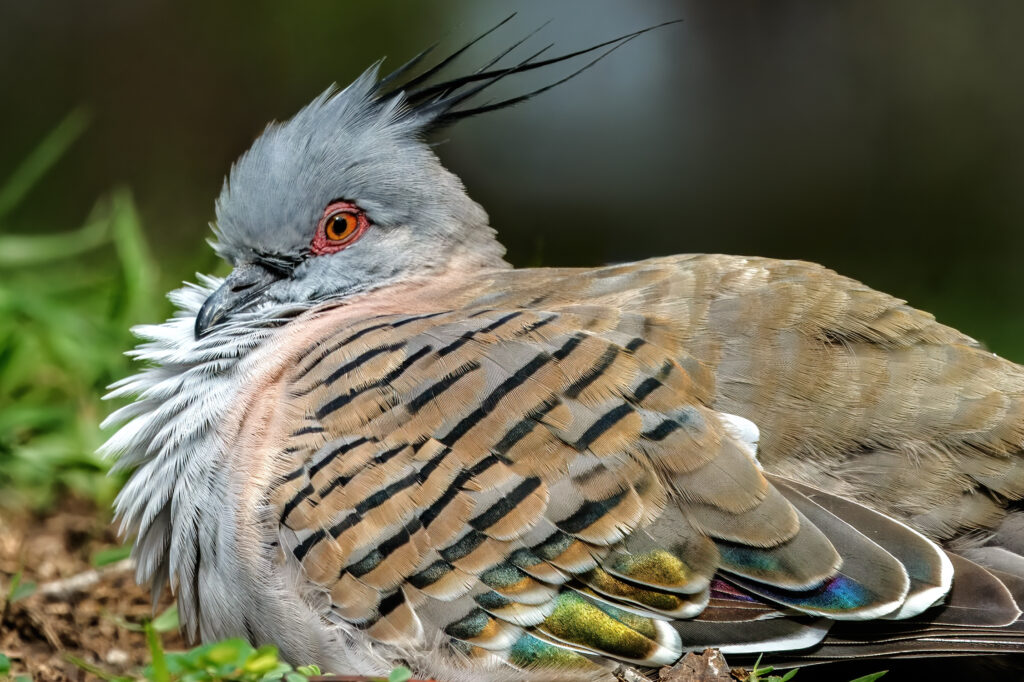
    Crested Pigeon – The Rain-Soaked Park

    This Crested Pigeon was resting peacefully in one of my local parks. Recent rain had soaked the background in vibrant greens and saturated colours, giving the image a lush, painterly feel. The bird was relaxed and comfortable with my presence—it almost felt like I was part of the family for the day.

    Striated Heron – Focused and Fierce

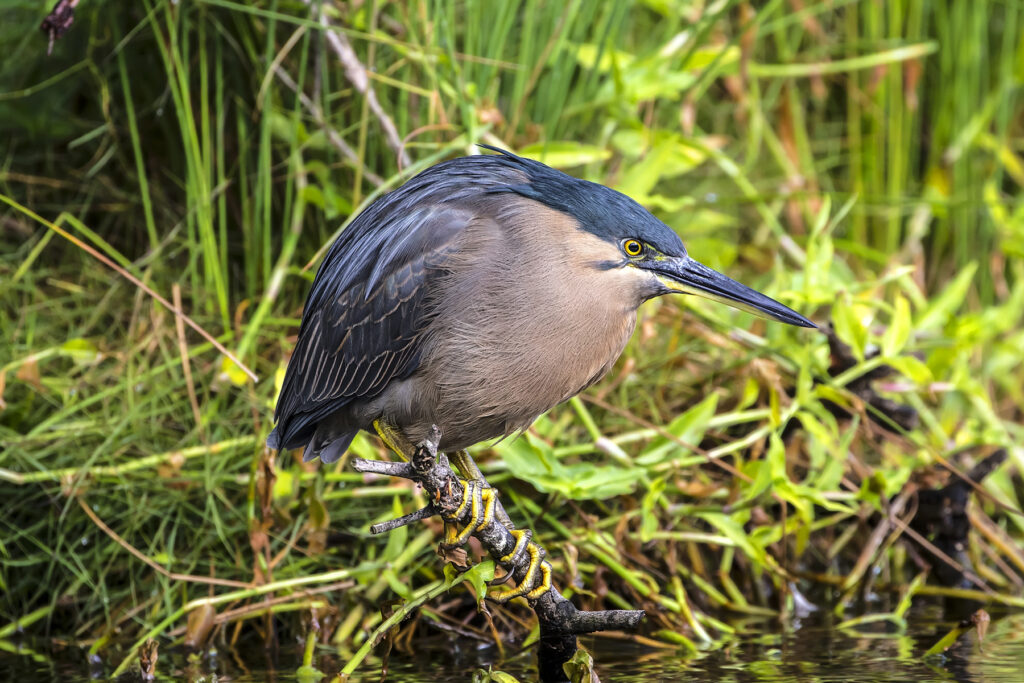
    This final image is of a Striated Heron, totally focused on tracking fish from its perch. Its claws are tightly wrapped, muscles tense, and the messy background adds a sense of mystery and intensity to the scene. It was even chosen as Photo of the Day on eBird—a nice honour for a moment that I remember vividly.

    The Hard Lesson

    I was planning to include more photos in this post, but as I was going through my hard drive… it decided to pack it in. I’m still hopeful that the images aren’t lost and can be recovered, but if there’s one takeaway—it’s the importance of backing up your photos. A lesson learned the hard way.

    I’d love to hear which photo or story resonated with you the most. Let me know in the comments below—and thank you for taking the time to revisit 2019 with me.

  • Fleeting Moments: Photographing Zebra Finches in the Aussie Outback

    Fleeting Moments: Photographing Zebra Finches in the Aussie Outback

    Interesting Facts

    Small in size but big in personality, the Zebra Finch (Taeniopygia guttata) is one of Australia’s most iconic and well-studied birds. Native to the arid and semi-arid regions of the mainland, these lively little finches are instantly recognisable by their striking black-and-white striped throats, orange cheeks (in males), and cheerful chirping calls. Despite their delicate appearance, Zebra Finches are remarkably resilient, thriving in some of the harshest environments on the continent. They’re also famous in the scientific world for their role in research on vocal learning — much like humans, young male Zebra Finches learn to sing by mimicking older males, making them a fascinating subject in both the wild and the lab. Whether flitting through the spinifex or perched on a fence wire, they’re a charming sight and a delight to photograph.

    Behaviour Insights

    Zebra Finches are social, active birds that live in flocks and rarely stray far from one another. Their social structure and constant communication make them an engaging subject for photographers who enjoy capturing interaction and movement. You’ll often spot them foraging on the ground in small groups, hopping about in search of seeds — their primary diet in the wild.

    One of the most fascinating behaviours to observe is their complex courtship rituals. Males puff out their chests, bob up and down, and sing intricate songs to impress potential mates. These displays often include fluttering dances and offering bits of nesting material. Once paired, Zebra Finches form strong monogamous bonds and are known for their cooperative nesting efforts. Both parents share incubation duties and take turns feeding their chicks — a lovely dynamic to photograph if you’re lucky enough to find an active nest.

    Another notable trait is their adaptability. Zebra Finches have a remarkable tolerance for heat and can survive extended dry periods, making them a symbol of resilience in the Australian outback. Their ability to breed opportunistically — often within days of rainfall — allows them to take advantage of brief resource-rich windows, even in seemingly barren landscapes.

    Habitat and Range

    In the wild, Zebra Finches are widespread across mainland Australia, particularly in inland and semi-arid zones. They prefer open grasslands, scrublands, and savannahs, often near water sources, but are just as likely to be found in agricultural areas, roadside verges, and even urban fringes. Their adaptability to different environments makes them one of the most successful native bird species on the continent.

    While they aren’t typically found in the dense coastal forests or tropical far north, they thrive in dry habitats where spinifex grass, acacias, and scattered eucalyptus trees provide food and shelter. Nests are usually built in shrubs, low trees, or even man-made structures such as fence posts and sheds. Their use of artificial habitats has contributed to their range expanding in some regions.

    For photographers, early morning and late afternoon are ideal times to spot Zebra Finches when they’re most active and lighting is soft. Look for them around waterholes or perched on low branches, chirping energetically. Their fast, erratic flight and quick movements on the ground can be challenging to capture, but with patience and a good telephoto lens, they make for delightful photographic subjects.

    When Finches Allow a Closer Look

    Photographing Zebra Finches is never as simple as just pointing the lens and clicking away. These tiny, energetic birds are constantly on the move, and while one might boldly perch in full view, the rest of the flock will be watching — always alert. The moment I get a little too close, they vanish into the nearest bush in a flash of wings and soft chatter. I’ve learnt over time that the best chance of approaching them is when they’re comfortable — either eating, preening, or singing. These are moments when they’re content, their happiness briefly outweighing the minor disturbance of a curious photographer edging closer. On the day I captured these shots, I found them early in the morning, gathered noisily near a waterhole, rehydrating after a hot desert night. It was an absolute joy to watch them arrive in flocks, jostling for position, fluttering about and pausing in beautiful poses. Their individual personalities shone through in the little dramas and quiet interactions between them. Below is a collection of my best images from that magical morning — a window into the fast-paced yet intricate world of the Zebra Finch.

  • Elusive Beauty in the Heart of Brisbane: A Close Encounter with the Lewin’s Rail

    Elusive Beauty in the Heart of Brisbane: A Close Encounter with the Lewin’s Rail

    The Lewin’s Rail (Lewinia pectoralis) is one of Australia’s most secretive wetland birds, often heard but rarely seen. These small, shy rails inhabit dense reed beds and swamps, typically venturing out only in the early morning or late evening. Their elusive nature makes them a sought-after species for many birders and wildlife photographers – a real prize sighting. Despite years of birdwatching, I had never laid eyes on one until now.

    Interesting Facts About Lewin’s Rail

    • Distinctive Call

    Despite being hard to spot, they have a loud, squealing or grunting call, often described as a “pig-like” squeal. This call is usually the first sign of their presence.

    • Habitat Specialists

    They prefer dense, swampy wetlands, especially reed beds, sedgelands, and freshwater marshes. They rely on thick vegetation for cover and rarely stray into the open.

    • Wide but Patchy Distribution

    Lewin’s Rails are found throughout eastern and southeastern Australia, with scattered populations in Tasmania, Victoria, New South Wales, Queensland, and parts of South Australia. There are also subspecies in New Guinea, the Philippines, and parts of Southeast Asia.

    • Small but Agile

    They’re small birds—typically around 20–30 cm in length—but move quickly through dense reeds and undergrowth, making them even harder to spot.

    • Named After a Naturalist

    The species is named after John Lewin, one of Australia’s first colonial artists and naturalists, who documented many native species in the early 19th century.

    • Extremely Secretive Nature

    Lewin’s Rails are incredibly shy and elusive. They’re more often heard than seen, making them a real challenge—and a prize—for birdwatchers and wildlife photographers.

    The opportunity to see the bird came thanks to a group of birders from Victoria who reported a Lewin’s Rail sighting on eBird. What followed was a flurry of observations, suggesting the bird had taken up a semi-regular presence in the area. A friend of mine, living nearby and closely tracking the exact location, tipped me off. The potential to photograph such a rare and shy bird was too good to pass up. Special thanks to Graham D for his keen eye and timely heads-up.

    Even more remarkable, this entire encounter took place right in the heart of Brisbane’s CBD. The experience was equal parts surreal, amusing, and unforgettable. Usually, when I photograph wildlife, the outside world fades away—just me and my subject, enveloped in the natural landscape. But this time, I was crouched beside an artificial pond, surrounded by concrete, steel, and glass, with the ever-present hum of city life vibrating in the background. If I’d turned my head, I would have seen towering skyscrapers framing the scene.

    To help paint the picture, I’ll be including two images below: one showing the surrounding skyline of skyscrapers, and another of the artificial pond itself—complete with pumped water that gives life to this small, urban pocket of habitat. It’s hard to believe such a secretive wetland bird would choose to appear in a place like this, but that’s part of what made the moment so special.

    I’ve never had a wildlife encounter amid such urban chaos. As soon as the cameras started clicking, curious passersby stopped in their tracks, trying to guess what mysterious creature had drawn our attention. It was a strange but fascinating collision of nature and civilisation.

    The wait for the bird to show was long, but certainly not wasted. We were rewarded with several brief yet clear views, and I managed to capture a handful of satisfying shots. You’ll find some of my best images below.

    Most importantly, I made some valuable connections with like-minded people who share the same passion for birds and photography. We’ve already started planning to collaborate—sharing experiences, tips, and ideas to help each other grow and improve the quality of our work. It’s always rewarding when a rare wildlife encounter not only results in great photos but also sparks new creative partnerships.

  • Swallows in Flight: A Wildlife Photographer’s Ultimate Challenge

    Swallows in Flight: A Wildlife Photographer’s Ultimate Challenge

    Few birds capture the spirit of freedom and precision quite like swallows. Sleek and nimble, these aerial acrobats are built for speed and endurance, with their slender bodies, forked tails and long, pointed wings. Swallows can cover vast distances during migration and are capable of feeding, drinking, and even sleeping mid-flight. In Australia, the swallows and martins are a familiar sight, often seen skimming low over fields and water, hunting insects on the wing with astonishing agility. But as elegant as they are to watch, they’re notoriously difficult to photograph—especially in flight.

    When I first picked up a camera, capturing a swallow mid-air quickly became a personal challenge. I remember asking a more experienced mate, somewhat in desperation, “How do you photograph a swallow in flight?” His reply, with a wry grin, was simply: “You don’t.” Ironically, he’d managed a decent shot of one in flight himself, which only stoked my determination. That was the moment this mission quietly began. Over the years, I’ve come to realise that the real difficulty in photographing swallows doesn’t lie solely with the camera gear—though even the most advanced autofocus systems can be pushed to their limits. The real test is a combination of factors: the gear, the autofocus speed, and most critically, the photographer’s own hand-to-eye coordination. Swallows are fast, agile, and unpredictable in flight, often changing direction in the blink of an eye. Keeping one in the viewfinder—especially when using a long telephoto lens—is no easy feat. In many ways, capturing a sharp, well-composed image of a swallow in mid-flight is the ultimate challenge for both the equipment and the person behind it.

    I tried my luck in freshly mown soccer fields, where small flocks of swallows would swoop for insects—unsuccessfully. I searched for locations where their flight might be more predictable, but again, without much joy. Then, five years into this quiet quest, I stumbled across a breakthrough: a drying puddle in the middle of a desert —the only source of water for kilometres. That afternoon, swallows descended in their hundreds to drink on the wing. I dropped flat on the ground, crossed my fingers, and hoped the sheer number of birds and the small size of the puddle might work in my favour. It did. Birds returned the next day as well, following the same pattern, and I finally got the shots I’d been chasing for half a decade.

    I’m sharing the results here with you, and with them, a friendly challenge: do you have a swallow-in-flight photo? If not, I can promise this—when you do get one, it’s immensely satisfying. Good luck out there!

  • From Chase to Connection: How Local Birds Redefined My Photography

    From Chase to Connection: How Local Birds Redefined My Photography

    When I first picked up a camera and started photographing wildlife—especially birds—I was obsessed with one thing: getting closer.

    It was all about filling the frame. I wanted to see every feather, every glint in the eye, every tiny detail that usually goes unnoticed. At first, it felt like a technical challenge—how close could I get without disturbing the bird? Could I use the longest lens possible, or outsmart the subject with patience, camouflage, or clever positioning? There was an undeniable thrill in it.

    Eventually, I started taking tight bird portraits—crisp, detailed shots where the subject dominated the frame. These moments felt like small victories. I remember the first time I captured a full-frame shot of a bird with perfect sharpness and catchlight in the eye. I was proud, even a little bit smug. I had gotten the shot.

    But over time, my priorities started to shift.

    Understanding the Language of Light

    Once I had some of these portraits under my belt, I began to notice something missing. The photos were technically solid, but sometimes they felt flat—lacking mood or atmosphere. That’s when I began to pay more attention to light, background, and composition beyond the subject.

    I realised that even the best lens couldn’t fix harsh midday light or a cluttered background. Some locations only worked in the soft hues of morning; others came alive in the golden glow of late afternoon. The angle of the light, the direction of the wind, and even the colour of the water or sky behind the bird—all of it mattered. I began scouting locations based on how the light interacted with the environment, not just where birds were most abundant.

    This shift was subtle at first, but profound. I stopped chasing just birds, and started chasing conditions. My photography became more intentional.

    The Role of Patience: More Than Just Focal Length

    As I became more experienced, I also discovered something about how we approach proximity in wildlife photography. Sure, you can get a 600mm lens, maybe even add a 1.4x or 2x converter, and get those tight portraits from a distance. And that certainly works—it’s how many professionals operate.

    But I also found another way: using a shorter lens, like a 400mm, and relying on patience instead of reach.

    When I began approaching birds slowly, respectfully, and without pressure—waiting for them to come to me or relax in my presence—it started to feel like something more. It wasn’t just about taking a photo anymore; it was about building trust. In those moments, I wasn’t just an observer—I felt like I was becoming part of their world, part of their family.

    This kind of closeness, built through time and presence rather than gear, made the final image feel more honest, more intimate. Once you master that skill, it expands naturally beyond birds—into mammals, reptiles, even insects. It’s a way of seeing, not just a way of shooting.

    The Search for the Rare—and the Lessons of Disappointment

    After photographing many of the local and familiar birds, my curiosity turned toward the more elusive species. I started planning trips, seeking out remote or specific habitats, tracking down birds I’d never seen before.

    But often, these long efforts didn’t result in great photographs. The birds didn’t show up. Or if they did, the lighting was poor, the background distracting, or the moment just didn’t materialise. I returned from many of these trips without a single keeper shot.

    It was disheartening. I began to ask myself: Why travel so far just to come back with nothing? That’s when I began to reconsider what I was really looking for with my camera.

    Rediscovering the Familiar

    After a few too many empty-handed journeys, I shifted focus again—this time back to the birds close to home. I decided to return to the local wetlands and bushland with a new perspective and greater intentionality.

    That’s when I started photographing ducks.

    Ducks are everywhere. I used to overlook them, assuming I’d already “gotten” those shots. But I hadn’t. Not really. One morning, I found myself watching a hardhead duck bathed in perfect light. I crouched down, framed it tightly, and clicked. That photo remains one of my favourites to this day.

    What started as an experiment quickly became a personal project. I began collecting duck portraits—each one crafted carefully, with attention to detail and emotion. Over time, I expanded this approach to other birds I’d previously overlooked: grebes, herons, moorhens, cormorants. I wasn’t just taking pictures anymore. I was telling quiet stories.

    Looking Ahead: Embracing the Environment

    Later in my photography journey, I began to move beyond just the bird itself. I started enjoying wider angles—photographing not only the subject but the environment it lives in. These images feel more narrative, more immersive. You don’t have to be extremely close to the bird, but the environment becomes more demanding. Light, habitat, background—all need to work in harmony.

    That’s a topic I’ll dive into more in the future posts. But for now, let’s enjoy these portraits of everyday birds—captured with patience, respect, and a deep appreciation for the wildlife that shares our local spaces.

  • Chasing the Light: A Story of the Shining Flycatcher

    Chasing the Light: A Story of the Shining Flycatcher

    Among Australia’s most captivating birds, the Shining Flycatcher (Myiagra alecto) lives up to its name in every way—especially the male, whose deep, metallic-blue plumage can appear almost liquid in the right light. This iridescence, however, is a blessing and a curse for photographers. The brilliant sheen reflects so much light that exposing for the shiny parts throws the rest into shadow, while exposing for the darker areas causes the highlights to blow out completely. Capturing them well is not just a matter of luck—it’s a true test of timing, patience, and lighting conditions.

    Fascinating Facts About the Shining Flycatcher
    📸 1. Iridescent Males
    Only the male Shining Flycatcher sports the dazzling, metallic blue-black plumage. This glossy sheen is not a pigment, but a result of structural colouration—microscopic structures in the feathers reflect light in a way that creates that shimmering effect.

    🧡 2. Subtle Females
    In contrast, the female is chestnut brown with a white underside, a classic example of sexual dimorphism. Her more muted colours help her stay hidden while nesting.

    🌿 3. Mangrove Specialist
    They are most often found in mangroves, wetlands, and tropical woodlands across northern Australia, New Guinea, and parts of Southeast Asia. Their preference for dense, tangled vegetation can make them very difficult to spot.

    🎶 4. Not-so-Vocal
    Unlike many flycatchers, the Shining Flycatcher has a soft, whistling call and isn’t particularly vocal, especially during nesting. This can make them hard to locate if you’re relying on sound alone.

    🐛 5. Insect Hunters
    They are insectivores, catching insects mid-air or picking them off leaves. They use quick, darting flights to grab prey and often return to the same perch.

    🪺 6. Tiny Nests, Big Effort
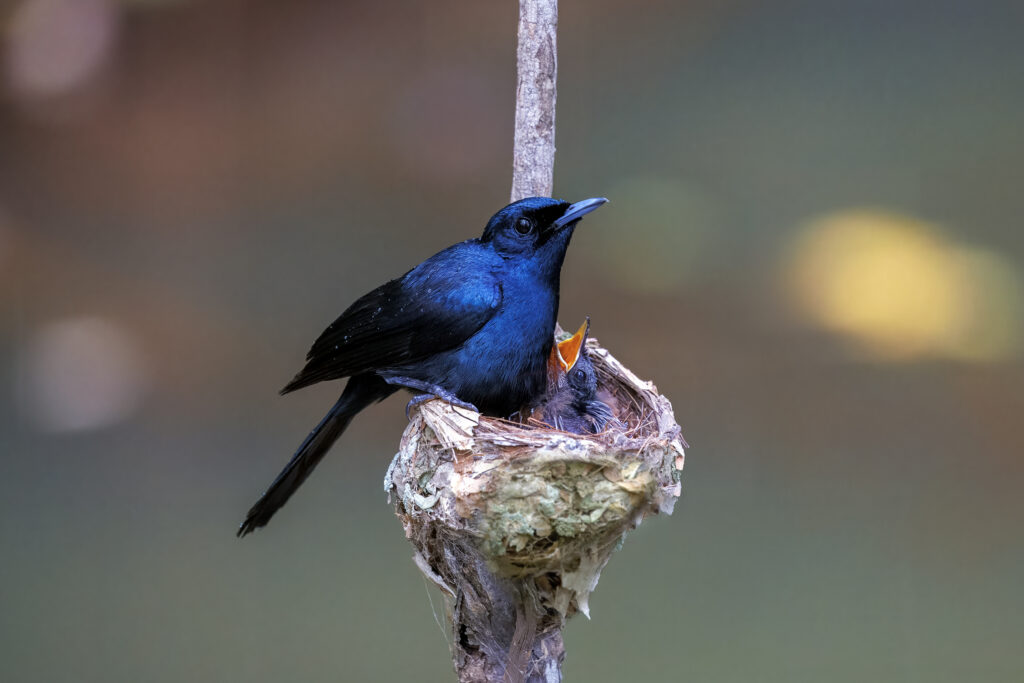
    Their cup-shaped nests are built with spider webs and plant fibers, placed on branches over water. The location provides both camouflage and protection from ground predators.

    My first encounter with this species was in the mangroves near Cairns on an overcast day—a stroke of luck, as the soft light let me capture the full range of plumage detail without harsh shadows or overblown highlights. Unfortunately, my next sightings, on Groote Eylandt, were less fruitful. Between the tangled environment and strong tropical sun, it was nearly impossible to get a clean, well-exposed frame.

    Then came the moment I’ll never forget.

    It was storm season, and a low-pressure system was sweeping across the heart of Groote Eylandt when I came across a Shining Flycatcher nest delicately balanced on a branch above a narrow creek. At first, the weather seemed far from ideal for photography—but I soon realized I was positioned right in the eye of the system, where the winds drop to almost zero. The result? Calm, quiet conditions with soft, overcast skies and a gentle drizzle—creating the kind of evenly diffused light wildlife photographers dream of. I spent the next five days quietly observing the nest and the flycatcher family as they carried out their daily routine.

    To avoid disturbing such a sensitive stage in the birds’ life cycle, I positioned myself at a respectful distance, concealed behind a cluster of trees. From there, I gradually managed to capture intimate portraits of both the male and female Shining Flycatchers.

    Female shining flycatcher

    Myiagra alecto

    Male shining flycatcher

    Myiagra alecto

    Without a tripod, I had to handhold my camera, bracing myself against a tree trunk for support. The adult birds returned to the nest to feed the chick roughly once every 15 minutes—a rhythm dictated by the time it took them to hunt down and catch suitable insects in the dense surrounding habitat. That meant when birds came to feed the chick I had, at best, just a few seconds to get the shot—if I missed it, I’d have to wait another full quarter hour for the next chance. After 45 minutes of holding the camera ready—often without taking more than one or two frames—fatigue started to set in. My arms were aching, and opportunities were slipping by simply because I was knackered after holding the camera that long.

    One afternoon, the female flew in to feed the chick and struck a pose I could never have anticipated. She spread her wings and opened her beak—completely silent, as though in mid-song—and for a split second, the underside of her wings and the vivid red of her open mouth were perfectly framed and lit. My position was just right. Everything—the tail, the wing, the beak, and the chick—fell into the same focal plane. I didn’t even have to think. I just pressed the shutter.

    By the next day, the chick had grown finer feathers, now with a soft brown tone. I watched the male stand over the nest in the rain, shielding the chick with his body. In this image, you can see that the chick has already developed some fine brown feathers.

    Then came the turning point. When I arrived, I saw not one, but two female-coloured birds on the nest. It took me a moment to realise—the chick had moulted into its juvenile plumage, identical to the adult female’s. (Young males and females look the same until the male eventually transforms into the striking metallic black-and-blue adult.)

    Soon after, I watched the chick flap its wings and climb out of the nest. It perched on the same branch and beat its wings—its very first flight attempt! Minutes later, I saw it launch itself into the air, wobbling to a tree nearby. Both parents were close, offering food and encouragement, alternating feeding and letting the chick rest between movements. I stood there in awe, witnessing not just the growth, but the moment life literally took off.

    What caught my attention was that it had no tail at all. Until now, I’d always assumed that tailless birds I’d seen had somehow lost their feathers, but this encounter taught me something new. It turns out that fledglings often leave the nest before their tails have fully developed, and they grow in just a few days after fledging. Witnessing this rare stage of life was a reminder of how much there is still to learn, even after years in the field.

    That evening, as dusk settled in, I left quietly and never saw the family again. But that’s exactly as it should be—a sign of success. A life begun. A story completed. And for me, a rare and personal insight into the wild world I feel so privileged to document. These photos, now among the most treasured in my collection, serve as a lasting memory of a journey I was lucky to be part of—and will never forget.