Boobies are named after their clumsiness. Early Spanish sailors called them bobo, meaning “fool” or “clown”, because the birds were so trusting they’d waddle right up to people on deck. Not the most flattering origin story, but it stuck.
They’re exceptional aerial hunters. Boobies dive from impressive heights—sometimes over 20 metres—spearing into the ocean like feathery missiles to snatch fish and squid. Their bodies are built for it, with shock-absorbing skulls and tightly folded wings.
Aussie waters are prime booby territory. While they’re more commonly associated with tropical islands across the Indo-Pacific, Australia has thriving populations on offshore islands from the Great Barrier Reef to the remote west coast.
They’re devoted parents (most of the time). Boobies typically lay just one egg, and both parents take turns incubating and feeding their chick. The nest is often little more than a scrape or a simple stick platform—practical, not fancy.
Their courtship dances are brilliantly odd. Expect sky-pointing, foot-lifting and all sorts of theatrical moves. The red-footed booby’s high-stepping foot display is particularly charming.
They’re surprisingly quiet birds. Unlike gulls or terns, boobies communicate mostly with soft grunts, honks and whistles—often from inside the colony where their nests cluster tightly together.
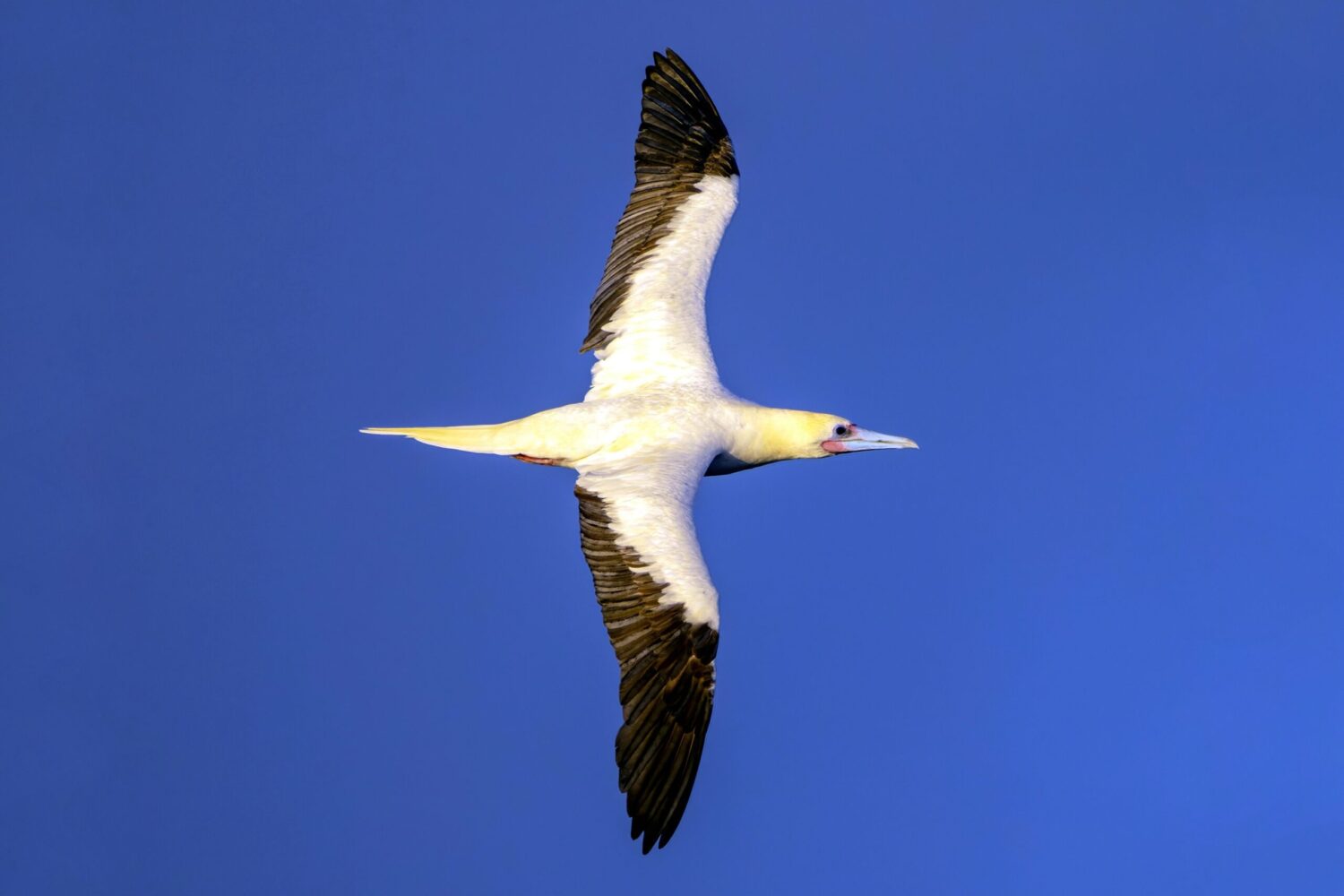
Red-footed boobies sport—you guessed it—bright red feet and come in several colour morphs.
Brown boobies are sleek, dark and super agile in flight.
Masked boobies show off a bold black facial mask and clean white plumage.
Australia’s Boobies Up Close: Life on the Wing Above the Deep Blue
I’m a bit prone to motion sickness and admittedly nervous about going on dedicated seabird-watching trips, especially when they involve small boats. Instead, I photographed these boobies from a large cruise ship, which I managed to turn into a surprisingly successful bird-watching adventure. I certainly wasn’t expecting to spot all three species at once, but the ship’s wake seemed to send flying fish leaping from the water—an ideal invitation for the birds to follow along, dive after the fish and show off from all sorts of angles. I’m especially fond of the deep blue tones of the open ocean in the background, which create a brilliant contrast and make the birds really stand out.
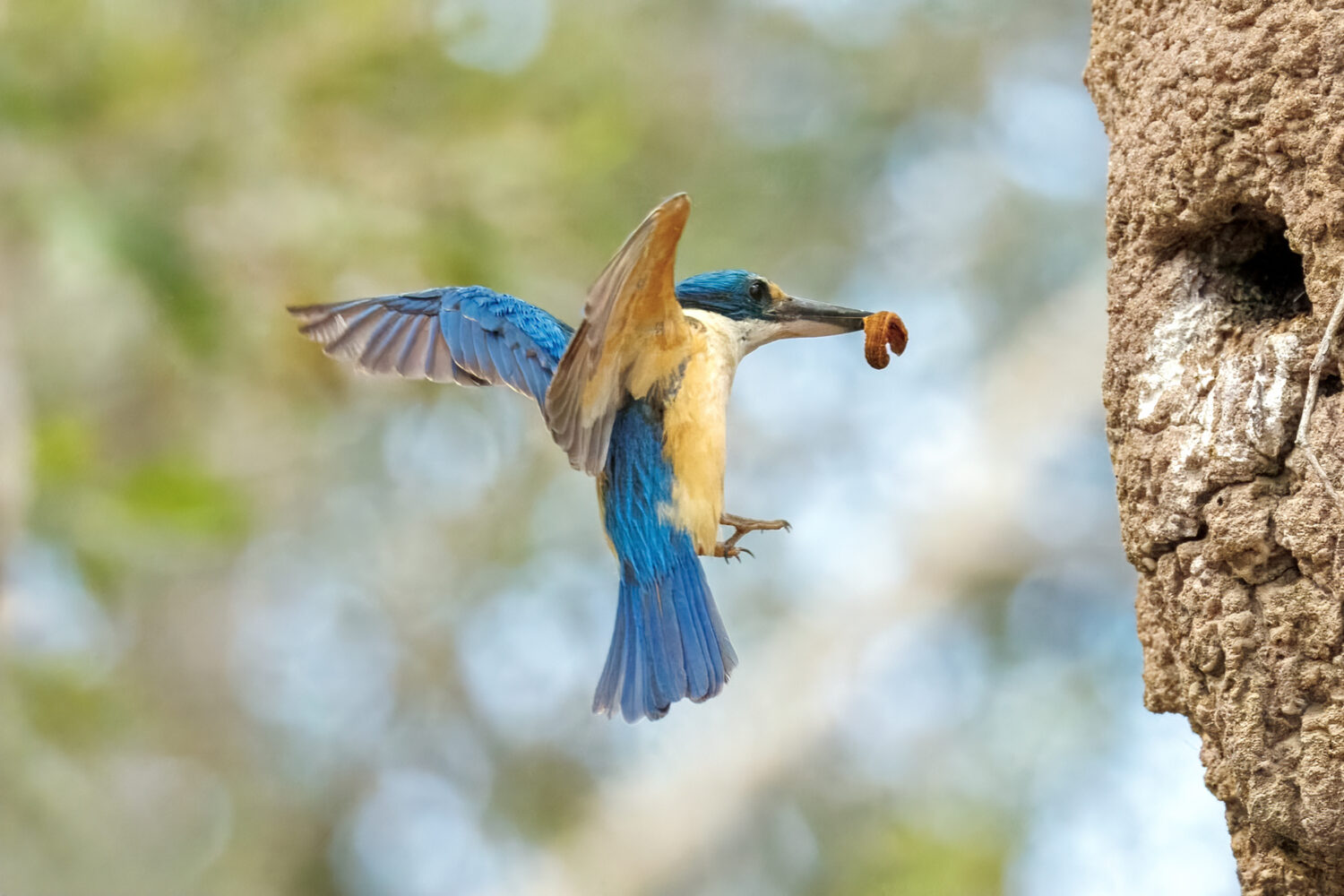
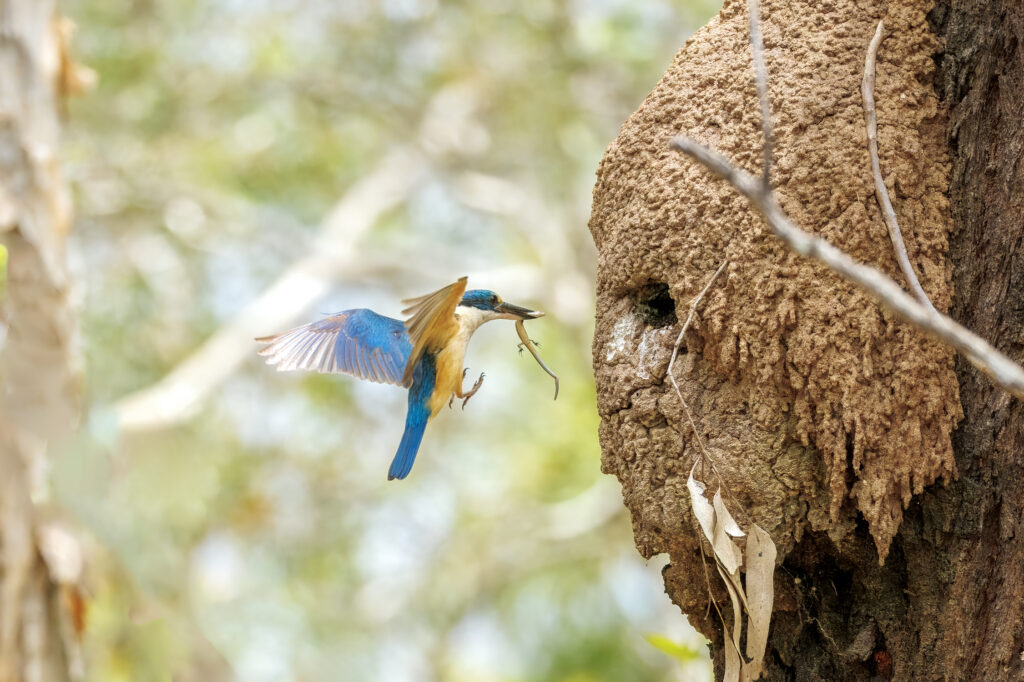
Aerial Acrobat: The Sacred Kingfisher is like a little superhero of the bird world, often diving from a perch in a split second to catch its prey, usually fish, insects, or even small reptiles. They are so fast and accurate that it looks like they’ve been practicing aerial acrobatics.
Sacred by Name, Sacred by Nature: Despite its name, the “sacred” part doesn’t relate to any religious significance but rather to the bird’s association with spirituality in various Aboriginal cultures. It’s sometimes seen as a totem or a symbol of communication with the spirit world—so this bird has some serious spiritual connection.
A Fish’s Worst Nightmare: The kingfisher’s hunting technique is to dive headfirst into the water, often from a high perch. It’s like the bird version of a high-speed chase scene in an action movie. Once they spot their prey, it’s game over for the fish. A Sacred Kingfisher can catch a fish in mid-air or while submerged, with a success rate that would make any predator jealous.
Not So Sacred About Their Love Life: Sacred Kingfishers are generally pretty loyal, sticking to monogamous pairs, and they typically stay in the same nesting site for years. But here’s the twist: sometimes, the males get a bit cheeky and try to court several females. Talk about a love triangle!
Flash of Blue in the Bush: The Sacred Kingfisher’s feathers are so vibrant, it’s as if they’re showing off their finest fashion—bright turquoise and green with a pop of white, creating a striking contrast against the green and brown of the bush. It’s like they’ve just stepped out of a birdy fashion magazine.
Migratory, But Not That Far: While they are migratory, they don’t travel in massive distances like some birds. Sacred Kingfishers will usually move a little further south during the winter months, but they’re still pretty picky about the areas they settle in. They like their habitats to be near water for fishing, so you’ll mostly find them near rivers, lakes, and coastlines.
Nest of Opportunity
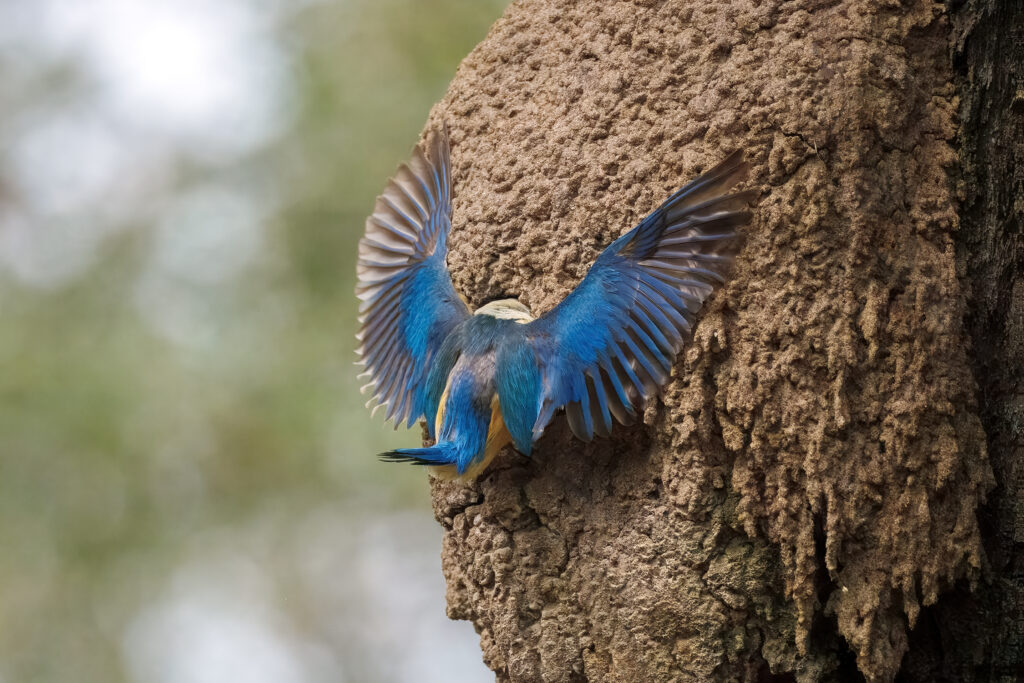
While exploring one of the local parks, I stumbled upon a remarkable sight: a Sacred Kingfisher nest tucked neatly inside a termite mound on the trunk of a tree. The nest wasn’t high up, making it accessible for the perfect photographic angle, and it was clear that this was a favorite spot for the birds. The mound, weathered and worn, offered both shelter and safety, a prime location for the kingfisher to raise its young. Over the following weeks, I returned to the site multiple times, camera in hand, to observe the kingfisher’s feeding habits. The menu was as diverse as it was fascinating: the bird darted to catch spiders from the tree bark, pounced on plump grubs in the underbrush, snapped up dragonflies in mid-flight, and even caught small lizards sunning themselves nearby. Each visit was a test of patience, as I studied the bird’s movements and perfected my pre-capture timing, eager to capture the graceful flash of blue against the textured backdrop of the tree and mound. These moments, where nature’s rhythm unfolds before you, offered perfect opportunities to freeze time and document the Sacred Kingfisher in all its hunting glory.
A Face in the Tree
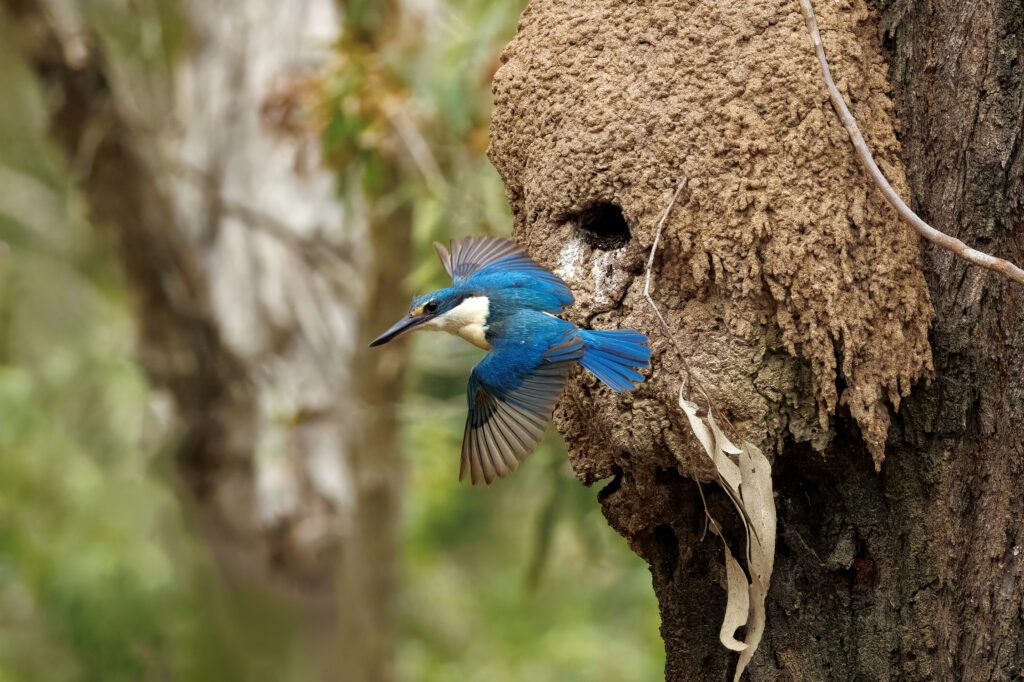
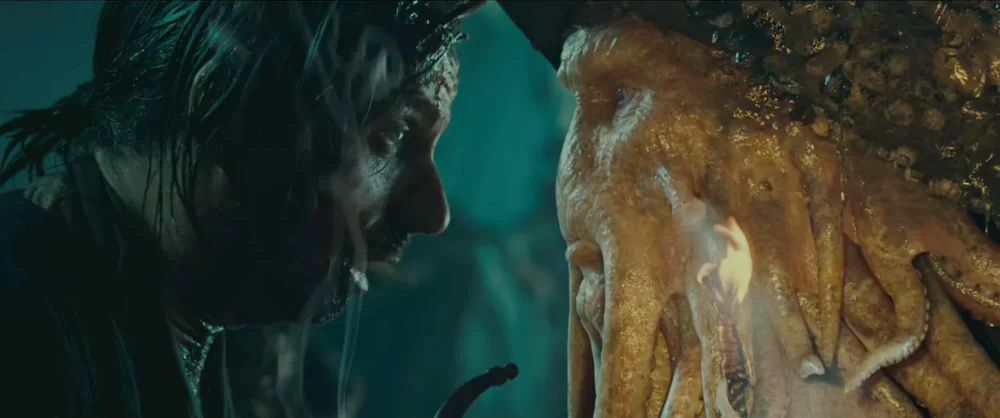
What made this particular nest even more remarkable was the way it resembled a face. At first glance, the mound seemed like a random mass of dirt, but as I spent more time studying it, something strange became clear—it looked remarkably like a face. The more I stared at it, the more familiar the features seemed, but it took me a while to place it. Then, it clicked: the face looked almost identical to Davy Jones, the eerie pirate from Pirates of the Caribbean! The shape of the brow, the indentations, and the textured grooves of the mound gave off a distinct resemblance to the iconic sea villain, complete with his tentacle-like features. Now, I’m not saying the nest was definitely meant to resemble a cursed pirate captain—but the uncanny likeness was hard to ignore. What do you think? Does it remind you of Davy Jones too, or am I just seeing ghosts of the Caribbean in the trees?
Comedic Landing
One of the most amusing shots I captured during my time observing the Sacred Kingfisher was a moment that felt like it belonged in the Comedy Wildlife Photography Awards. In this image, the bird looked like it was on a mission, flying full speed toward the tree with wings spread wide—so wide, in fact, that it appeared to be trying to hug the trunk mid-flight. But the real comedy came in when the kingfisher’s head disappeared inside the nest, as if it had forgotten to stop or was attempting some kind of airborne headbutt. The timing of the shot was priceless—here was this otherwise graceful predator, now caught in a moment of utter chaos, wings flapping like an overenthusiastic hugger and face buried deep in the mound. It’s a perfect reminder that even the most skilled hunters have their awkward moments—and this one, to me, could easily have earned a spot in the Comedy Wildlife Photo Contest.
Fun & Interesting Facts About Comb-crested Jacanas:
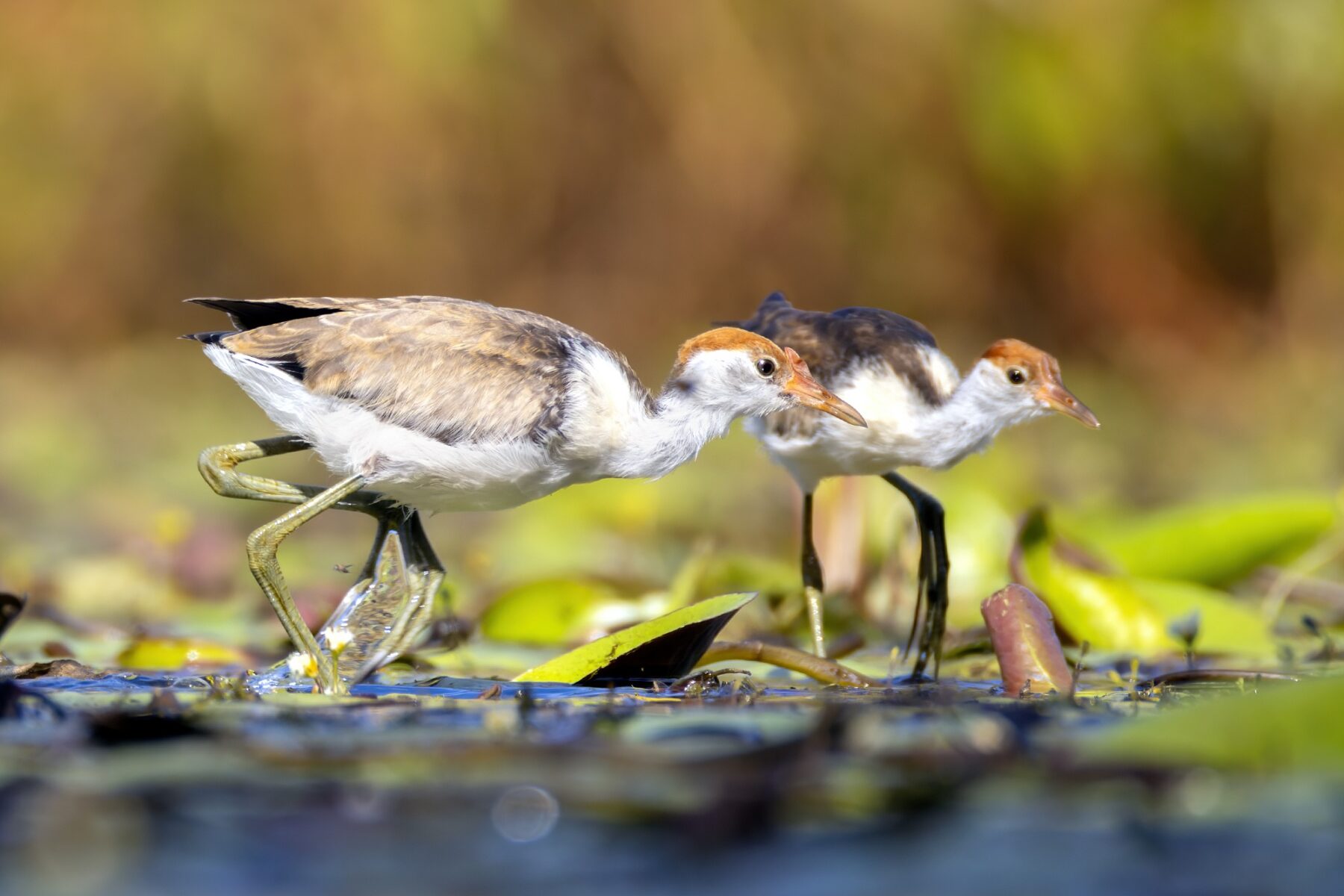
Water Walkers: Comb-crested Jacanas are often called “Jesus birds” because they can seemingly walk on water, thanks to their long, strong toes and claws that help them glide across the surface of ponds and marshes. It’s almost like they’re doing a delicate little dance on water lilies!
Fancy Footwork: Their long toes aren’t just for walking on water. They’re designed to distribute their weight evenly across the surface, preventing them from sinking. It’s like nature’s version of snowshoes!
The Royal Comb: Male Comb-crested Jacanas are known for the striking, bright red comb on top of their heads, which looks like a crown. It’s a beautiful, flamboyant feature that they use in mating displays—think of it as their personal party hat!
Unconventional Dads: In the world of Jacanas, the dads do most of the parenting. The male takes on the responsibility of incubating the eggs and caring for the young, while the female is free to mate with multiple males. Essentially, Jacana dads are the primary caregivers, making them stand out in the bird world for their “hands-on” approach.
Flamboyant Fashionistas: Comb-crested Jacanas have some of the brightest and boldest colors around. Their plumage is a mix of blacks, whites, and rich browns, with a hint of iridescent sheen, making them look like they’re always dressed for a party.
Can’t Stop, Won’t Stop: Known for their stamina, these birds are constantly moving, whether it’s hopping from lily pad to lily pad, hunting for food, or just strutting around the marsh. They rarely stand still for long, making them a challenge to photograph but also a joy to capture in action!
Secret Snackers: Comb-crested Jacanas are omnivores and eat a variety of foods, from seeds to small insects, and even little fish. But they are especially fond of feeding on insects that live among the floating vegetation in their wetland habitats.
Elusive Water Dwellers
These birds can only thrive on water bodies blanketed with floating vegetation—especially lily pads. Because water levels in Australia’s wetlands change with the seasons, not every pond will host Jacanas all year round. This makes finding them a little unpredictable and, for a photographer, all the more rewarding when you do spot them.
Masters of the Lily Pad
I love watching Comb-crested Jacanas at work. With their comically long toes, they can look a bit clumsy at first glance. Yet their balance and precision are incredible as they tiptoe across the pads, testing each one’s stability. Not every lily pad holds firm—sometimes they wobble, sometimes they dip, and occasionally the bird sinks in for a split second before quickly recovering. It’s nature’s slapstick comedy act, performed with elegance.
Parental Surprises
One of the most fascinating things about Jacanas is their parental behavior. The males are devoted dads and will sometimes carry their chicks beneath their wings to protect them from danger. I’ve read about this many times, but I haven’t been lucky enough to witness it in person—yet! Perhaps one day I’ll capture that moment through my lens.
For now, enjoy this small gallery below showcasing these remarkable birds in their watery world.
Australia is a land of countless climate zones and an incredible diversity of life forms. This richness is especially evident in its flowering plants. As a wildlife photographer, each season I find it impossible to walk past a blossoming bush or tree without stopping in admiration.
From Flowers to Feathers
Although I’ve always appreciated the beauty of flowers, flower photography has never been my main passion. As many of you know, I specialise in bird photography. However, I began to realise that when such stunning flowers are in bloom, any bird landing on them could create a truly striking image. Over time, I started targeting certain blossoms, waiting patiently for the moment a bird would land and complete the scene I had in mind. This approach has led to a collection of photographs I’m genuinely proud of.
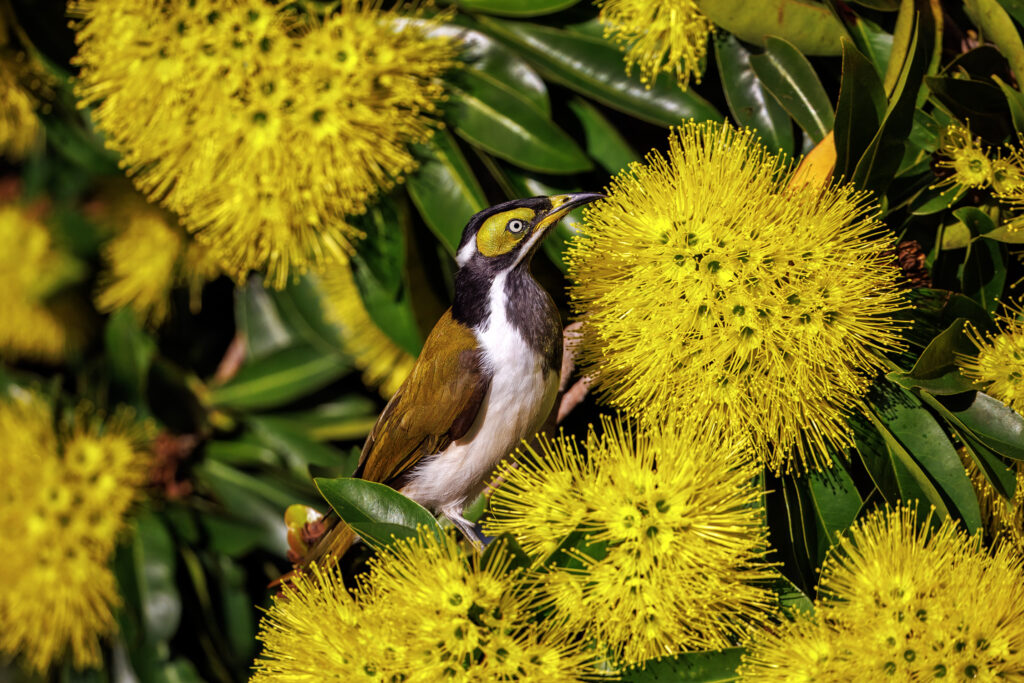
Rainbow Lorikeets on Yellow Penda Blossoms
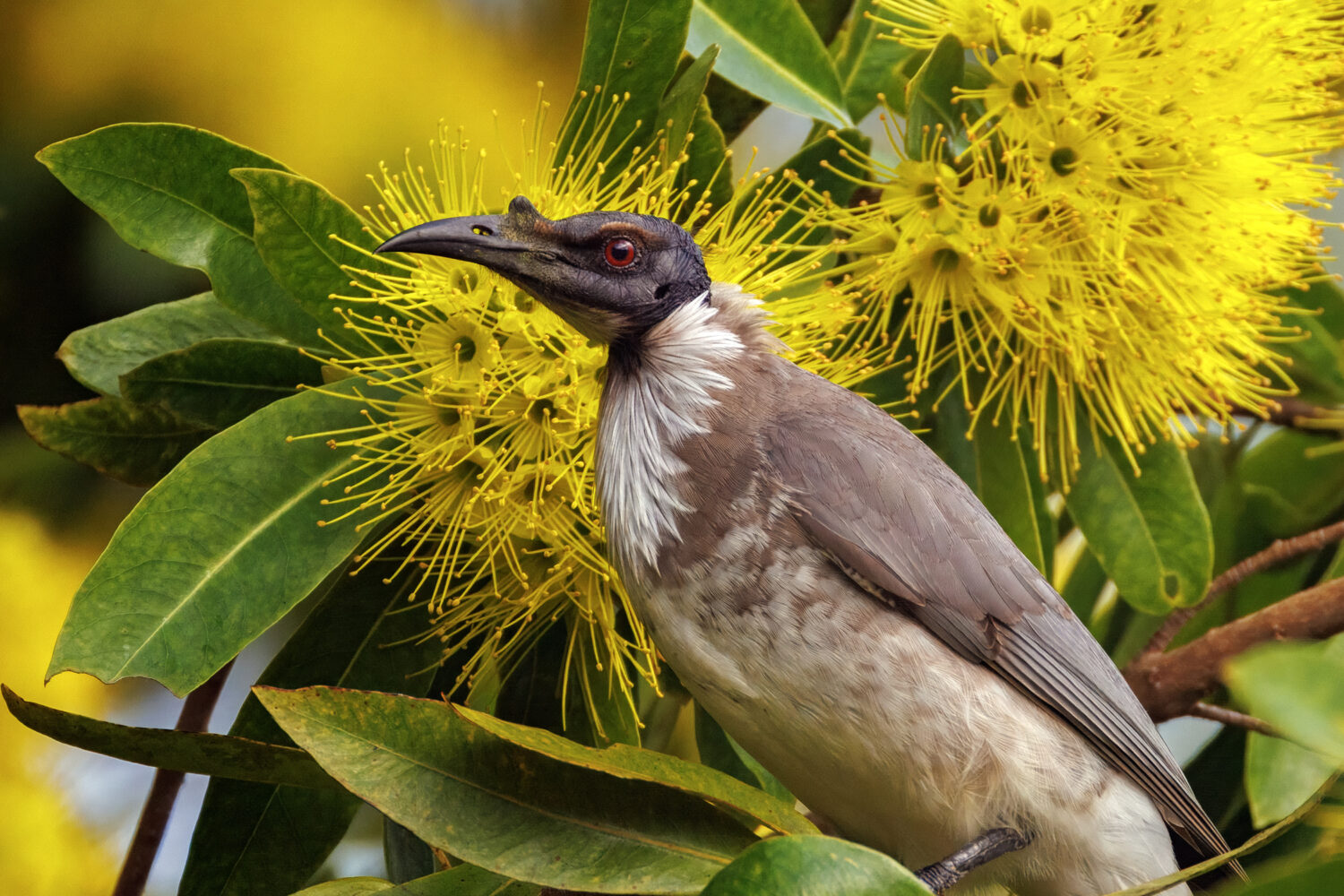
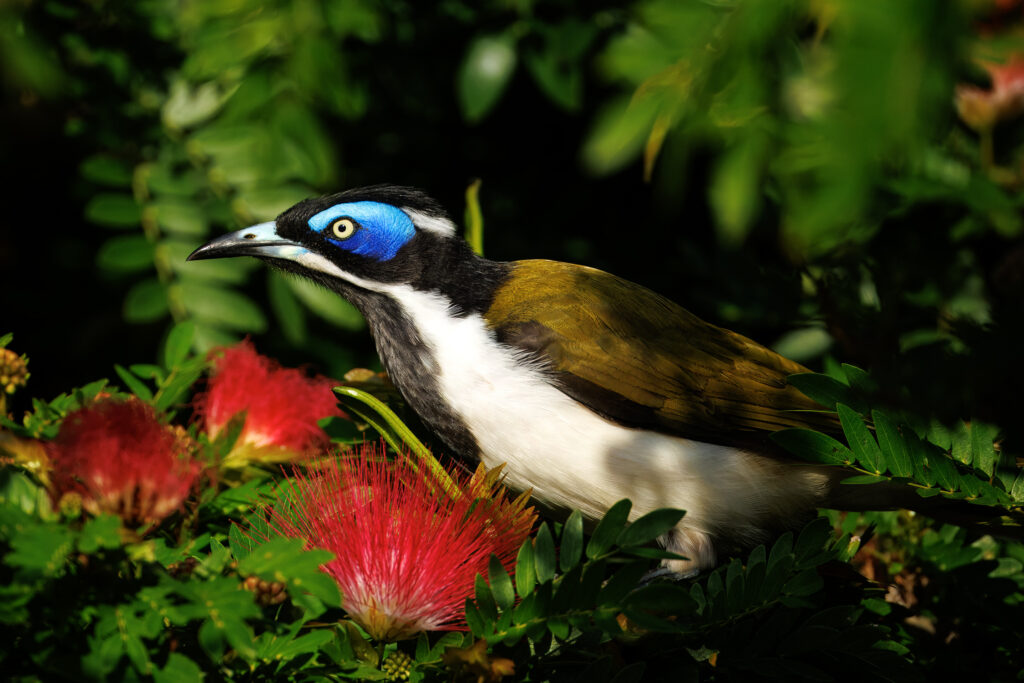
The first image I’d like to share features a Rainbow Lorikeet posing beautifully on the vivid yellow blossoms of the Yellow Penda. These flowers don’t last long—perhaps a week at most—and their delicate blooms are easily ruined by rain or strong winds. After missing several seasons in a row, I made sure to dedicate enough time to this year’s bloom and captured as many visiting species as possible. You’ll find photos of the Blue-faced Honeyeater enjoying the blossoms.
🌼 Yellow Penda (Xanthostemon chrysanthus)
Queensland’s floral gem: The Yellow Penda is native to tropical North Queensland and is sometimes called the “Townsville Gold.”
A magnet for wildlife: Its bright yellow, pom-pom-like flowers are rich in nectar, attracting lorikeets, honeyeaters, butterflies and bees.
Tough but fleeting: Despite being a hardy tree that thrives in heat, the flowers only last about a week — making your timing with photography absolutely crucial!
🐦 Noisy Friarbird (Philemon corniculatus)
The bald one: With its featherless black head and long curved bill, it’s often nicknamed the “Leatherhead.”
Big personality: True to its name, the Noisy Friarbird is loud and bossy, often chasing away smaller birds from its favourite nectar sources.
Team player: Despite the noise, they’re important pollinators — carrying pollen from flower to flower as they feed.
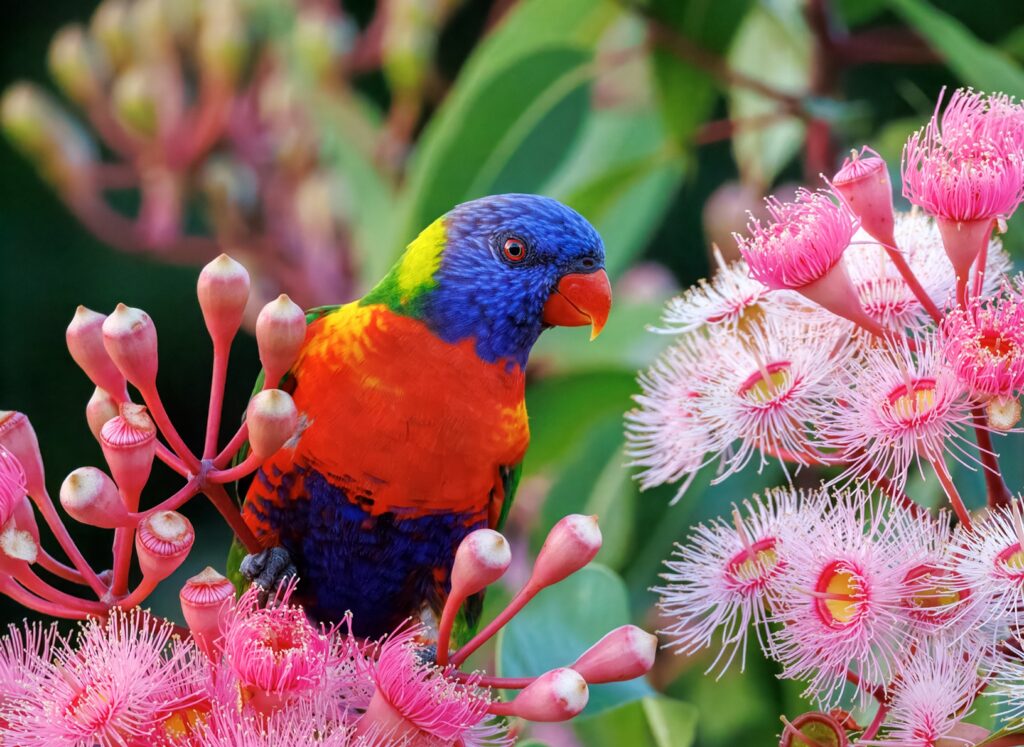
Blue Gum Blooms and Lorikeet Colours
Next, I turned my lens toward the blossoms of the Blue Gum eucalyptus tree. Here, once again, the Rainbow Lorikeet took centre stage. The bright greens and blues of the bird against the creamy white gum blossoms make for a vibrant and quintessentially Australian scene.
🌿 Blue Gum (Eucalyptus globulus and other Eucalyptus spp.)
An Aussie icon: Blue Gums are among the most recognisable eucalypts, with smooth blue-grey bark and creamy white flowers.
Sweet scent, strong flavour: The nectar not only draws birds but is also used by bees to make a distinct, strong-flavoured honey.
Koala café: While lorikeets love the blossoms, koalas are more interested in the leaves — they can eat up to a kilo a day!
🦜 Rainbow Lorikeet (Trichoglossus moluccanus)
Nature’s paint palette: Their rainbow plumage — green, blue, orange, and red — isn’t just for show; it helps them blend into the colourful blossoms they feed on.
Brush-tipped tongues: Lorikeets have special bristle-like tongues that act like paintbrushes, perfect for sipping nectar from flowers.
Chatty neighbours: They’re highly social and noisy — if you’ve ever been near a flowering gum in the morning, you’ve likely heard their cheerful squawks!
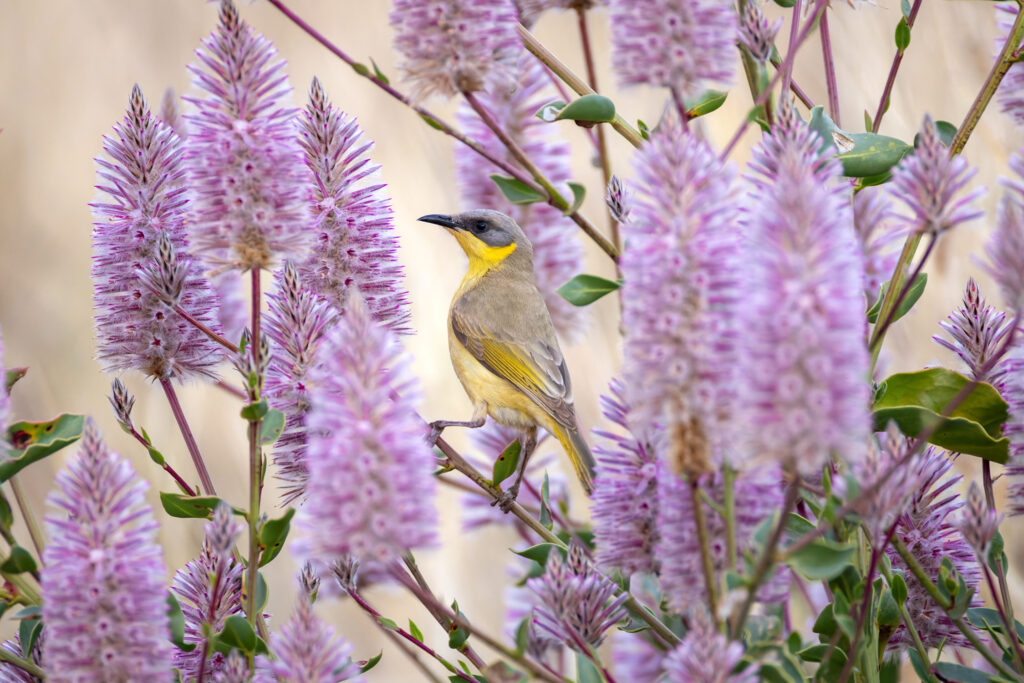
Honeyeaters Among the Mulla-Mullas
My next set of photos comes from the Australian outback, where the Pink Mulla-mullas bloom for much of the winter season. These stunning flowers are a magnet for honeyeaters, and I was fortunate enough to capture Grey-headed Honeyeaters feeding among the pink spikes. The contrast between the dusty outback landscape and the bursts of pink made for a captivating composition.
🌸 Pink Mulla-Mulla (Ptilotus exaltatus)
Desert beauty: These fluffy, pink-purple flower spikes are a familiar sight in the arid heart of Australia, especially after rain.
Outback survivor: Mulla-mullas can tolerate extreme heat and drought, often colouring the red desert plains for months.
Not just pretty: Indigenous Australians traditionally used parts of the plant for soothing burns and wounds.
🪶 Grey-headed Honeyeater (Ptilotula keartlandi)
Outback specialist: Found mainly in Australia’s inland deserts and dry woodlands, it’s well adapted to the heat.
Social drinkers: They often visit waterholes in small flocks, particularly in the morning and late afternoon.
Flower fanatics: Like most honeyeaters, they have a brush-tipped tongue for collecting nectar — and play a big role in pollinating desert plants.
🎵 Singing Honeyeater (Gavicalis virescens)
Desert songbird: Common across much of Australia, they’re named for their clear, melodious call.
Flexible feeders: From nectar to insects to fruit, these honeyeaters adapt to whatever’s available — one reason they thrive in harsh environments.
Territorial tunes: Males use their songs to defend feeding territories, often perched proudly atop a flowering shrub.
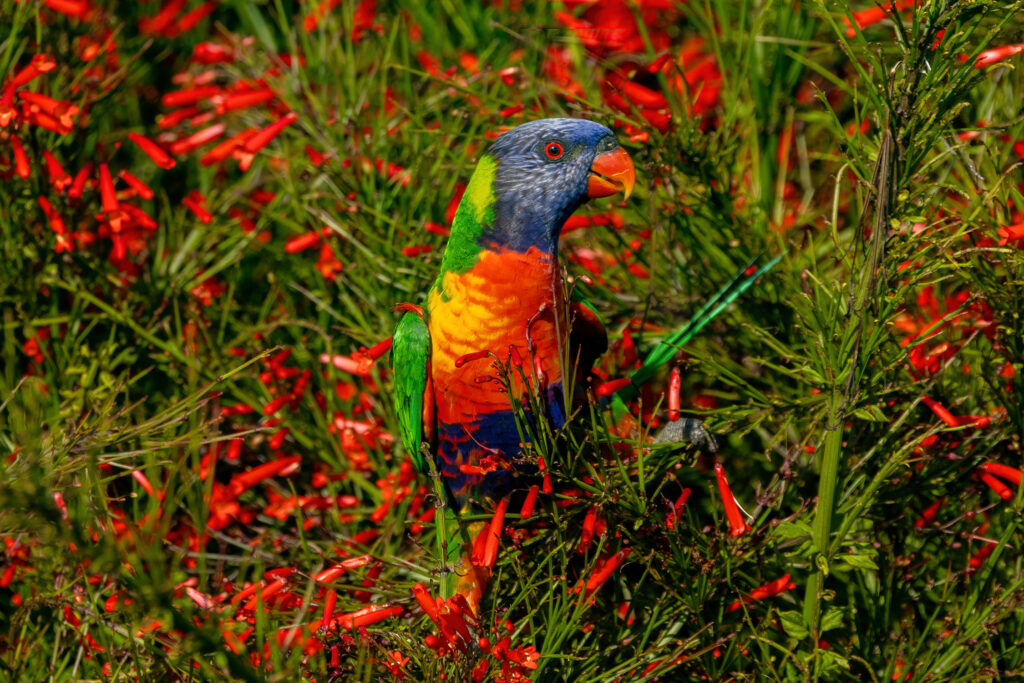
Mystery Blossoms and Curious Lorikeets
The final couple of photos once again feature lorikeets, but this time I must admit—I have no idea what plants they’re perched on! If you recognise them, please drop a comment below and let me know. I always enjoy learning more about Australia’s incredible flora from fellow nature lovers.
Join the Conversation
This collection will continue to grow as I explore new regions and seasons. For now, I’d love to hear from you—which of these photos is your favourite? Leave a comment below and let’s celebrate Australia’s unique beauty together.
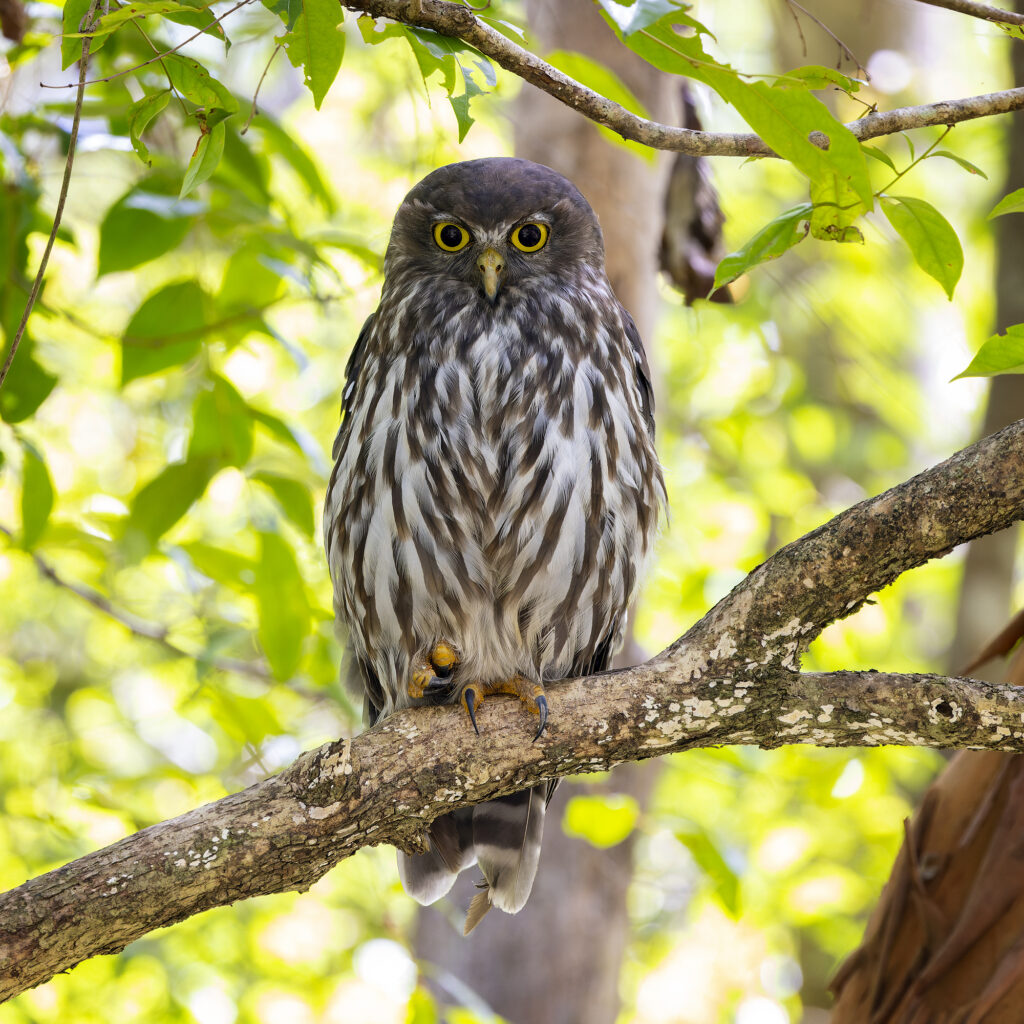
Australian owls are unlike their counterparts elsewhere in the world. Most species spend the day hidden inside tree hollows, rarely seen roosting in the open. They are entirely nocturnal, emerging only under the cover of darkness to hunt. This secretive behavior makes seeing them — and especially photographing them — both difficult and deeply rewarding.I’ve spent countless hours wandering through forests and national parks across Australia, searching for signs of nocturnal life. Along the way, I’ve been lucky enough to encounter and photograph some of Australia’s most remarkable owls.
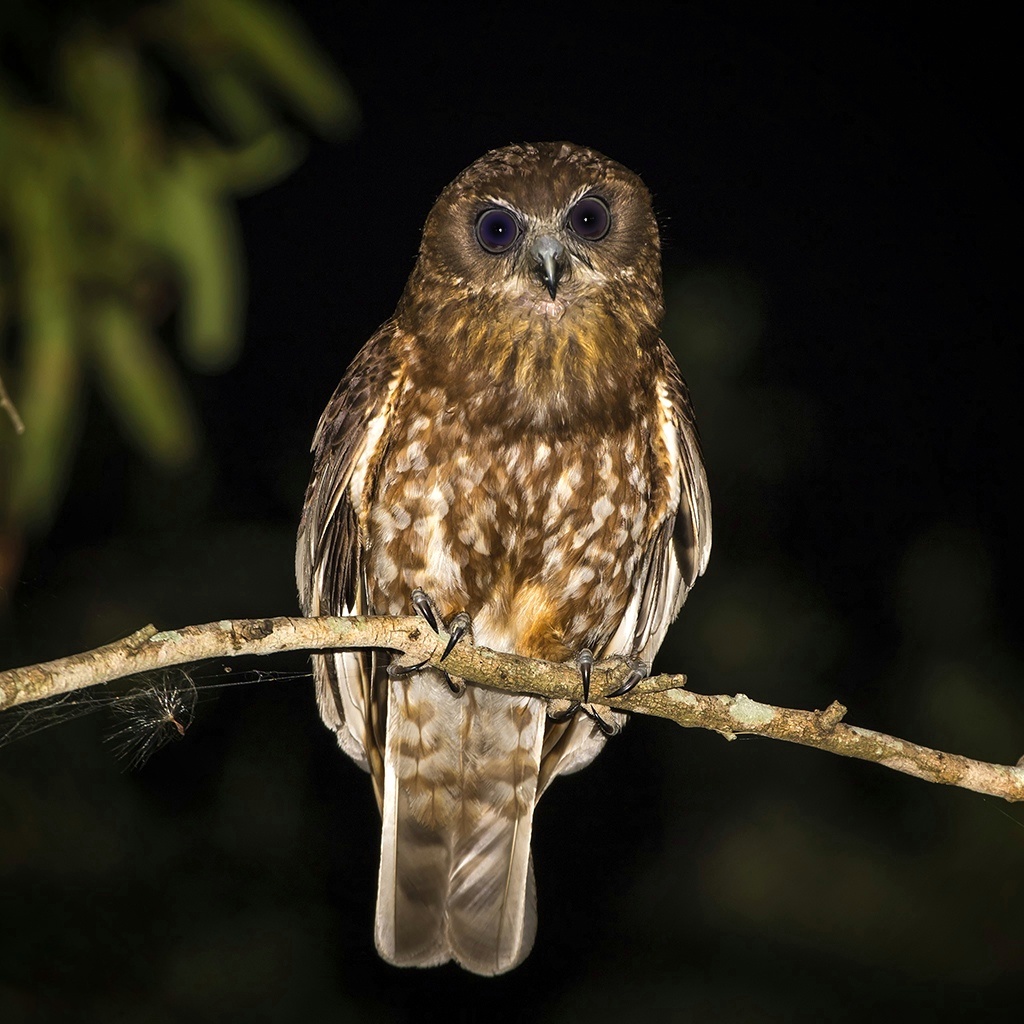
🦉 Southern Boobook (Ninox boobook)
The first owl I’d like to share is the Southern Boobook, the smallest of Australia’s owls. Despite their size, they are fierce little hunters with a haunting, melodic call that echoes through the night. This small but fierce hunter is the most widespread owl in Australia, found from rainforests to suburban backyards. Its familiar “boo-book” call echoes through the night and is often mistaken for a distant cuckoo.
😷 Masked Owl (Tyto novaehollandiae)
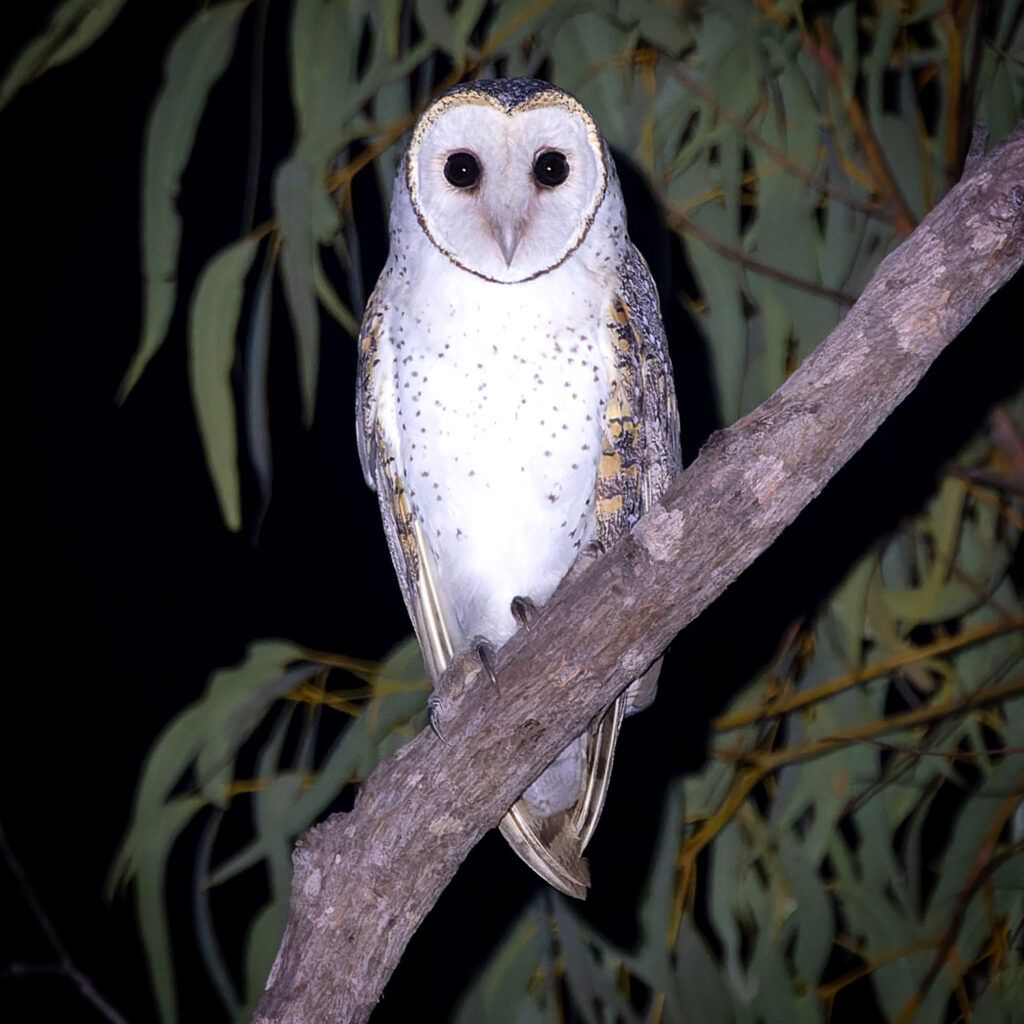
The ghost of the forest.With their heart-shaped faces and dark eyes, Masked Owls look like forest phantoms. They have one of the largest facial discs of any owl, helping them detect prey by sound alone — even under thick leaf litter. Sadly, their dependence on large old trees makes them vulnerable to habitat loss.
The Masked Owl is a rare and striking species, particularly around the Brisbane region. I was fortunate to spend time photographing them while living on Groote Eylandt in the Northern Territory, where their ghostly faces and silent flight make them unforgettable.
🐶 Barking Owl (Ninox connivens)
The owl that barks — and screams.Famous for its dog-like “woof-woof” call, the Barking Owl can also produce a chilling scream that’s earned it the nickname “the screaming woman owl” in bush folklore. They’re highly social, often calling in pairs as part of their nightly duet.
The Barking Owl is as endearing as it sounds. Named after its dog-like bark, it’s known to confuse — and sometimes infuriate — local dogs that can’t quite locate the source of the sound. Their expressive eyes and rounded faces make them a joy to photograph.
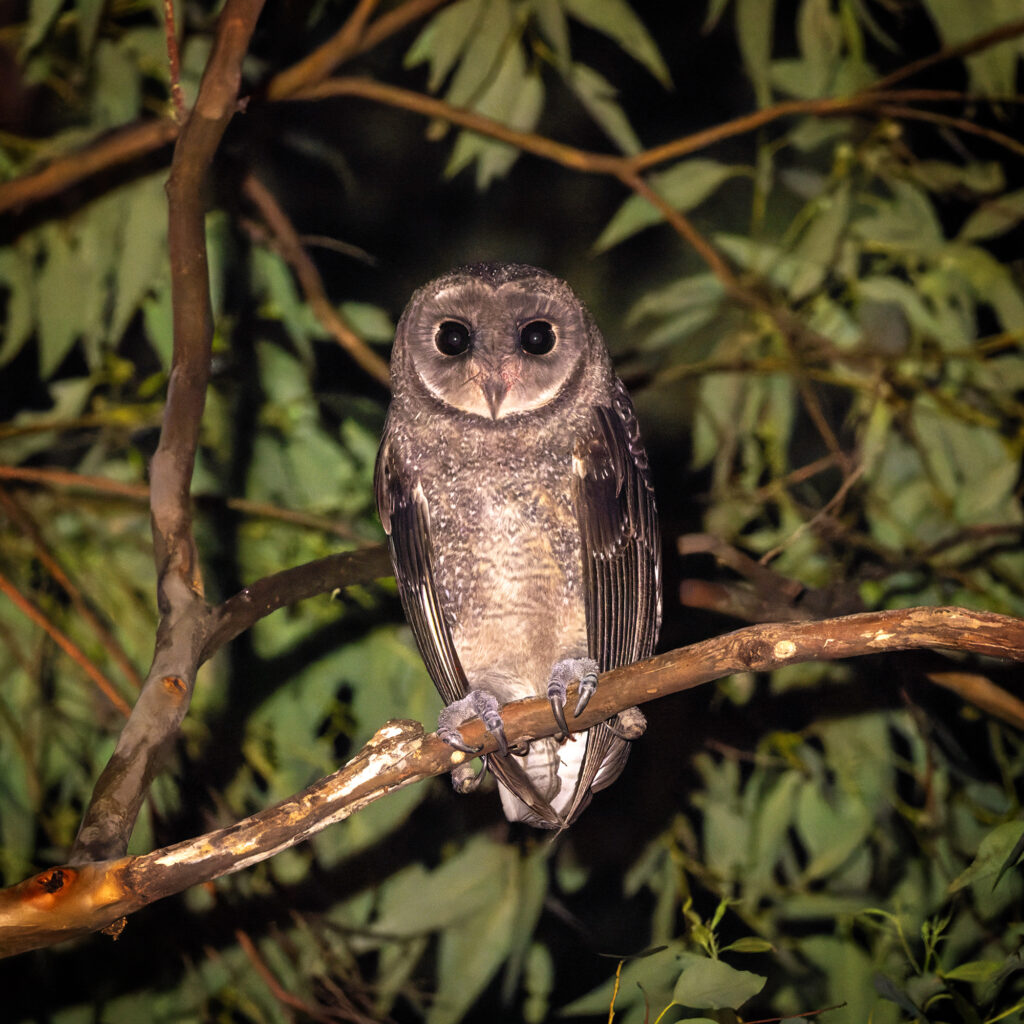
🌌 Greater Sooty Owl (Tyto tenebricosa)
A shadow with wings.These stunning owls haunt the dark rainforests of eastern Australia, their plumage a velvety mix of silver, grey, and black. Their eerie, falling-bomb screech can echo through the forest at night, startling anyone unfamiliar with their presence.
Of all the owls I’ve seen, the Greater Sooty Owl is perhaps the most beautiful. With dark, velvety plumage and large, black eyes, they look almost otherworldly. Their eerie, rasping scream in the night is unforgettable once heard.
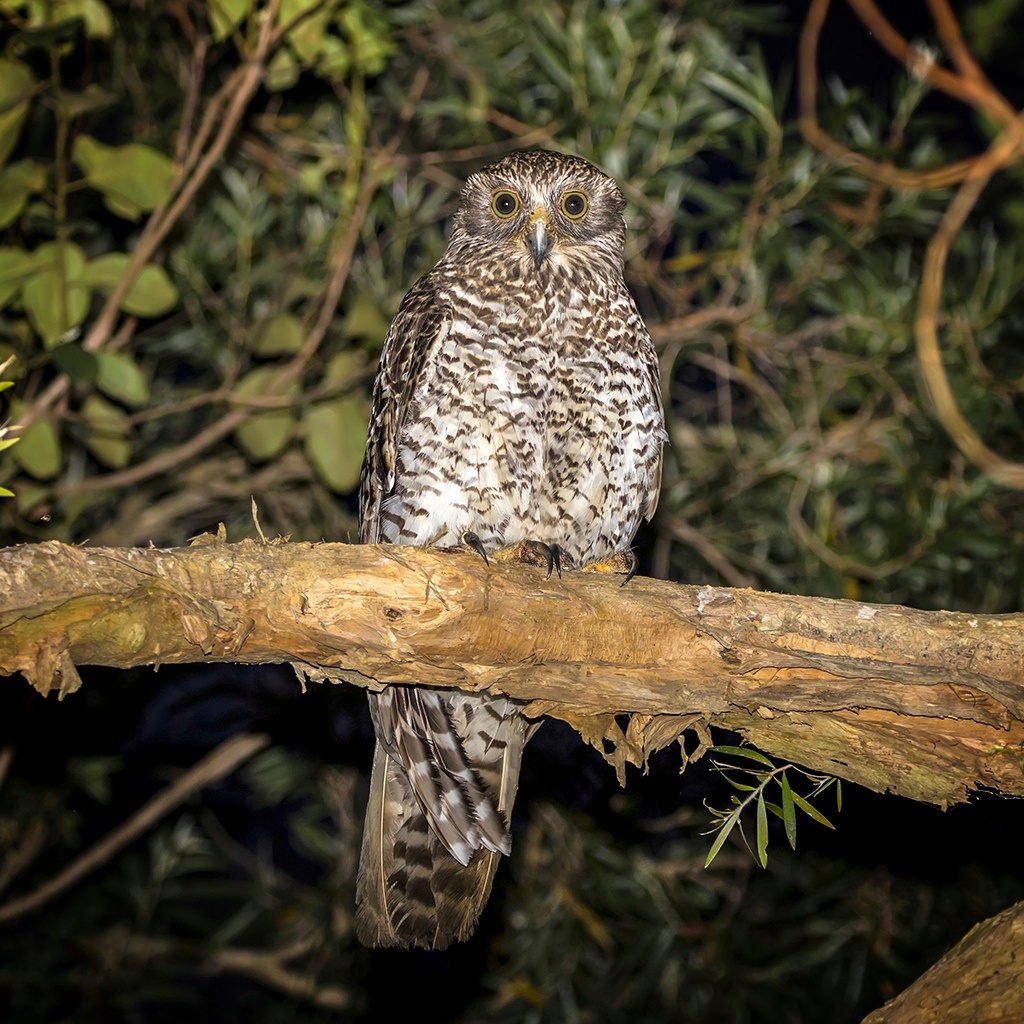
💪 Powerful Owl (Ninox strenua)
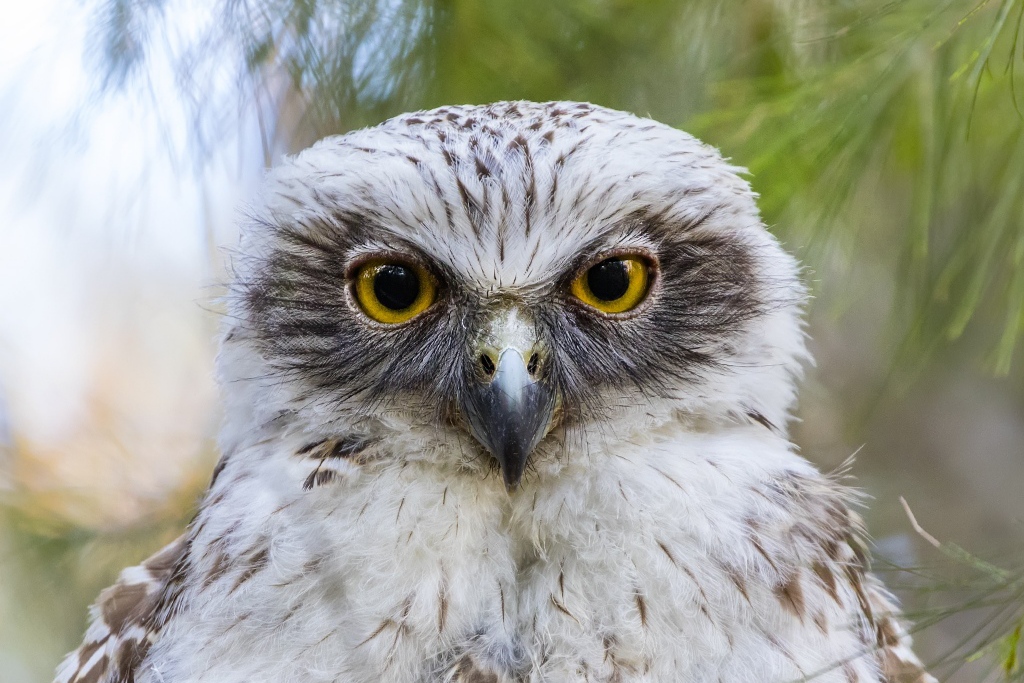
And then there’s the Powerful Owl — the largest of them all, growing up to 65 cm tall. Australia’s top nocturnal predator, the Powerful Owl lives up to its name. With immense talons and strength, it can take prey as large as a flying fox or small wallaby. Despite their fearsome hunting skills, these owls form lifelong bonds and tenderly care for their chicks during the breeding season.
Finding possums often means Powerful Owls are nearby. Their deep, resonant hoots can carry for over a kilometre through the forest.One year, I set myself a challenge: to photograph a Powerful Owl in daylight. This became one of the most rewarding — and demanding — projects I’ve ever attempted.
Here’s a glimpse of how that journey unfolded:
Night 1: Found chicks calling, marked the area, and left them undisturbed.
Day 1: No sign of owls.
Night 2: Located them again.
Day 2: Found them too high for good photos.
Night 3–4: On and off sightings, missed opportunities due to rain.
Night 6: Found them again.
Day 6: Thick trees blocked my view.
Night 8: More searching, more near misses…
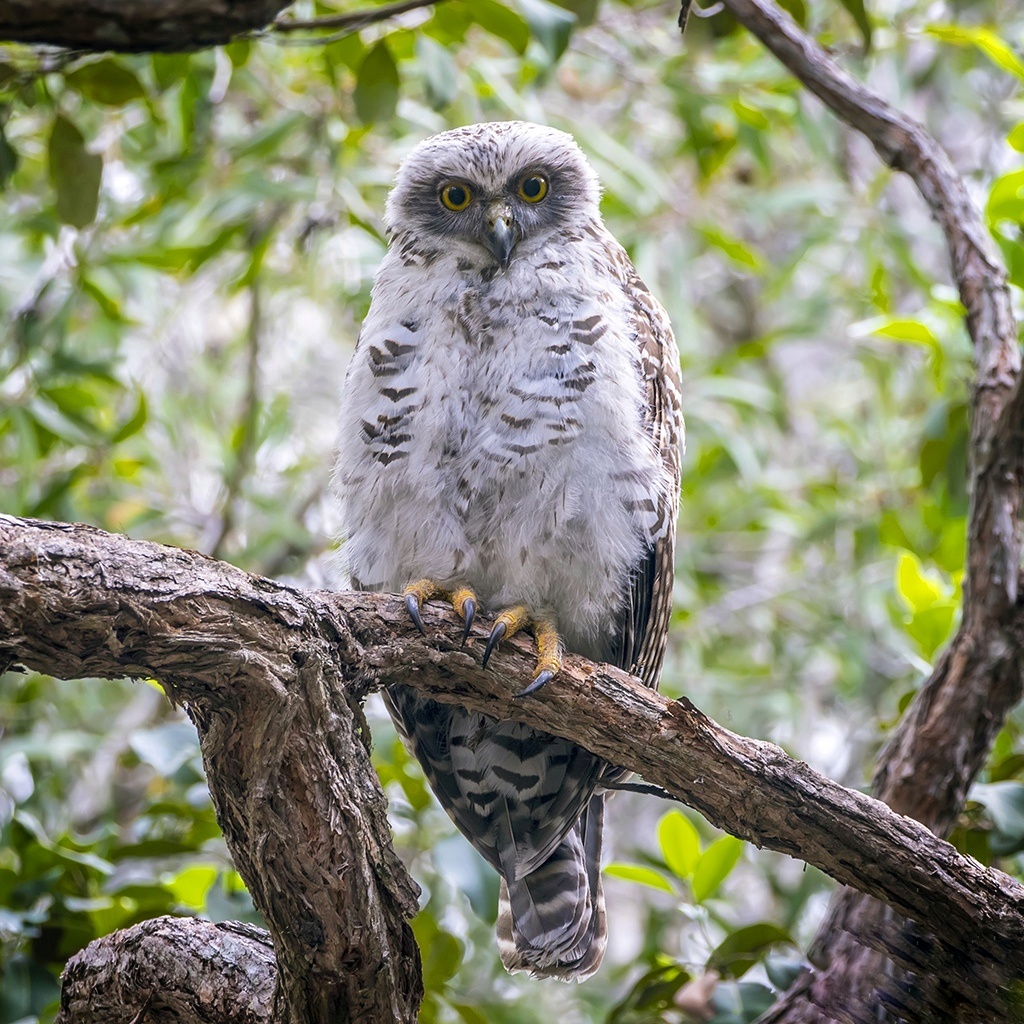
And so it went, night after night. For nearly a month, I searched. But persistence paid off. One morning, I finally found a Powerful Owl chick, perched right above a walking track — beautifully exposed in the soft morning light. The parents stayed hidden, but I’m sure they were watching me closely the entire time.The photos I captured that day remain among my proudest achievements. They remind me that patience, respect, and perseverance are the true keys to wildlife photography.
I’m delighted to share these images with you here. Let me know in the comments below — which Australian owl captures your heart?
Unlike ducks and many other waterbirds, cormorants don’t have fully waterproof feathers. This might seem like a design flaw, but it actually helps them dive deeper and move more efficiently underwater. After a good fishing session, they’ll be seen perched with wings spread out, drying off like feathered scarecrows.
🐟 Underwater acrobats
Cormorants are phenomenal swimmers — they use their webbed feet to propel themselves underwater while steering with their tails. Some species can dive as deep as 40 metres in pursuit of fish!
📦 They nest in colonies that smell… unforgettable
Many cormorants nest in large colonies, often on islands or cliffs. These nesting sites are loud, chaotic, and pungent — thanks to all the fish-rich guano. Not ideal for the nose, but perfect for the lens.
🌍 Globally widespread, locally unique
Cormorants are found all over the world, but Australia is home to a unique mix of species — including the coastal Black-faced Cormorant, which you won’t see anywhere else on Earth.
🐣 Chicks with prehistoric vibes
Young cormorants hatch naked and awkward-looking, resembling little dinosaurs. As they grow, they develop downy feathers before taking on the sleek, glossy plumage of adults.
🛶 Fishermen’s helpers (and rivals)
In parts of Asia, trained cormorants have been used by traditional fishermen for centuries. A snare is tied around the bird’s neck to stop it from swallowing larger fish, which the fisherman retrieves when the bird returns to the boat. (Don’t worry — they still get rewarded with smaller fish!)
🔭 The “wing-drying” mystery
There’s still some debate among scientists about why cormorants spread their wings to dry. Yes, it’s to dry off — but some research suggests it may also help regulate body temperature or aid digestion.
🎯 Visual hunters
Cormorants rely heavily on sight when hunting underwater. Their eyes can adjust quickly between air and water vision — a handy trick when you spend your life darting between the two.
Masters of Air and Water: The Unique World of Cormorants
Cormorants are fascinating birds — sleek, sharp-eyed, and built for life in the water. What makes them truly interesting is their mastery of both air and water: with their long necks and powerful wings, they can soar overhead just as easily as they vanish beneath the surface, chasing fish with uncanny agility. Unlike many waterbirds, cormorants don’t have fully waterproof feathers. You’ll often see them perched with wings spread wide, drying off after a dive — a signature pose that’s both iconic and a little eerie.
A Personal Journey: Photographing Every Australian Cormorant
I have seen and photographed all of the Australian cormorants, which is a cool achievement, as they all inhabit different parts of the country, but also sad, as there is no birds of this genus left for me to “hunt”. It’s been a journey across wetlands, coastlines, rivers and remote headlands — and each encounter has been special in its own way.
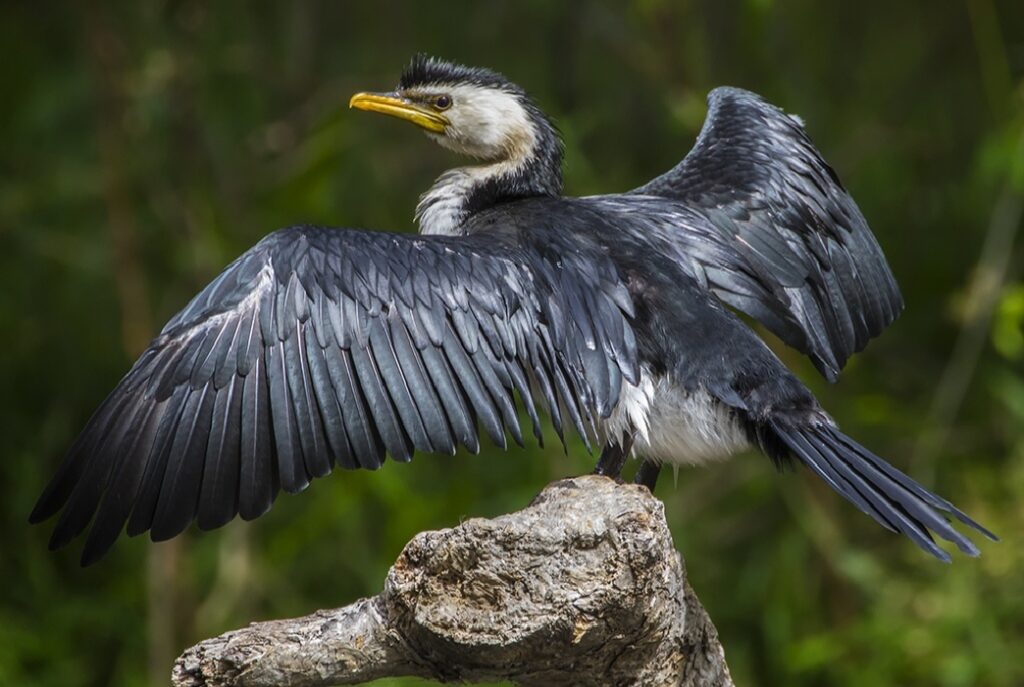
Little Pied Cormorant (Microcarbo melanoleucos)
The Little Pied Cormorant is a common sight around inland lakes, rivers, and even urban wetlands. It’s easily recognised by its striking black and white plumage — a small, elegant bird with a bit of attitude. It tends to hunt alone, often floating quietly before diving for small fish or aquatic insects. Their versatility has allowed them to thrive in a wide range of habitats, from city parks to remote bush billabongs.
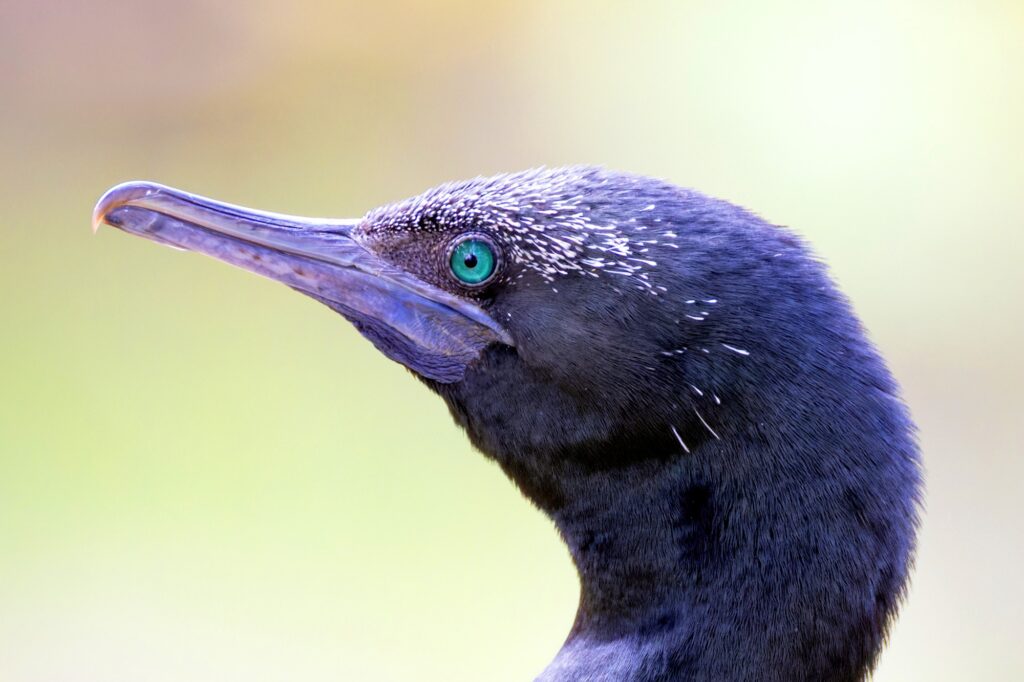
Little Black Cormorant (Phalacrocorax sulcirostris)
Sleek and uniformly black, the Little Black Cormorant is often seen in large flocks, especially on inland freshwater bodies. When they gather in numbers, the spectacle of synchronised diving is something to behold. Their social nature sets them apart from the more solitary species, and they’re often found roosting together in long lines on tree branches or rocks near water. Adult birds have an incredible eye colour — a vivid turquoise blue — which contrasts beautifully against their glossy black feathers and really stands out in good light.
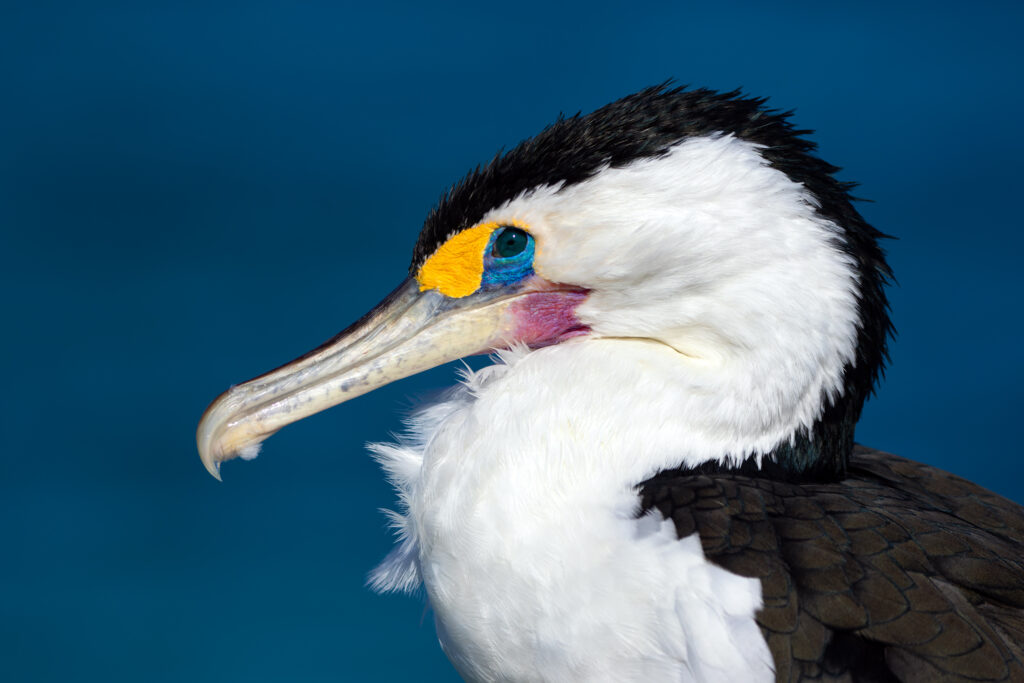
Pied Cormorant (Phalacrocorax varius)
The Pied Cormorant is one of Australia’s more striking waterbirds, with bold black-and-white plumage and a strong, yellow-orange facial patch that stands out against its pale face. Larger than the Little Pied but smaller than the Great Cormorant, it’s most commonly found along the coast, especially in estuaries, bays, and sheltered inshore waters, though it does venture inland in some regions. It’s a powerful diver and often seen fishing alone or in loose groups. When perched, its bright eyes and contrasting colours make it especially photogenic — a real favourite among bird photographers. Their heavy, slightly curved bill is another good field mark to pick them out in a mixed cormorant roost. The portrait below was taken on a jetty where the bird was having a siesta. I don’t think it was possible to get any closer, so the photo is full of fine detail, and the breeding colours are simply phenomenal — with the dark blue sea perfectly complementing the scene.
Great Cormorant (Phalacrocorax carbo)
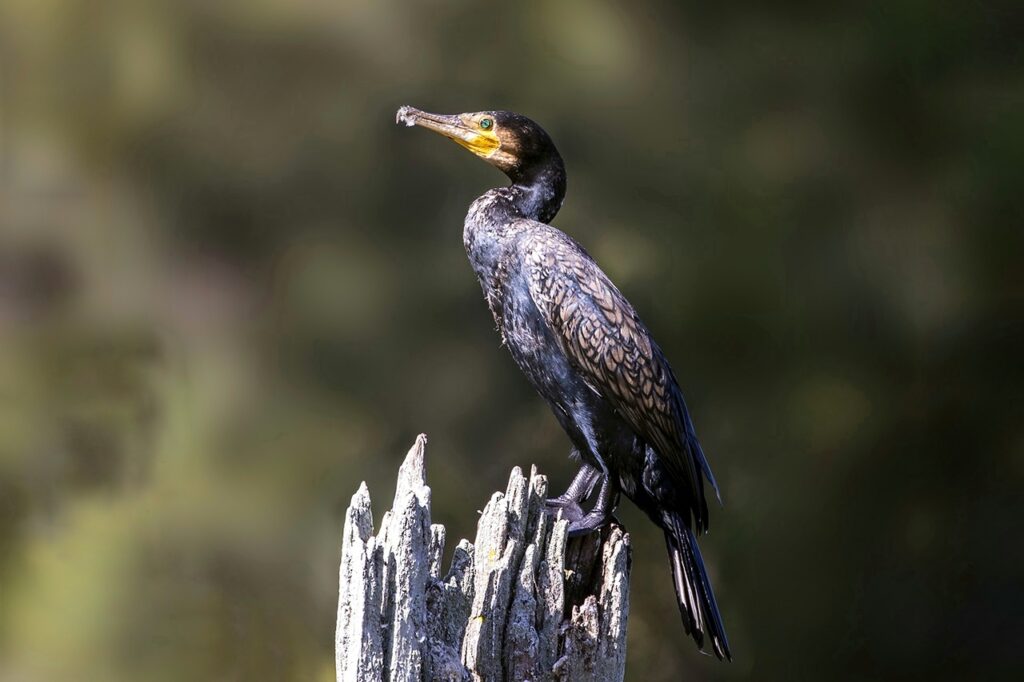
As its name suggests, the Great Cormorant is the largest of the Australian species. With its powerful build and commanding presence, it’s often found in coastal environments, though it also ventures inland. The plumage is mostly black with a distinctive white throat and yellowish facial skin. It’s a formidable hunter, capable of chasing down larger prey, and its deep, heavy flight makes it easy to pick out against the sky.
Black-faced Cormorant (Phalacrocorax fuscescens)
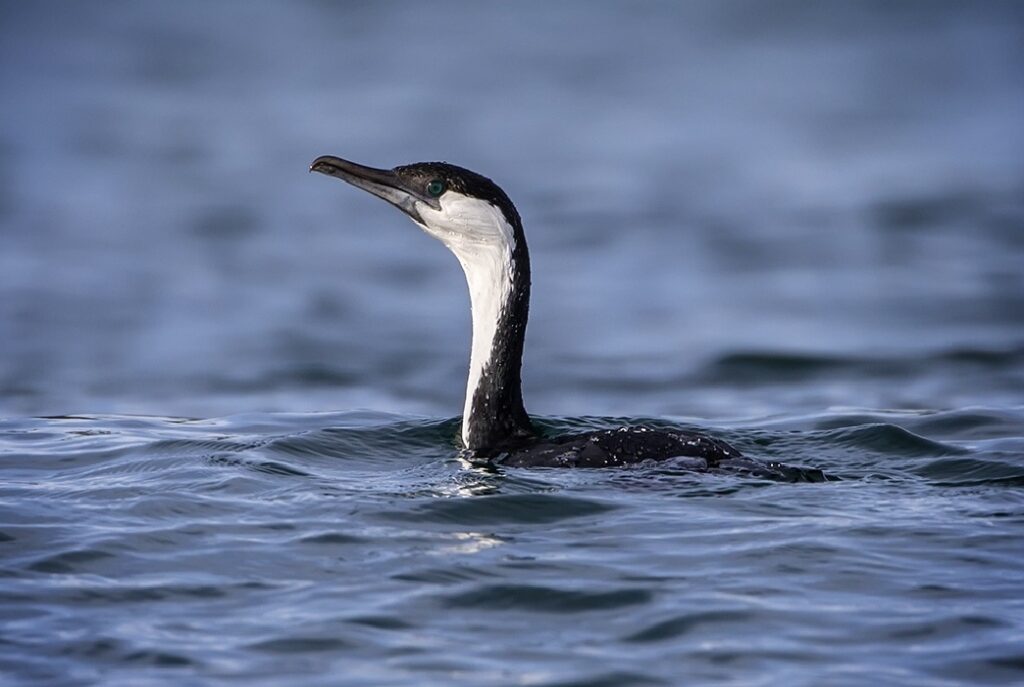
This species is a true coastal specialist, found mainly along the southern shores of Australia and Tasmania. It’s one of the more range-restricted cormorants, preferring the cold, rough waters of rocky coasts and offshore islands. The white underparts contrast sharply with its darker upper body and the characteristic black face mask. They nest in large colonies and are a bit harder to approach than their inland cousins — a reward for the more adventurous photographer.
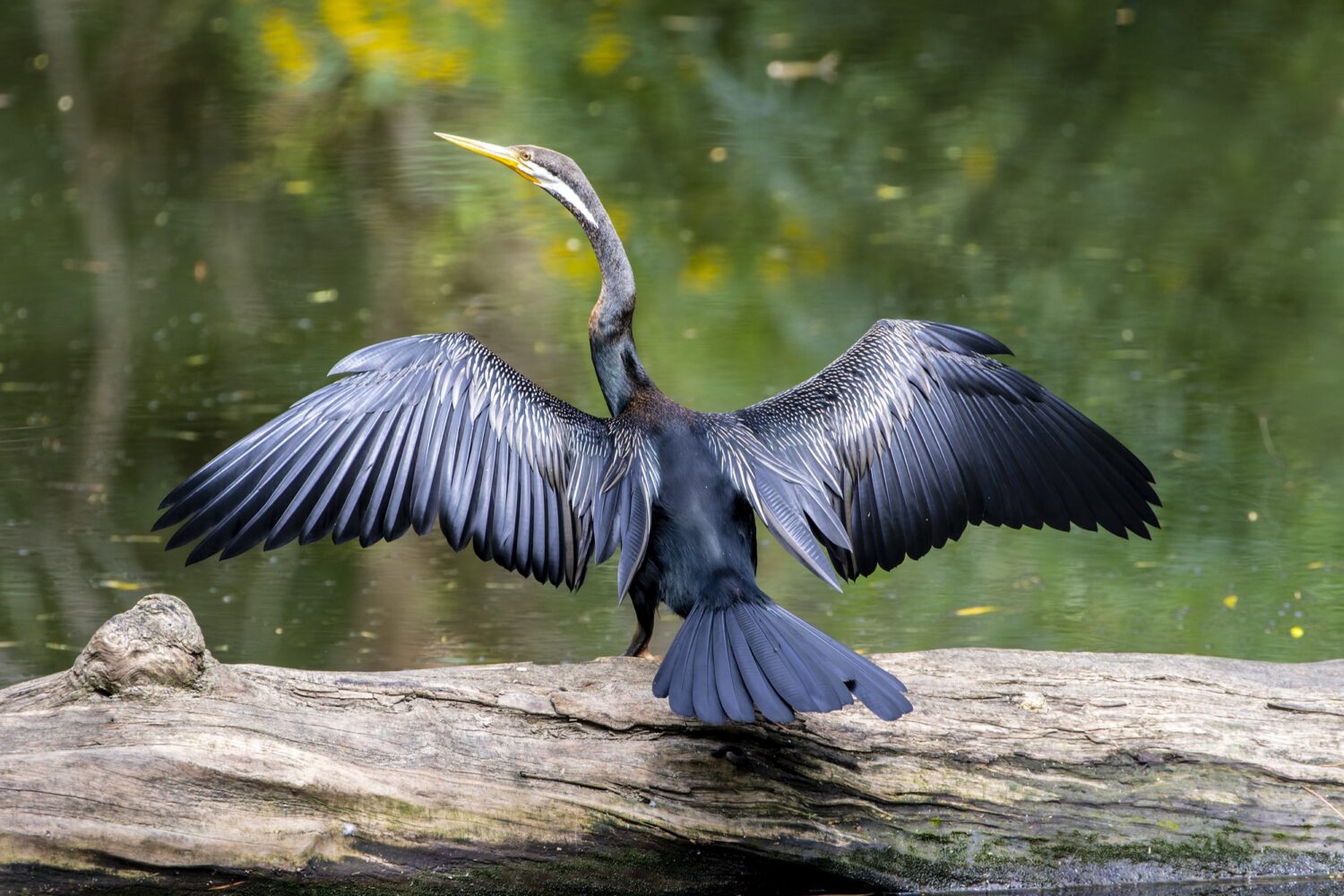
Australasian Darter (Anhinga novaehollandiae)
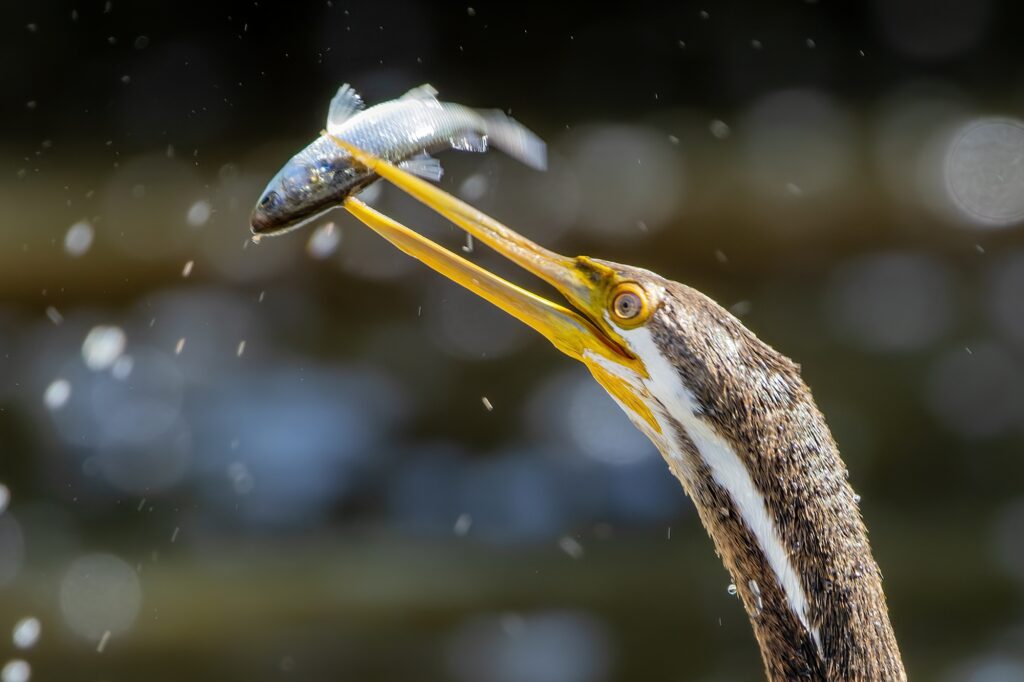
While not technically a cormorant, the Australasian Darter is closely related and often found in similar habitats. Also called the “snakebird” due to its long, slender neck and swimming style, the darter hunts with a rapid, spearing motion of its sharp bill. Its silhouette is more slender and graceful than a cormorant’s, and in flight, it shows a long tail and narrow wings. Darters also perch with wings spread, drying off after a dive, making them easy to mistake for a cormorant at first glance.
Taxonomically, darters belong to the family Anhingidae, while cormorants fall under Phalacrocoracidae. Both families sit within the order Suliformes, making them close cousins in the bird world. Their diving behaviour and general appearance are quite similar, but there are subtle differences in posture, feeding style, and anatomy that set them apart — something birders and photographers alike grow to notice with experience.
The Australasian Darter hunts by using its sharp, pointed beak to spear fish underwater. Once it emerges, it needs to skillfully manoeuvre the catch off its beak and into its mouth — a tricky feat it accomplishes by repeatedly tossing and flipping the fish in a smooth, practiced motion.
Patience, Pursuit, and Memories: My Cormorant Adventure Complete
Each of these species has challenged me in different ways — whether it was the patience needed to photograph the elusive Black-faced Cormorant on a windswept southern cliff, or the joy of finding a Great Cormorant sunning itself on a riverbank. Now that I’ve seen them all, it’s a satisfying milestone, but also a little bittersweet. There are no more cormorants left in Australia for me to “hunt” with the lens — but the photos, and the memories behind them, will always remind me of the journey.