Category: Nature

  • Meeting the Rainbow Pitta: Australia’s Shy Rainforest Gem

    Meeting the Rainbow Pitta: Australia’s Shy Rainforest Gem

    Tucked away in the lush monsoon forests of the Northern Territory, the rainbow pitta is one of Australia’s most dazzling yet discreet birds. Its jewel-bright colours flash like a surprise in the shadows, offering photographers a rare reward for patience and quiet footsteps. While their beauty is undeniable, rainbow pittas are far more than a pretty subject—they’re agile ground foragers, meticulous nest-builders and fascinating characters of the Top End’s tropical ecosystems. In this article, I’ll take you behind the scenes of my recent encounters with these vibrant little forest dwellers and share the photographs that tell their story.

    Interesting facts about the Australian rainbow pitta

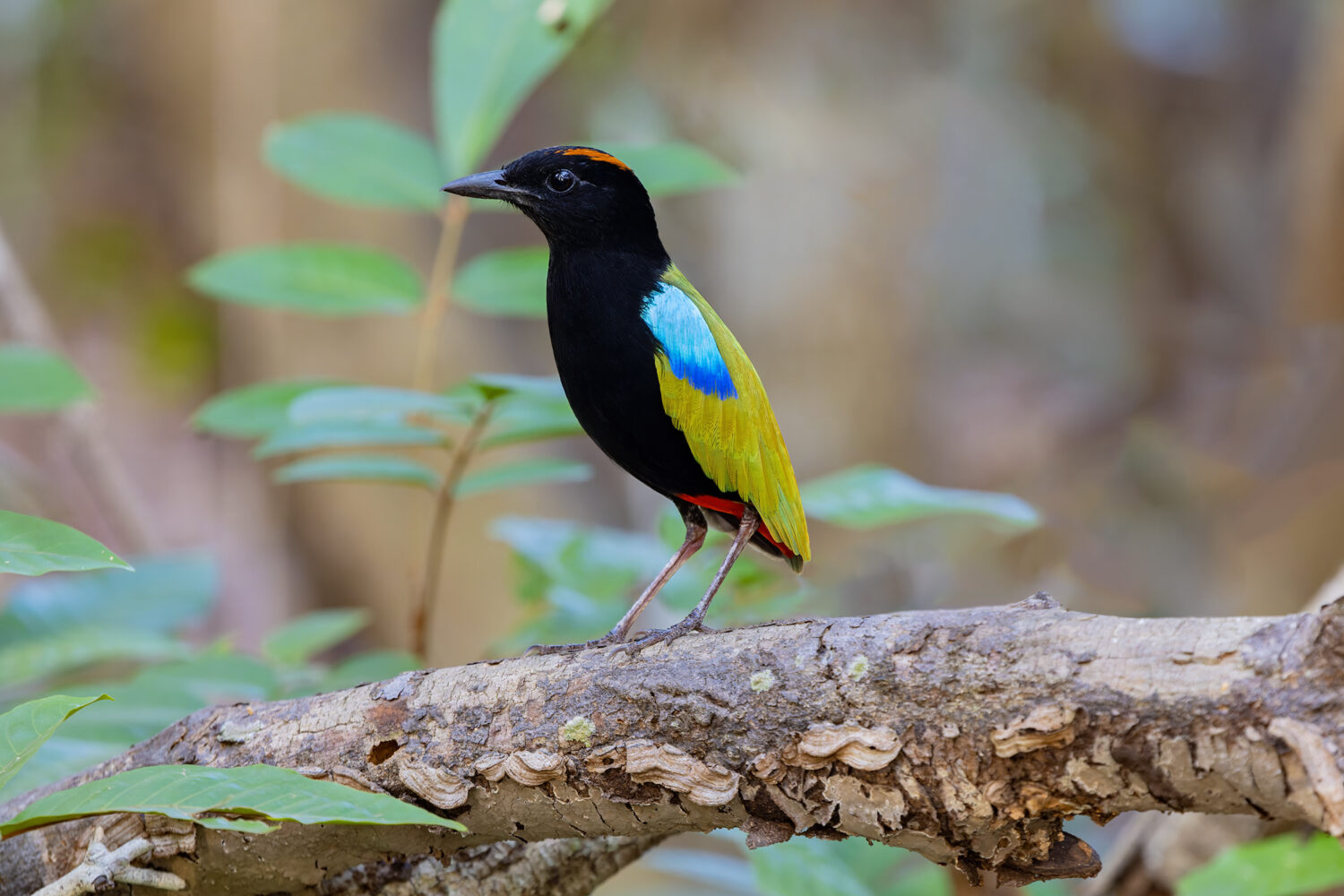
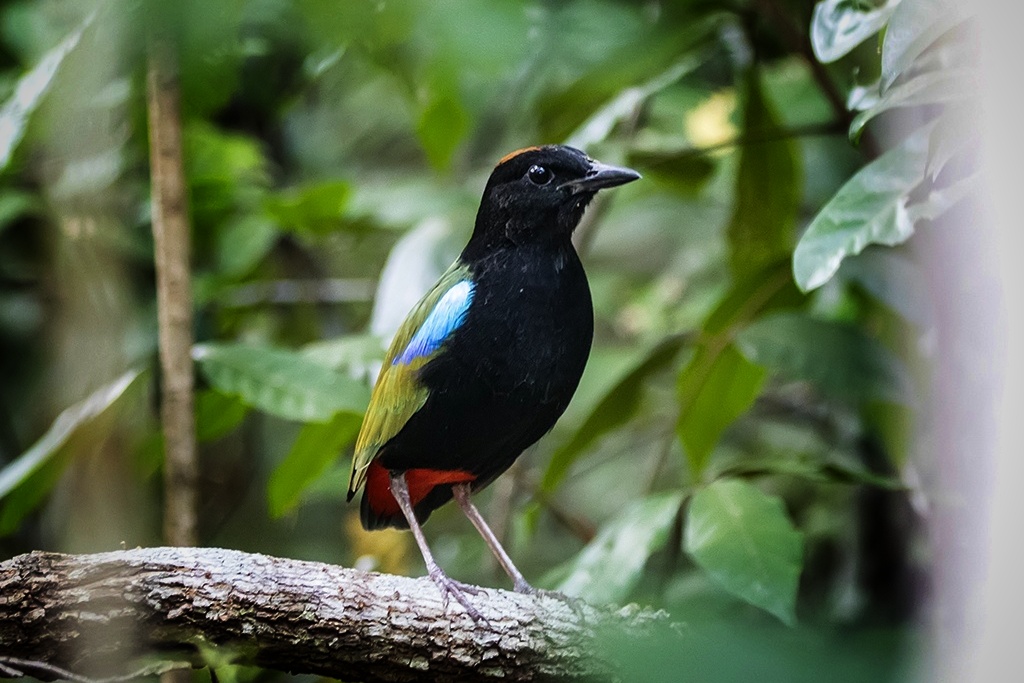
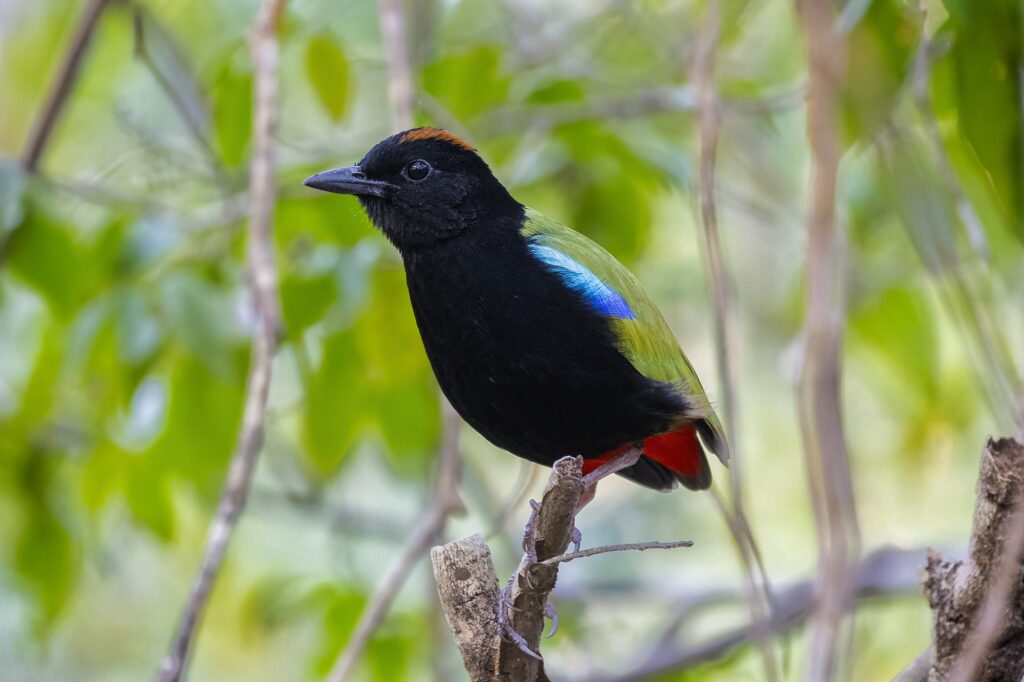
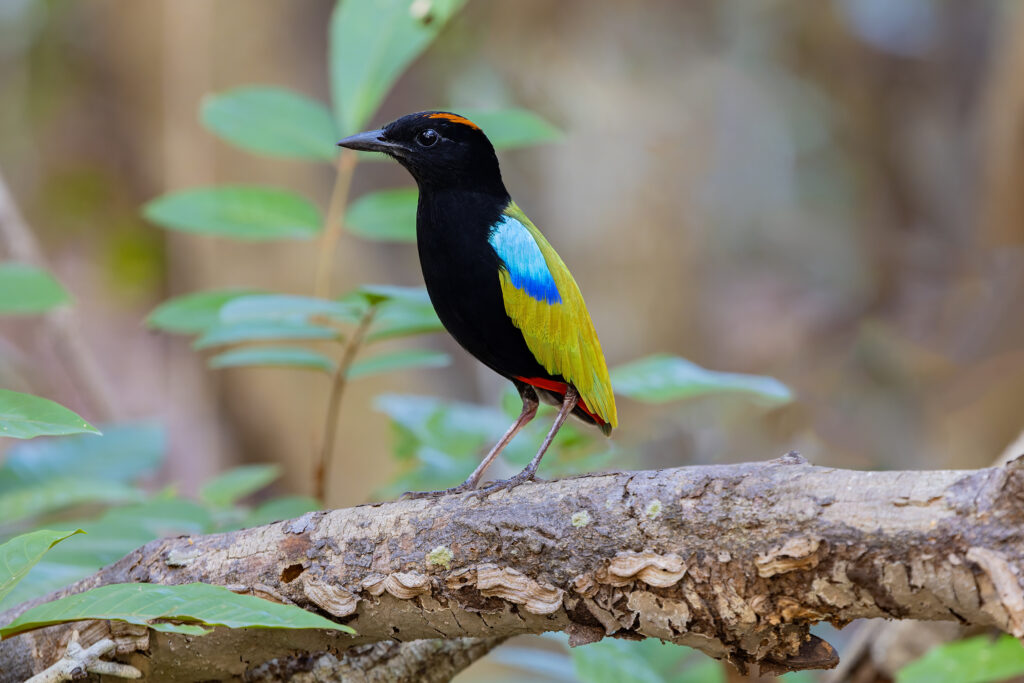
    • Brilliant plumage – Despite foraging in dim forest undergrowth, rainbow pittas sport a striking combo of emerald-green wings, a velvety black head, a cobalt patch on the shoulder and a vivid scarlet rump.
    • Northern Territory locals – They’re found almost exclusively in the Top End, especially around Darwin, Kakadu and the Tiwi Islands, making them one of Australia’s more regionally restricted birds.
    • Master nest-builders – Rainbow pittas create dome-shaped nests with side entrances, often built close to the ground and lined with soft materials like moss and fine roots.
    • Secretive behaviour – Although colourful, they’re surprisingly elusive and prefer skulking through leaf litter rather than showing off in the open.
    • Diet of opportunity – They feed on insects, earthworms, snails, spiders and the occasional small skink, which they often bash against a log or rock before eating.
    • Seasonal singers – Their distinctive “teow-teow” call is most often heard during the Wet, especially at dawn when the forest resonates with bird song.
    • Short, powerful hops – Rather than flying long distances, rainbow pittas rely on strong legs to hop rapidly along the forest floor.
    • Monsoon forest specialists – They thrive in dense monsoon vine thickets, coastal rainforest patches and riparian forests that offer shelter, leaf litter and consistent moisture.
    • Solitary by nature – Outside of breeding season, rainbow pittas are mostly solitary, each bird maintaining and defending a small territory.

    Discovery

    I accidentally discovered these birds in the mangrove forest along the beach while working on Groote Eylandt. Rainbow pittas are one of my favourite subjects—I could never tire of photographing them. Being arguably the most beautiful bird on the island, I decided to spend time observing it, trying to capture the image I had envisioned: a clean background with minimal clutter.

    Below is my first photo of the rainbow pitta. You can see just how congested and dark its environment was, making every shot a real challenge.

    A Shy Jewel of the Forest

    Its home was the densest part of the forest, full of broken branches and low shrubs, with hardly any sunlight reaching the forest floor. Even during the brightest part of the day, the technical challenges were immense. The bird’s plumage itself presented a puzzle: glossy metallic wing patches set against deep black feathers. Expose for the black, and the shiny patches blow out; expose for the metallic sheen, and the rest plunges into shadow.

    Technical Challenges

    The first challenge was figuring out whether it ever ventured into slightly more open, sunlit areas—but the pitta was steadfast in its routine, never straying from its preferred paths. It took days of careful observation to understand its movements and timing. This knowledge allowed me to position myself ahead of its arrival, quietly watching for any opportunity to photograph it on a suitable branch. Such spots were rare: after days of crawling through the undergrowth, I finally found a small, roughly circular clearing about two metres across. I positioned myself outside it, hoping the bird would eventually enter and offer a frameable shot.

    Three Months to Success

    After a couple of weeks, I managed some photos, but none met my vision.

    I kept returning, day after day, and it took three months before I finally captured images I am proud to share. During this time, I discovered a humorous side effect: as I crawled the forest photographing other birds—bowerbirds, whistlers, gerygones, kingfishers—local birdwatchers noticed my submissions on eBird, but they never saw me as I was spending all my time inside the dense bush, looking for pitta. Curious about the mysterious photographer with a long lens, they eventually spotted me after my project was complete, and one day, a stranger stretched out his hand and said, “Hello, Alex.” He had pieced together my identity from my posts and sightings. That simple encounter sparked a friendship born from shared passion—a reminder of the unexpected connections wildlife photography can create.

    The Trials Behind the Shot

    This project demanded more time and effort than any other photo I’ve taken. I was scratched by bushes, bitten by mozzies and green ants, and even was bitten right in the eye when I accidentally knocked an ant nest onto my back. Despite the hardships, the experience is unforgettable. The time, patience, and persistence required to capture this bird will always shine in my memory like a jewel—the ultimate testament to nature’s splendour.

    This is what a final image look like.

    Reflections on a Rainbow Jewel

    Working with the rainbow pitta taught me that patience, observation, and respect for a bird’s natural rhythms are just as important as skill behind the lens. It reminded me that the best wildlife photographs are not just about capturing a moment—they’re about understanding the creature, its habitat, and its story. Every scratch, mosquito bite, and muddy crawl became part of the experience, making the final image far more meaningful. Seeing the pitta appear in that tiny clearing, just as I had imagined, was a rare and humbling reward. Nature has a way of rewarding persistence, and this bird—vibrant, elusive, and utterly enchanting—will remain a highlight of my photographic journey for years to come.

    I’d love to hear your thoughts! If you’ve ever spent time observing or photographing elusive wildlife, or have tips for capturing tricky subjects like the rainbow pitta, please share your experiences in the comments below.

  • Funky Feet and Fierce Comb: The Charm of Comb-crested Jacanas

    Funky Feet and Fierce Comb: The Charm of Comb-crested Jacanas

    Fun & Interesting Facts About Comb-crested Jacanas:

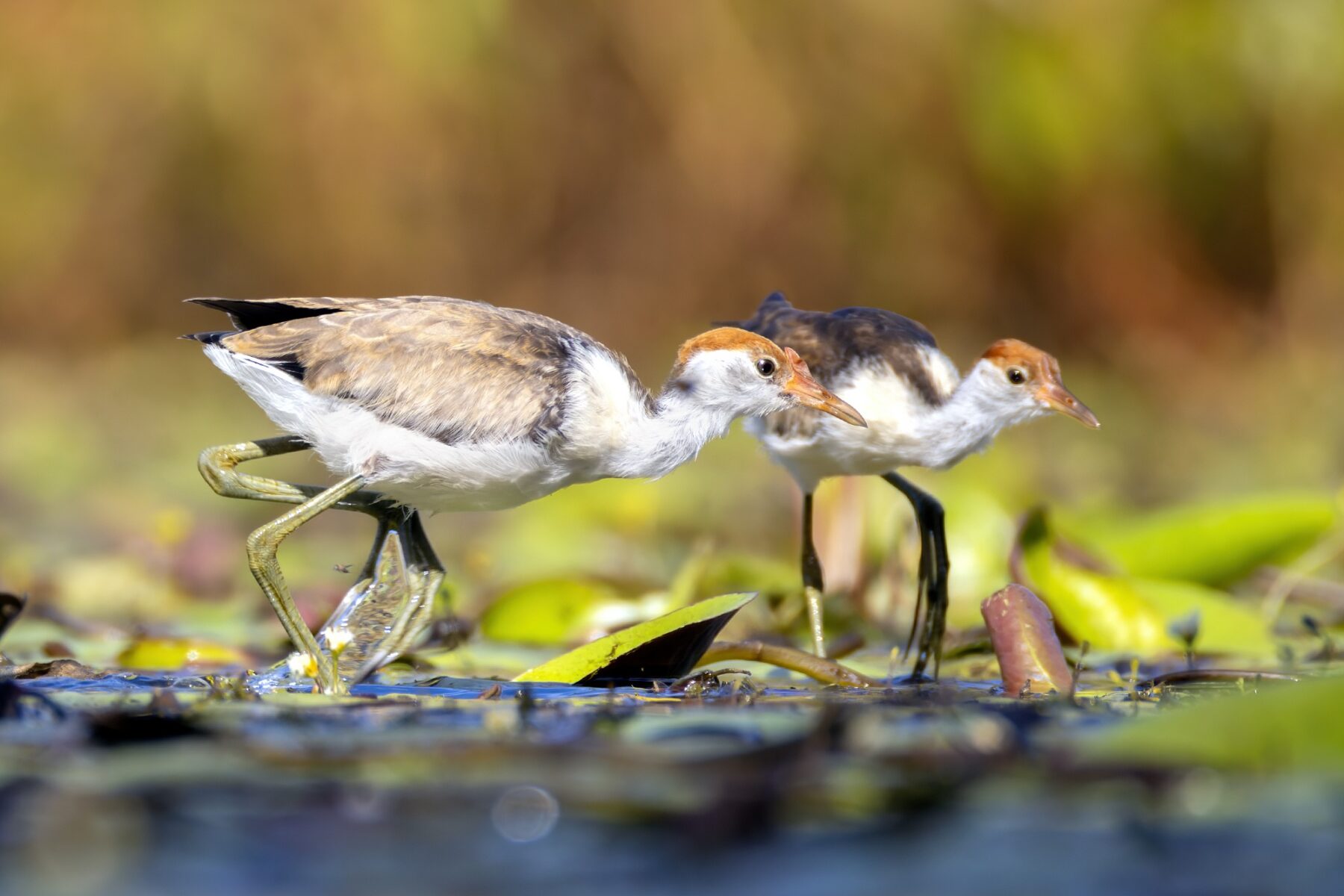
    • Water Walkers: Comb-crested Jacanas are often called “Jesus birds” because they can seemingly walk on water, thanks to their long, strong toes and claws that help them glide across the surface of ponds and marshes. It’s almost like they’re doing a delicate little dance on water lilies!
    • Fancy Footwork: Their long toes aren’t just for walking on water. They’re designed to distribute their weight evenly across the surface, preventing them from sinking. It’s like nature’s version of snowshoes!
    • The Royal Comb: Male Comb-crested Jacanas are known for the striking, bright red comb on top of their heads, which looks like a crown. It’s a beautiful, flamboyant feature that they use in mating displays—think of it as their personal party hat!
    • Unconventional Dads: In the world of Jacanas, the dads do most of the parenting. The male takes on the responsibility of incubating the eggs and caring for the young, while the female is free to mate with multiple males. Essentially, Jacana dads are the primary caregivers, making them stand out in the bird world for their “hands-on” approach.
    • Flamboyant Fashionistas: Comb-crested Jacanas have some of the brightest and boldest colors around. Their plumage is a mix of blacks, whites, and rich browns, with a hint of iridescent sheen, making them look like they’re always dressed for a party.
    • Can’t Stop, Won’t Stop: Known for their stamina, these birds are constantly moving, whether it’s hopping from lily pad to lily pad, hunting for food, or just strutting around the marsh. They rarely stand still for long, making them a challenge to photograph but also a joy to capture in action!
    • Secret Snackers: Comb-crested Jacanas are omnivores and eat a variety of foods, from seeds to small insects, and even little fish. But they are especially fond of feeding on insects that live among the floating vegetation in their wetland habitats.

    Elusive Water Dwellers

    These birds can only thrive on water bodies blanketed with floating vegetation—especially lily pads. Because water levels in Australia’s wetlands change with the seasons, not every pond will host Jacanas all year round. This makes finding them a little unpredictable and, for a photographer, all the more rewarding when you do spot them.

    Masters of the Lily Pad

    I love watching Comb-crested Jacanas at work. With their comically long toes, they can look a bit clumsy at first glance. Yet their balance and precision are incredible as they tiptoe across the pads, testing each one’s stability. Not every lily pad holds firm—sometimes they wobble, sometimes they dip, and occasionally the bird sinks in for a split second before quickly recovering. It’s nature’s slapstick comedy act, performed with elegance.

    Parental Surprises

    One of the most fascinating things about Jacanas is their parental behavior. The males are devoted dads and will sometimes carry their chicks beneath their wings to protect them from danger. I’ve read about this many times, but I haven’t been lucky enough to witness it in person—yet! Perhaps one day I’ll capture that moment through my lens.

    For now, enjoy this small gallery below showcasing these remarkable birds in their watery world.

  • Crazy Blooms, Colourful Birds: Australia’s Natural Duets

    Crazy Blooms, Colourful Birds: Australia’s Natural Duets

    Australia’s Blossoming Diversity

    Australia is a land of countless climate zones and an incredible diversity of life forms. This richness is especially evident in its flowering plants. As a wildlife photographer, each season I find it impossible to walk past a blossoming bush or tree without stopping in admiration.

    From Flowers to Feathers

    Although I’ve always appreciated the beauty of flowers, flower photography has never been my main passion. As many of you know, I specialise in bird photography. However, I began to realise that when such stunning flowers are in bloom, any bird landing on them could create a truly striking image. Over time, I started targeting certain blossoms, waiting patiently for the moment a bird would land and complete the scene I had in mind. This approach has led to a collection of photographs I’m genuinely proud of.

    Rainbow Lorikeets on Yellow Penda Blossoms

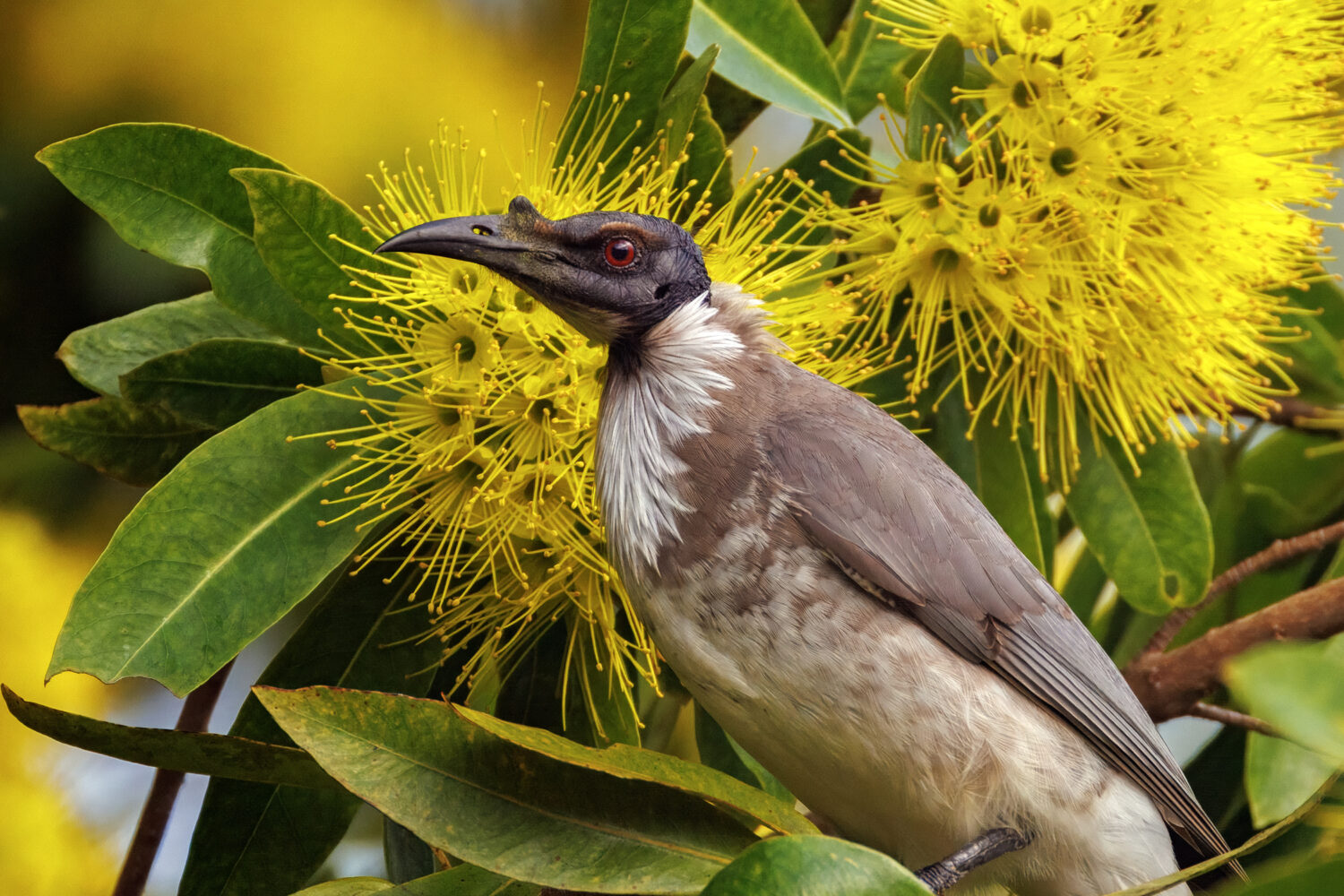
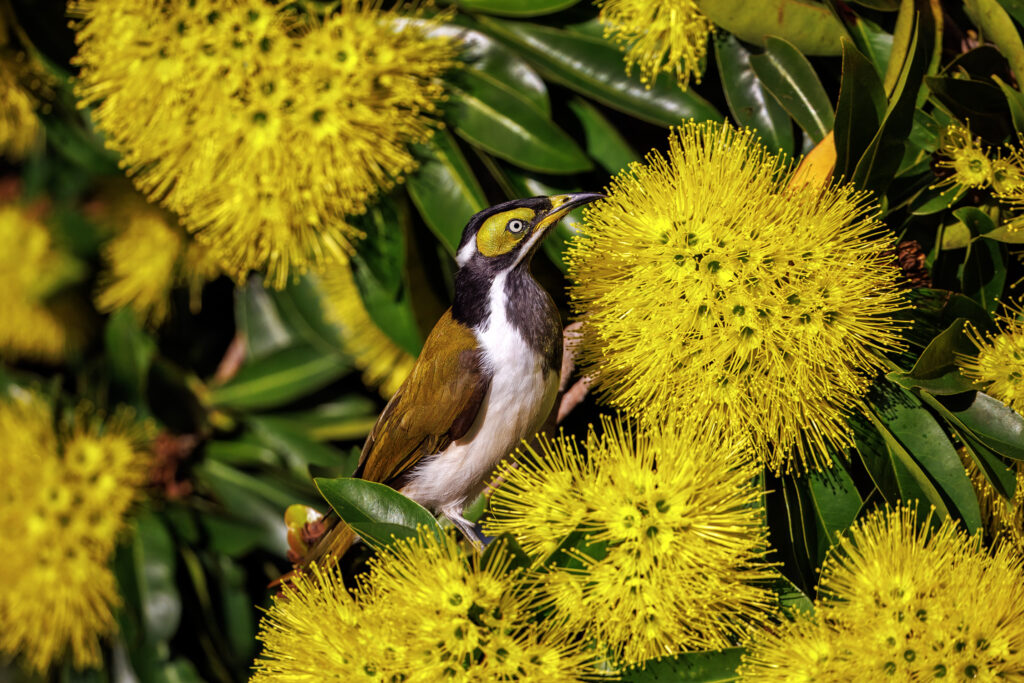
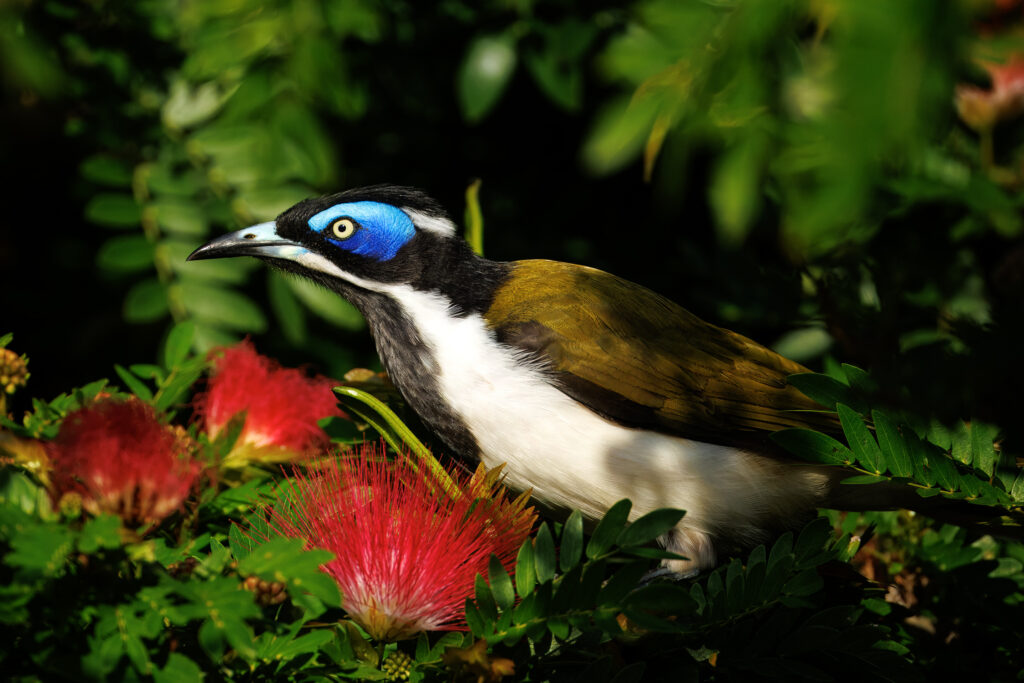
    The first image I’d like to share features a Rainbow Lorikeet posing beautifully on the vivid yellow blossoms of the Yellow Penda. These flowers don’t last long—perhaps a week at most—and their delicate blooms are easily ruined by rain or strong winds. After missing several seasons in a row, I made sure to dedicate enough time to this year’s bloom and captured as many visiting species as possible. You’ll find photos of the Blue-faced Honeyeater enjoying the blossoms.

    🌼 Yellow Penda (Xanthostemon chrysanthus)

    Queensland’s floral gem: The Yellow Penda is native to tropical North Queensland and is sometimes called the “Townsville Gold.”

    A magnet for wildlife: Its bright yellow, pom-pom-like flowers are rich in nectar, attracting lorikeets, honeyeaters, butterflies and bees.

    Tough but fleeting: Despite being a hardy tree that thrives in heat, the flowers only last about a week — making your timing with photography absolutely crucial!

    🐦 Noisy Friarbird (Philemon corniculatus)

    The bald one: With its featherless black head and long curved bill, it’s often nicknamed the “Leatherhead.”

    Big personality: True to its name, the Noisy Friarbird is loud and bossy, often chasing away smaller birds from its favourite nectar sources.

    Team player: Despite the noise, they’re important pollinators — carrying pollen from flower to flower as they feed.

    Blue Gum Blooms and Lorikeet Colours

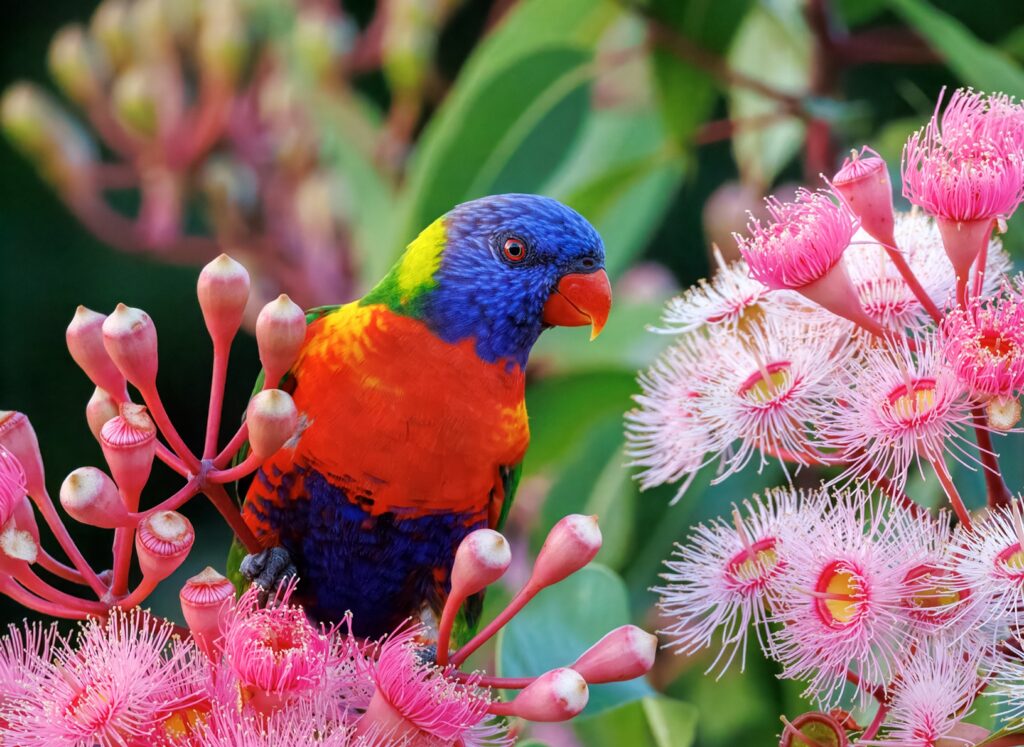
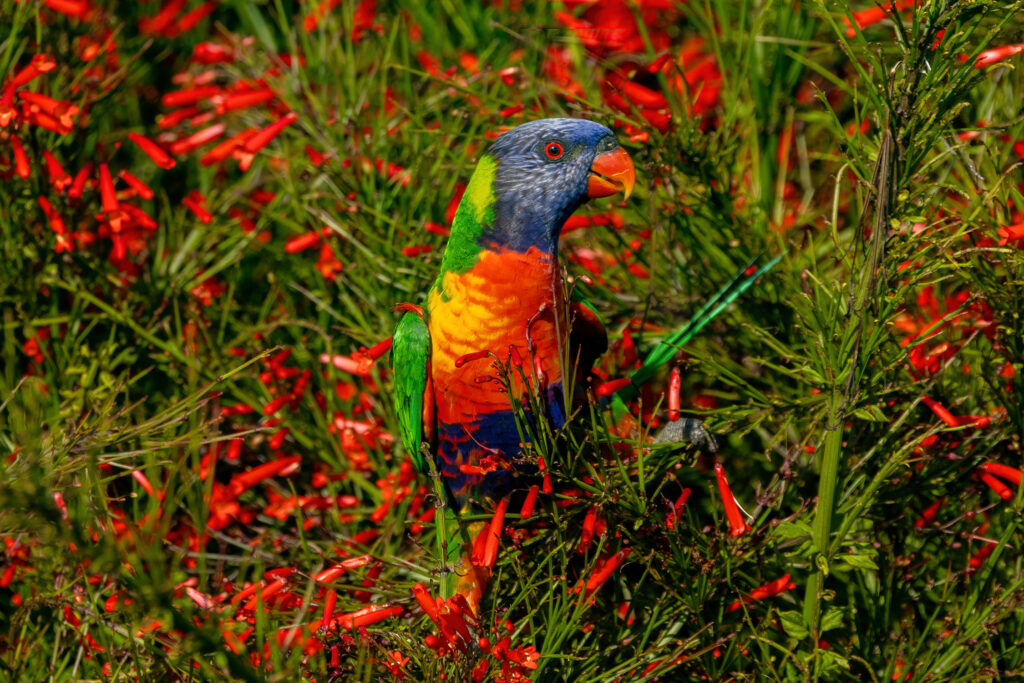
    Next, I turned my lens toward the blossoms of the Blue Gum eucalyptus tree. Here, once again, the Rainbow Lorikeet took centre stage. The bright greens and blues of the bird against the creamy white gum blossoms make for a vibrant and quintessentially Australian scene.

    🌿 Blue Gum (Eucalyptus globulus and other Eucalyptus spp.)

    An Aussie icon: Blue Gums are among the most recognisable eucalypts, with smooth blue-grey bark and creamy white flowers.

    Sweet scent, strong flavour: The nectar not only draws birds but is also used by bees to make a distinct, strong-flavoured honey.

    Koala café: While lorikeets love the blossoms, koalas are more interested in the leaves — they can eat up to a kilo a day!

    🦜 Rainbow Lorikeet (Trichoglossus moluccanus)

    Nature’s paint palette: Their rainbow plumage — green, blue, orange, and red — isn’t just for show; it helps them blend into the colourful blossoms they feed on.

    Brush-tipped tongues: Lorikeets have special bristle-like tongues that act like paintbrushes, perfect for sipping nectar from flowers.

    Chatty neighbours: They’re highly social and noisy — if you’ve ever been near a flowering gum in the morning, you’ve likely heard their cheerful squawks!

    Honeyeaters Among the Mulla-Mullas

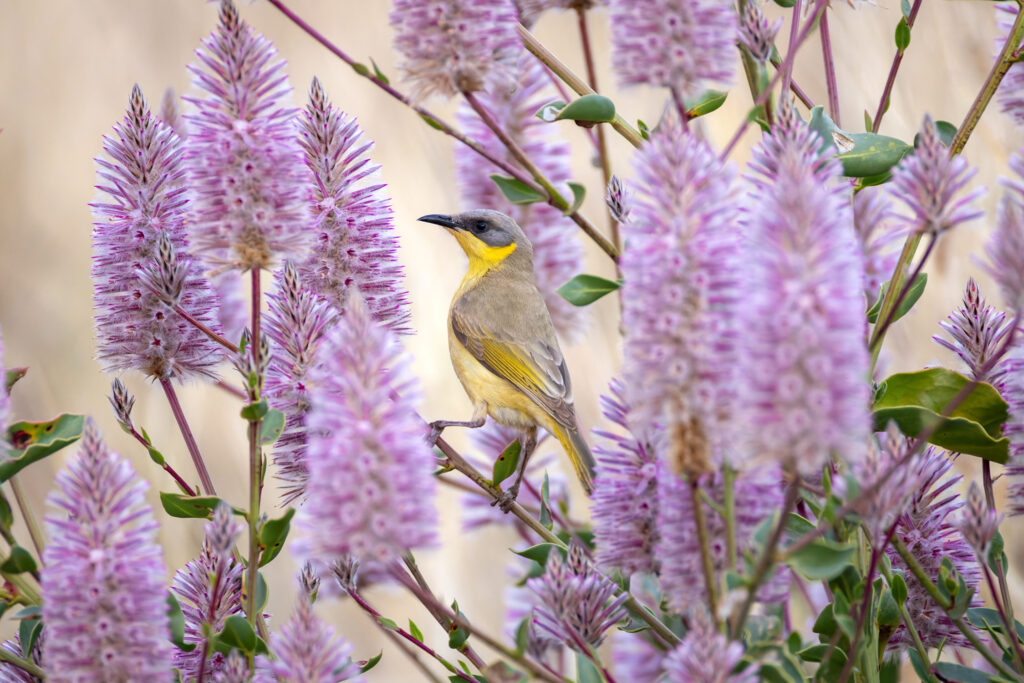
    My next set of photos comes from the Australian outback, where the Pink Mulla-mullas bloom for much of the winter season. These stunning flowers are a magnet for honeyeaters, and I was fortunate enough to capture Grey-headed Honeyeaters feeding among the pink spikes. The contrast between the dusty outback landscape and the bursts of pink made for a captivating composition.

    🌸 Pink Mulla-Mulla (Ptilotus exaltatus)

    Desert beauty: These fluffy, pink-purple flower spikes are a familiar sight in the arid heart of Australia, especially after rain.

    Outback survivor: Mulla-mullas can tolerate extreme heat and drought, often colouring the red desert plains for months.

    Not just pretty: Indigenous Australians traditionally used parts of the plant for soothing burns and wounds.

    🪶 Grey-headed Honeyeater (Ptilotula keartlandi)

    Outback specialist: Found mainly in Australia’s inland deserts and dry woodlands, it’s well adapted to the heat.

    Social drinkers: They often visit waterholes in small flocks, particularly in the morning and late afternoon.

    Flower fanatics: Like most honeyeaters, they have a brush-tipped tongue for collecting nectar — and play a big role in pollinating desert plants.

    🎵 Singing Honeyeater (Gavicalis virescens)

    Desert songbird: Common across much of Australia, they’re named for their clear, melodious call.

    Flexible feeders: From nectar to insects to fruit, these honeyeaters adapt to whatever’s available — one reason they thrive in harsh environments.

    Territorial tunes: Males use their songs to defend feeding territories, often perched proudly atop a flowering shrub.

    Mystery Blossoms and Curious Lorikeets

    The final couple of photos once again feature lorikeets, but this time I must admit—I have no idea what plants they’re perched on! If you recognise them, please drop a comment below and let me know. I always enjoy learning more about Australia’s incredible flora from fellow nature lovers.

    Join the Conversation

    This collection will continue to grow as I explore new regions and seasons. For now, I’d love to hear from you—which of these photos is your favourite? Leave a comment below and let’s celebrate Australia’s unique beauty together.

  • In Search of Shadows: My Encounters with Australian Owls

    In Search of Shadows: My Encounters with Australian Owls

    Australian owls are unlike their counterparts elsewhere in the world. Most species spend the day hidden inside tree hollows, rarely seen roosting in the open. They are entirely nocturnal, emerging only under the cover of darkness to hunt. This secretive behavior makes seeing them — and especially photographing them — both difficult and deeply rewarding.I’ve spent countless hours wandering through forests and national parks across Australia, searching for signs of nocturnal life. Along the way, I’ve been lucky enough to encounter and photograph some of Australia’s most remarkable owls.

    🦉 Southern Boobook (Ninox boobook)

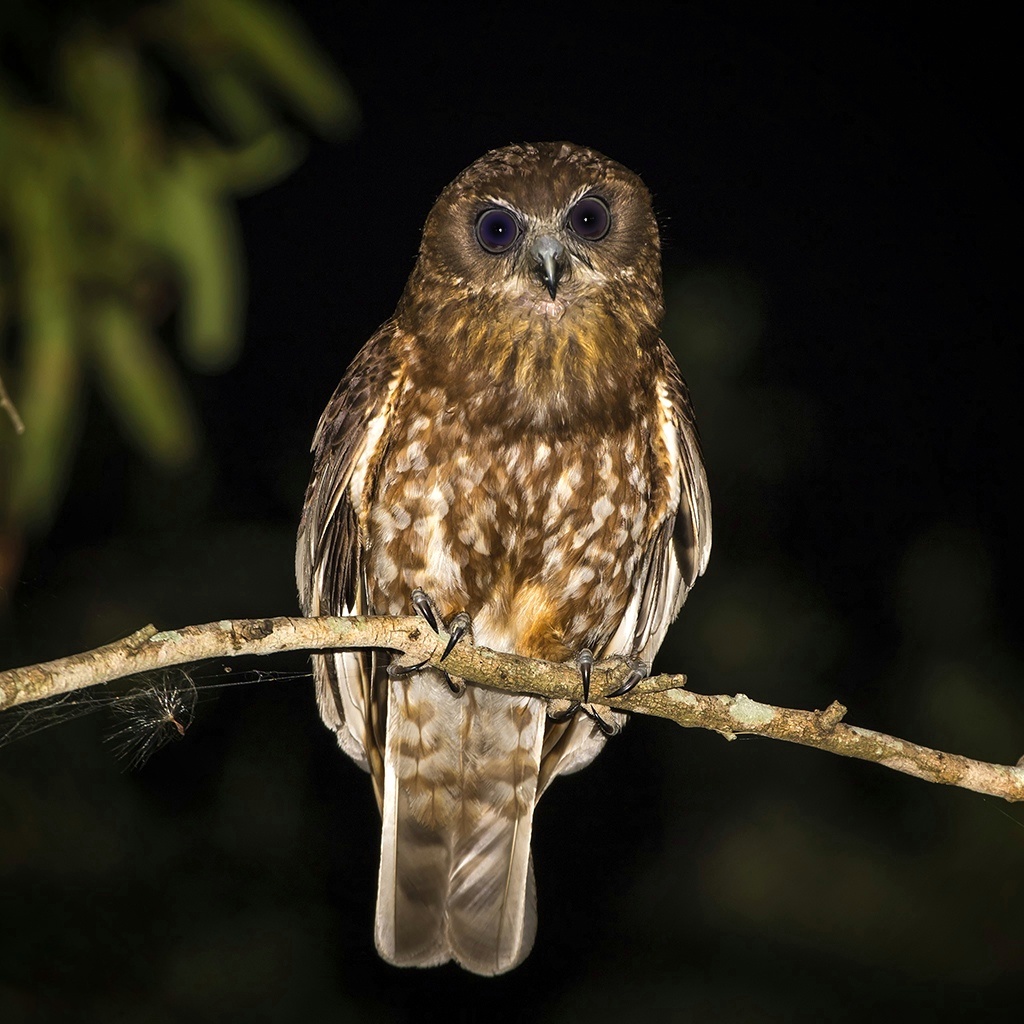
    The first owl I’d like to share is the Southern Boobook, the smallest of Australia’s owls. Despite their size, they are fierce little hunters with a haunting, melodic call that echoes through the night. This small but fierce hunter is the most widespread owl in Australia, found from rainforests to suburban backyards. Its familiar “boo-book” call echoes through the night and is often mistaken for a distant cuckoo.

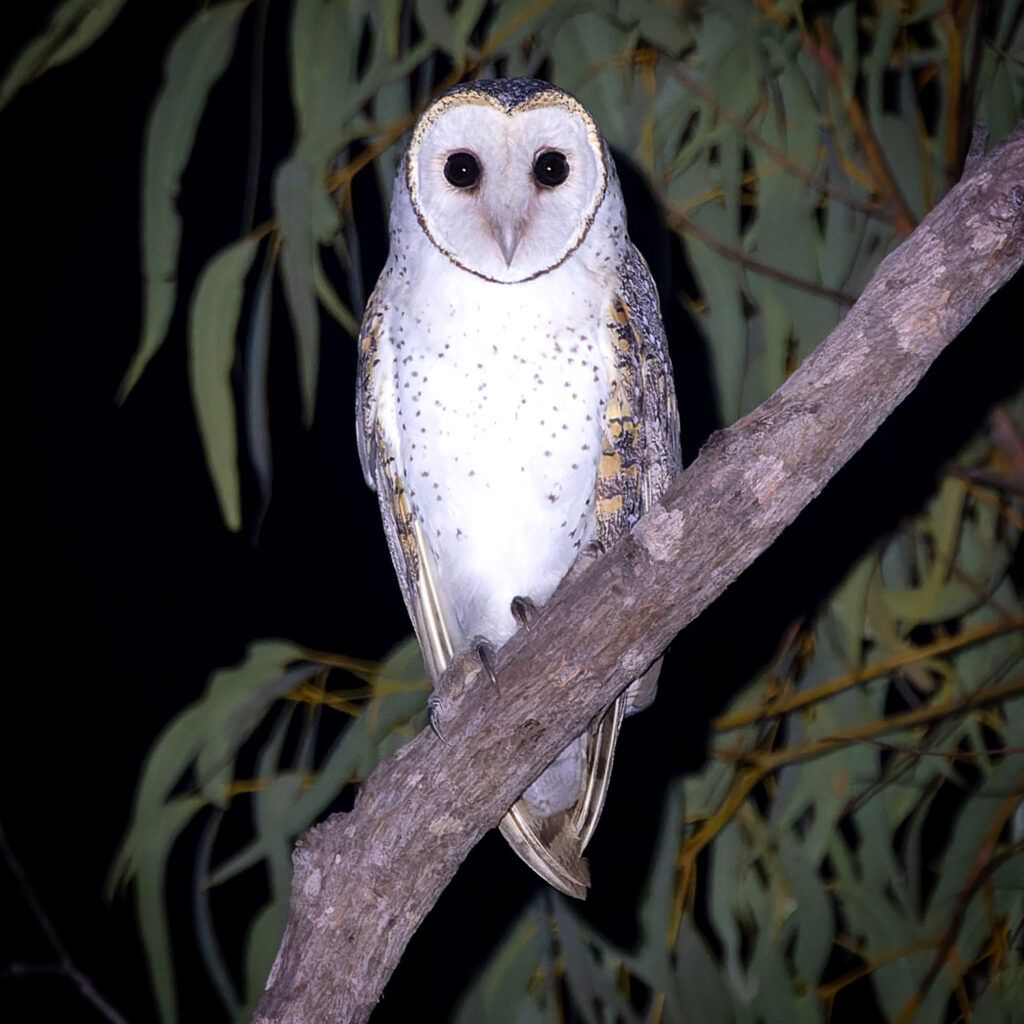
    😷 Masked Owl (Tyto novaehollandiae)

    The ghost of the forest.With their heart-shaped faces and dark eyes, Masked Owls look like forest phantoms. They have one of the largest facial discs of any owl, helping them detect prey by sound alone — even under thick leaf litter. Sadly, their dependence on large old trees makes them vulnerable to habitat loss.

    The Masked Owl is a rare and striking species, particularly around the Brisbane region. I was fortunate to spend time photographing them while living on Groote Eylandt in the Northern Territory, where their ghostly faces and silent flight make them unforgettable.

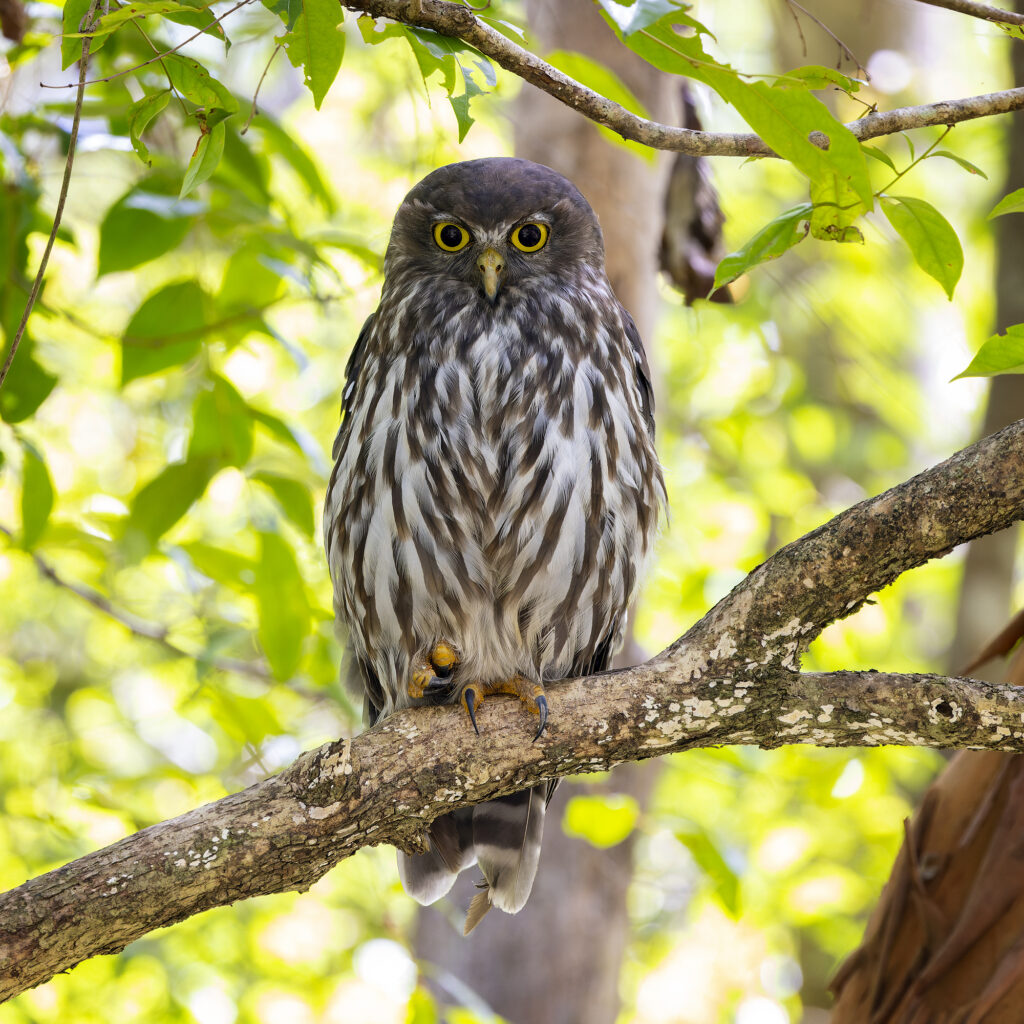
    🐶 Barking Owl (Ninox connivens)

    The owl that barks — and screams.Famous for its dog-like “woof-woof” call, the Barking Owl can also produce a chilling scream that’s earned it the nickname “the screaming woman owl” in bush folklore. They’re highly social, often calling in pairs as part of their nightly duet.

    The Barking Owl is as endearing as it sounds. Named after its dog-like bark, it’s known to confuse — and sometimes infuriate — local dogs that can’t quite locate the source of the sound. Their expressive eyes and rounded faces make them a joy to photograph.

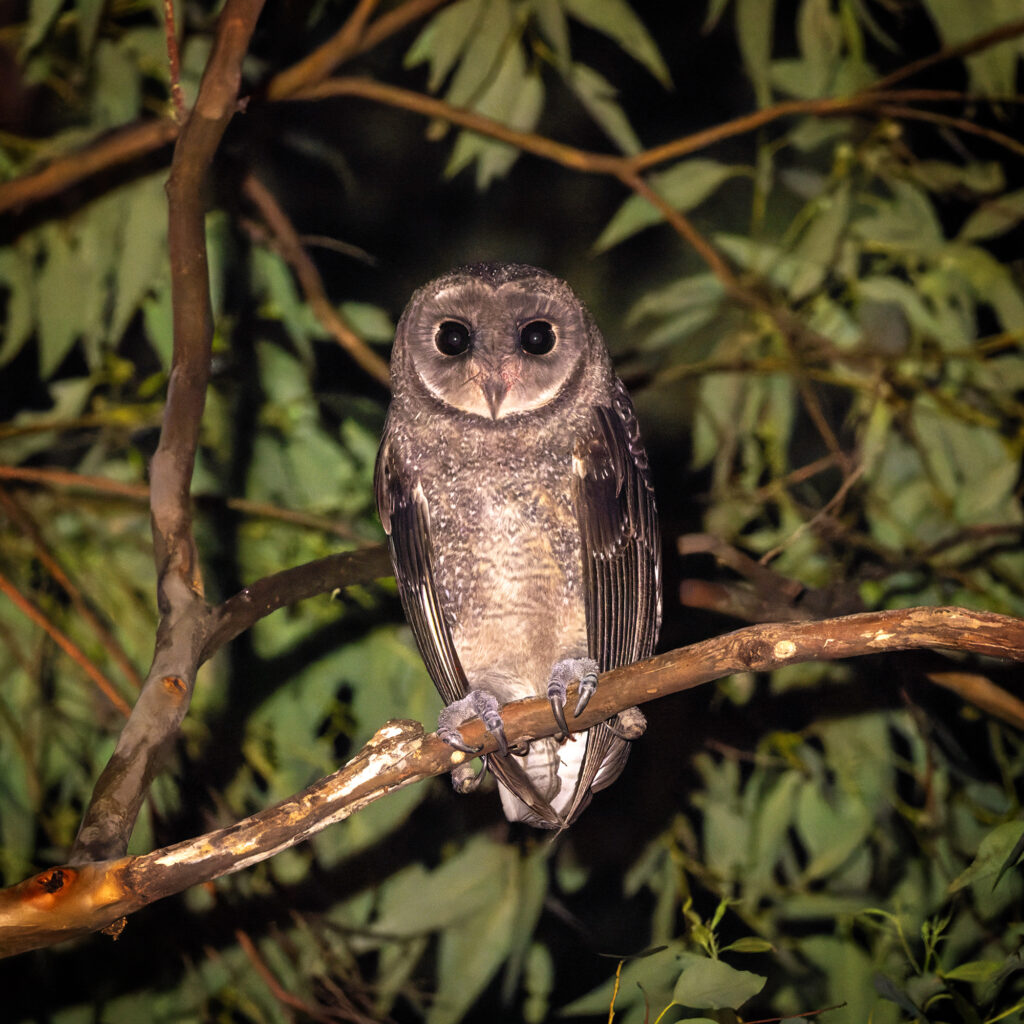
    🌌 Greater Sooty Owl (Tyto tenebricosa)

    A shadow with wings.These stunning owls haunt the dark rainforests of eastern Australia, their plumage a velvety mix of silver, grey, and black. Their eerie, falling-bomb screech can echo through the forest at night, startling anyone unfamiliar with their presence.

    Of all the owls I’ve seen, the Greater Sooty Owl is perhaps the most beautiful. With dark, velvety plumage and large, black eyes, they look almost otherworldly. Their eerie, rasping scream in the night is unforgettable once heard.

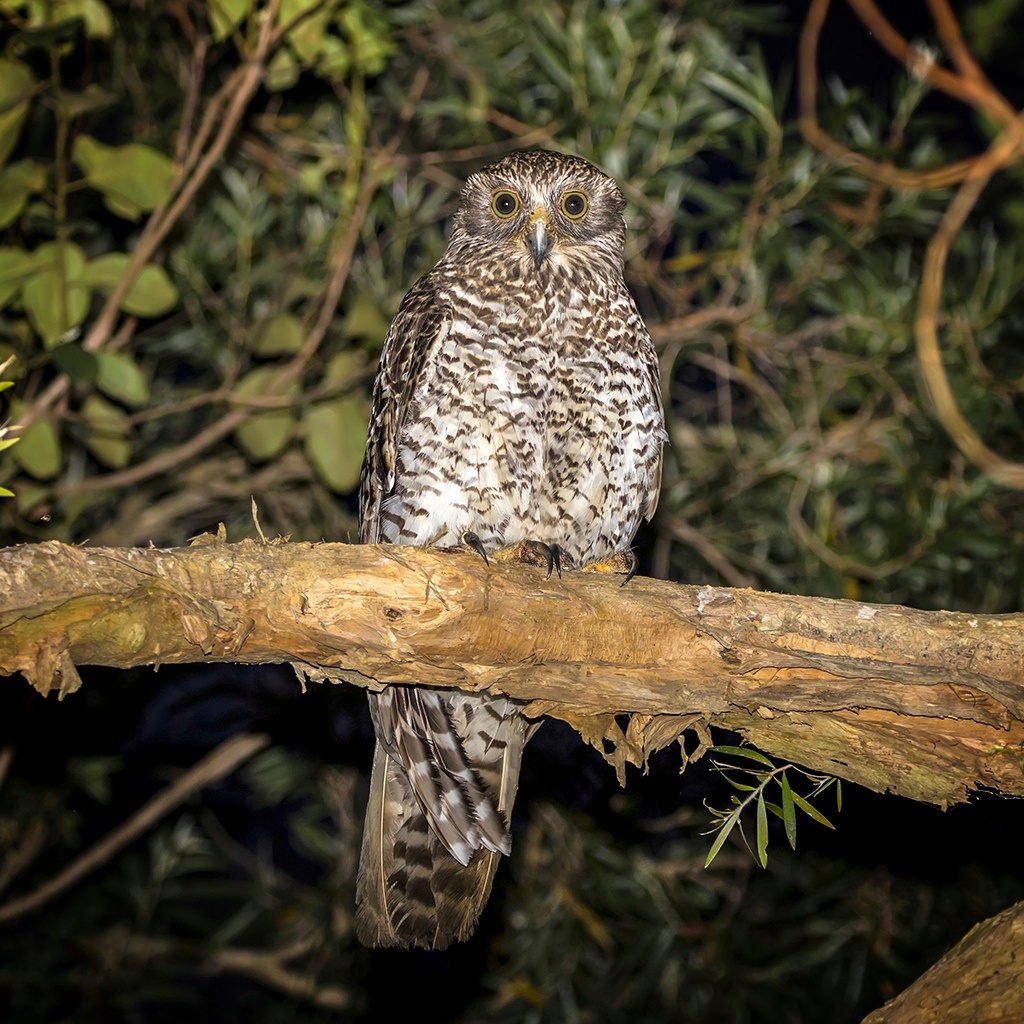
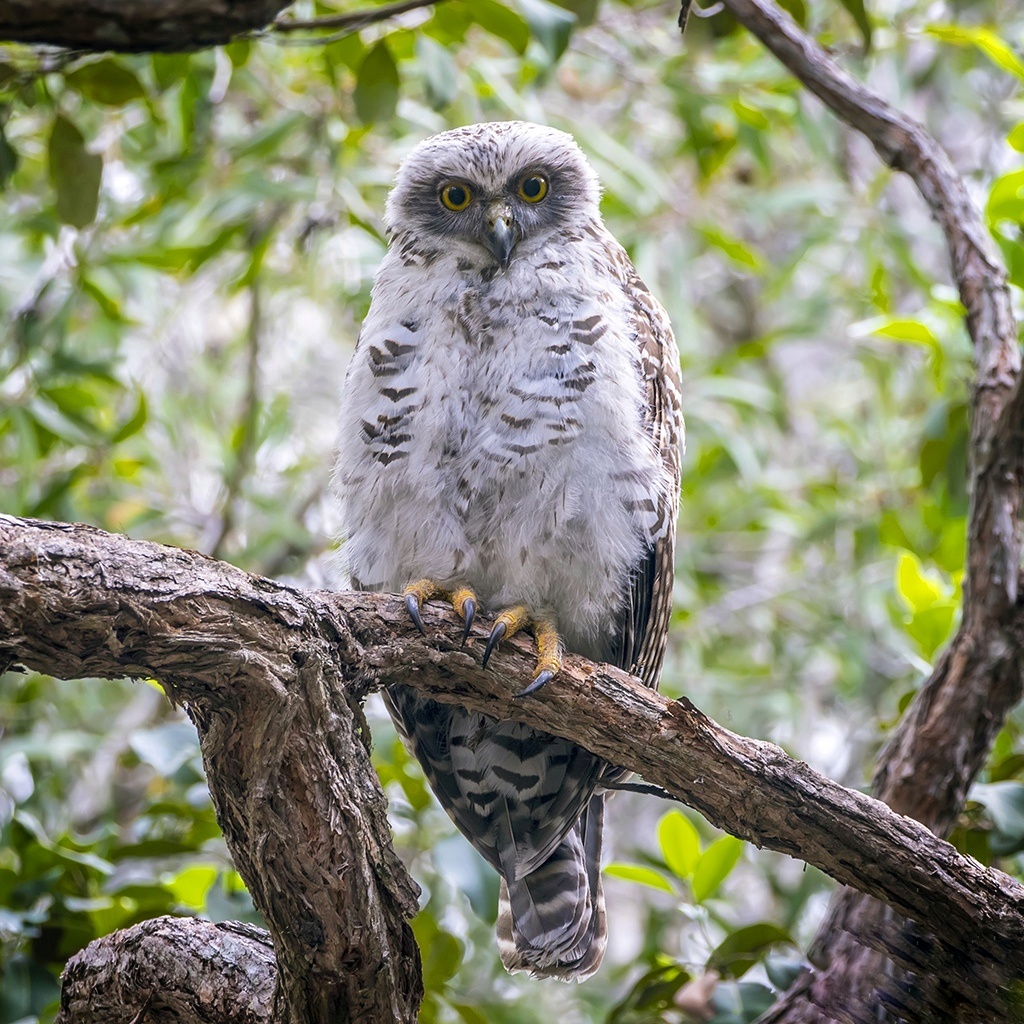
    💪 Powerful Owl (Ninox strenua)

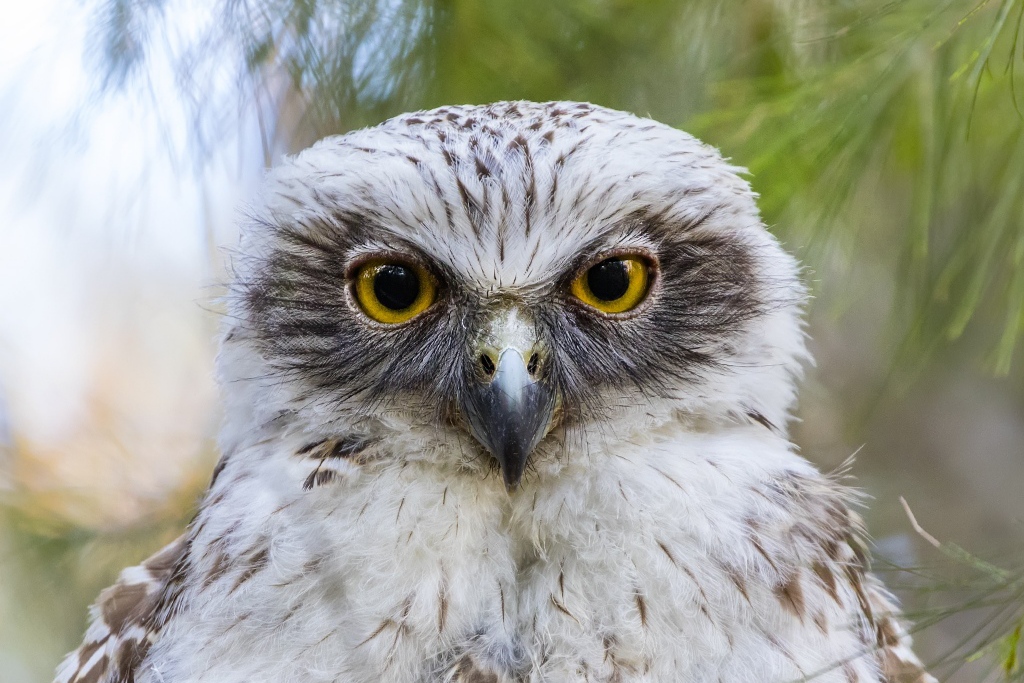
    And then there’s the Powerful Owl — the largest of them all, growing up to 65 cm tall. Australia’s top nocturnal predator, the Powerful Owl lives up to its name. With immense talons and strength, it can take prey as large as a flying fox or small wallaby. Despite their fearsome hunting skills, these owls form lifelong bonds and tenderly care for their chicks during the breeding season.

    Finding possums often means Powerful Owls are nearby. Their deep, resonant hoots can carry for over a kilometre through the forest.One year, I set myself a challenge: to photograph a Powerful Owl in daylight. This became one of the most rewarding — and demanding — projects I’ve ever attempted.

    Here’s a glimpse of how that journey unfolded:

    Night 1: Found chicks calling, marked the area, and left them undisturbed.

    Day 1: No sign of owls.

    Night 2: Located them again.

    Day 2: Found them too high for good photos.

    Night 3–4: On and off sightings, missed opportunities due to rain.

    Night 6: Found them again.

    Day 6: Thick trees blocked my view.

    Night 8: More searching, more near misses…

    And so it went, night after night. For nearly a month, I searched. But persistence paid off. One morning, I finally found a Powerful Owl chick, perched right above a walking track — beautifully exposed in the soft morning light. The parents stayed hidden, but I’m sure they were watching me closely the entire time.The photos I captured that day remain among my proudest achievements. They remind me that patience, respect, and perseverance are the true keys to wildlife photography.

    I’m delighted to share these images with you here. Let me know in the comments below — which Australian owl captures your heart?

  • Wing-Dryers and Deep Divers: The Cormorants of Australia

    Wing-Dryers and Deep Divers: The Cormorants of Australia

    Fun Facts About Cormorants

    🪶 Waterbirds with soggy feathers

    Unlike ducks and many other waterbirds, cormorants don’t have fully waterproof feathers. This might seem like a design flaw, but it actually helps them dive deeper and move more efficiently underwater. After a good fishing session, they’ll be seen perched with wings spread out, drying off like feathered scarecrows.

    🐟 Underwater acrobats

    Cormorants are phenomenal swimmers — they use their webbed feet to propel themselves underwater while steering with their tails. Some species can dive as deep as 40 metres in pursuit of fish!

    📦 They nest in colonies that smell… unforgettable

    Many cormorants nest in large colonies, often on islands or cliffs. These nesting sites are loud, chaotic, and pungent — thanks to all the fish-rich guano. Not ideal for the nose, but perfect for the lens.

    🌍 Globally widespread, locally unique

    Cormorants are found all over the world, but Australia is home to a unique mix of species — including the coastal Black-faced Cormorant, which you won’t see anywhere else on Earth.

    🐣 Chicks with prehistoric vibes

    Young cormorants hatch naked and awkward-looking, resembling little dinosaurs. As they grow, they develop downy feathers before taking on the sleek, glossy plumage of adults.

    🛶 Fishermen’s helpers (and rivals)

    In parts of Asia, trained cormorants have been used by traditional fishermen for centuries. A snare is tied around the bird’s neck to stop it from swallowing larger fish, which the fisherman retrieves when the bird returns to the boat. (Don’t worry — they still get rewarded with smaller fish!)

    🔭 The “wing-drying” mystery

    There’s still some debate among scientists about why cormorants spread their wings to dry. Yes, it’s to dry off — but some research suggests it may also help regulate body temperature or aid digestion.

    🎯 Visual hunters

    Cormorants rely heavily on sight when hunting underwater. Their eyes can adjust quickly between air and water vision — a handy trick when you spend your life darting between the two.

    Masters of Air and Water: The Unique World of Cormorants

    Cormorants are fascinating birds — sleek, sharp-eyed, and built for life in the water. What makes them truly interesting is their mastery of both air and water: with their long necks and powerful wings, they can soar overhead just as easily as they vanish beneath the surface, chasing fish with uncanny agility. Unlike many waterbirds, cormorants don’t have fully waterproof feathers. You’ll often see them perched with wings spread wide, drying off after a dive — a signature pose that’s both iconic and a little eerie.

    A Personal Journey: Photographing Every Australian Cormorant

    I have seen and photographed all of the Australian cormorants, which is a cool achievement, as they all inhabit different parts of the country, but also sad, as there is no birds of this genus left for me to “hunt”. It’s been a journey across wetlands, coastlines, rivers and remote headlands — and each encounter has been special in its own way.

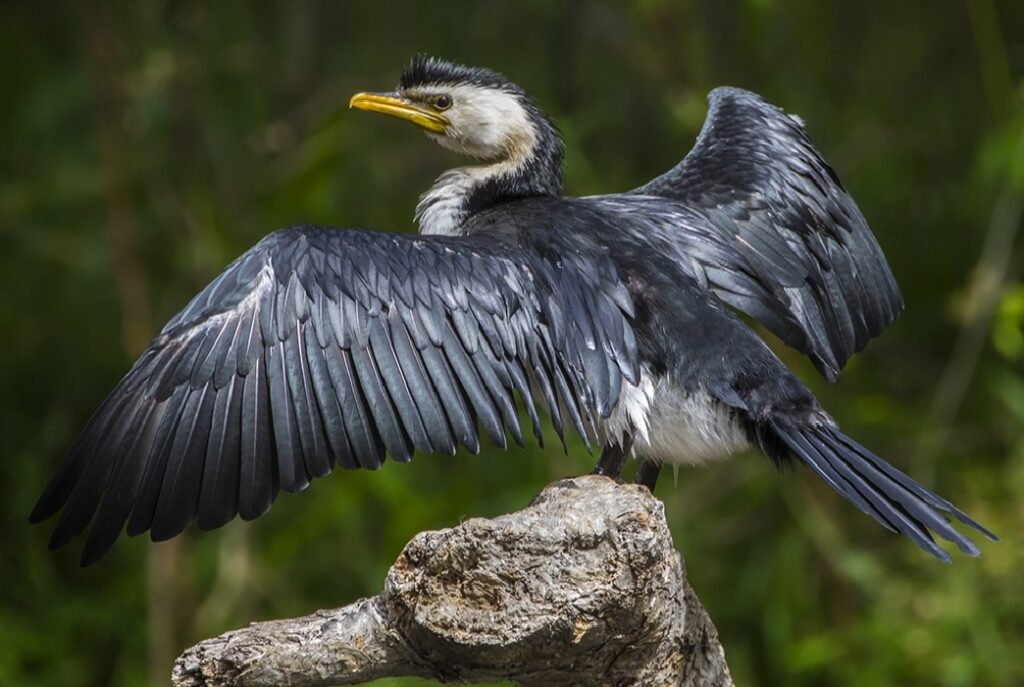
    Little Pied Cormorant (Microcarbo melanoleucos)

    The Little Pied Cormorant is a common sight around inland lakes, rivers, and even urban wetlands. It’s easily recognised by its striking black and white plumage — a small, elegant bird with a bit of attitude. It tends to hunt alone, often floating quietly before diving for small fish or aquatic insects. Their versatility has allowed them to thrive in a wide range of habitats, from city parks to remote bush billabongs.

    Little Black Cormorant (Phalacrocorax sulcirostris)

    Sleek and uniformly black, the Little Black Cormorant is often seen in large flocks, especially on inland freshwater bodies. When they gather in numbers, the spectacle of synchronised diving is something to behold. Their social nature sets them apart from the more solitary species, and they’re often found roosting together in long lines on tree branches or rocks near water. Adult birds have an incredible eye colour — a vivid turquoise blue — which contrasts beautifully against their glossy black feathers and really stands out in good light.

    Pied Cormorant (Phalacrocorax varius)

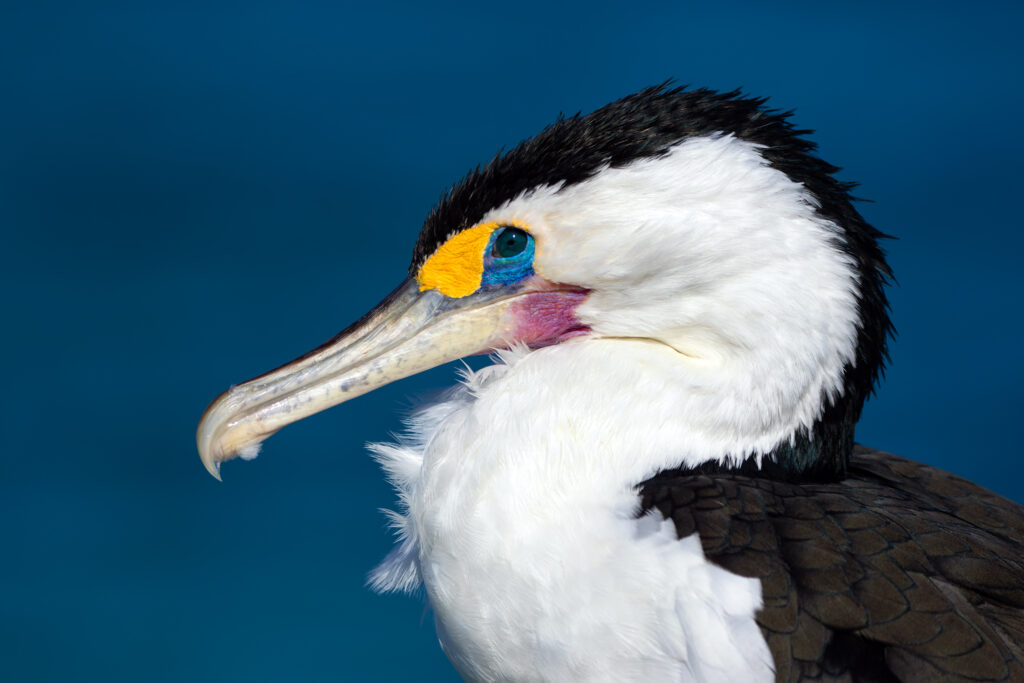
    The Pied Cormorant is one of Australia’s more striking waterbirds, with bold black-and-white plumage and a strong, yellow-orange facial patch that stands out against its pale face. Larger than the Little Pied but smaller than the Great Cormorant, it’s most commonly found along the coast, especially in estuaries, bays, and sheltered inshore waters, though it does venture inland in some regions. It’s a powerful diver and often seen fishing alone or in loose groups. When perched, its bright eyes and contrasting colours make it especially photogenic — a real favourite among bird photographers. Their heavy, slightly curved bill is another good field mark to pick them out in a mixed cormorant roost. The portrait below was taken on a jetty where the bird was having a siesta. I don’t think it was possible to get any closer, so the photo is full of fine detail, and the breeding colours are simply phenomenal — with the dark blue sea perfectly complementing the scene.

    Great Cormorant (Phalacrocorax carbo)

    As its name suggests, the Great Cormorant is the largest of the Australian species. With its powerful build and commanding presence, it’s often found in coastal environments, though it also ventures inland. The plumage is mostly black with a distinctive white throat and yellowish facial skin. It’s a formidable hunter, capable of chasing down larger prey, and its deep, heavy flight makes it easy to pick out against the sky.

    Black-faced Cormorant (Phalacrocorax fuscescens)

    This species is a true coastal specialist, found mainly along the southern shores of Australia and Tasmania. It’s one of the more range-restricted cormorants, preferring the cold, rough waters of rocky coasts and offshore islands. The white underparts contrast sharply with its darker upper body and the characteristic black face mask. They nest in large colonies and are a bit harder to approach than their inland cousins — a reward for the more adventurous photographer.

    Australasian Darter (Anhinga novaehollandiae)

    While not technically a cormorant, the Australasian Darter is closely related and often found in similar habitats. Also called the “snakebird” due to its long, slender neck and swimming style, the darter hunts with a rapid, spearing motion of its sharp bill. Its silhouette is more slender and graceful than a cormorant’s, and in flight, it shows a long tail and narrow wings. Darters also perch with wings spread, drying off after a dive, making them easy to mistake for a cormorant at first glance.

    Taxonomically, darters belong to the family Anhingidae, while cormorants fall under Phalacrocoracidae. Both families sit within the order Suliformes, making them close cousins in the bird world. Their diving behaviour and general appearance are quite similar, but there are subtle differences in posture, feeding style, and anatomy that set them apart — something birders and photographers alike grow to notice with experience.

    The Australasian Darter hunts by using its sharp, pointed beak to spear fish underwater. Once it emerges, it needs to skillfully manoeuvre the catch off its beak and into its mouth — a tricky feat it accomplishes by repeatedly tossing and flipping the fish in a smooth, practiced motion.

    Patience, Pursuit, and Memories: My Cormorant Adventure Complete

    Each of these species has challenged me in different ways — whether it was the patience needed to photograph the elusive Black-faced Cormorant on a windswept southern cliff, or the joy of finding a Great Cormorant sunning itself on a riverbank. Now that I’ve seen them all, it’s a satisfying milestone, but also a little bittersweet. There are no more cormorants left in Australia for me to “hunt” with the lens — but the photos, and the memories behind them, will always remind me of the journey.

  • Willy Wagtails: Small Birds, Big Personalities

    Willy Wagtails: Small Birds, Big Personalities

    Fun facts about the Willy Wagtail

    • Name Origin: The name “Willy Wagtail” comes from the bird’s distinctive behavior—its tail wags or “flirts” constantly. The “willy” part is an old British term for a lively, excitable character, fitting perfectly with the bird’s energetic personality.
    • Tail Tricks: The Willy Wagtail’s tail isn’t just for show. It’s a key part of their communication. They use it for displays of aggression or to attract mates. In flight, their tail is fanned out beautifully, making them one of the most striking birds to watch mid-air.
    • Incredible Flycatchers: Willy Wagtails are expert flycatchers. They dart through the air at incredible speeds, snatching insects mid-flight. They can even fly backwards for a split second while trying to catch an insect—an impressive acrobatic feat!
    • Territorial and Brave: Willy Wagtails are incredibly territorial. They will fiercely defend their area, even against much larger birds or animals. Some have even been known to dive-bomb humans who come too close to their nests—yet another example of their brave (sometimes cheeky) character.
    • Not Really a “Wagtail”: Despite their name, Willy Wagtails aren’t actually true wagtails, which belong to a different family. They belong to the flycatcher family (Muscicapidae), but they share some behaviors and physical traits with wagtails, hence the name.
    • Rapid Growth: The chicks of Willy Wagtails grow at an astonishing rate. Within just a few weeks of hatching, they can take their first flight. Their parents are extremely attentive and constantly bring them food, ensuring the little ones are strong and ready to leave the nest quickly.
    • Famous for Their Calls: Willy Wagtails have a distinctive, melodious call, which sounds like a high-pitched “pip-pip-pip” or sometimes a more complex “whee-wee.” These calls are often heard echoing through Australian parks and gardens. They’re also one of the few birds to make a sound that seems to match their active, bouncing nature.
    • Cultural Significance: The Willy Wagtail holds cultural importance for many Indigenous Australian groups. Its call and behavior have inspired stories and totemic representations, as it’s often seen as a messenger or a symbol of vitality and energy.
    • Adaptable to Humans: One of the most remarkable things about Willy Wagtails is their ability to adapt to human environments. You’ll often find them in backyards, parks, and even cities. In some places, they’ve become almost domesticated, hopping around near people without much fear.
    • “Punk” Hairstyle: Willy Wagtails have a distinct “punk-rock” look, with a spiky crest on their head when they’re in display mode, which can give them an almost mohawk-like appearance. It’s a subtle yet charming part of their appearance that adds to their character.

    Australia’s Most Iconic Little Flycatcher

    Willy Wagtails are one of the most beloved and iconic flycatchers in Australia, and it’s easy to see why. These small, agile birds are a common sight across the country, from bustling urban parks to remote deserts and wetlands. Known for their playful antics and striking tail movements, Willy Wagtails are found in a variety of habitats, from coastal scrublands to open woodlands, farmlands, and even the fringes of urban areas. They thrive in both natural and human-modified environments, often seen flitting about yards, gardens, and public spaces, bringing a sense of vitality wherever they go.

    A Bird That Thrives Nearly Everywhere

    Their habitat preferences are diverse: while they can often be found near water, including creeks, swamps, and wetlands, they are just as comfortable in dry, inland areas. They are often seen perched on fences, power lines, and even low branches, constantly on the lookout for insects, which they snatch mid-air with remarkable precision.

    A Simple Look, a Complex Personality

    Though the Willy Wagtail is a small bird with a simple colour palette—its black-and-white plumage is striking yet understated—its personality is anything but simple. Though the Willy Wagtail’s plumage is simple—its striking black-and-white feathers might remind you of a gentleman in a sharp tuxedo, elegant and timeless. With its bold, contrasting colors, it’s as if the bird is always dressed to impress, whether perched on a fence or mid-flight, bringing a touch of class to any scene it graces.

    These birds are exceptionally active, darting around with rapid, erratic movements that make them a challenge to capture on camera. For me, photographing them has always been a thrill. I never grew bored of their antics, even from my very first encounter. There’s something endearing and lively about the way they move, and it keeps me coming back for more.

    The Quiet Magic of a Familiar Bird

    Though the Willy Wagtail can be found across most parks in all Australian states and territories, it’s more than just a ubiquitous bird—it has a quiet charm that reveals itself over time. Whether it’s perched serenely on a branch or mid-flight, it always seems to have something new to offer. Even in urban environments, where nature often feels distant, these birds bring a sense of simplicity and purity. There’s something quietly humble about them that’s easy to overlook at first, but once you start paying attention, you realize they have a way of connecting us to the natural world.

    From Picture-Perfect to Storytelling Shots

    When I first started my photography journey, my early images of Willy Wagtails were more traditional—shots of them perched neatly on sticks or branches against uniform, “postcard-perfect” backgrounds. These images were beautiful, but they didn’t quite capture the essence of the bird’s energy. Over time, I wanted to breathe more life into my photographs—telling a story, rather than simply documenting the bird’s form. The Willy Wagtail, with its bold personality, was more than willing to oblige.

    Chasing the Unpredictable: A Photographer’s Challenge

    The challenge, of course, was their unpredictability. These birds never follow a script. You can’t predict when or how they’ll fly, or what moment they’ll decide to hunt for insects. At first, I could never quite capture the shot I had in mind. But with the advent of pre-capture technology in modern cameras, I’m getting closer to that elusive, perfect shot. One of my long-term projects has been capturing a Willy Wagtail in flight, its tail and wings fanned out mid-air—a breathtaking display of acrobatic grace. Although I haven’t nailed the perfect shot just yet, I’m getting closer, and I can’t wait to share the final image when it comes together.

    Of course, capturing these fast and feisty birds in action is no easy feat. Sometimes, the bird decides to leave its perch just as I press the shutter button. The result? A blur of feathers and a lot of missed opportunities! I like to imagine the Willy Wagtail is just too quick for me, like it’s playing a game of ‘catch me if you can’ with the camera. You know it’s not intentional, but the bird sure seems to be making a statement: ‘Nice try, but I’m faster than your lens!’ It’s these moments of near-misses that add an extra layer of fun to the challenge of photographing them—after all, it’s not just about getting the perfect shot, but about enjoying the chase itself!

    Celebrating the Spirit of the Willy Wagtail

    In the meantime, I hope you enjoy this collection of photos that capture the spirit of the Willy Wagtail—its elegance, its energy, and its humble charm.

    Now that you’ve had a glimpse of these lively Willy Wagtails, I’d love to hear what you think! Drop a comment below and let me know which photo is your favorite, or share any fun stories you’ve had with these energetic little birds!