Author: Alexander Babych

  • Project Scorpion: The Glowing Escape Artist 🩂

    Project Scorpion: The Glowing Escape Artist 🩂

    How I Ended Up Photographing a Scorpion.

    It all started about a year ago, in 2024, while I was photographing a Noisy Pitta. I was fully camouflaged, sitting motionless in the undergrowth, when I heard footsteps approaching. Not wanting to cause a heart attack by suddenly materializing in front of someone, I stood up and revealed myself.

    The man was a city council worker collecting seeds in the area. We struck up a conversation about wildlife, and during our chat, he casually mentioned that just a short distance away, black scorpions could be found under almost every rock. That little piece of information lodged itself in my memory. I didn’t act on it right away, but when I finally invested in a macro lens, I knew I had a new project: photographing a scorpion.

    When I returned to the area he described, I was surprised to find fewer rocks than expected. I walked a two-kilometre stretch, flipping nearly every stone along the way — nothing. Just as I was about to turn back, having mentally set a limit for how far I’d go, I lifted one last rock… and there it was: the elusive scorpion.

    My initial vision was to photograph a scorpion in a desert-like setting — golden sands and stark shadows. Since I don’t live near a desert, I figured a local beach might do. I carefully transported the scorpion there, all while diving deep into research about Australian scorpions. I learned there are around 100 species in Australia. Thankfully, unlike their infamous African cousins, none are deadly. Still, their sting can pack a punch — comparable to a large bee or wasp—so I always wore gloves when handling the container.

    The beach shoot didn’t go as planned. The sand lacked those beautiful, rippling dunes typical of deserts, and the scorpion itself was covered in mud and debris from its rock hideout. I had no idea how to clean it — what would you do? A tiny scorpion wash-and-groom session wasn’t in my skillset.

    During my research, I discovered that scorpions fluoresce under UV light. Fascinated, I ordered a UV torch. Time was tight — I needed to release the scorpion soon, and I still hadn’t gotten the shot I wanted. I learned they only eat every few days, so I fed it bugs I caught myself, hoping that would tide it over.

    With the beach shoot a bust, I decided to photograph the scorpion in its natural environment — somewhere lush and mossy. I imagined it perched on a vibrant green rock. To keep it from scuttling away mid-session, I placed the rock in the middle of a creek, hoping the water would serve as a natural boundary.

    That was the plan, at least…

    Instead, the scorpion started running laps around the rock, dipping both pincers into the water repeatedly. At first, I couldn’t figure out what it was doing — until it suddenly leapt into the creek, latched onto the bottom, and began walking across the stream bed, fully submerged. That’s when it hit me: the scorpion had been using its pincers to gauge the strength and direction of the current, calculating the shortest and safest path to the shore before making its move. It was a remarkable display of instinct and problem-solving. And, to top it off, the little escape artist finally came out sparkling clean.

    The photo session that followed was… intense. Camera in one hand, gloved hand ready to gently place and reposition the scorpion, constantly squatting, stepping back to focus, and just as I’d frame the shot—it would move again. After 30 or 40 minutes of this cardio-intensive “macro workout,” I managed to capture just one usable photo.

    It was time to bring it back to where I’d found it. Camera in one hand, rock in the other, I began walking back. That’s when the scorpion decided it wanted to get to know me better — it started climbing up my glove. Within seconds it was just millimetres from my bare wrist. I panicked. I tried shaking it off, but it held on with impressive strength. I ended up flinging the entire glove. The glove flew one way, the scorpion the other, and my heart almost exploded.

    After catching my breath, I realized I’d accidentally released it several kilometres from its home. I felt a bit guilty — what if it didn’t like its new neighbourhood? To ease my conscience, I flipped a few rocks nearby to see if others lived there. Under the second rock – bingo – another scorpion. Hopefully, my little friend would have company.

    When my UV torch finally arrived, I returned to the new area at night. On a short walk, I found three scorpions. I picked the largest to be my model. That night, with a mirror set up and my son holding the UV torch, I finally captured the shots I’d been dreaming of. Under UV light, the scorpion glowed an eerie, radioactive green. The camera’s white balance went haywire in the darkness, rendering the photos a surreal blue. But honestly? Both versions looked amazing, so I kept and sharing them here. Let me know in the comments below, which photo do you personally like more?

    In the final images, you can even make out the tiny eyes of the scorpion — an incredible detail that most people never get to see.

    And now? I’m not sure how keen I am to return to that park at night, knowing just how many creatures are hiding beneath every rock. But again
 things like this never stopped me before.

  • Falling for the Small Things: Discovering the Art of Macro đŸȘČ

    Falling for the Small Things: Discovering the Art of Macro đŸȘČ

    I often joke that I was born with a camera in my hands. Over the years, I’ve explored a wide range of photographic styles—panoramic landscapes, infrared scenes, long-lens wildlife work, and more. Each genre brought its own challenges and rewards, and I embraced them with curiosity and passion.

    But one area I deliberately avoided was macro photography. Not because it lacked appeal, but because I feared falling too deeply for it. The idea of spending my days crawling through undergrowth, chasing insects the size of a grain of rice, didn’t seem all that glamorous. I knew myself well enough to recognize that if I gave it a try, I’d probably get hooked—and I wasn’t sure I was ready for that kind of commitment.

    However, after years of wildlife photography—particularly after photographing over 60% of Australia’s bird species—I began to feel the creative itch again. As the opportunities for new and exciting avian subjects dwindled, I found myself in a lull. Boredom crept in. And that’s when I finally gave in and picked up a macro lens.

    What I discovered was a world more intricate and challenging than I’d imagined. Macro photography is intensely technical. The shallow depth of field demands that you get close—really close—to your subject. But that proximity often causes it to flee. Achieving tack-sharp focus is a constant battle. Stop the lens down beyond f/11, and images start to lose their crispness due to diffraction. Open wider than f/7, and the razor-thin depth of field forces you into the realm of focus stacking—a technique that requires shooting multiple frames at different focus points and blending them later. But stacking only works if your subject, and the environment around it, stay perfectly still—no easy task when you’re outdoors and every breeze becomes your enemy.

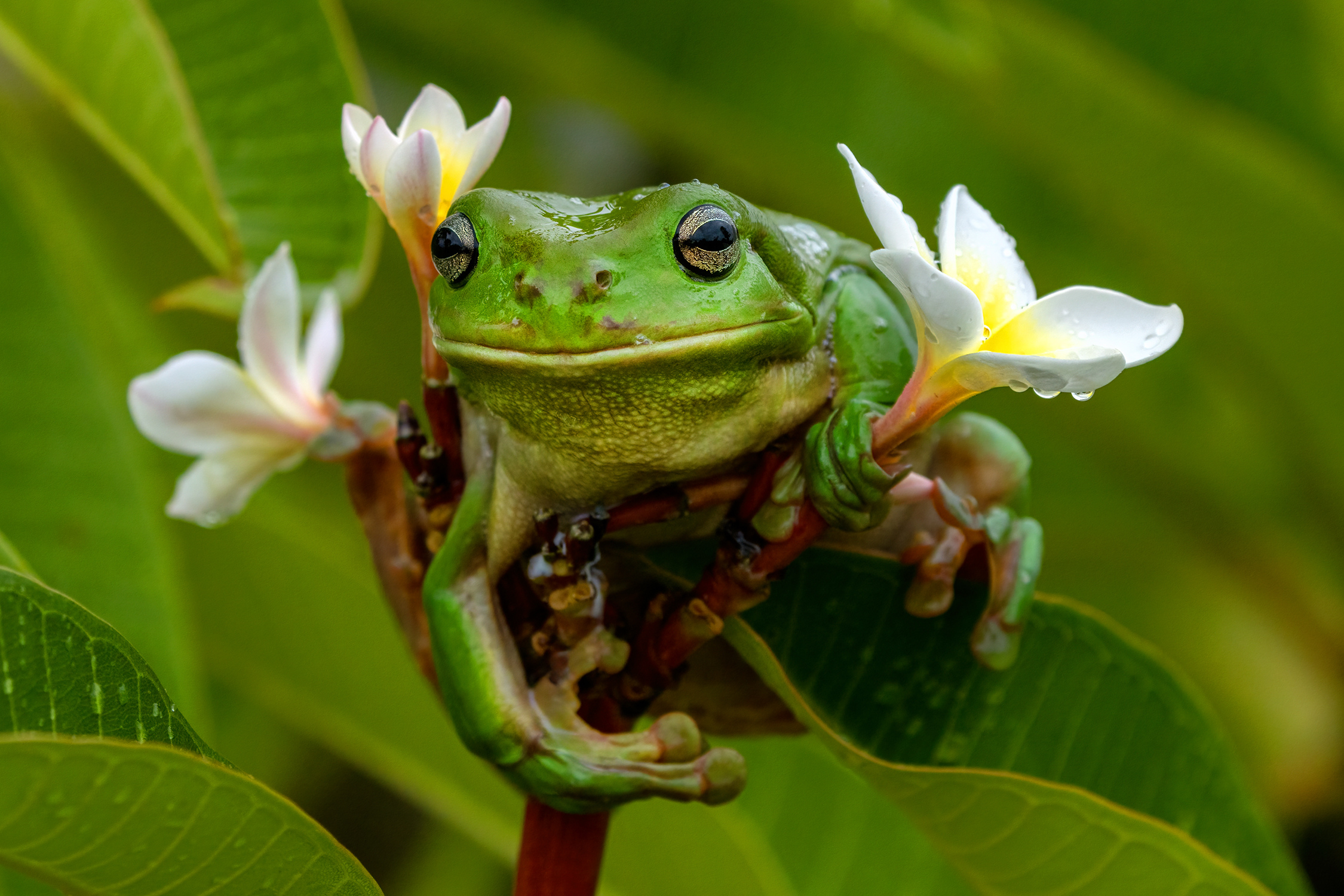
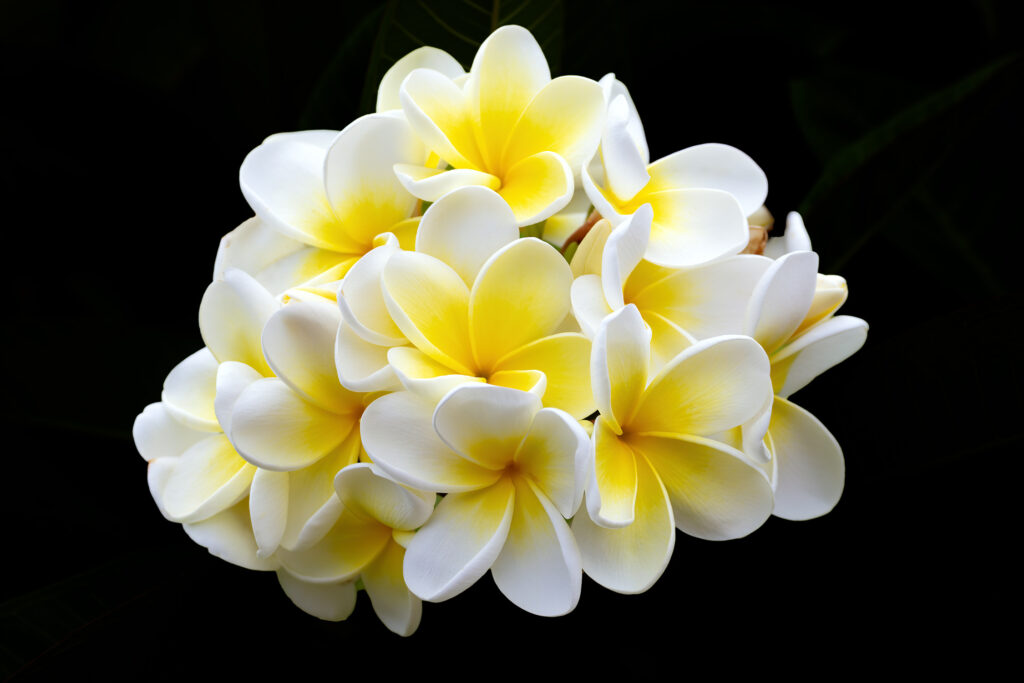
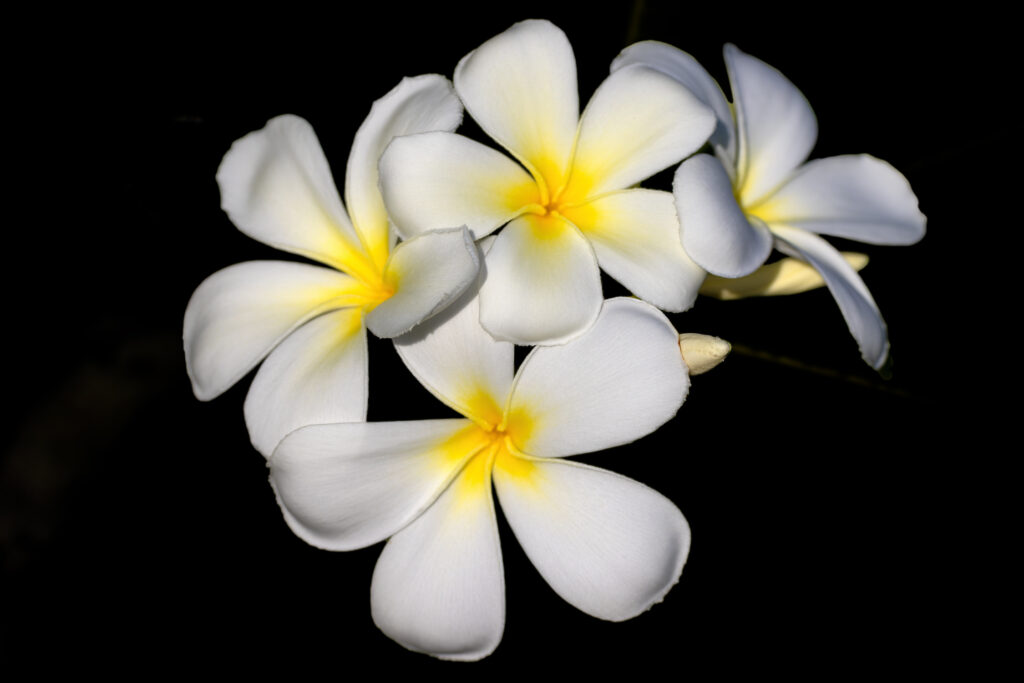
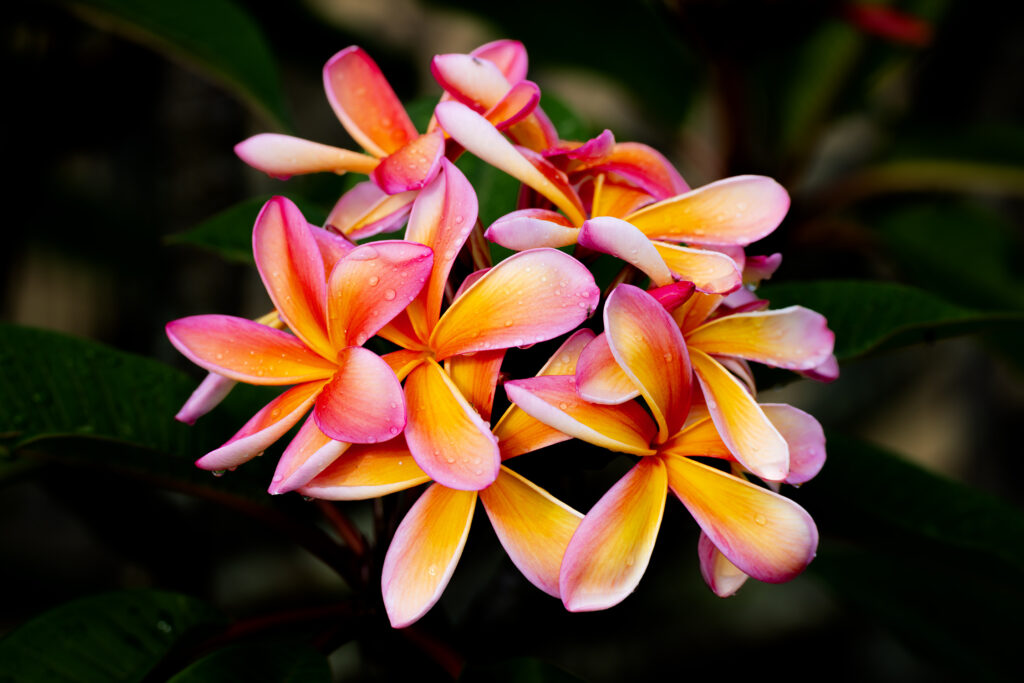
    As with any new photographic style, I started with the basics. My first macro subjects were the easiest and most forgiving—flowers. They don’t move, they don’t mind how close you get, and they’re full of colour and texture. I especially enjoyed photographing them after rain, when droplets clung delicately to petals and leaves, adding a layer of mood and detail. Those early sessions taught me how to handle the razor-thin depth of field, how to compose within such a small frame, and how to manage light and contrast on a micro scale.

    From there, I started to explore one of the most fascinating aspects of macro work—the ability to zoom in and keep zooming, revealing details invisible to the naked eye. One of my favourite series so far features a common house gecko. In the first image, you see an animal, perched against a neutral background. In the next, the frame tightens around its head, drawing attention to the texture and pattern of its skin. And in the final shot, I’ve zoomed in so close that you can see the reflection of clouds in its eye. That moment perfectly captured what I love about macro: the ability to discover entire landscapes in a single square centimetre.

    It took some time, and plenty of trial and error, but gradually my results began to improve. And, as I feared, the more I practiced, the more I fell in love with it. While bird photography remains my primary passion, macro photography has carved out its own irresistible niche in my creative life.

    I now find myself drawn not just to the tiny creatures themselves, but to the stories their environments can tell. To truly elevate my macro work, I know I need to focus more on composition and backgrounds—on creating images that aren’t just technically sharp, but also emotionally engaging. That will come with time and patience.

    One unexpected challenge I’ve encountered in this journey is the identification of the subjects I photograph. Unlike birds—where field guides and online databases make species recognition relatively straightforward—the world of insects is incredibly vast, diverse, and often under-documented. Many species can be nearly impossible to identify without expert knowledge or even microscopic examination.

    As a result, I’ve chosen not to provide species names for every photo from the set of photos below. My focus at this stage has been on exploring the art and technique of macro photography rather than diving deep into taxonomy. I hope you’ll enjoy these images for their visual storytelling, detail, and character, even without a scientific label attached.

    This collection represents the early steps of what I suspect will become a long-term fascination—and perhaps obsession—with the tiny, intricate world hiding in plain sight.

  • Jewel of the Jungle: Chasing the Elusive Noisy Pitta 🩜

    Jewel of the Jungle: Chasing the Elusive Noisy Pitta 🩜

    Where I live, Noisy Pittas are only seasonal visitors. They arrive in the winter months, staying for just a few precious weeks or months before vanishing back to higher elevations. As altitude migrants, they move between lowland and upland forests depending on the season—a behavior that makes encounters even more fleeting and unpredictable.

    Photographing the Noisy Pitta has never been easy. Last year, I managed to capture a pretty good photo—one I was proud of at the time. Here it is.

    But as soon as the moment passed, I knew I wanted more. This year, I made it a personal mission to improve on that result—to not only see the bird again but to create an image that truly honors its splendor and the intricate world it inhabits.

    That mission took time. Two weeks of early mornings, long hikes, quiet waiting, and careful listening passed before the opportunity finally arrived.

    To make things more difficult, this year’s wet season has been one of the wettest I can remember. The jungle was constantly soaked, trails were muddy rivers, and the sound of rain on the canopy was near constant. I often found myself working in conditions no typical photographer would even consider stepping outside in. But sometimes, that’s what it takes—embracing the discomfort, waterproofing your gear as best you can, and waiting, soaked and silent, for that one brief moment when the forest offers a glimpse of something extraordinary.

    After days of tracking their calls echoing through the dense undergrowth, I stumbled upon what felt like the perfect stage. A vertical root of a strangling fig tree stood like a natural sculpture in a small clearing, draped with moss and surrounded by lush, layered ferns.

    Strangling Fig Tree in the Jungle…

    …and this is where I thought the pitta will look nice

    ← Right there

    To minimize any impact on the bird, I took extra care to remain hidden and non-intrusive. I wore a full ghillie suit, blending completely into the forest floor, and positioned myself across a small creek, using the natural barrier as a buffer zone. With a long telephoto lens, I was able to observe and photograph the Pitta from a respectful distance, ensuring it remained relaxed and undisturbed in its environment. It was important to me that the image was not only beautiful, but ethically made.

    Took me time to find myself on this photo.

    The light in the jungle was almost non-existent—especially under thick cloud cover during the rain. It was a dim, moody atmosphere that pushed both my camera and my resolve to the limit. Shooting in such low light meant relying on high ISO settings and trusting that my gear could handle the challenge without sacrificing too much detail. But in a way, that darkness added to the mystery, making the moment the Pitta emerged feel even more surreal.

    Then, after all the waiting, all the soaked mornings and silent hours, it happened—the Pitta jumped up onto the stage I had imagined so many times in my mind. My heart started racing. In that instant, everything narrowed to the bird, the frame, and the light—or lack of it. I managed to get the shots not by luck, but because I’ve spent so much time out here, so many days behind the lens, that using my gear has become second nature. I didn’t have to think—I just reacted.

    And then, the moment became even more special. Because of the rain, tiny droplets clung to the bird’s feathers, adding a shimmer I couldn’t have planned for—a delicate, natural detail that elevated the whole image. It was a rare, perfect combination of timing, conditions, and preparation.

    It’s going to be extremely hard to beat these photos next time—but I’ll still be out there trying.

    Which photo do you like more—one from 2024 or from 2025? Let me know in the comments below👇

  • Patience and the Pacific Heron đŸȘż

    Patience and the Pacific Heron đŸȘż

    This morning at the pond, I had a quiet encounter that reminded me once again why photography is as much about patience as it is about timing.

    What followed was a mesmerizing display of precision and instinct. The heron began to pluck tadpoles from the water one by one, each movement quick and deliberate. It feasted in silence, the early light glinting off the surface as ripples spread from each gentle strike. Watching from just a few meters away, I felt like a silent guest at nature’s breakfast table.

    Moments like these can’t be rushed—and they can’t be forced. Sometimes, all it takes is stillness and a little bit of trust.

  • Chasing Grebes in the Tanami: A Photography Journey 🩆

    Chasing Grebes in the Tanami: A Photography Journey 🩆

    The Tanami Desert isn’t a place one typically associates with water birds. But after a rare desert downpour, the landscape transformed overnight. Shallow pans and clay depressions filled with rainwater, creating temporary oases in the otherwise arid expanse. One such ephemeral pond became the unlikely stage for my latest photography project.

    I arrived just after the rains, drawn by the surreal sight of water shimmering in the desert. What I hadn’t expected was the arrival of feathered guests — grebes. Both Australasian and Hoary-headed grebes had flown in, seizing the fleeting opportunity to feed, preen, and, seemingly, enjoy themselves.

    Over the next several days, I made it my mission to photograph these birds in this rare and fragile moment. The light was constantly shifting — from golden sunrise glows to stark midday contrast, to the soft pastels of dusk. The changing light provided endless moods and textures to frame the grebes in. The setting was almost painterly — deep blue water reflecting the clear desert sky, ringed by dry spinifex and grasses glowing golden in the low sun.

    I captured them diving for food, bobbing in the breeze, and often simply floating in serene silence. But the most amusing behavior by far was their bathing rituals. They would fluff their feathers, splash water in dramatic arcs, and then — hilariously — shake themselves dry while still afloat, like tiny aquatic dogs. It was equal parts elegant and comical. This project became more than just about the birds. It was about the magic of impermanence — of life seizing opportunity in the harshest of places, even if only for a few days. These images are a testament to that fleeting desert miracle, a reminder that beauty and humor can spring up where you least expect them.