Author: Alexander Babych

  • From Egg to Flight: Documenting the Life Cycle of Cattle Egrets

    From Egg to Flight: Documenting the Life Cycle of Cattle Egrets

    While I set out with a single goal — to photograph the lilac hues of breeding cattle egrets — it quickly became clear that I was witnessing something far richer. The scenes unfolding around me offered enough material for an entire project: a visual record of the full life cycle of the cattle egret.

    The cattle egret (Bubulcus ibis) is a migratory bird best known for its close association with livestock. It is often seen following cattle and other grazing animals, capitalising on insects disturbed by their movement. What follows is an overview of its remarkable life cycle, much of which I was fortunate enough to observe firsthand.

    1. Egg Stage

    • Breeding:
      Cattle egrets typically breed in large colonies, nesting in trees, shrubs or reed beds, usually close to water. In Australia, breeding often coincides with the wet season, when food is abundant.

    During the breeding season, cattle egrets undergo a dramatic transformation. Their usually understated white plumage is enlivened by soft lilac tones, while long plumes on the head, neck and back are raised and fluffed during elaborate courtship displays. At times, the birds resemble miniature birds-of-paradise, posturing and preening as they advertise their fitness to potential mates.

    These displays are followed by brief but decisive mating interactions, often taking place on the nesting platform or nearby branches. Though the act itself is quick, it marks the beginning of a tightly coordinated partnership, with both birds sharing nesting, incubation and chick-rearing duties.

    Even birds-of-paradise would envy these plumes
    • Eggs:
      The female lays between two and five eggs per clutch. The eggs are typically pale blue to greenish in colour.
    • Incubation:
      Both parents share incubation duties, taking turns on the nest. This stage lasts around 21–25 days before the chicks hatch.

    Although the chicks were never visible from my vantage point, concealed deep within the nests, their voices carried far. Their insistent begging transformed the colony into a constant chorus long before any young birds could be seen.

    2. Chick Stage

    • Hatching:
      Newly hatched chicks are blind and covered in soft down. Completely dependent on their parents, they rely on them for warmth, protection and food.
    • Feeding:
      Adults feed their young a steady diet of insects, small vertebrates and other invertebrates gathered while foraging.

    The colony I observed raised an estimated 25–30 chicks this season. Families ranged from one to three chicks, and the more mouths to feed, the more chaotic the process became. To receive food, a chick must grasp an adult’s beak — no easy task when the nest is perched on papyrus. Unlike sturdy tree branches, papyrus offers little stability. Picture one bird struggling to balance, then add two squabbling chicks lunging for food. In one case, a parent with three hungry offsprings made a hasty retreat when the situation became untenable.

    Time to retreat!
    • Growth:
      Over the next three to four weeks, the chicks grow rapidly. Their eyes open, feathers develop, and they become increasingly active within the nest.

    Once they are large enough to hop from one papyrus stalk to the next, the chicks begin venturing out while waiting to be fed. And there is plenty of waiting involved. This downtime gives siblings ample opportunity to play, squabble, preen and occasionally irritate one another.

    Where are you, mum?
    The loudest voice in the choir
    • Fledging:
      At around four to five weeks of age, young egrets take their first flights. Even then, they may continue to rely on their parents for food and guidance.

    3. Juvenile Stage

    • Independence:
      After fledging, juveniles gradually learn to forage on their own, often shadowing adults as they refine their skills.
    • Social structure:
      Young cattle egrets tend to remain in family groups or loose colonies, benefiting from safety in numbers.
    • Maturation:
      By about six months, juveniles reach full physical size. Their adult white plumage, often with subtle yellowish tones, develops around this time.

    As the weeks passed, I noticed a fascinating shift within the colony. More and more young birds were waiting outside their nests for their parents, while the adults’ vibrant breeding colours began to fade. At this stage, the most reliable distinguishing feature was the beak: adults sported yellow beaks, while juveniles retained black ones. Can you spot the adult bird in the image below?

    4. Adult Stage

    • Breeding:
      At roughly one year of age, cattle egrets are ready to breed. During the breeding season, adults — particularly males — once again develop striking yellow to orange colouring on the head, neck and back, standing in vivid contrast to their white plumage. And so the cycle repeats.
    • Lifespan:
      In the wild, cattle egrets can live for 10–15 years, though many face threats from predation and increasing human pressures.

  • Underwing Secrets: A Close Encounter with a Letter-Winged Kite

    Underwing Secrets: A Close Encounter with a Letter-Winged Kite

    In this article, I’m excited to share my recent encounter with one of Australia’s most elusive raptors — the Letter-winged kite. Before I dive into the story of that unforgettable sighting, let’s start with some fascinating facts about this rare and remarkable bird.

    Interesting facts

    • World’s only nocturnal raptor: The Letter-winged kite (Elanus scriptus) is a true night hunter, the only bird of prey in the world that consistently hunts exclusively after dark, rather than just occasionally being seen at night.
    • Endemic to Australia: This species occurs nowhere else, inhabiting the arid and semi-arid inland regions of the continent.
    • Distinctive wing markings: Bold black “letter-shaped” markings on the underside of the wings make the species unmistakable in flight.
    • Exceptional hearing: Like owls, Letter-winged kites rely heavily on sound to locate prey in complete darkness.
    • Silent flight: Soft-edged feathers allow near-silent flight, giving them a major advantage when hunting rodents.
    • Specialist mouse hunters: Mice form the bulk of their diet, with the species closely tied to rodent population cycles.
    • Boom-and-bust population cycles: Numbers increase rapidly during mouse plagues following good rainfall, then decline sharply as prey becomes scarce.
    • Opportunistic breeding: Breeding occurs only when food is abundant, and multiple broods may be raised in favourable seasons.
    • Daytime communal roosting: Birds roost quietly in trees during the day, often in loose groups.
    • Scarce and seldom seen: In dry years, the population is estimated at only 1,000–2,000 mature individuals, and their nomadic movements make encounters unpredictable.

    Discovering the Letter-Winged Kite

    One afternoon, walking home through an area where Black-shouldered kites are usually seen, something darker caught my eye. It didn’t take long before the bird took flight, revealing the striking black lines across the underside of its wings — not the dark wingtips I was used to.

    A Letter-winged kite! My heart raced. My camera wasn’t with me, and I knew I had to act fast. It took an hour and a half, trekking through the desert heat, to grab my gear and return — all the while hoping the bird hadn’t disappeared. Unbelievably, it was still there.

    Slowly, I approached, snapping photos and closing the distance a few metres at a time, careful not to startle it. Later, it was mobbed by crows and, almost theatrically, displayed its signature underwing “letter” again — this time for the camera.

    The photos I’m sharing aren’t works of art, but they capture the sheer luck of witnessing one of Australia’s rarest nocturnal raptors. Perhaps my first — and only — Letter-winged kite sighting.

    For anyone unfamiliar with the Letter-winged kite, it’s hard to overstate just how rare this bird is. To put that rarity into perspective, there are only around 500 recorded observations on eBird across all time. For a species that ranges over such a large part of inland Australia, that number is remarkably small and highlights just how seldom these birds are encountered, let alone photographed. Many seasoned birders will go their entire lives without seeing one in the wild.

    Observations map (all time).
    Observations map (this year).

    The map of this year’s observations tells the story at a glance. Overall sightings are few, widely scattered, and largely confined to remote inland regions, reflecting the kite’s nomadic nature and highly specialised habitat requirements. Each record represents not just a rare bird, but a fleeting moment when rainfall, prey abundance and timing have aligned just right. For a wildlife photographer, encountering a Letter-winged kite is less about planning and more about sheer luck—and that’s what makes every sighting, and every photograph, so special.

    Have you ever encountered a Letter-winged kite? Tell me in the comments below where you saw it!

  • Breeding Blues: My Adventure Photographing the Lilac Cattle Egret

    Breeding Blues: My Adventure Photographing the Lilac Cattle Egret

    Discovering the Colony

    About six years ago, when I first discovered a cattle egret colony nesting in papyrus right next to my house, I saw a rare opportunity. With such close access, I decided to focus on photographing the birds in their breeding blush—the reddish or pinkish coloration that appears on certain parts of the plumage during the breeding season.

    First Attempts at the Breeding Blush

    This colouring typically develops on the face, throat and breast of males, and occasionally females, though it is most pronounced in males. One image from that first year became my strongest photograph of the species. You can find it in the story linked here.

    Learning About the Lilac Phase

    What I later learned, however, was that cattle egrets can display an even more striking and fleeting plumage condition. At the peak of the breeding season, the base of the bill, lores, orbital rings, and eyes can turn a vivid lilac-blue. These colours may last only a few days, making the condition rare and difficult to photograph. “Challenge accepted,” I thought, already beginning to mentally frame it as a photographic project.

    Missing the Moment

    I made annual attempts to observe the egrets, but it took a couple of years to realise that I was consistently missing this brief window and needed to begin my observations much earlier.

    At the end of 2025, I returned to the egret colony with renewed determination.

    Gaining Access to the Canopy

    As the years passed, the papyrus grew ever taller, and my original method—using a three-metre A-frame ladder to reach the top of the colony—was no longer workable. A five-metre ladder was now required, and the only practical option was to lean it against a nearby tree.

    I visited the site both in the morning and afternoon to study the direction and quality of light, eventually narrowing my options to several suitable trees. This is what the setup looked like. The position gave me access to the canopy and clear views into the daily life of the colony.

    Papyrus plantation

    This is what it looked like from the outside. No sign of egrets!

    My setup

    This is how I was spending best time of my day.

    A Colony at Many Stages

    It soon became apparent that the birds were at very different stages of breeding. Some were mating, while others already had chicks begging for food. As a result, some birds were only just developing breeding plumage, while others were likely already moulting. It is possible that this staggered breeding reflects an adaptive strategy, potentially reducing the risk of losing the entire breeding season to a single catastrophic event, such as a cyclone or other environmental disturbance.

    Patience in the Field

    At any given day, I could usually see only a single bird that matched my criteria—and because individuals didn’t remain in the colony continuously, this involved a lot of waiting.

    Success at Last

    This time, I spent almost every morning in the tree for several weeks, from late December through to February. I’m happy to report that I believe I achieved my goal. I managed to find several birds showing the lilac-blue colouration I was hoping for.

    An Unexpected International Chapter

    Interestingly, I also encountered a couple of particularly bright individuals while photographing in Indonesia, turning this project into an unexpectedly international one. Below are the results of my efforts.

    Cattle Egret in Breeding Blush, Rice Fields of Indonesia

    What Influences the Colouration

    While working on this series, I also learned that this colouration is not only extremely short-lived, but can vary greatly depending on diet, environment and the hormonal condition of each individual bird. In some cases, it may be subtle—or entirely absent.

    Looking Ahead

    I’ll continue observing this colony in the hope that one day I’ll photograph an even brighter individual.

    Your Experiences in the Field

    Let me know in the comments below — have you had any luck photographing lilac cattle egrets? Have you ever seen them an even brighter blue?

  • When the Desert Turns Crimson

    When the Desert Turns Crimson

    The Heat of the Desert

    The Tanami Desert is getting less rain this year compared to last, and air temperatures are reaching new extremes, with highs of 44°C and ground temperatures soaring to 75°C. This intense heat drastically limits the time both wildlife and I can spend outdoors. A thermal image of my boot shows surface temperatures nearing 60°C after walking, while nearby termite mounds register even higher ground temperatures — hot enough that it feels like my feet are being slowly boiled inside my boots. While I usually enjoy long hours out in the cooler weather, the past few months have made it tough to stick to my usual routine. And I’m not exaggerating; the following thermal images tell the story.

    Thermal image of my boot after 10 minutes walk in the desert (~60°C)
    Thermal image of a termite mound (~75°C).

    An Unexpected Encounter

    One early morning, I managed to get out before the heat rolled in, and I couldn’t believe my eyes when I spotted a bright red bird hopping along the ground. There aren’t many birds with such a striking colour, and it immediately grabbed my attention. It was a Crimson Chat. I’d seen one last year and assumed they’d just pass through the desert without stopping, like some migratory birds do. I thought if you were lucky enough to spot them, it would only be for a short window—just a couple of days. But I’m happy to admit I was wrong. To my surprise, the Crimson Chats are ground-dwellers, more like pipits than the tree-perching birds I expected. This changed everything, and I realised I had been searching in the wrong places.

    The Allure of the Crimson Chat

    As someone who loves capturing vibrant red tones in my photos, I was thrilled at the chance to spend more time with these incredibly bright and captivating birds—ones that never seem to lose their charm through the lens.

    The Challenge of Capturing the Chats

    I now understand why photographing them on the ground is such a challenge. First, they’re incredibly active and rarely stop moving, making it hard for even the most advanced autofocus systems to keep up. Second, they prefer areas with dense spinifex grass, which makes getting an eye-level shot nearly impossible. The spinifex, which is everywhere, constantly blocks clear views. Lastly, the intense heat haze that often hangs over the ground also makes it difficult to get sharp, focused shots.

    A Stroke of Luck

    Earlier in the season, I was lucky to find some controlled burns had cleared areas of the spinifex, opening up small gaps through which I was able to get clearer views and photographs.

    And then—look at those colours! I’m still in awe of the vivid sight of these birds.

    The Female Crimson Chat

    In the next photo, you’ll see the female Crimson Chat, and you’ll notice the stark difference in colouration. While the males are bright and eye-catching, the females are much more subdued. This is likely an evolutionary trait to help them blend in while nesting and avoid drawing attention.

    A Game of Hide and Seek

    One memorable encounter involved a bit of “hide and seek” with a female. I tracked her until she darted behind a small bush and disappeared from view. If you can spot her in the photo, I’d love to hear your thoughts in the comments below!

    Laughs and Learnings: Fun Facts about Crimson Chats

    • The “Bouncy” bird. Crimson Chats are often described as “bouncy” birds. Instead of walking or running like most other birds, they hop around on the ground, much like a little kangaroo. This hopping behaviour is cute and comical to witness, especially when they bounce energetically from one spot to the next as if they’re on a spring-loaded trampoline!
    • The “Flamboyant” Males. Male Crimson Chats really know how to stand out, often flaunting their vibrant red plumage like they’re on a runway. They practically scream, “Look at me!” when they’re trying to attract a mate, but ironically, their bold appearance makes them an easy target for predators. It’s like they’ve dressed for a party but forgot it’s a survival game. Talk about a fashion risk!
    • The “Chatty” Socialites. Though their calls are not overly loud or frequent, when a group of Crimson Chats does decide to have a “chat,” it’s like they’re gossiping in a birdie huddle. It’s almost like they’re trying to decide who’s got the best feathers or who’s won the title of the most stylish bird in the desert. Their calls sound like little whispers—birds seem to gossip as much as humans!
    • The “Oops, I’m a Ground Bird!” Moment. Crimson Chats can be hilariously awkward when it comes to tree hopping. Though they’re mostly ground-dwellers, they’re technically capable of hopping up onto low branches, but their attempts often look pretty funny, as if they’re not quite sure what they’re doing. They tend to look slightly confused about the whole “perching” thing, almost like they’re saying, “I don’t think I belong here… do I?”
  • Bali’s Wild Side: A Photographer’s Notes on Birds and Beyond

    Bali’s Wild Side: A Photographer’s Notes on Birds and Beyond

    My overall impression of Bali

    Bali is not an ideal destination for a wildlife photographer. In my experience, there are very few publicly accessible parklands or natural areas. Much of the land is heavily subdivided and intensively used for rice cultivation, meaning it is frequently flooded and difficult to traverse. Water is everywhere on Bali due to the extensive rice fields and irrigation systems, with constant running streams forming part of the landscape. Narrow strips of tall trees do exist, but access is often impossible due to surrounding rice paddies.

    Pick your favoruite photography destination!

    The climate is extremely humid and moist, resulting in rapid and dense vegetation growth. While this creates lush scenery, it allows birds to disperse widely rather than congregating in smaller, predictable areas. The constant sound of running water also makes it difficult to hear the calls of smaller birds, further complicating efforts to locate them. In urban and semi-urban areas, land is almost entirely given over to residential development. Waterways are noticeably polluted, and it is not uncommon to see waterbirds perched on floating islands of rubbish. Overall, it is far from a perfect location for wildlife photography.

    Don’t get me wrong — I still thoroughly enjoyed the trip for many reasons, one of them being the exposure to an entirely new range of species. In Australia, it often takes me around six months to encounter a new bird, so discovering 30 new species during a short stay in Bali was genuinely exciting. I wasn’t able to photograph every species I saw, so I’ll be sharing only those I managed to capture through the lens.

    There won’t be any breathtaking images in this article, and I was perfectly ready for that. Over the years, I average about one truly good image per month, each requiring hours of patient work. In Bali, my time was limited and weather conditions far from ideal, so I didn’t expect miracles. This post is really about celebrating the incredible variety of new birds I encountered, learning more about them, and observing their behaviours — not producing gallery-worthy shots.

    Javan Pond-Heron

    A stocky heron often seen stalking rice paddies and wetlands, changing from plain brown to striking chestnut and white during the breeding season.

    Interesting fact: Outside the breeding season it looks so different that it’s often mistaken for a completely different species.

    Frequently seen in rice fields, it was the very first bird I managed to photograph.

    White-breasted Waterhen

    A bold, dark waterbird with a crisp white face and breast, frequently heard before it’s seen.

    Interesting fact: Despite its chicken-like appearance, it’s an excellent swimmer and can even dive when threatened.

    Another familiar resident of the rice fields, this bird seems to have a healthy population. Despite being rather stealthy, it’s still spotted regularly.

    Scaly-breasted Munia

    A small finch with a distinctive scalloped pattern across its chest, usually found in grassy areas and farmland.

    Interesting fact: These birds are highly social and often feed in tight-knit flocks.

    These birds feed on seeds, including rice. Interestingly, eBird removed it from my Australian life list, so I’ve now effectively ‘rediscovered’ it here in Indonesia.

    Javan Kingfisher

    A stunning kingfisher with a turquoise body and heavy red bill, endemic to Java and Bali.

    Interesting fact: Unlike many kingfishers, it often hunts insects and small reptiles away from water.

    It was one of the birds I most wanted to capture, but its vibrant colours only came alive in sunlight — which I sadly lacked. And every time I aimed my camera, I was always just a split second too late.

    Japanese Sparrowhawk

    A compact raptor with sharp features and powerful wings, typically seen darting through forest edges.

    Interesting fact: It’s a long-distance migrant, travelling from northern Asia to Indonesia during the non-breeding season.

    A tiny raptor, yet in shape and markings it closely resembles the Australian Brown Goshawk.

    Ornate Sunbird

    A tiny, energetic bird with iridescent colours that shimmer in the sunlight, especially in males.

    Interesting fact: Its curved bill is perfectly adapted for feeding on nectar, making it an important pollinator.

    I was delighted to spot these birds, but unfortunately their favourite perches were too high and too distant to photograph.

    Yellow Bittern

    A small, secretive heron with warm yellow-brown plumage, often hidden among reeds.

    Interesting fact: When alarmed, it freezes with its bill pointed upwards, blending almost perfectly with surrounding vegetation.

    Perhaps this was my rarest find. Given the secretive nature of bitterns, it felt like beginner’s luck to actually spot one.

    Bar-winged Prinia

    A lively, grey-brown songbird commonly seen flitting through shrubs and open woodland.

    Interesting fact: Its call is far more noticeable than its appearance, often giving away its location.

    These birds are constantly active among the reeds, making clear views nearly impossible even though their calls are heard all the time.

    Eurasian Sparrow

    A familiar urban bird with brown, black and white markings, thriving around villages and towns.

    Interesting fact: It’s one of the most widely distributed birds in the world, closely associated with human settlement.

    One more bird that pretty much everyone knows.

    Black-crowned Night Heron

    A stocky heron with a glossy black cap and red eyes, usually active at dusk and night.

    Interesting fact: During the day, it often roosts in large groups, sometimes surprisingly close to busy human areas.

    It was a real pleasure to spot these nocturnal birds.

    Javan Munia

    A small finch with rich brown plumage and a thick bluish bill, common in grasslands and rice fields.

    Interesting fact: It feeds mainly on grass seeds, making it a frequent companion to agricultural landscapes.

    Large, noisy flocks patrolled the rice fields, making it difficult to approach without them taking flight.

    Purple Heron

    A tall, elegant heron with elongated neck and subtle purple tones, favouring wetlands and marshes.

    Interesting fact: It is more slender and stealthy than the Grey Heron, often hunting while concealed in reeds.

    This was another species I was eager to photograph. At first, it was far beyond the reach of my 800mm lens, but thankfully the rain drove them closer to the edges of the nearby mangroves. Extremely cautious of any movement, this bird kept me waiting for 40 minutes before it finally felt comfortable enough to start preening its feathers.

    Racket-tailed Treepie

    A striking black bird with long tail feathers ending in racket-shaped tips.

    Interesting fact: It’s highly intelligent and curious, sometimes approaching people to inspect shiny objects.

    These birds were hilarious to watch as they leapt into the air to catch prey, their long tails trailing behind with a slight, comical delay

    Javan Myna

    A dark, glossy starling with bright yellow facial skin and legs, commonly seen in open country and towns.

    Interesting fact: It’s an excellent mimic and can copy a wide range of sounds, including human speech.

    As with any other myna, these birds are firmly established, though nine times out of ten they choose perches that are far too high for a decent shot.

    Plantain Squirrel

    One of Bali’s most commonly seen squirrels, the plantain squirrel is a small, quick-moving tree dweller with a reddish belly and a bold black-and-white stripe along its side. It’s often spotted darting through gardens, temples and forest edges, rarely sitting still for long.

    Funny fact: plantain squirrels have a habit of scolding anything they don’t trust — including photographers — with a rapid series of sharp chirps, as if loudly complaining about being photographed without permission.

    Long-tailed Macaque

    A medium-sized, agile monkey with a distinctive long tail and expressive face, often grey-brown in colour. They are extremely common in Bali’s forests, temples, and tourist areas.

    Interesting fact: They are called “crab-eating macaques” because, in the wild, they sometimes catch and eat small crabs in mangrove areas.

    These monkeys can be quite annoying, as they’re notorious for stealing anything that isn’t properly secured. I was naïve enough to think I could grab a photo with one — until I heard my backpack being unzipped.

    I’d love to hear from you! Have you ever visited Bali and explored its wildlife? Which bird was your favourite encounter on the island? And among the species I’ve shared in this post, which one catches your eye the most? Drop a comment below and let’s share our love for these incredible creatures.

  • One Moment, One Year: My Best Photo of 2025

    One Moment, One Year: My Best Photo of 2025

    A Time for Reflection

    As the year draws to a close, it’s a natural time for reflection. Like many others, I find myself looking back—this time through the lens of my photography journey.

    How I Select My Best Images Each Year

    Whenever I capture an image I consider truly high quality, I place it into a dedicated folder reserved for what I regard as my best work of the year. Over time, this has averaged out to around a dozen images annually.

    A Year Shaped by Challenging Conditions

    This year was both challenging and rewarding. The main obstacles came from the weather: months of persistent rain followed by periods of extreme heat. Neither condition is particularly friendly to nature photography. And yet, despite these challenges, I managed to capture a strong collection of images I’m genuinely proud of.

    The Difficulty of Choosing Just One Photograph

    For this article, I wanted to share just one photograph. I assumed choosing a single image would be straightforward—but I quickly realised it wasn’t. One image might stand out because of the species, another because of the story it tells, and yet another for the sheer rarity of the moment or the time and planning invested. Each has its own significance.

    Let’s Get to the Image

    That said, I know most of you are here to see a photograph, not to read an endless introduction—so let’s get to it.

    My Top Photograph of 2025: Plumed Honeyeaters

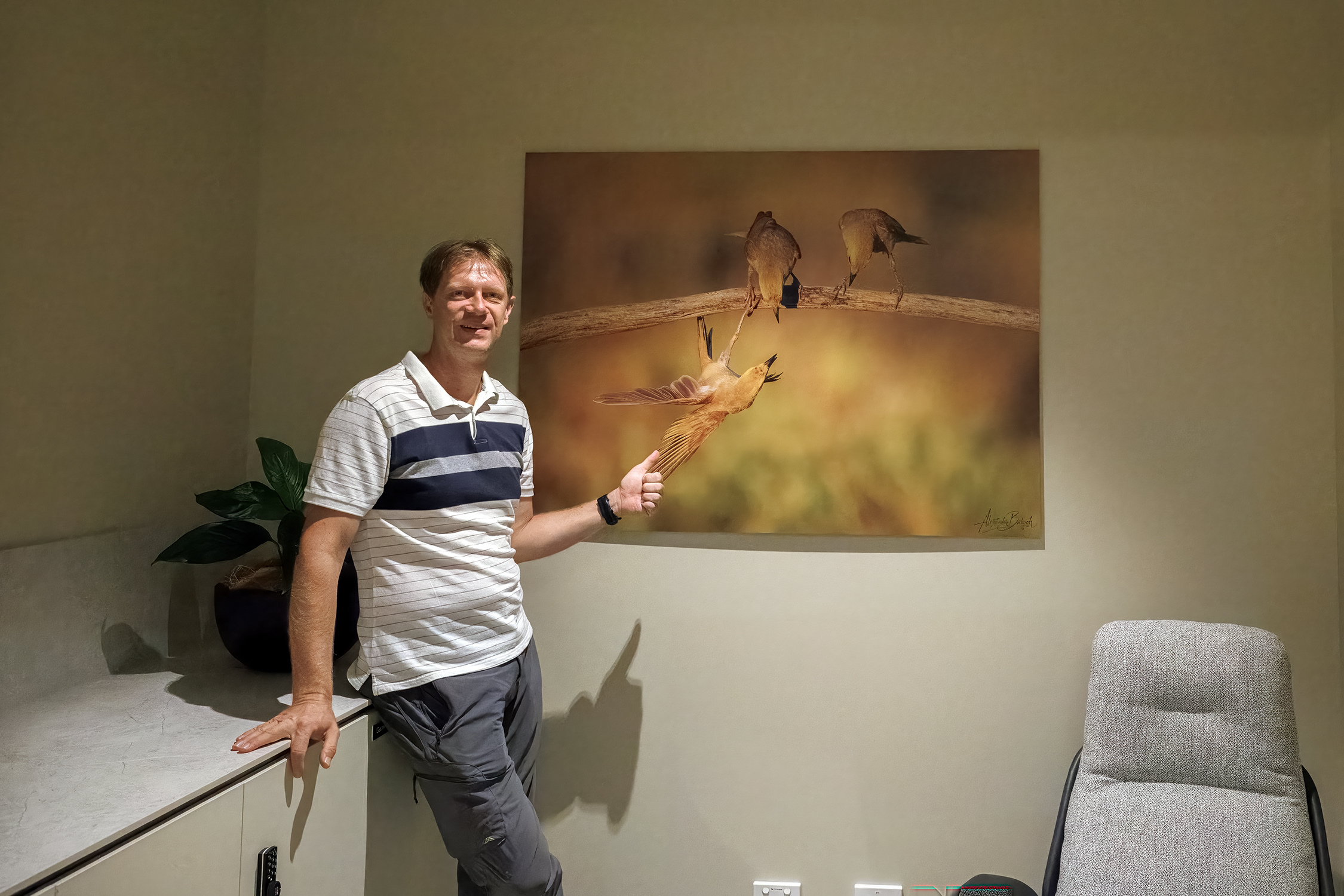
    Below is my top-ranked image of the year, capturing a remarkable interaction between three plumed honeyeaters. Two birds stand atop a branch, intently focused on a third individual dangling upside down beneath them, suspended by a single leg. What makes this moment especially intriguing is that one of the perched birds appears to be standing on the hanging bird’s leg, giving the impression that it may be trying to prevent it from falling.

    Whether this is a rare glimpse into cooperative behaviour, a split-second of chaos, or simply a piece of accidental bushland comedy is open to interpretation. The clean background and unusual body positions draw the eye and invite the viewer to linger, making this image stand out as my personal favourite of the year.

    Your Interpretation of the Moment

    I’d love to hear your thoughts. Do you see a dramatic rescue, a moment of mischief, or something else entirely? What story does this photograph tell you?