
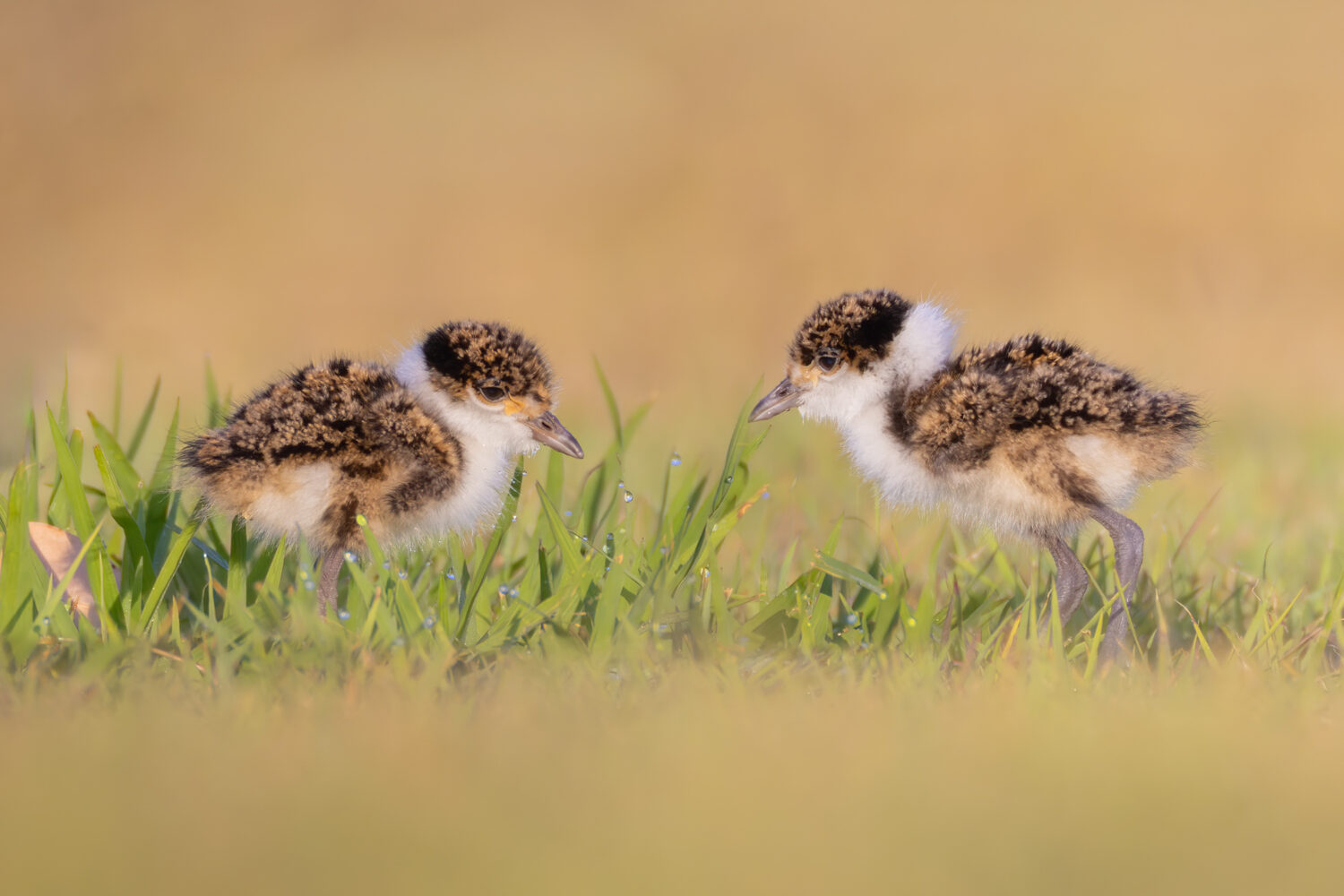
Masked Lapwings (often called plovers) are a fascinating paradox of the bird world—part drama, part delight. As a wildlife photographer, I’ve long been drawn to their unapologetically loud personalities, their fierce devotion to parenthood, and the irresistible cuteness of their chicks. Over the past year, I dedicated myself to capturing this unique species in all its forms—through rain, wind, noise, and dive-bombing attacks.
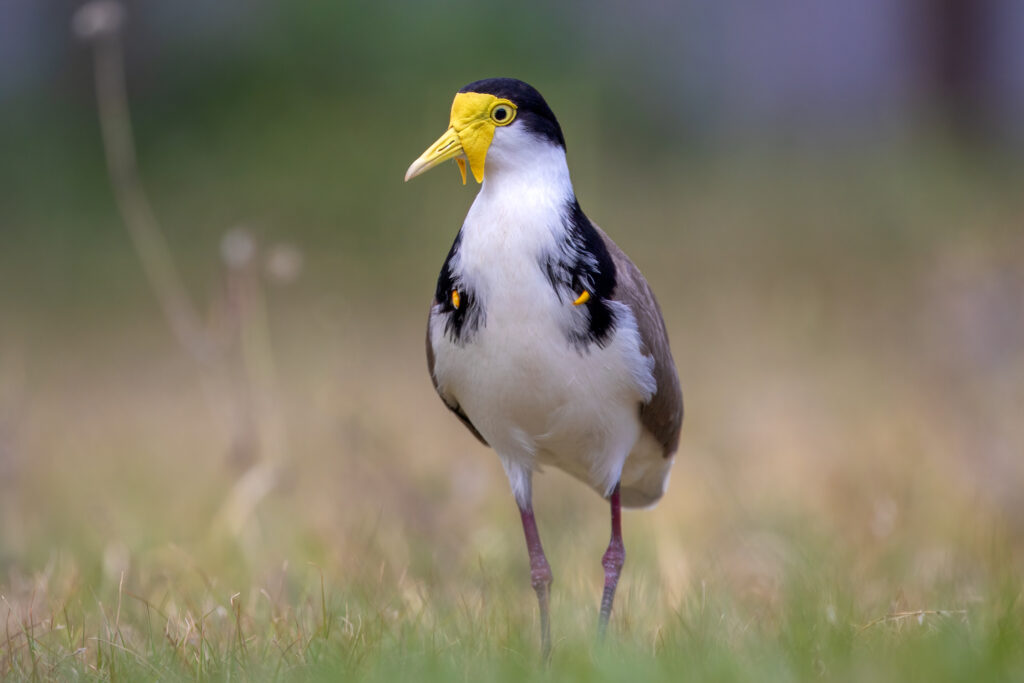
Adult Southern Masked Lapwing with visible spurs
Regional Differences and That Curious Mask
Not all Masked Lapwings look the same. There are two main races: the northern race (Vanellus miles miles), common in northern Australia, and the southern race (Vanellus miles novaehollandiae), found across the south and east. One key difference is the plumage—southern birds sport distinctive black shoulder patches, while northern birds lack these entirely, giving them a slightly cleaner look across the wings.
Another fascinating feature is the bird’s namesake “mask”—the bright yellow wattles that drape from the face. At a glance, they look ornamental, almost cartoonish. But during preening, I managed to capture a rare moment: a bird lifting its mask in the wind, revealing that these wattles are actually made of bare, flexible skin. They move and bend, and their expressiveness seems to change depending on the bird’s mood or motion, adding a whole new layer to their personality.
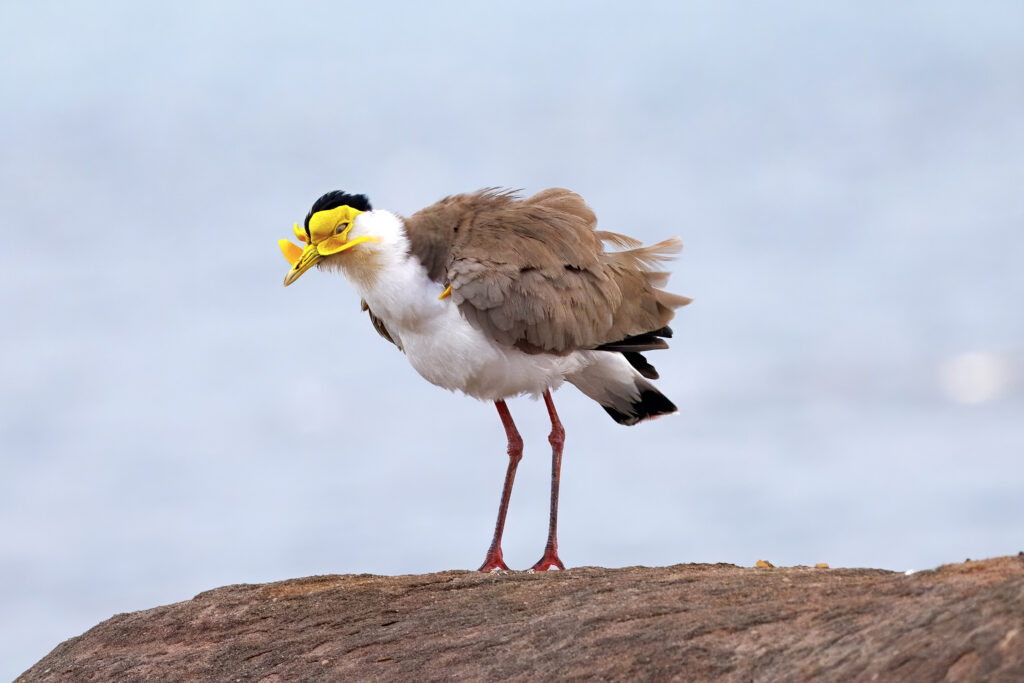
Adult Northern Masked Lapwing with the flapping mask
Masters of Defence
Masked Lapwings are known for their fearless defence tactics. Despite not building nests—simply laying their eggs directly on open ground—they become obsessive guardians the moment the eggs are placed. What they lack in architectural skill, they make up for in vigilance. The adult birds will patrol the area relentlessly, ready to defend their offspring from any perceived threat.
And they don’t care how big the intruder is. These birds have been recorded attacking everything from photographers to emus, Australia’s largest bird, and even airplanes, which is why they’re considered a hazard around aerodromes. Watch them chase emus
and a photographer trying to get too close
They are equipped for combat, too—each adult has a yellow spur on its wing, which acts as a natural weapon during aerial swoops and strikes. I captured a close-up image of this feature, and it’s a vivid reminder that these birds aren’t bluffing when they come at you, screeching and flapping.
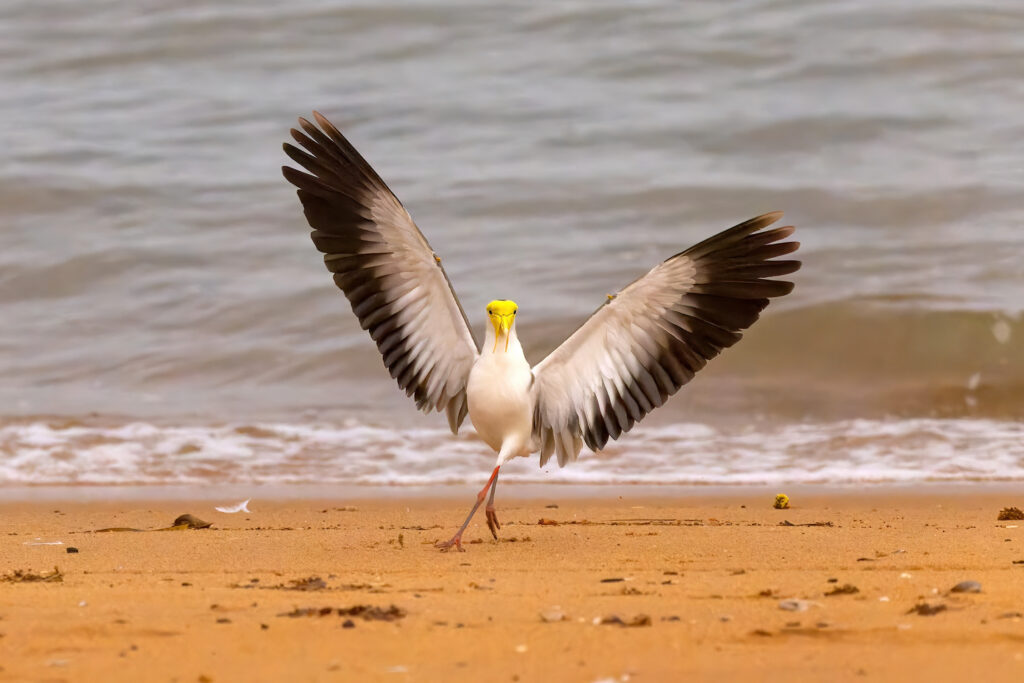
Photographing the adults has been just as thrilling as challenging. One of my favourite moments was catching an adult Lapwing landing on the beach in a pose that looked like a mid-air dance—wings outstretched, body poised, almost balletic. In another photo, I managed to capture a bird in full flight, yellow wattles flaring and spurs also visible in mid-flight. These are birds of contrast: graceful in motion, yet unapologetically confrontational when they feel threatened.
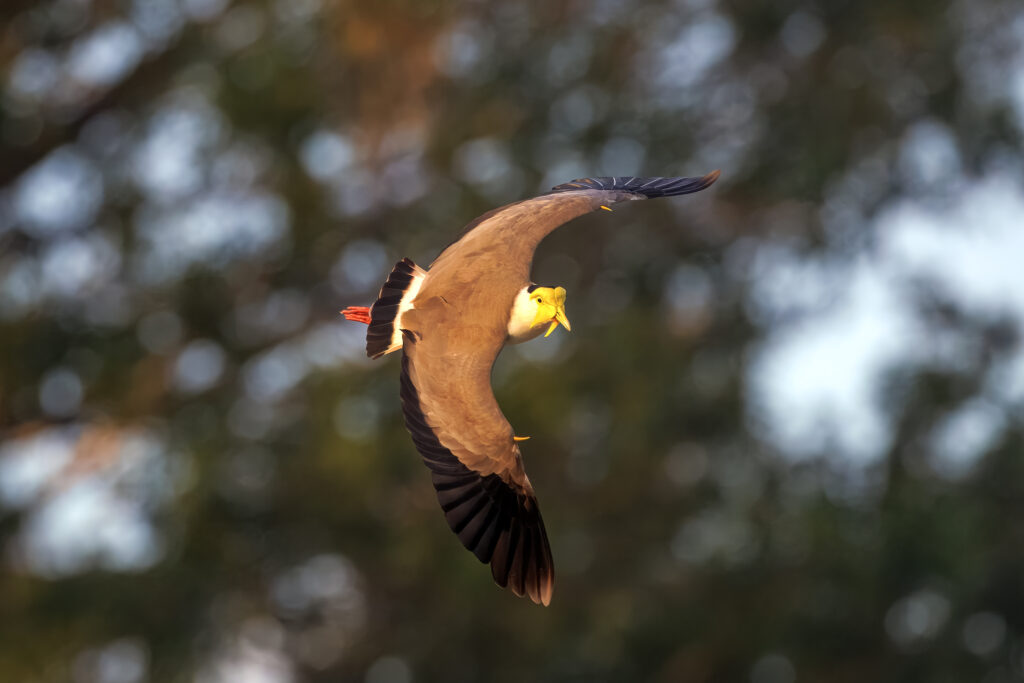
Masked Lapwing
in flight
Masked Lapwing
Landing on the beach
Fluffballs on Patrol
Despite the noisy, aggressive nature of the adults, their chicks are pure joy—tiny, fluffy, and endlessly curious. They roll around in the grass like wind-up toys and look more like plush animals than wild birds. I had always dreamed of photographing them up close, but early attempts ended in failure, with protective parents launching immediate attacks any time I stepped too near. After several such encounters, I nearly gave up.
But in 2024, I turned that dream into a personal project. I committed to capturing images of the chicks, no matter how long it took. I monitored a returning pair closely and waited patiently through two separate nesting attempts. Each time, the challenge began anew: how to get close without setting off the alarm.
Approaching the chicks took days of slow, careful observation. If you try to get near too fast, you’re guaranteed a noisy and sometimes physical response. I had to earn their trust, moving closer each day until I could photograph the young ones without causing a commotion. Some days were overcast and gloomy, others rainy and wet. There were days I found myself belly-crawling through wet grass only to find the birds too far away. It required patience, timing, and a lot of mud.
But the reward was more than worth it. I documented their journey from tiny fluffballs to young, feathered juveniles, watching the transformation week by week. Their personalities started to emerge, and I like to believe the parents slowly began to recognize me—not as a threat, but as a respectful observer.
Below, you’ll find some of the results from this long-term project—images from the 2024 season that I’m incredibly proud of. They reflect not just the beauty and humour of the Lapwing family but also the patience and persistence required to work with wild animals on their terms.
I’m hopeful the same pair will breed again this year, and if they do, I’ll be ready. Maybe—just maybe—I’ve become their unofficial family photographer.
Leave a Reply