
Interesting Facts About Azure Kingfishers
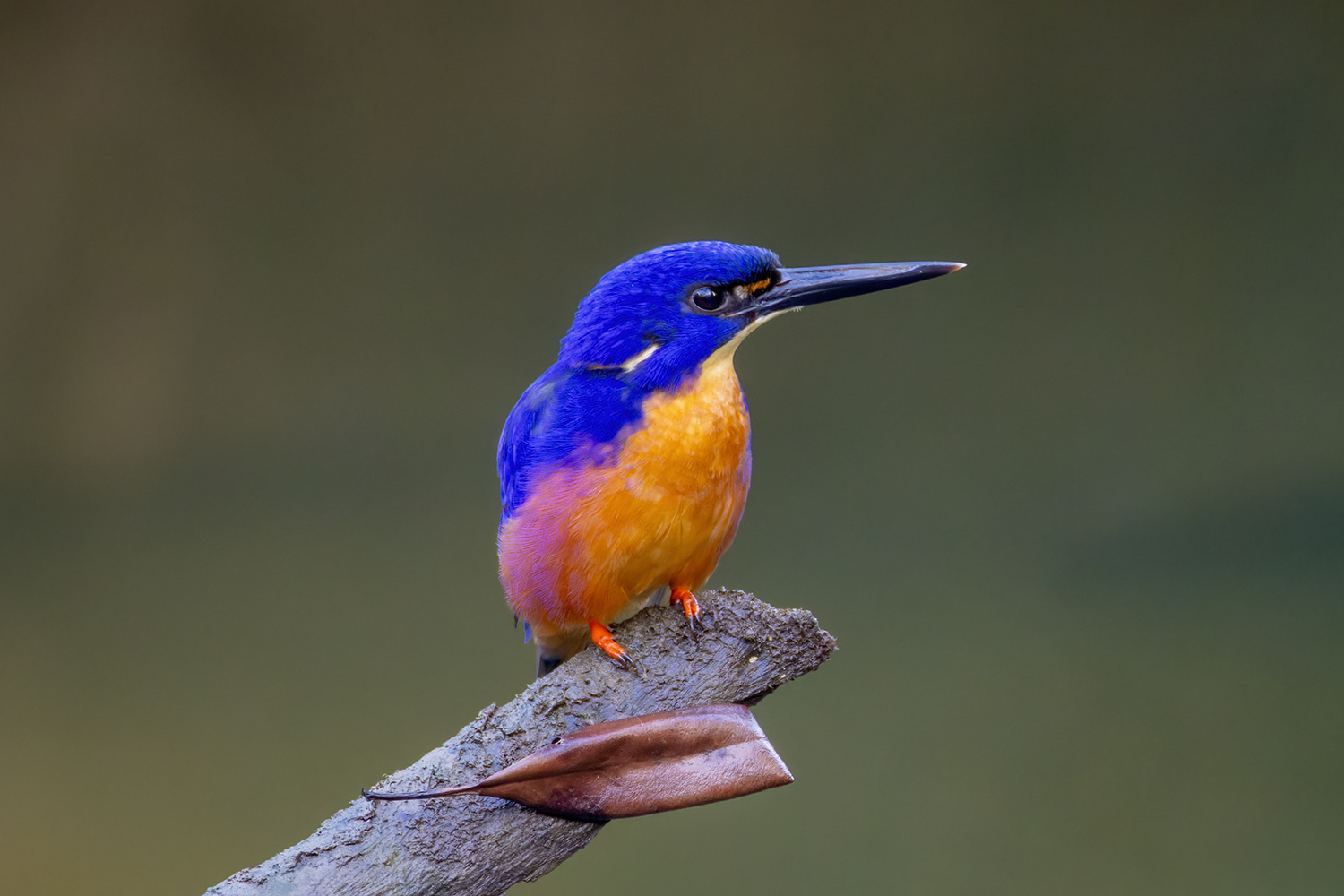
- Their plumage is intensely colourful – a deep azure-blue back, bright orange‑rufous underparts, and a white throat spot that stands out when viewed from the front.
- They have unique white “eye‑spots” on their lores, which appear like two large white eyes from the front and may help deter predators.
- Their feet are bright red and unusual, with only two forward‑facing toes, unlike most birds that have three.
- Azure kingfishers are expert divers, plunging from low branches to catch fish, crustaceans, aquatic insects, and sometimes frogs. They often bash prey against a perch before swallowing it head‑first.
- They live near calm, clear waterways, including rivers, creeks, billabongs, swamps, mangroves, and estuaries – always close to water with overhanging vegetation.
- They nest by digging long burrows – up to 80–130 cm – into riverbanks, ending in a chamber where eggs are laid. Flooding can destroy low burrows.
- They form monogamous breeding pairs, with both parents incubating eggs and feeding chicks.
- Their flight is fast and direct, and they often bob their heads or flick their wings while hunting, signaling intense focus before diving.
Discovery Close to Home
I was lucky enough to stumble upon a pair of azure kingfishers just minutes from home, tucked away along a quiet bend of the local creek. As any wildlife photographer knows, nothing beats working with local birds – familiar ground, predictable light, and the chance to return again and again. So I committed to spending as much time with them as they would allow. What began as a casual discovery turned into several months of observation, as the pair had chosen a soft section of the creek bank to dig their nesting burrow.
Colours That Never Get Old
I never tire of photographing these birds. Their colours alone are enough to stop you in your tracks—deep, electric blue set against warm, glowing orange. It’s a combination so bold it doesn’t need a dramatic backdrop; they stand out no matter where they perch.
Blending In for the Best View
To minimise my impact, I relied heavily on a ghillie suit and camouflage netting, always keeping a respectful distance and shooting with a long lens.
From Quiet Incubation to Constant Activity
Early in the season, when they were incubating, the activity was subtle: one bird slipping out of the burrow, the other slipping in, a quiet exchange of duties. But once the chicks hatched, everything changed. Suddenly the creek came alive with movement. I watched the parents return again and again with tiny fish and freshwater prawns, each delivery disappearing into the darkness of the burrow to feed the growing brood.
A Story Still Unfolding
I never did witness the moment the young birds fledged, but that only adds to the sense of anticipation. With a bit of luck, this pair—or perhaps their offspring—will return next season. And if they do, I’ll be ready.
Sharing the Season’s Highlights
Below are the best photos from that season—moments that capture the colour, character and quiet drama of this remarkable pair. If you’ve spent time with azure kingfishers yourself, or have stories from your own local patch, feel free to leave a comment. I’d love to hear about your experiences and observations of these brilliant little birds.

Leave a Reply