
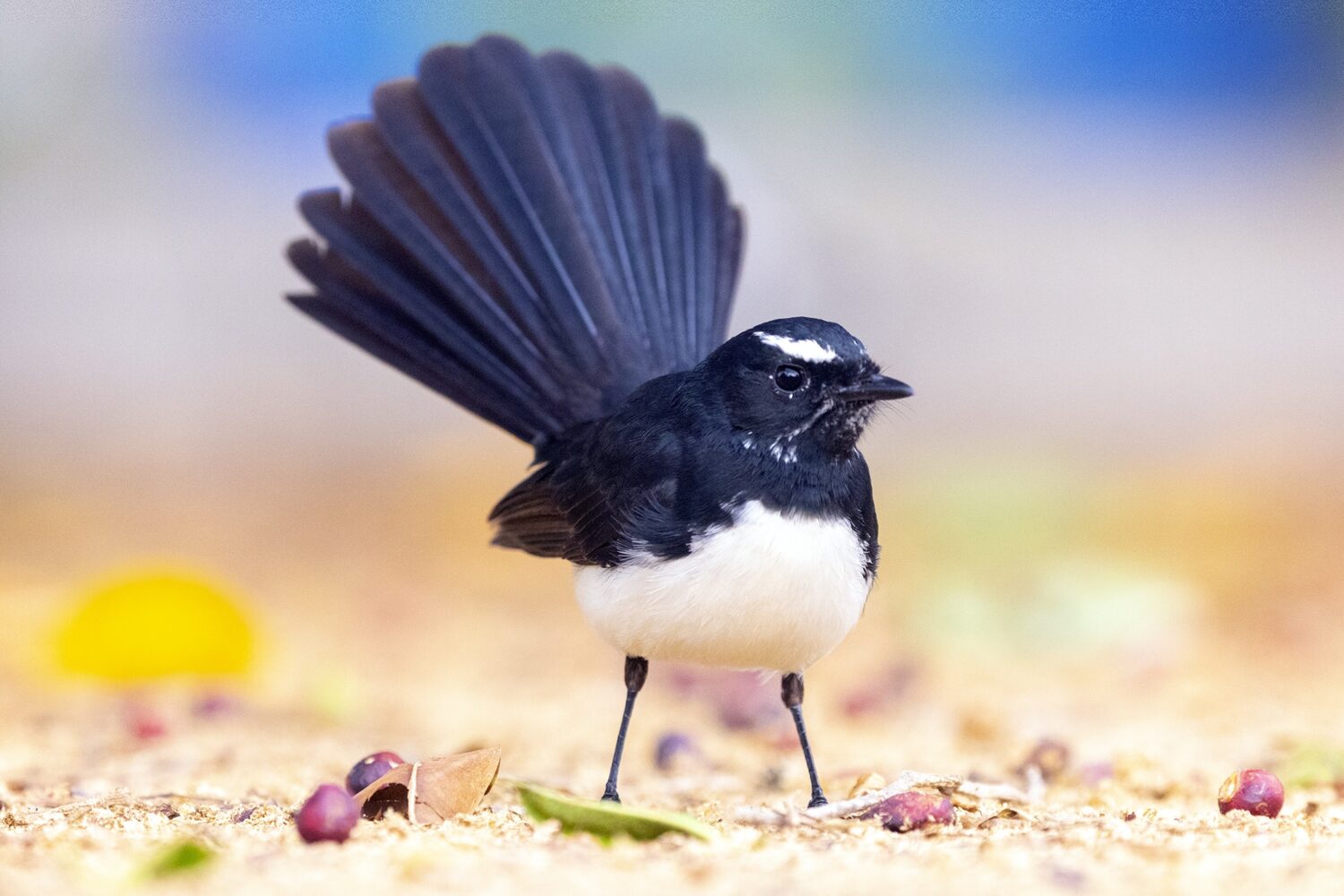
Fun facts about the Willy Wagtail
- Name Origin: The name “Willy Wagtail” comes from the bird’s distinctive behavior—its tail wags or “flirts” constantly. The “willy” part is an old British term for a lively, excitable character, fitting perfectly with the bird’s energetic personality.
- Tail Tricks: The Willy Wagtail’s tail isn’t just for show. It’s a key part of their communication. They use it for displays of aggression or to attract mates. In flight, their tail is fanned out beautifully, making them one of the most striking birds to watch mid-air.
- Incredible Flycatchers: Willy Wagtails are expert flycatchers. They dart through the air at incredible speeds, snatching insects mid-flight. They can even fly backwards for a split second while trying to catch an insect—an impressive acrobatic feat!
- Territorial and Brave: Willy Wagtails are incredibly territorial. They will fiercely defend their area, even against much larger birds or animals. Some have even been known to dive-bomb humans who come too close to their nests—yet another example of their brave (sometimes cheeky) character.
- Not Really a “Wagtail”: Despite their name, Willy Wagtails aren’t actually true wagtails, which belong to a different family. They belong to the flycatcher family (Muscicapidae), but they share some behaviors and physical traits with wagtails, hence the name.
- Rapid Growth: The chicks of Willy Wagtails grow at an astonishing rate. Within just a few weeks of hatching, they can take their first flight. Their parents are extremely attentive and constantly bring them food, ensuring the little ones are strong and ready to leave the nest quickly.
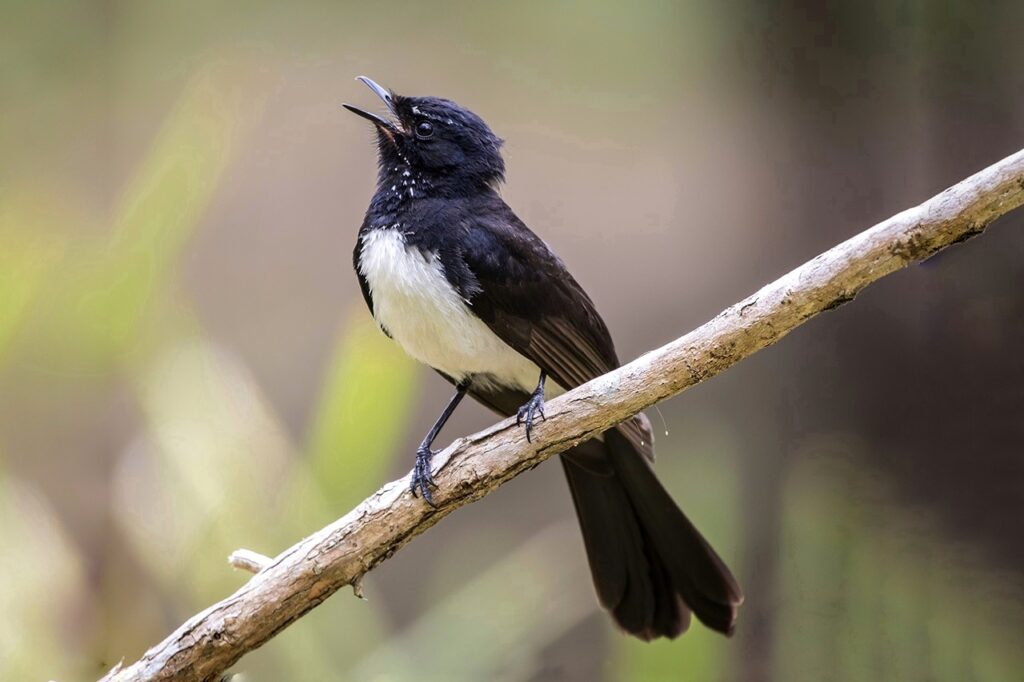
- Famous for Their Calls: Willy Wagtails have a distinctive, melodious call, which sounds like a high-pitched “pip-pip-pip” or sometimes a more complex “whee-wee.” These calls are often heard echoing through Australian parks and gardens. They’re also one of the few birds to make a sound that seems to match their active, bouncing nature.
- Cultural Significance: The Willy Wagtail holds cultural importance for many Indigenous Australian groups. Its call and behavior have inspired stories and totemic representations, as it’s often seen as a messenger or a symbol of vitality and energy.
- Adaptable to Humans: One of the most remarkable things about Willy Wagtails is their ability to adapt to human environments. You’ll often find them in backyards, parks, and even cities. In some places, they’ve become almost domesticated, hopping around near people without much fear.
- “Punk” Hairstyle: Willy Wagtails have a distinct “punk-rock” look, with a spiky crest on their head when they’re in display mode, which can give them an almost mohawk-like appearance. It’s a subtle yet charming part of their appearance that adds to their character.
Australia’s Most Iconic Little Flycatcher
Willy Wagtails are one of the most beloved and iconic flycatchers in Australia, and it’s easy to see why. These small, agile birds are a common sight across the country, from bustling urban parks to remote deserts and wetlands. Known for their playful antics and striking tail movements, Willy Wagtails are found in a variety of habitats, from coastal scrublands to open woodlands, farmlands, and even the fringes of urban areas. They thrive in both natural and human-modified environments, often seen flitting about yards, gardens, and public spaces, bringing a sense of vitality wherever they go.
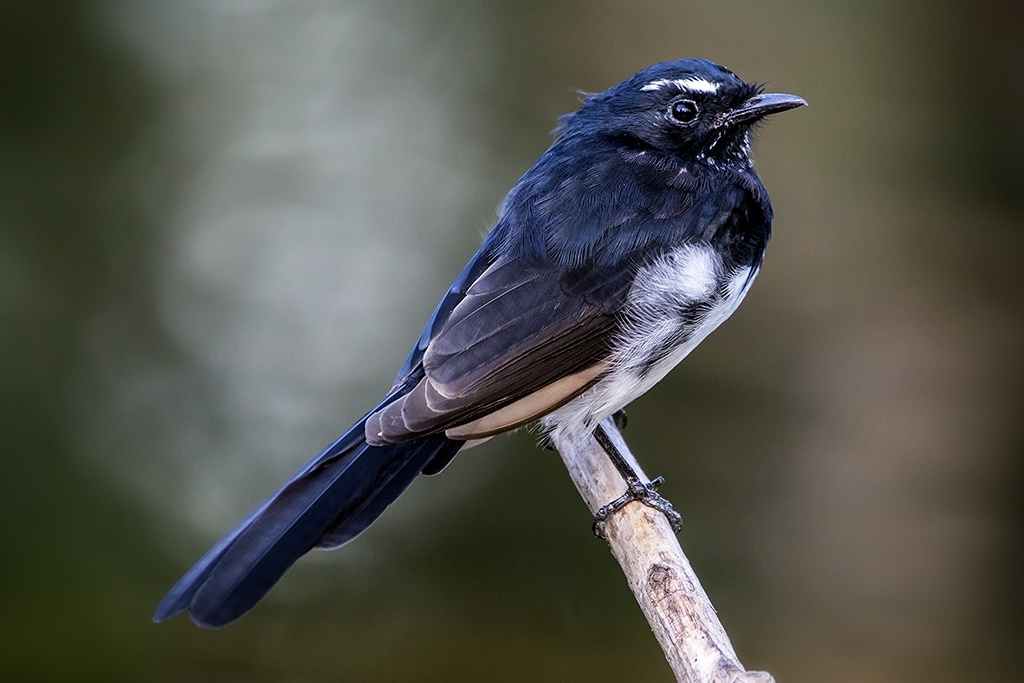
A Bird That Thrives Nearly Everywhere
Their habitat preferences are diverse: while they can often be found near water, including creeks, swamps, and wetlands, they are just as comfortable in dry, inland areas. They are often seen perched on fences, power lines, and even low branches, constantly on the lookout for insects, which they snatch mid-air with remarkable precision.
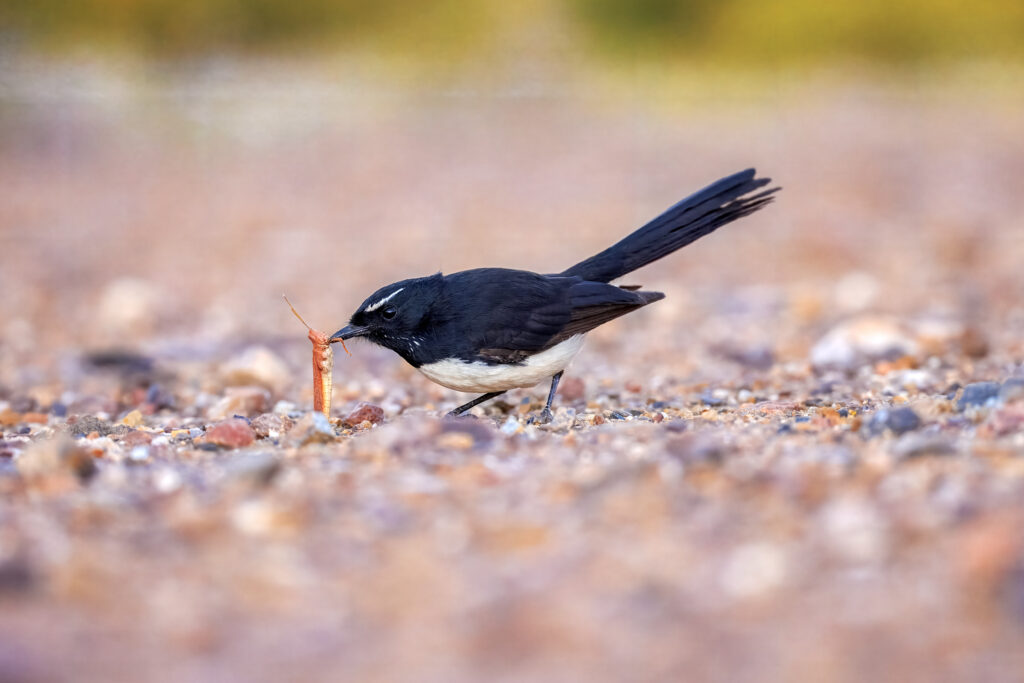
A Simple Look, a Complex Personality
Though the Willy Wagtail is a small bird with a simple colour palette—its black-and-white plumage is striking yet understated—its personality is anything but simple. Though the Willy Wagtail’s plumage is simple—its striking black-and-white feathers might remind you of a gentleman in a sharp tuxedo, elegant and timeless. With its bold, contrasting colors, it’s as if the bird is always dressed to impress, whether perched on a fence or mid-flight, bringing a touch of class to any scene it graces.
These birds are exceptionally active, darting around with rapid, erratic movements that make them a challenge to capture on camera. For me, photographing them has always been a thrill. I never grew bored of their antics, even from my very first encounter. There’s something endearing and lively about the way they move, and it keeps me coming back for more.
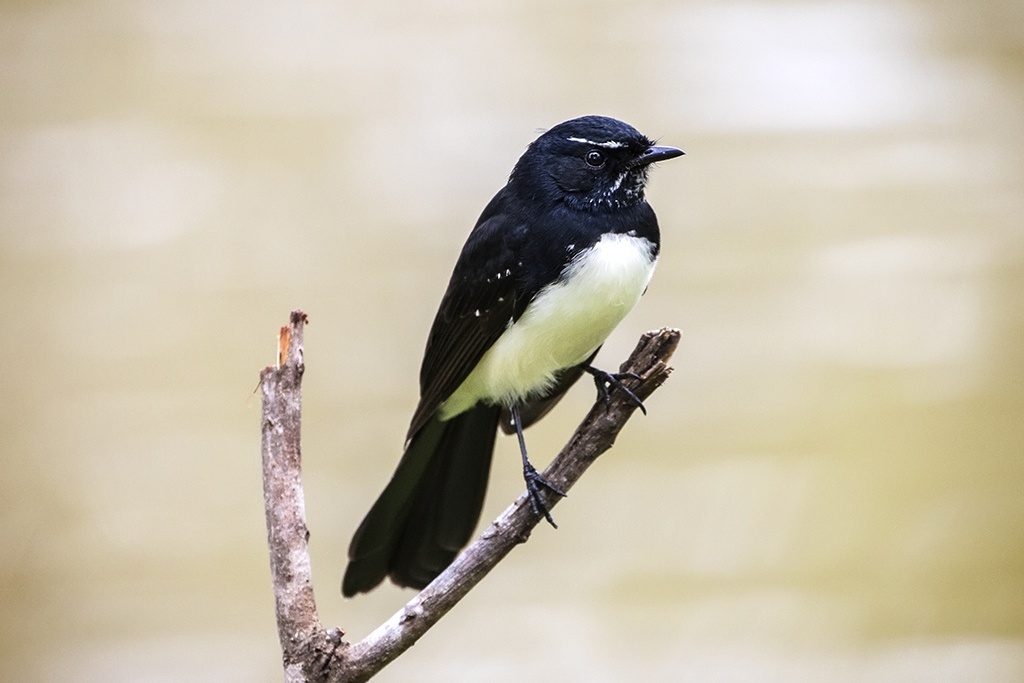
The Quiet Magic of a Familiar Bird
Though the Willy Wagtail can be found across most parks in all Australian states and territories, it’s more than just a ubiquitous bird—it has a quiet charm that reveals itself over time. Whether it’s perched serenely on a branch or mid-flight, it always seems to have something new to offer. Even in urban environments, where nature often feels distant, these birds bring a sense of simplicity and purity. There’s something quietly humble about them that’s easy to overlook at first, but once you start paying attention, you realize they have a way of connecting us to the natural world.
From Picture-Perfect to Storytelling Shots
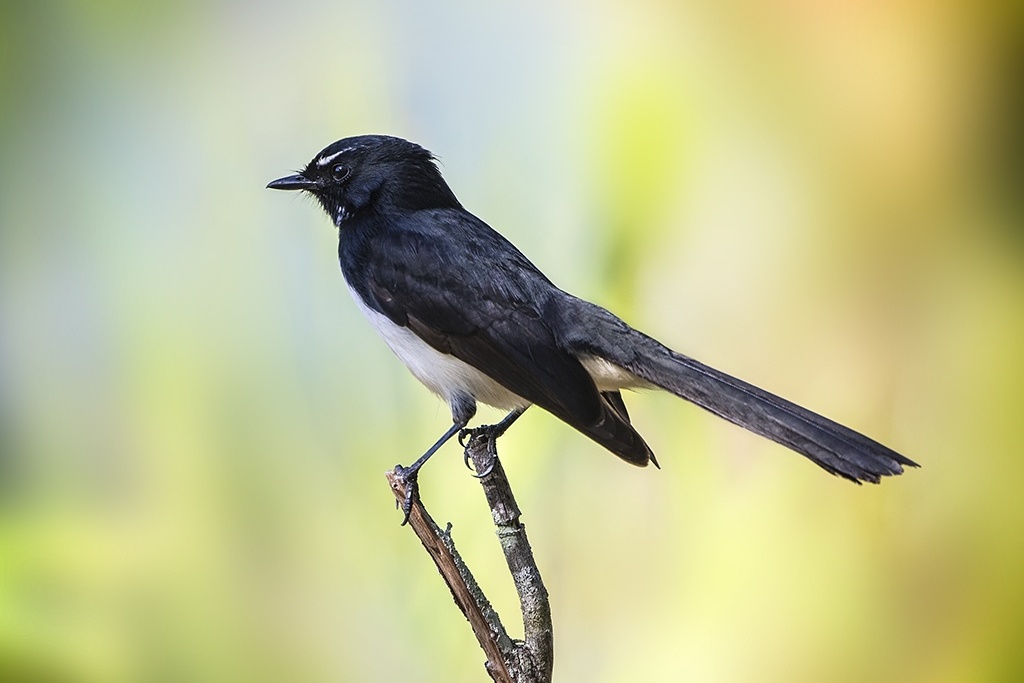
When I first started my photography journey, my early images of Willy Wagtails were more traditional—shots of them perched neatly on sticks or branches against uniform, “postcard-perfect” backgrounds. These images were beautiful, but they didn’t quite capture the essence of the bird’s energy. Over time, I wanted to breathe more life into my photographs—telling a story, rather than simply documenting the bird’s form. The Willy Wagtail, with its bold personality, was more than willing to oblige.
Chasing the Unpredictable: A Photographer’s Challenge
The challenge, of course, was their unpredictability. These birds never follow a script. You can’t predict when or how they’ll fly, or what moment they’ll decide to hunt for insects. At first, I could never quite capture the shot I had in mind. But with the advent of pre-capture technology in modern cameras, I’m getting closer to that elusive, perfect shot. One of my long-term projects has been capturing a Willy Wagtail in flight, its tail and wings fanned out mid-air—a breathtaking display of acrobatic grace. Although I haven’t nailed the perfect shot just yet, I’m getting closer, and I can’t wait to share the final image when it comes together.
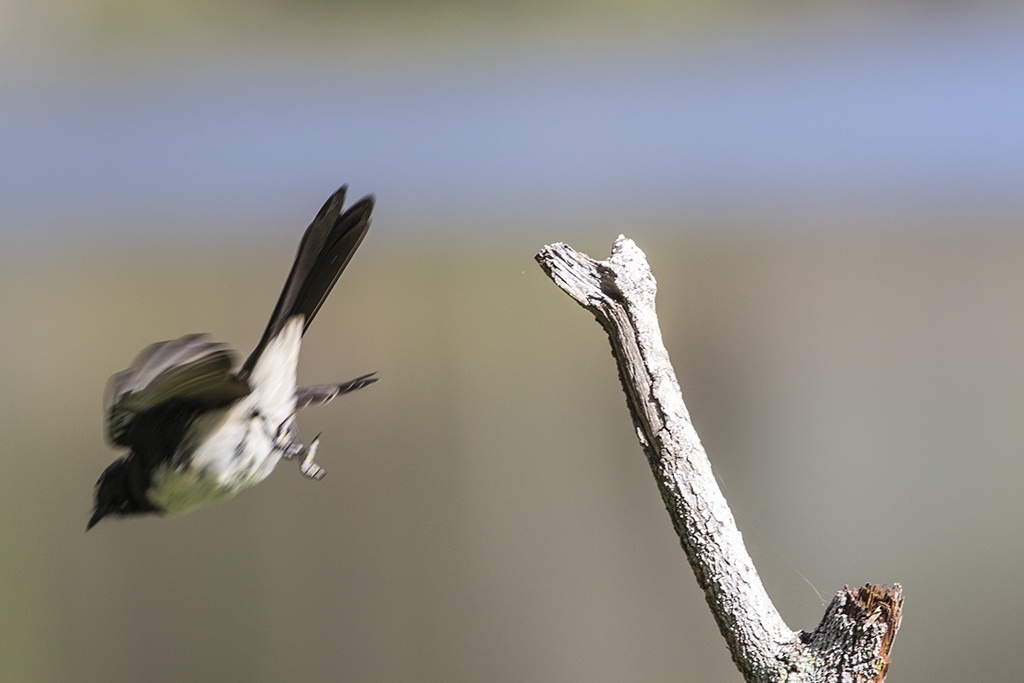
Of course, capturing these fast and feisty birds in action is no easy feat. Sometimes, the bird decides to leave its perch just as I press the shutter button. The result? A blur of feathers and a lot of missed opportunities! I like to imagine the Willy Wagtail is just too quick for me, like it’s playing a game of ‘catch me if you can’ with the camera. You know it’s not intentional, but the bird sure seems to be making a statement: ‘Nice try, but I’m faster than your lens!’ It’s these moments of near-misses that add an extra layer of fun to the challenge of photographing them—after all, it’s not just about getting the perfect shot, but about enjoying the chase itself!
Celebrating the Spirit of the Willy Wagtail
In the meantime, I hope you enjoy this collection of photos that capture the spirit of the Willy Wagtail—its elegance, its energy, and its humble charm.
Now that you’ve had a glimpse of these lively Willy Wagtails, I’d love to hear what you think! Drop a comment below and let me know which photo is your favorite, or share any fun stories you’ve had with these energetic little birds!
Leave a Reply