Tag: Tanami

  • Wild and Unfiltered: A Closer Look at the Dingoes of the Tanami Desert

    Wild and Unfiltered: A Closer Look at the Dingoes of the Tanami Desert

    Dingoes are one of Australia’s most iconic yet misunderstood native animals. Thought to have arrived on the continent over 4,000 years ago, they’ve since adapted to thrive in diverse environments across the country — from tropical forests and alpine regions to arid deserts. As apex predators, dingoes play a crucial role in maintaining healthy ecosystems by controlling populations of herbivores and invasive species. Unlike domestic dogs, dingoes are incredibly agile, clever, and self-reliant, often covering vast distances in search of food and water.

    🐾 Fun Facts About Dingoes

    1. They don’t bark like domestic dogs. Instead, dingoes communicate using howls, growls, chortles, and yelps. Their howls can carry over several kilometres — perfect for calling to mates or warning off rivals.
    2. They have rotating wrists. Dingoes have unusually flexible wrists and can rotate them, which gives them better climbing ability than most dogs. They can scale fences, open gates, and even climb trees if needed!
    3. They’re Australia’s wild canines — but not technically native. Dingoes arrived in Australia around 4,000 years ago, likely brought by seafarers. So while they’re not endemic, they’ve become a vital part of the ecosystem over millennia.
    4. They often mate for life. Dingoes are generally monogamous, with dominant breeding pairs staying together for multiple years, raising their pups cooperatively within a pack.
    5. Dingoes are excellent hunters. With keen senses and endurance, dingoes can take down prey much larger than themselves, including kangaroos. They often hunt in coordinated packs but are also capable solo hunters.
    6. Their footprints are unique. Unlike domestic dogs, dingoes tend to walk in a straight line, placing their back foot directly in line with their front — leaving a very neat and distinctive track.
    7. They play a critical ecological role. As apex predators, dingoes help control populations of invasive species like rabbits and feral cats, contributing to biodiversity by giving native flora and fauna a better chance to thrive.
    8. Pups are born once a year — usually in winter. Dingo breeding season typically runs from March to June, with pups born around May to August. Litters usually include 4–6 pups, raised communally within the pack.

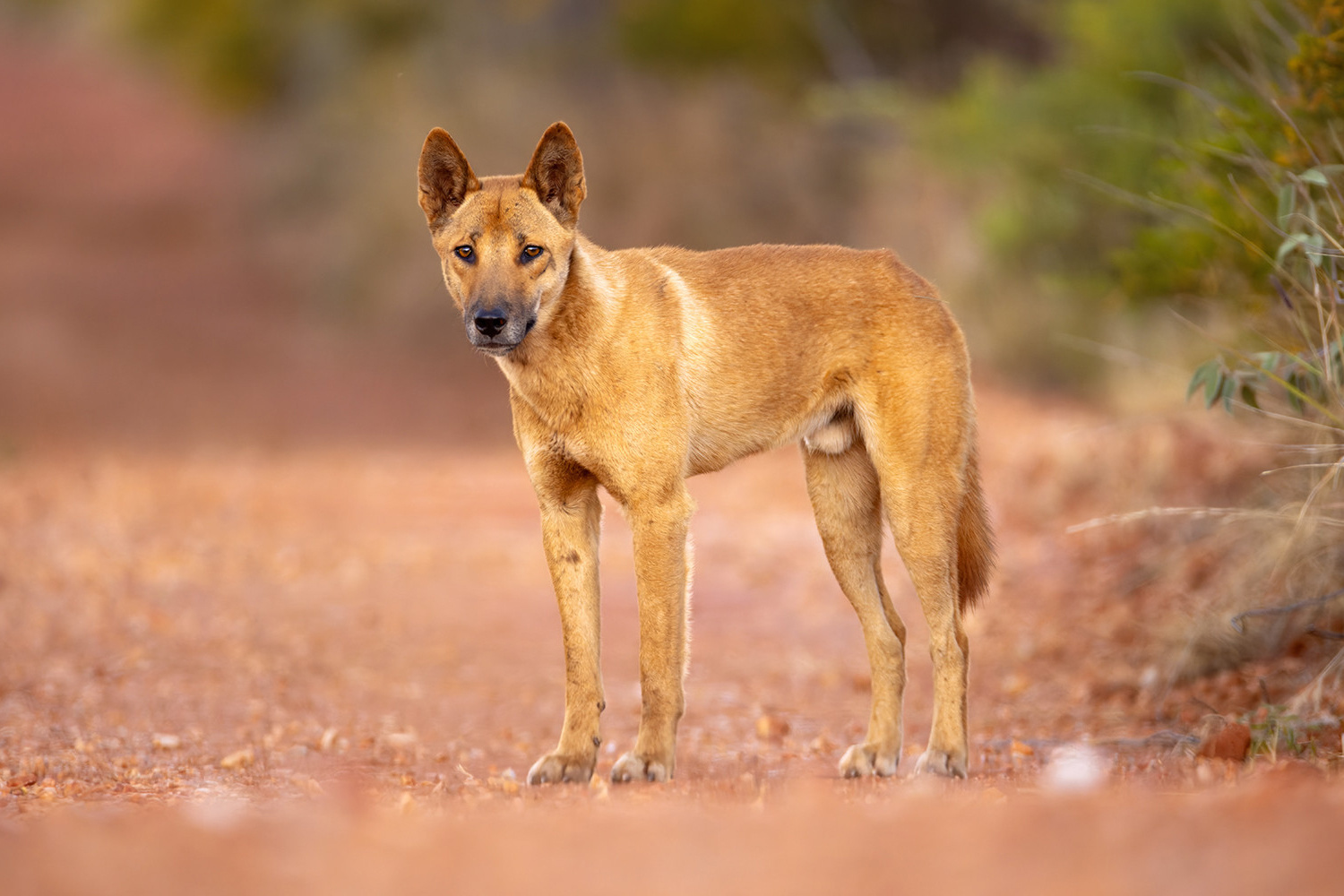
    The following photos were taken during my recent trip to the Tanami Desert, one of the most remote and least disturbed regions of Australia. Due to its isolation, the dingoes here are considered to be among the purest in the country, having remained largely free from hybridisation with domestic dogs — a major concern in other regions.

    What stood out to me immediately was their striking black and rufous colouring. I used to seeing dingoes in captivity or less remote areas, where their coats were typically creamy or reddish-brown. Initially, I assumed these darker individuals were juveniles whose fur would change as they matured. However, after digging into various sources, I learnt that dingoes naturally occur in a broad range of colours — from pale off-white and cream to deep rufous, chocolate brown, and even jet black. This diversity in coat colour can vary depending on genetics, environment, and regional populations.

    Below are several photographs showcasing the rugged beauty and unique colouration of the Tanami dingoes. I hope they offer a fresh perspective on these remarkable wild dogs — unfiltered, undisturbed, and entirely in their element.

  • Chasing Red in the Desert: Painted Finches of the Tanami

    Chasing Red in the Desert: Painted Finches of the Tanami

    🎨 Painted by Nature

    The name painted finch is no exaggeration — the males look like they’ve been hand-painted, with crimson red splashes on the face, chest, and rump, contrasting dramatically against their black-and-white spotted body. Even their beak is a striking red.

    🌵 Desert Survivors

    Painted finches thrive in harsh environments, particularly Australia’s central and northwestern deserts. They’re commonly found near rocky outcrops, spinifex grasslands, and dry creek beds — always close to a source of water.

    👂 Hard to Hear

    Their call is a soft, high-pitched tsee-tsee that can be incredibly hard to detect in the wild, especially with desert winds and background noise. This quiet nature often makes them difficult to locate, even when nearby.

    🐣 Tiny but Tough

    Despite their delicate appearance, painted finches are tough little birds. They feed mostly on grass seeds and can survive on very little water, extracting moisture from their food and visiting water sources only occasionally.

    👨‍👩‍👧‍👦Loyal Pairs

    They usually form monogamous pairs and can be seen foraging or drinking together. Breeding is often timed after rainfall when seed abundance is high. Both sexes help build the nest, and both share incubation duties.

    🏡 Architects of the Outback

    Their nests are built low in shrubs or grasses, made of fine twigs and grass stems, and often lined with feathers. Interestingly, they sometimes use old zebra finch nests or build their own close to zebra finch colonies.

    🧬 A Finch With Many Names

    Besides “painted finch,” they’re sometimes referred to as “painted firetail” — a nod to their brilliant red rump. Their scientific name Emblema pictum literally means “painted emblem.”

    📉 Not (Yet) Endangered

    While their habitat is remote and relatively undisturbed, their dependence on water sources and grass seed means they’re vulnerable to changes in fire regimes, grazing pressure, and climate variability.

    📷 A Photographer’s Dream — and Nightmare

    Their stunning plumage makes them highly sought-after by bird photographers. But their shy behavior, quiet call, and tendency to hide in dense grass make them one of the more challenging subjects in the outback.

    My Story

    Ever since I first set foot in the Tanami Desert, I knew there was a chance — however slim — to encounter the elusive painted finch (Emblema pictum). For a wildlife photographer, any bird with a touch of red is an automatic invitation to frame. But painted finches? These birds don’t just have a touch. They are so vividly patterned — crimson splashed across jet black and earthy browns — that the first time you see one, it can feel almost unreal. Like a child’s drawing that somehow came to life. Or as I often say, they’re so colorful it might just make your eyes bleed.But knowing a bird exists and actually finding it are two very different things — especially in the vastness of central Australia. It took nearly a year before I had my first real encounter. Ironically, it wasn’t even in person.

    A Ghost in Pixels

    It was my trail camera that first picked one up — a fleeting glimpse in the corner of a frame. That image changed everything. I finally had a clue: a general area, a pattern, a hope. Still, unlike zebra finches, which flock in dozens and fill the desert air with their constant chatter, painted finches are subtle. Solitary. Quiet.

    Their call is a soft, high-pitched whisper — almost impossible to pick out against the ever-present drone of the desert wind. And they move low in the grasses, blending perfectly into the ochres and silvers of the landscape.

    The First Photograph

    One morning, while checking a waterhole, I caught sight of them — a pair, just briefly, drinking alongside some diamond doves. The male vanished almost immediately into the spinifex. I was left with only a single shot of the female. But even she, in her muted tones, made my eyes twitch. Painted finches truly are striking, even when they’re not wearing their Sunday best.That single image carried me through the next few months. I kept returning, kept scanning the low bushes, kept listening for whispers in the wind.

    A Desert Reward

    Then, one morning just before sunrise, it happened. A pair of male painted finches — one adult, one juvenile — appeared, seemingly out of nowhere. The golden hour light had just begun to warm the red sands, and for a few precious minutes, everything lined up. The juvenile bird posed, still for just long enough for me to get the shot. His feathers catching that soft dawn light, red face vibrant against the blue-grey desert background.

    Below is that photo — the only clear image I have so far of an adult male painted finch. A perfect mix of fresh plumage and curiosity, captured just as the desert was waking up.

    The adult male, of course, was less cooperative. He dodged the lens with precision honed by a lifetime in the desert. I didn’t get the perfect pose from him — not yet. But that’s the way it goes. The desert never gives up all its secrets at once.

    Still Hunting

    And so, the hunt continues. For the perfect pose. For the perfect light. For another chance to witness these desert jewels in their element. Painted finches don’t come easy — but maybe that’s exactly why they’re so rewarding when they do.

  • Fleeting Moments: Photographing Zebra Finches in the Aussie Outback

    Fleeting Moments: Photographing Zebra Finches in the Aussie Outback

    Interesting Facts

    Small in size but big in personality, the Zebra Finch (Taeniopygia guttata) is one of Australia’s most iconic and well-studied birds. Native to the arid and semi-arid regions of the mainland, these lively little finches are instantly recognisable by their striking black-and-white striped throats, orange cheeks (in males), and cheerful chirping calls. Despite their delicate appearance, Zebra Finches are remarkably resilient, thriving in some of the harshest environments on the continent. They’re also famous in the scientific world for their role in research on vocal learning — much like humans, young male Zebra Finches learn to sing by mimicking older males, making them a fascinating subject in both the wild and the lab. Whether flitting through the spinifex or perched on a fence wire, they’re a charming sight and a delight to photograph.

    Behaviour Insights

    Zebra Finches are social, active birds that live in flocks and rarely stray far from one another. Their social structure and constant communication make them an engaging subject for photographers who enjoy capturing interaction and movement. You’ll often spot them foraging on the ground in small groups, hopping about in search of seeds — their primary diet in the wild.

    One of the most fascinating behaviours to observe is their complex courtship rituals. Males puff out their chests, bob up and down, and sing intricate songs to impress potential mates. These displays often include fluttering dances and offering bits of nesting material. Once paired, Zebra Finches form strong monogamous bonds and are known for their cooperative nesting efforts. Both parents share incubation duties and take turns feeding their chicks — a lovely dynamic to photograph if you’re lucky enough to find an active nest.

    Another notable trait is their adaptability. Zebra Finches have a remarkable tolerance for heat and can survive extended dry periods, making them a symbol of resilience in the Australian outback. Their ability to breed opportunistically — often within days of rainfall — allows them to take advantage of brief resource-rich windows, even in seemingly barren landscapes.

    Habitat and Range

    In the wild, Zebra Finches are widespread across mainland Australia, particularly in inland and semi-arid zones. They prefer open grasslands, scrublands, and savannahs, often near water sources, but are just as likely to be found in agricultural areas, roadside verges, and even urban fringes. Their adaptability to different environments makes them one of the most successful native bird species on the continent.

    While they aren’t typically found in the dense coastal forests or tropical far north, they thrive in dry habitats where spinifex grass, acacias, and scattered eucalyptus trees provide food and shelter. Nests are usually built in shrubs, low trees, or even man-made structures such as fence posts and sheds. Their use of artificial habitats has contributed to their range expanding in some regions.

    For photographers, early morning and late afternoon are ideal times to spot Zebra Finches when they’re most active and lighting is soft. Look for them around waterholes or perched on low branches, chirping energetically. Their fast, erratic flight and quick movements on the ground can be challenging to capture, but with patience and a good telephoto lens, they make for delightful photographic subjects.

    When Finches Allow a Closer Look

    Photographing Zebra Finches is never as simple as just pointing the lens and clicking away. These tiny, energetic birds are constantly on the move, and while one might boldly perch in full view, the rest of the flock will be watching — always alert. The moment I get a little too close, they vanish into the nearest bush in a flash of wings and soft chatter. I’ve learnt over time that the best chance of approaching them is when they’re comfortable — either eating, preening, or singing. These are moments when they’re content, their happiness briefly outweighing the minor disturbance of a curious photographer edging closer. On the day I captured these shots, I found them early in the morning, gathered noisily near a waterhole, rehydrating after a hot desert night. It was an absolute joy to watch them arrive in flocks, jostling for position, fluttering about and pausing in beautiful poses. Their individual personalities shone through in the little dramas and quiet interactions between them. Below is a collection of my best images from that magical morning — a window into the fast-paced yet intricate world of the Zebra Finch.

  • Swallows in Flight: A Wildlife Photographer’s Ultimate Challenge

    Swallows in Flight: A Wildlife Photographer’s Ultimate Challenge

    Few birds capture the spirit of freedom and precision quite like swallows. Sleek and nimble, these aerial acrobats are built for speed and endurance, with their slender bodies, forked tails and long, pointed wings. Swallows can cover vast distances during migration and are capable of feeding, drinking, and even sleeping mid-flight. In Australia, the swallows and martins are a familiar sight, often seen skimming low over fields and water, hunting insects on the wing with astonishing agility. But as elegant as they are to watch, they’re notoriously difficult to photograph—especially in flight.

    When I first picked up a camera, capturing a swallow mid-air quickly became a personal challenge. I remember asking a more experienced mate, somewhat in desperation, “How do you photograph a swallow in flight?” His reply, with a wry grin, was simply: “You don’t.” Ironically, he’d managed a decent shot of one in flight himself, which only stoked my determination. That was the moment this mission quietly began. Over the years, I’ve come to realise that the real difficulty in photographing swallows doesn’t lie solely with the camera gear—though even the most advanced autofocus systems can be pushed to their limits. The real test is a combination of factors: the gear, the autofocus speed, and most critically, the photographer’s own hand-to-eye coordination. Swallows are fast, agile, and unpredictable in flight, often changing direction in the blink of an eye. Keeping one in the viewfinder—especially when using a long telephoto lens—is no easy feat. In many ways, capturing a sharp, well-composed image of a swallow in mid-flight is the ultimate challenge for both the equipment and the person behind it.

    I tried my luck in freshly mown soccer fields, where small flocks of swallows would swoop for insects—unsuccessfully. I searched for locations where their flight might be more predictable, but again, without much joy. Then, five years into this quiet quest, I stumbled across a breakthrough: a drying puddle in the middle of a desert —the only source of water for kilometres. That afternoon, swallows descended in their hundreds to drink on the wing. I dropped flat on the ground, crossed my fingers, and hoped the sheer number of birds and the small size of the puddle might work in my favour. It did. Birds returned the next day as well, following the same pattern, and I finally got the shots I’d been chasing for half a decade.

    I’m sharing the results here with you, and with them, a friendly challenge: do you have a swallow-in-flight photo? If not, I can promise this—when you do get one, it’s immensely satisfying. Good luck out there!

  • Patience and the Pacific Heron 🪿

    Patience and the Pacific Heron 🪿

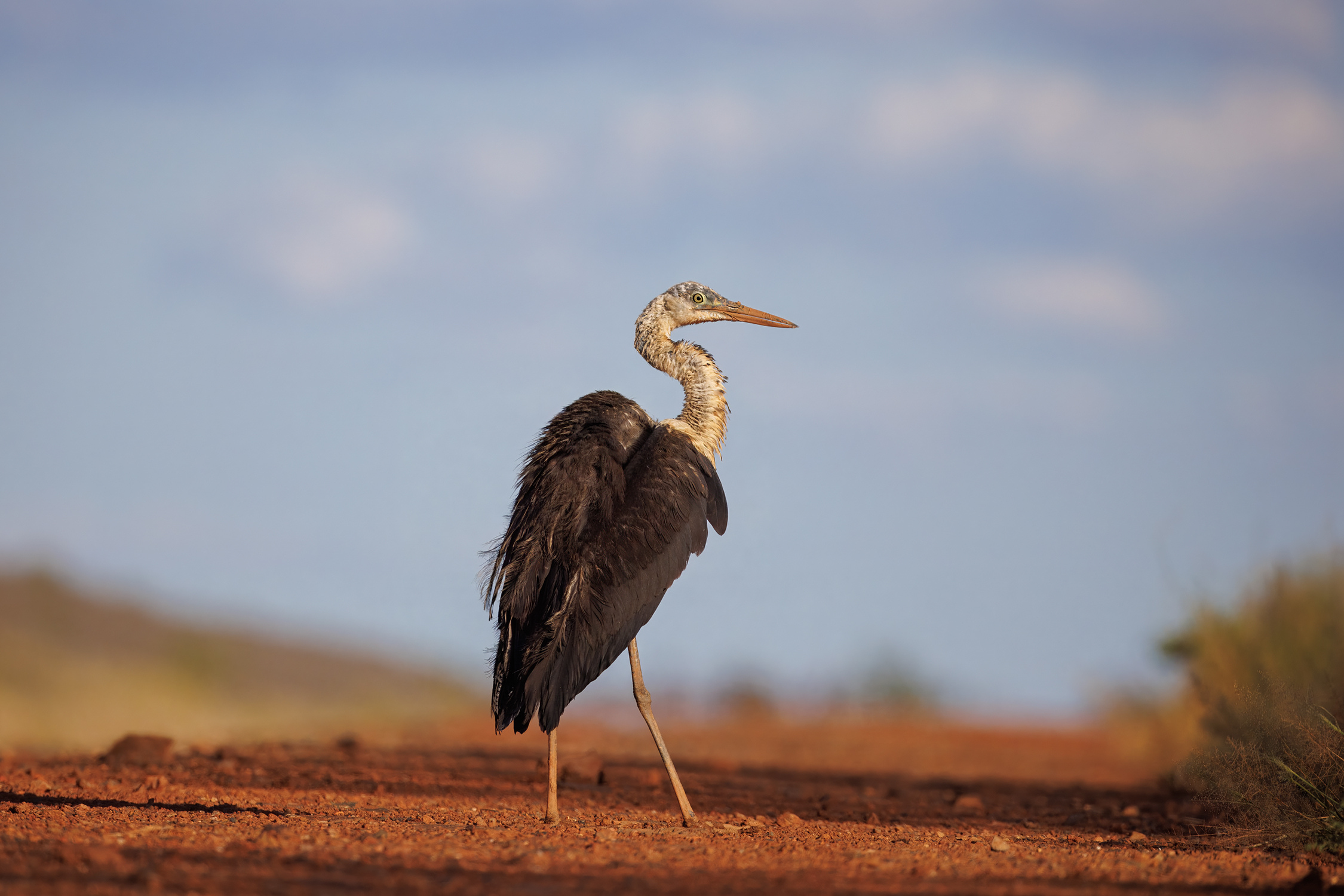
    This morning at the pond, I had a quiet encounter that reminded me once again why photography is as much about patience as it is about timing.

    What followed was a mesmerizing display of precision and instinct. The heron began to pluck tadpoles from the water one by one, each movement quick and deliberate. It feasted in silence, the early light glinting off the surface as ripples spread from each gentle strike. Watching from just a few meters away, I felt like a silent guest at nature’s breakfast table.

    Moments like these can’t be rushed—and they can’t be forced. Sometimes, all it takes is stillness and a little bit of trust.

  • Chasing Grebes in the Tanami: A Photography Journey 🦆

    Chasing Grebes in the Tanami: A Photography Journey 🦆

    The Tanami Desert isn’t a place one typically associates with water birds. But after a rare desert downpour, the landscape transformed overnight. Shallow pans and clay depressions filled with rainwater, creating temporary oases in the otherwise arid expanse. One such ephemeral pond became the unlikely stage for my latest photography project.

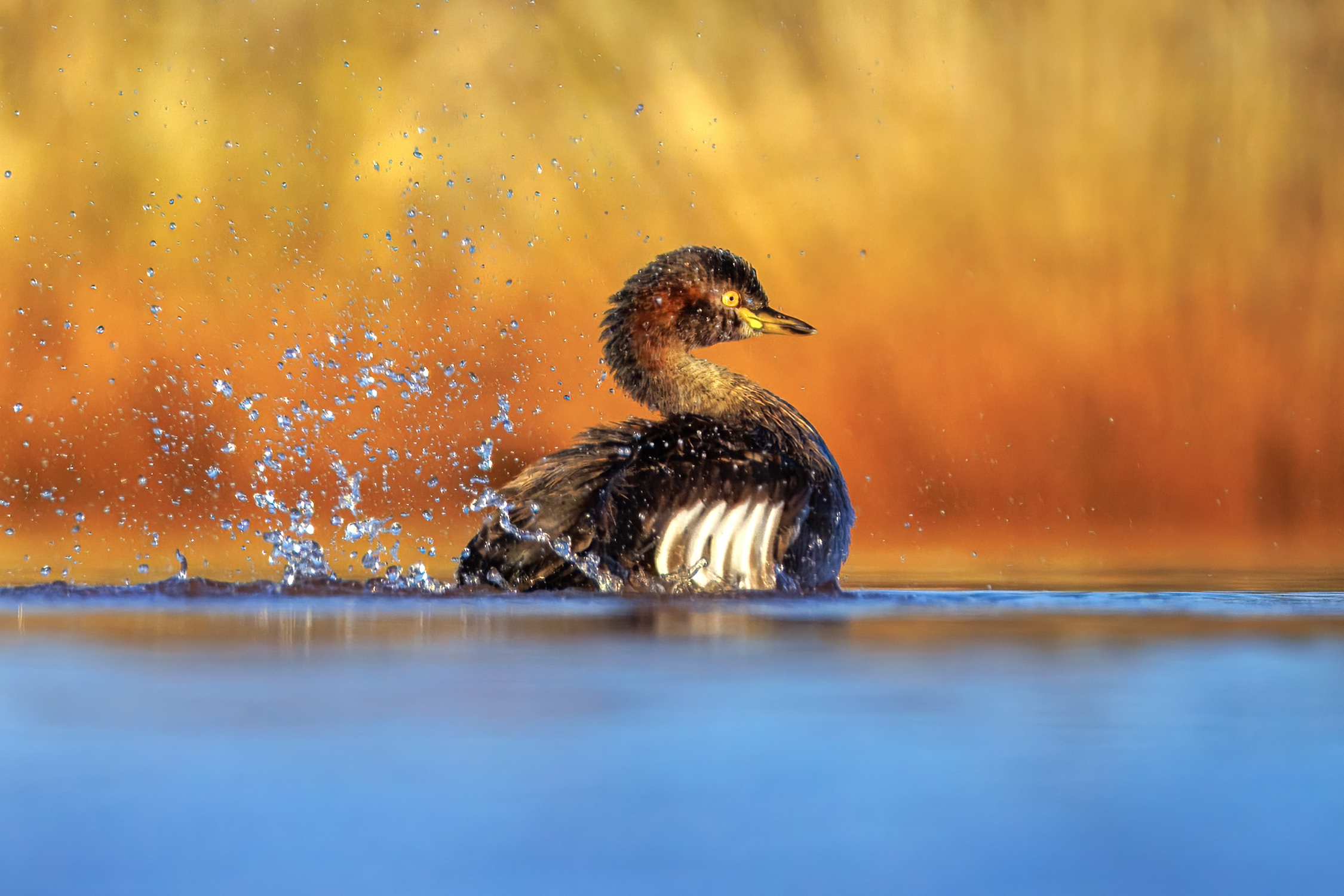
    I arrived just after the rains, drawn by the surreal sight of water shimmering in the desert. What I hadn’t expected was the arrival of feathered guests — grebes. Both Australasian and Hoary-headed grebes had flown in, seizing the fleeting opportunity to feed, preen, and, seemingly, enjoy themselves.

    Over the next several days, I made it my mission to photograph these birds in this rare and fragile moment. The light was constantly shifting — from golden sunrise glows to stark midday contrast, to the soft pastels of dusk. The changing light provided endless moods and textures to frame the grebes in. The setting was almost painterly — deep blue water reflecting the clear desert sky, ringed by dry spinifex and grasses glowing golden in the low sun.

    I captured them diving for food, bobbing in the breeze, and often simply floating in serene silence. But the most amusing behavior by far was their bathing rituals. They would fluff their feathers, splash water in dramatic arcs, and then — hilariously — shake themselves dry while still afloat, like tiny aquatic dogs. It was equal parts elegant and comical. This project became more than just about the birds. It was about the magic of impermanence — of life seizing opportunity in the harshest of places, even if only for a few days. These images are a testament to that fleeting desert miracle, a reminder that beauty and humor can spring up where you least expect them.