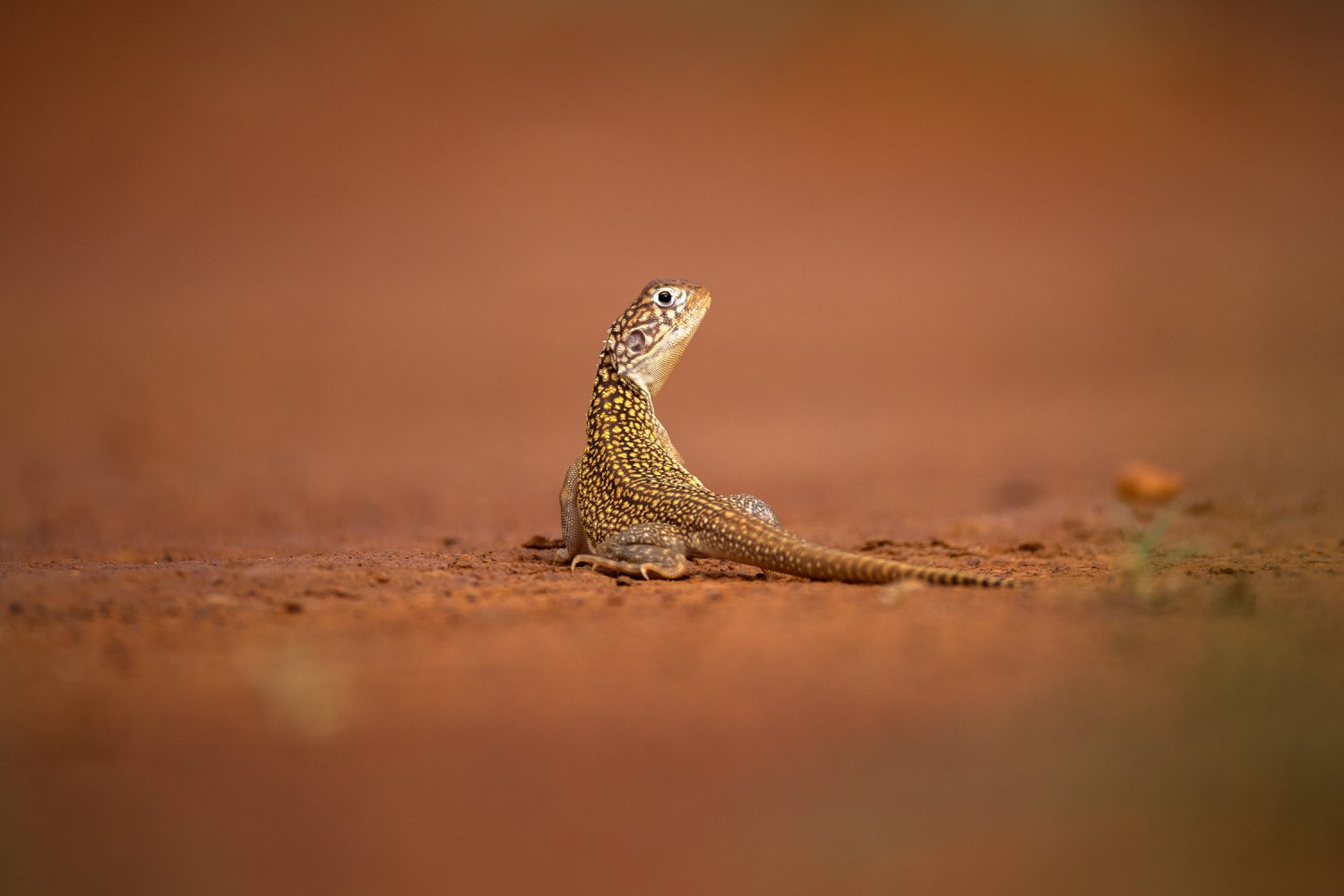
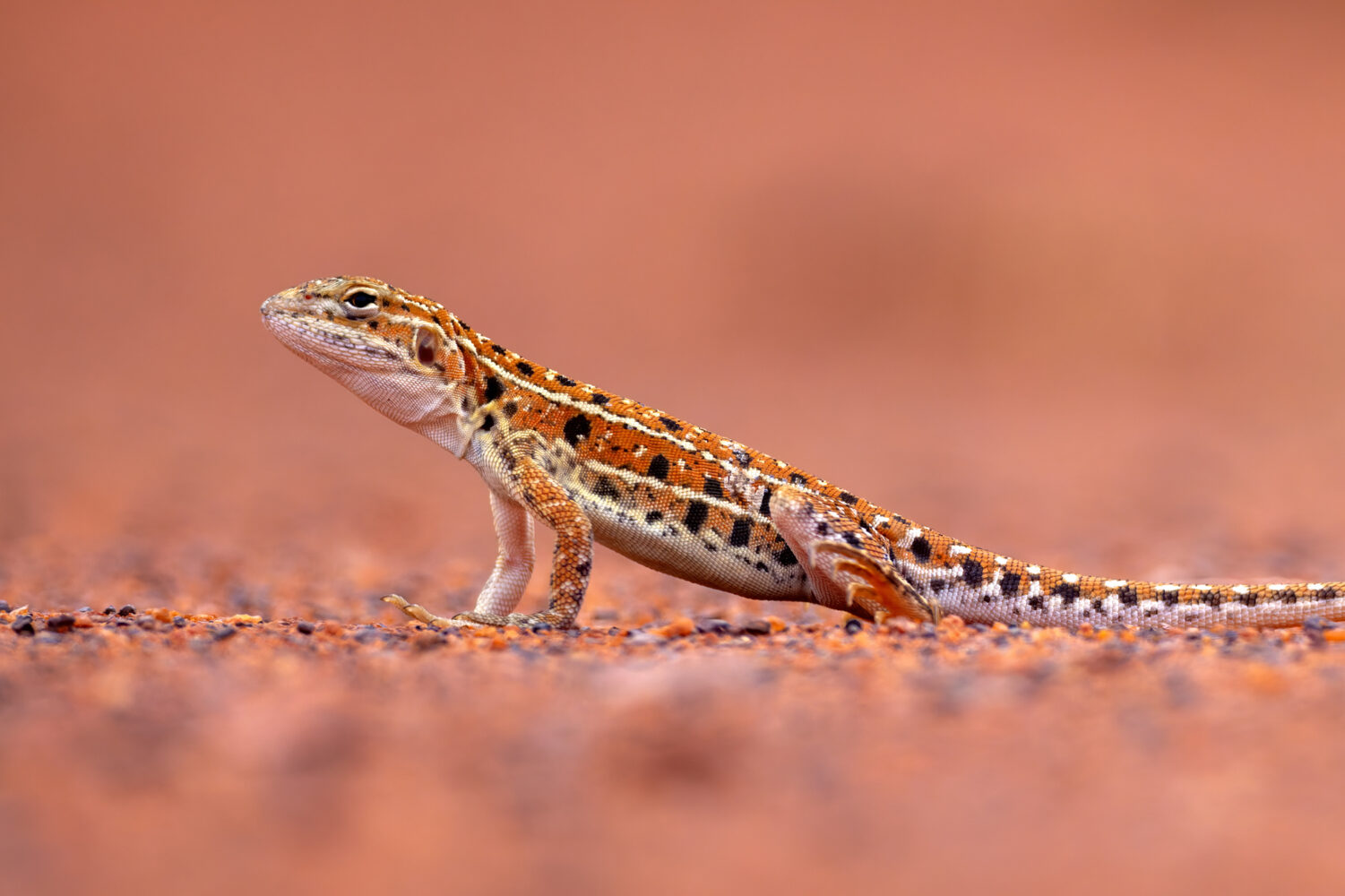
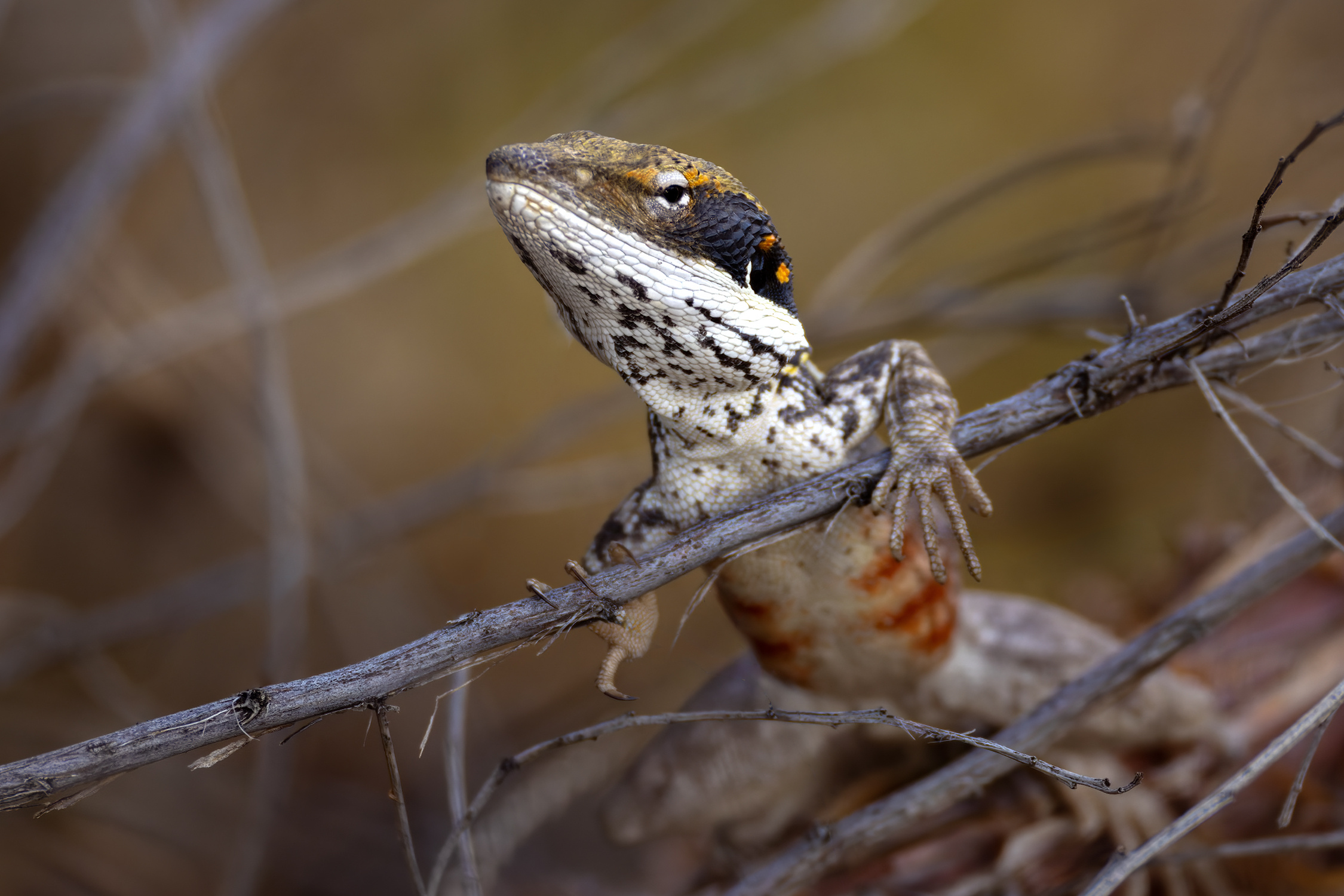
The Australian netted dragon is one of those reptiles that looks like it’s wandered straight out of a Dreamtime tale. Its striking lattice‑like patterning isn’t just for show — it’s a clever bit of camouflage that helps it disappear into the ochre soils and scrubby spinifex of inland Australia. Despite their small size, they’re lightning‑quick on their feet and surprisingly bold, often perching on low branches or fence posts to warm up. They’re insectivores with a big ecological job, keeping local insect populations in check while thriving in some of the country’s harshest, driest landscapes.
I often find them basking in the sun early in the morning, when the light is soft and the air is still cool. This is the perfect moment to slow down, observe their behaviour, and carefully plan the shot. When they’re settled into their morning routine, they tend to hold a pose just long enough to frame the composition, adjust the angle, and capture the fine detail of their patterned scales. It’s one of those rare wildlife encounters where patience genuinely pays off.
Despite the searing heat of the desert, there are plenty of reptiles populating the Tanami. Some are small and quick, others larger and more robust; some are common and regularly encountered — like the Military Dragon — while others are nocturnal and rarely seen, slipping silently across the sand after dark. Out here, survival depends on timing, camouflage and an intimate understanding of the ground beneath their feet. Even in temperatures that send most creatures into retreat, these lizards remain active, alert and remarkably well adapted to life on hot sand.
The Desert’s Everyday Dragon
Among the most frequently photographed is the Military Dragon, a hardy and widespread species across Australia’s arid zones. Its patterned scales blend seamlessly into the red dunes and spinifex plains, making it both a challenge and a delight to photograph. Active and alert, it rarely stays still for long — constantly foraging, pausing, scanning, then darting forward again.
Poised to Launch: The Jumping Lizard in Motion
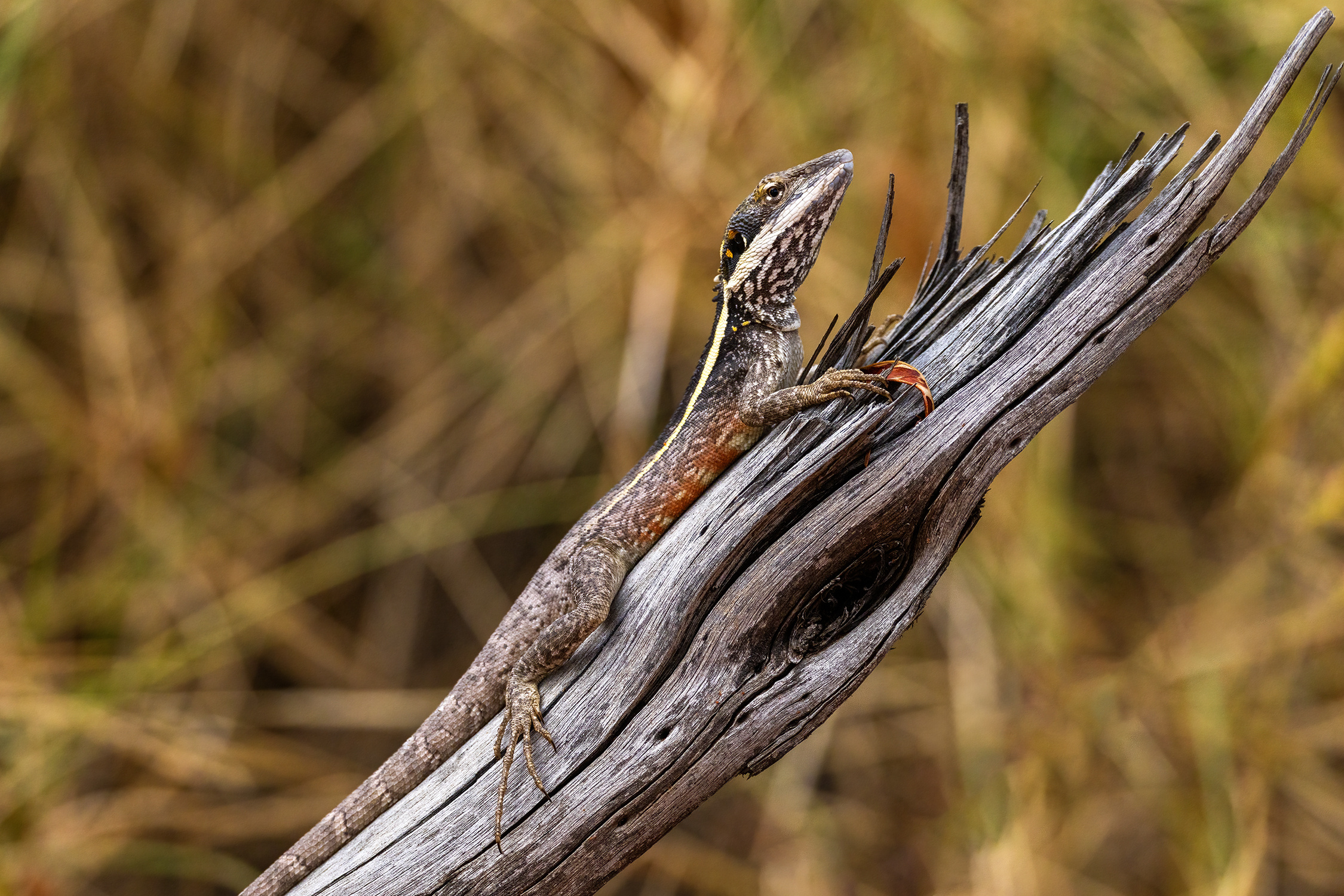
Sharing this landscape is the agile Jumping Lizard, a species that brings a completely different energy to the frame. Where the Military Dragon often patrols the ground, the Jumping Lizard favours elevation — termite mounds, fallen branches, low shrubs — sitting upright and alert before launching into sudden motion. Its powerful hind legs allow it to spring clear of danger in an instant, turning stillness into explosive movement. Photographing one mid-leap captures a different side of desert survival: not endurance against heat alone, but speed, precision and timing.
When Speed Becomes Survival
One of my favourite moments in the field happened in a split second. I watched a Military Dragon bolt across open ground at extraordinary speed. When it hit a small sand hump, it launched clean off the crest and, for a heartbeat, was airborne — not a glide, not a planned leap, just pure momentum carrying it forward. It was a reminder of just how powerful and explosive these small reptiles can be. In the harsh openness of the desert, speed can mean survival.
The Jumping Lizard expresses that same alert energy from a different stage of the landscape. Frequently seen perched upright on tree trunks and low branches, it uses height as both lookout and launchpad. In the image accompanying this piece, the lizard clings confidently to the bark, poised and watchful, ready to spring at the slightest disturbance. Whether it’s a Military Dragon briefly taking flight over a dune or a Jumping Lizard balanced against the rough texture of a tree, these moments reveal the athletic precision that underpins survival in the Tanami.
A Desert Monument
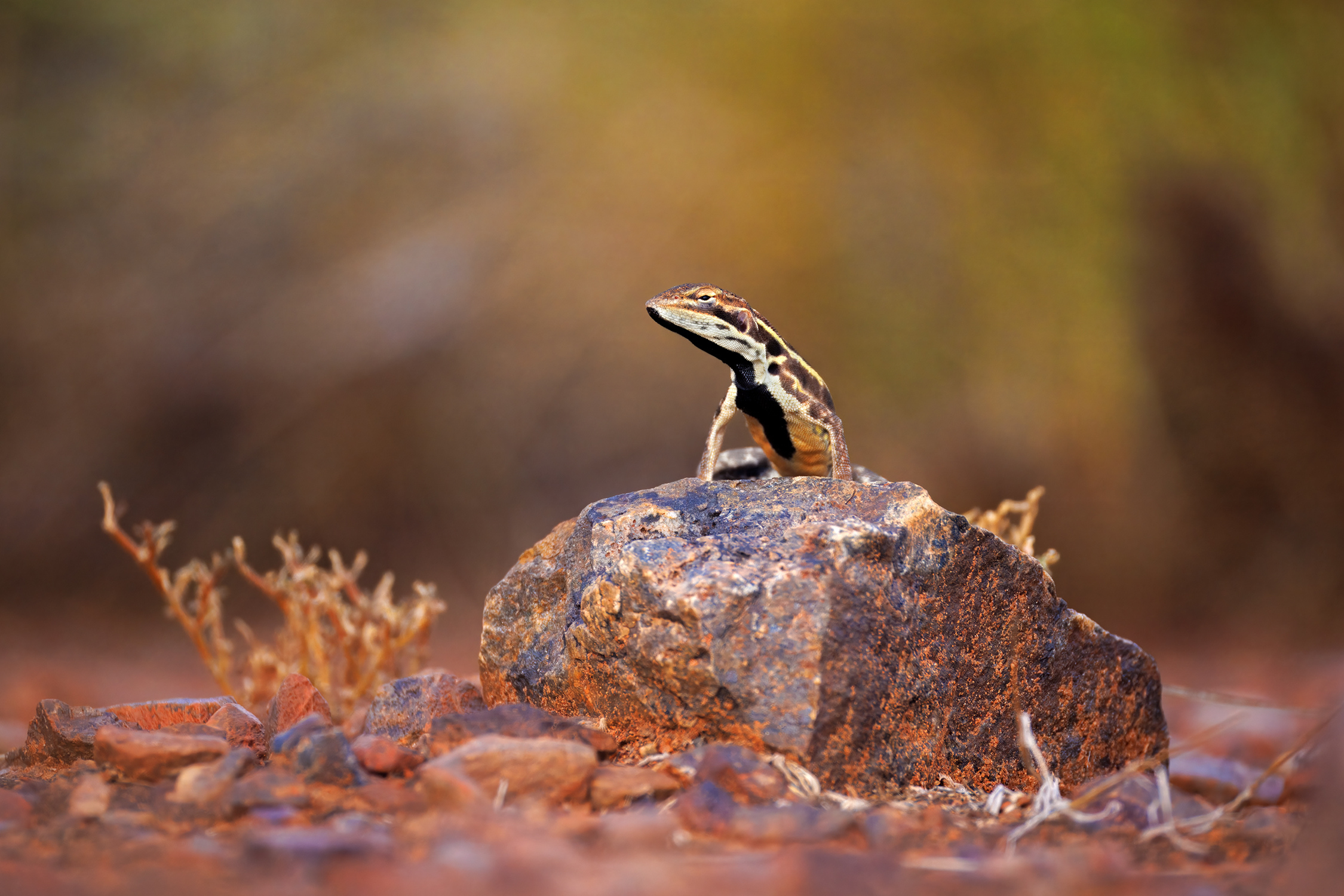
One image that always stands out shows a Military Dragon perched atop a sun-baked rock, surveying its surroundings with quiet authority. From the camera’s perspective, the lizard appears almost monumental — a tiny yet imposing sentinel against the vast red desert backdrop. The way the light hits the rock and casts subtle shadows around its patterned scales gives the scene a sculptural quality, as if the desert itself has honoured this little creature with its own pedestal. It’s a striking reminder that even the smallest desert inhabitants can command attention and convey a sense of grandeur when captured in the right moment.
Dancing on Scorching Sand
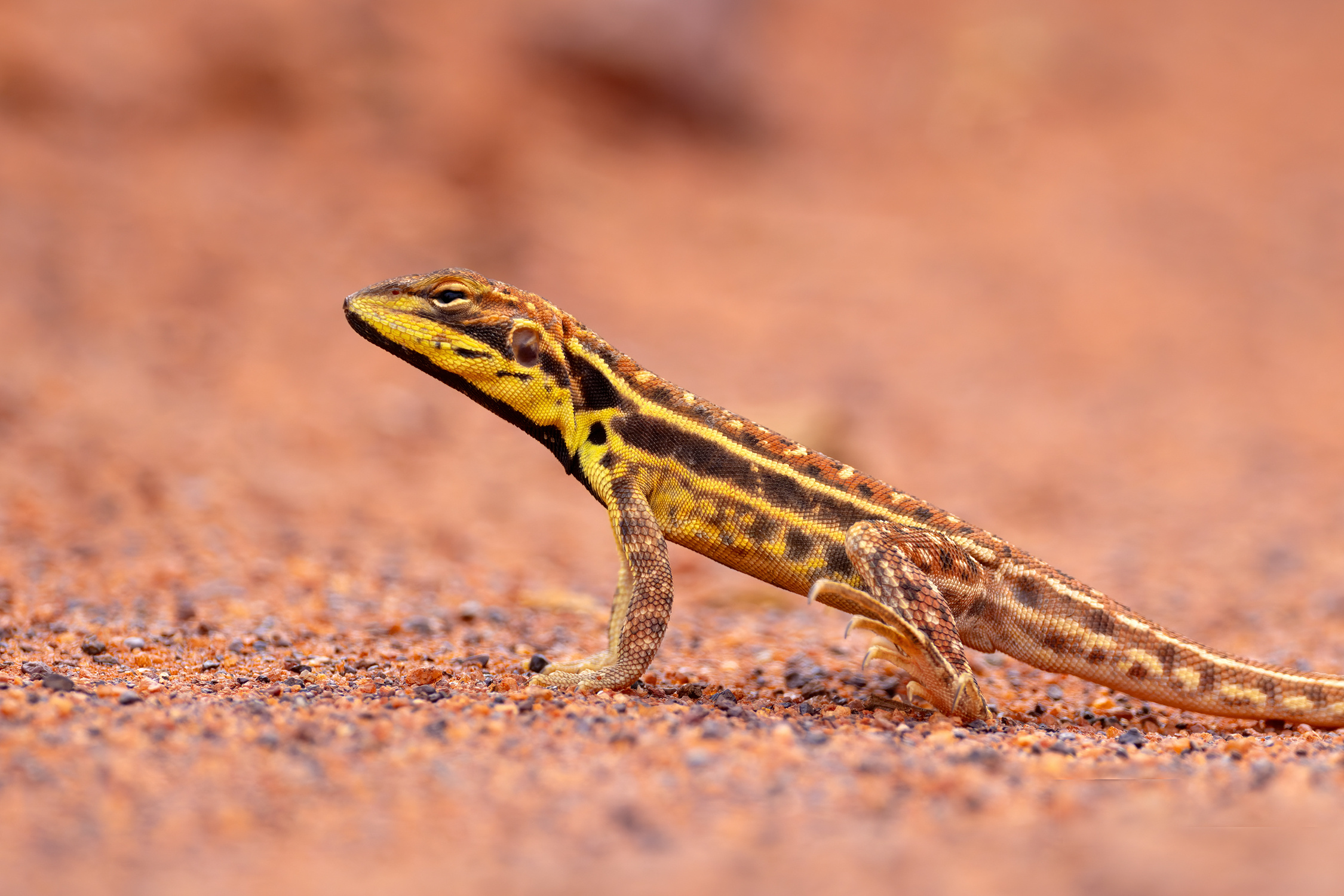
In another photograph from the same series, a lizard is captured lifting its rear toes and resting back on its heels, minimising contact with the scorching sand. This subtle posture — a clever behavioural response to extreme surface temperatures — tells its own story. You can almost feel the heat radiating through the frame.
Adaptation in Every Frame
In the Tanami, every frame reveals adaptation in action — whether it’s a dragon frozen in perfect camouflage, balanced delicately above blistering ground, or travelling so fast it briefly takes flight.
Seasonal Colours: Breeding Transformation
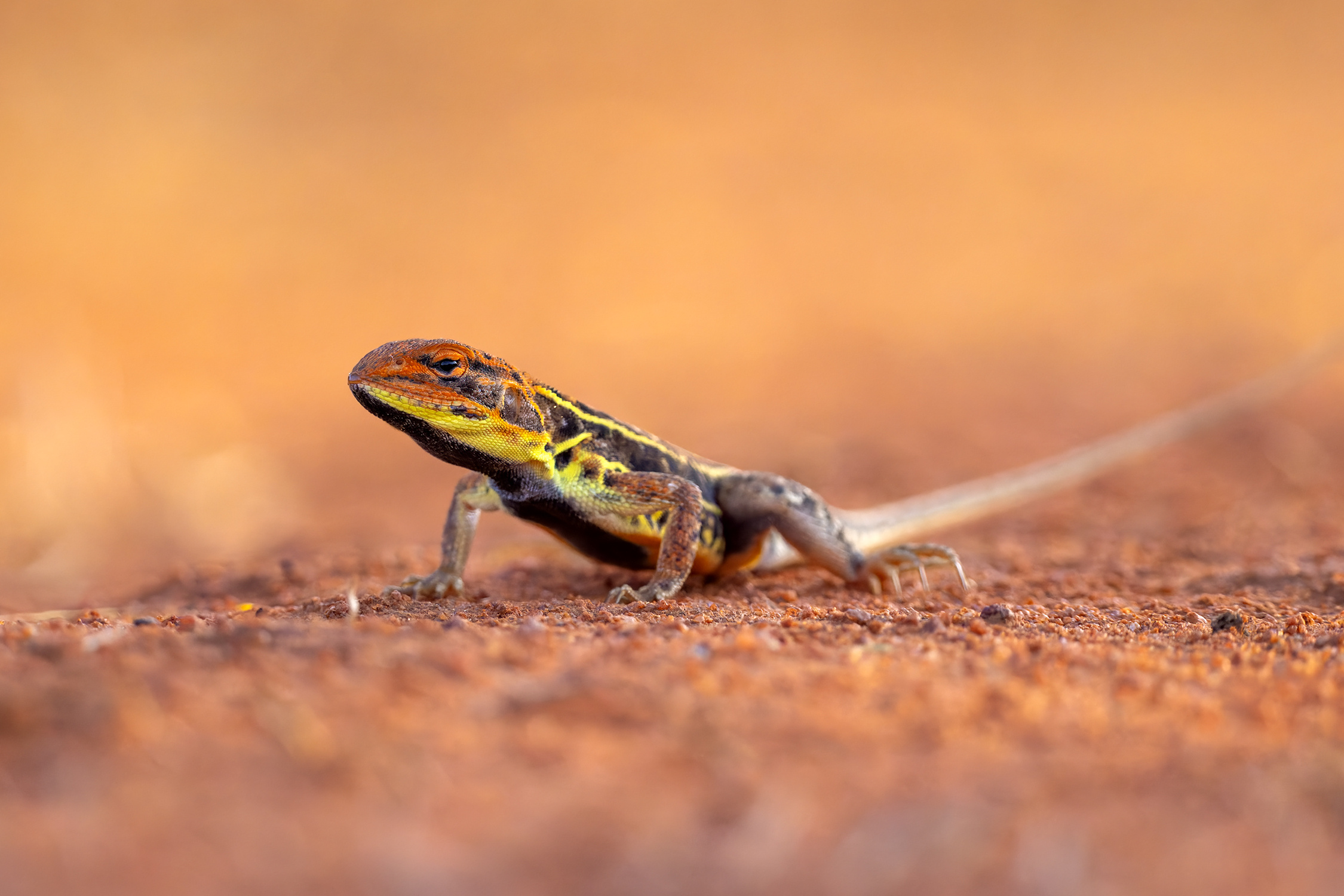
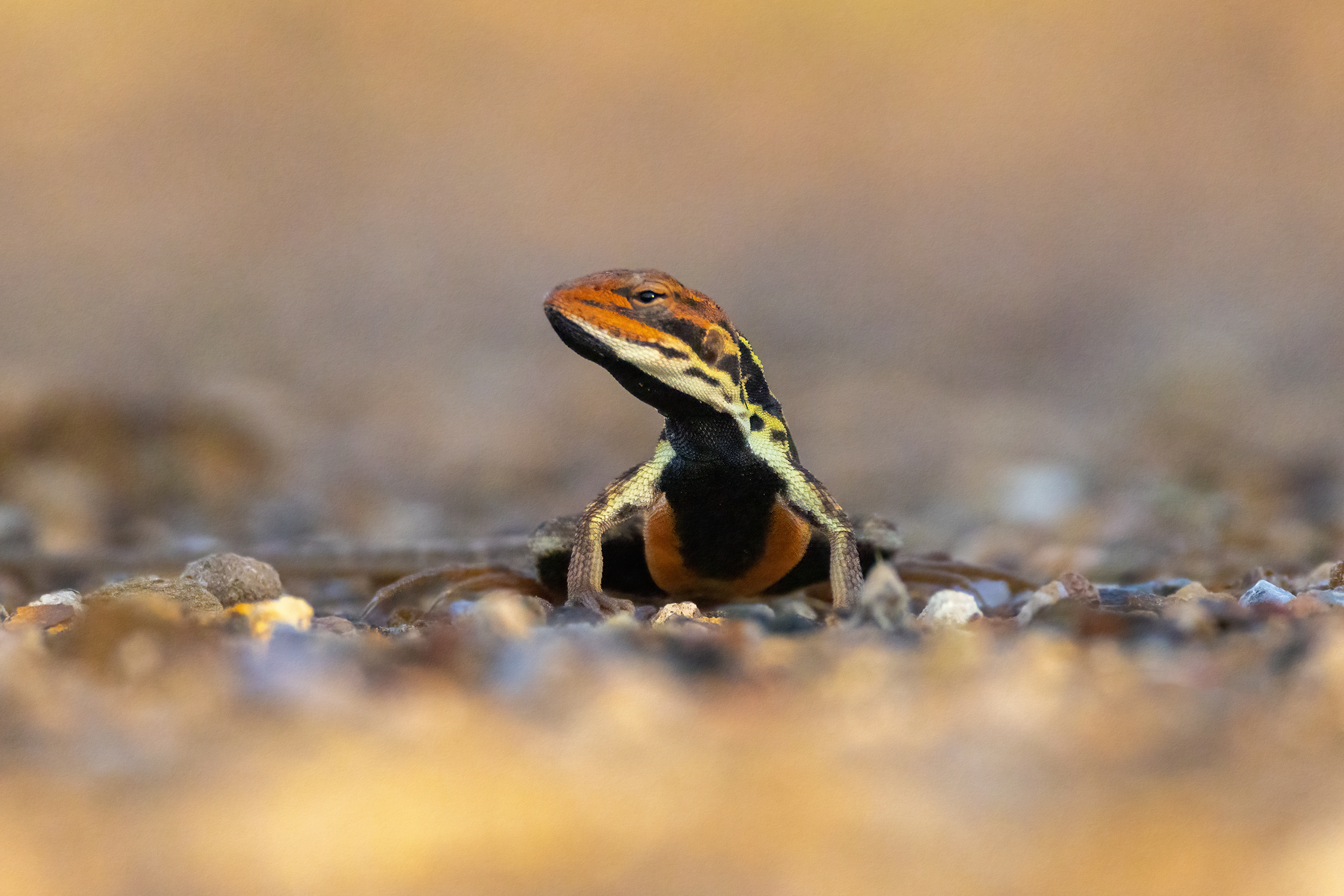
During the breeding season, Military Dragons undergo a noticeable colour transformation. Their normally pale underside can darken dramatically to black, while brighter yellow tones become more pronounced — particularly in males, who use these intensified colours as part of courtship and territorial displays. This seasonal shift adds another layer of visual interest for photographers. A dragon that appears subtly patterned for most of the year can suddenly look bold and high-contrast, its dark belly absorbing heat while its brighter flanks signal strength and readiness to breed. It’s yet another reminder that even familiar subjects can surprise you, depending on the season and the story unfolding in front of you.
Reading the Heat in Every Frame
Look closely at the details within each frame below — the harshness of the light, the angle of the body, the tension held in those lifted limbs. Can you work out how hot the sand was that day just from those subtle clues? Now compare those scenes to photographs taken in winter, when the desert floor is cool and the lizards move with far more relaxed ease. The contrast is striking. And while you’re studying the heat written into the landscape, see if you can also spot the breeding males — their darkened bellies and brighter yellow tones standing out against the red earth. As you scroll through the images, I invite you to read the country as carefully as the subject, and see if you can feel not only the temperature of the Tanami, but the season unfolding through the lens.
In this article, I’m excited to share my recent encounter with one of Australia’s most elusive raptors — the Letter-winged kite. Before I dive into the story of that unforgettable sighting, let’s start with some fascinating facts about this rare and remarkable bird.
Interesting facts
World’s only nocturnal raptor: The Letter-winged kite (Elanus scriptus) is a true night hunter, the only bird of prey in the world that consistently hunts exclusively after dark, rather than just occasionally being seen at night.
Endemic to Australia: This species occurs nowhere else, inhabiting the arid and semi-arid inland regions of the continent.
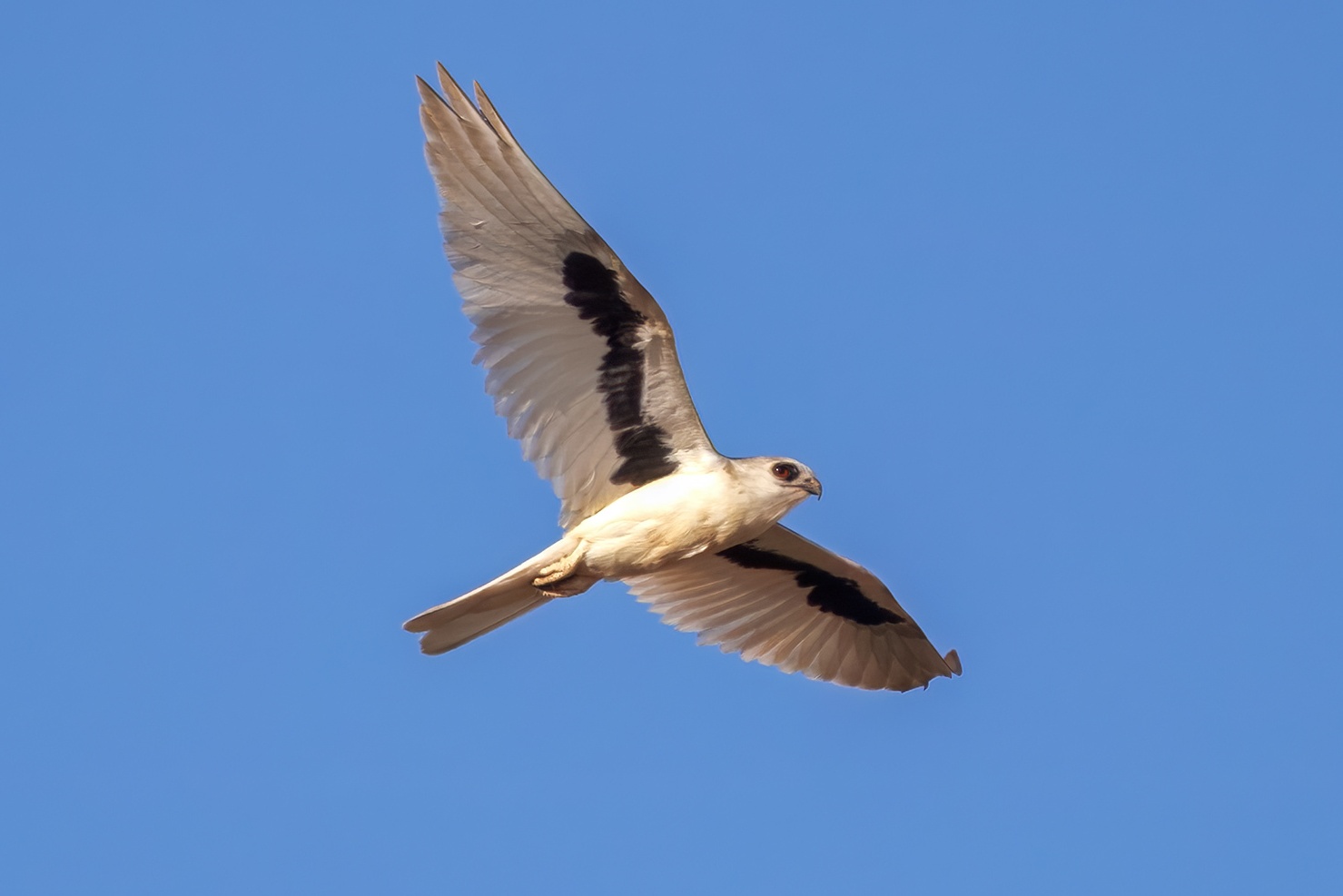
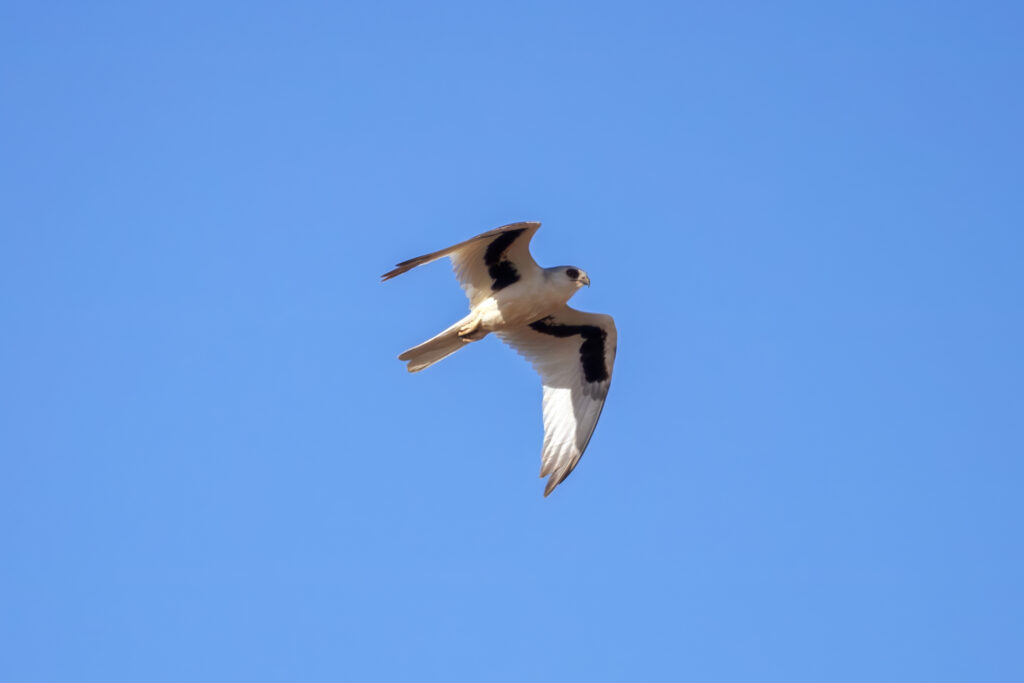
Distinctive wing markings: Bold black “letter-shaped” markings on the underside of the wings make the species unmistakable in flight.
Exceptional hearing: Like owls, Letter-winged kites rely heavily on sound to locate prey in complete darkness.
Silent flight: Soft-edged feathers allow near-silent flight, giving them a major advantage when hunting rodents.
Specialist mouse hunters: Mice form the bulk of their diet, with the species closely tied to rodent population cycles.
Boom-and-bust population cycles: Numbers increase rapidly during mouse plagues following good rainfall, then decline sharply as prey becomes scarce.
Opportunistic breeding: Breeding occurs only when food is abundant, and multiple broods may be raised in favourable seasons.
Daytime communal roosting: Birds roost quietly in trees during the day, often in loose groups.
Scarce and seldom seen: In dry years, the population is estimated at only 1,000–2,000 mature individuals, and their nomadic movements make encounters unpredictable.
Discovering the Letter-Winged Kite
One afternoon, walking home through an area where Black-shouldered kites are usually seen, something darker caught my eye. It didn’t take long before the bird took flight, revealing the striking black lines across the underside of its wings — not the dark wingtips I was used to.
A Letter-winged kite! My heart raced. My camera wasn’t with me, and I knew I had to act fast. It took an hour and a half, trekking through the desert heat, to grab my gear and return — all the while hoping the bird hadn’t disappeared. Unbelievably, it was still there.
Slowly, I approached, snapping photos and closing the distance a few metres at a time, careful not to startle it. Later, it was mobbed by crows and, almost theatrically, displayed its signature underwing “letter” again — this time for the camera.
The photos I’m sharing aren’t works of art, but they capture the sheer luck of witnessing one of Australia’s rarest nocturnal raptors. Perhaps my first — and only — Letter-winged kite sighting.
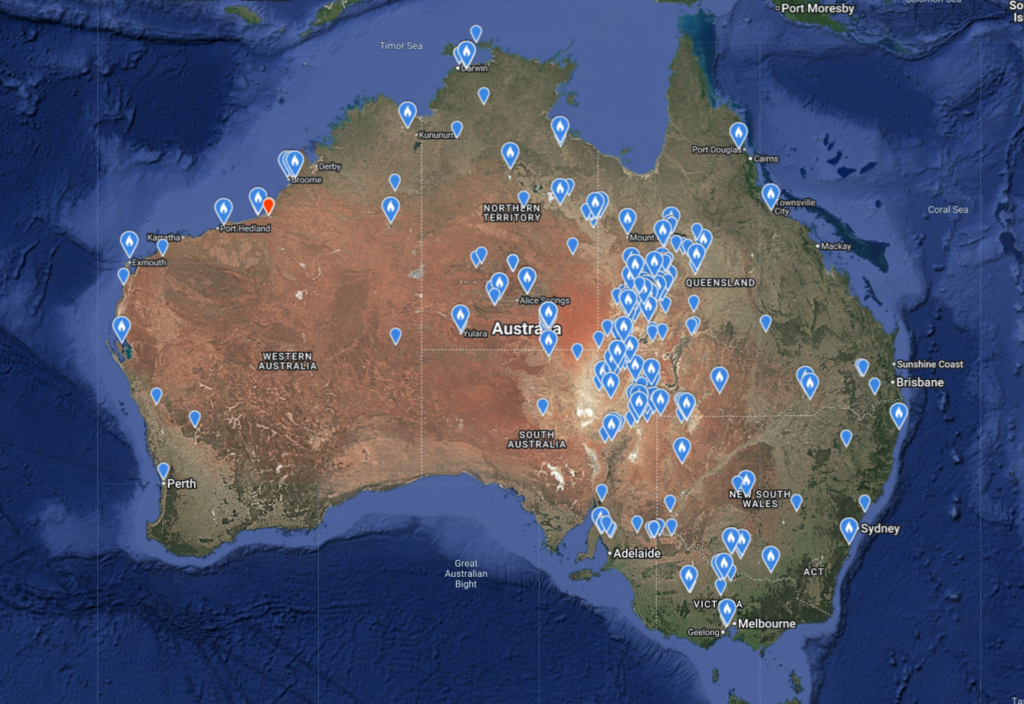
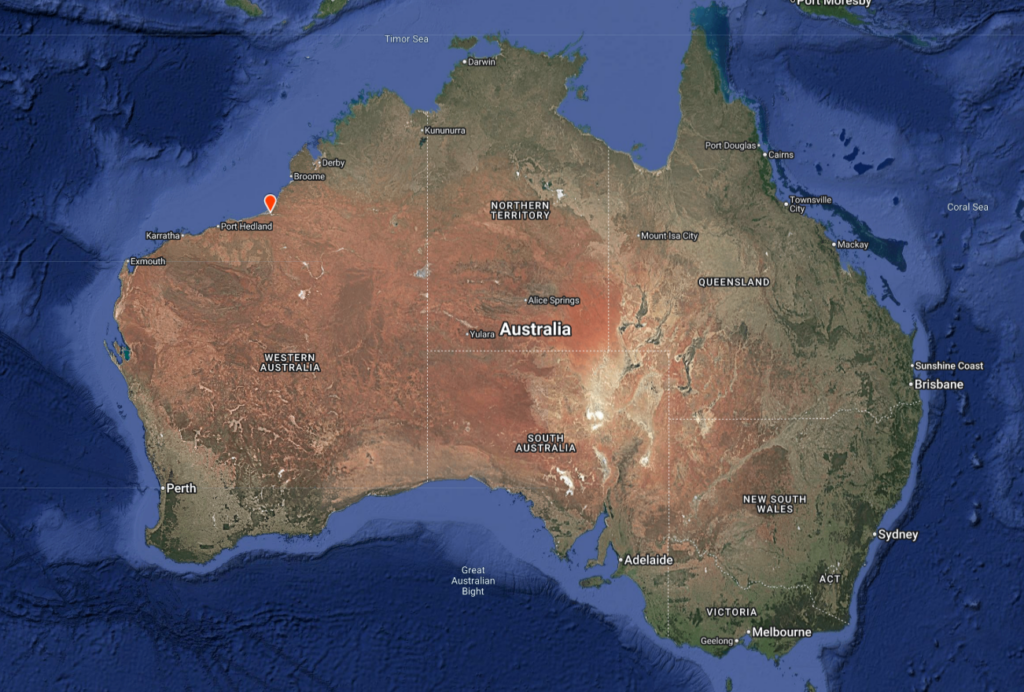
For anyone unfamiliar with the Letter-winged kite, it’s hard to overstate just how rare this bird is. To put that rarity into perspective, there are only around 500 recorded observations on eBird across all time. For a species that ranges over such a large part of inland Australia, that number is remarkably small and highlights just how seldom these birds are encountered, let alone photographed. Many seasoned birders will go their entire lives without seeing one in the wild.
The map of this year’s observations tells the story at a glance. Overall sightings are few, widely scattered, and largely confined to remote inland regions, reflecting the kite’s nomadic nature and highly specialised habitat requirements. Each record represents not just a rare bird, but a fleeting moment when rainfall, prey abundance and timing have aligned just right. For a wildlife photographer, encountering a Letter-winged kite is less about planning and more about sheer luck—and that’s what makes every sighting, and every photograph, so special.
Have you ever encountered a Letter-winged kite? Tell me in the comments below where you saw it!
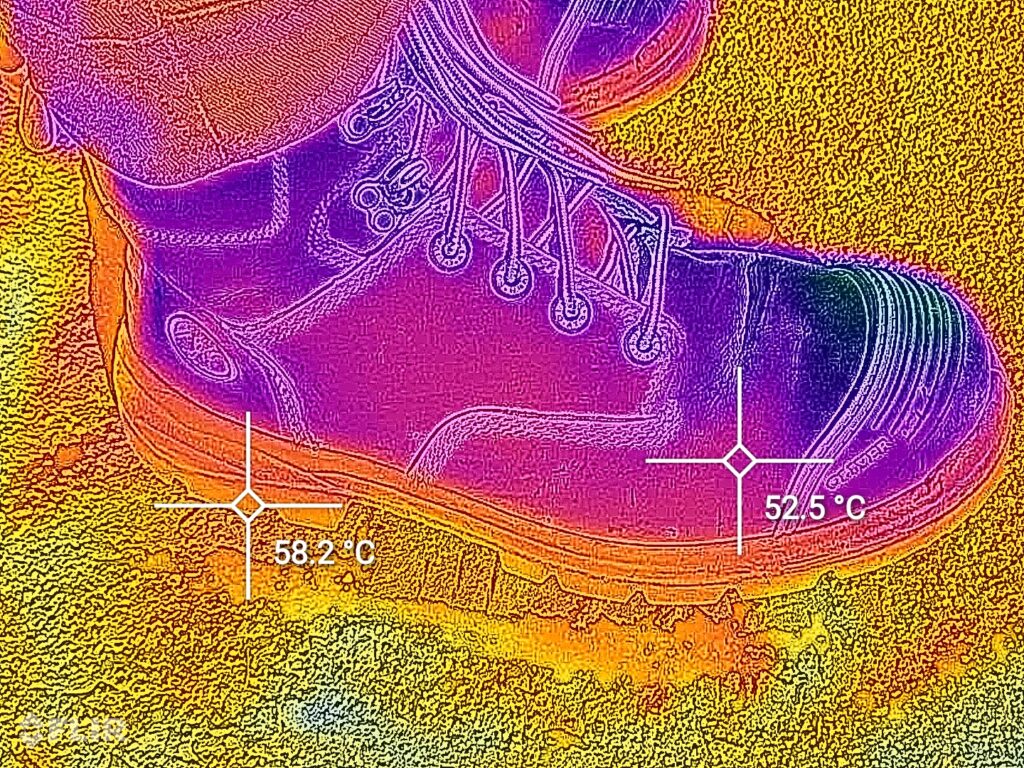
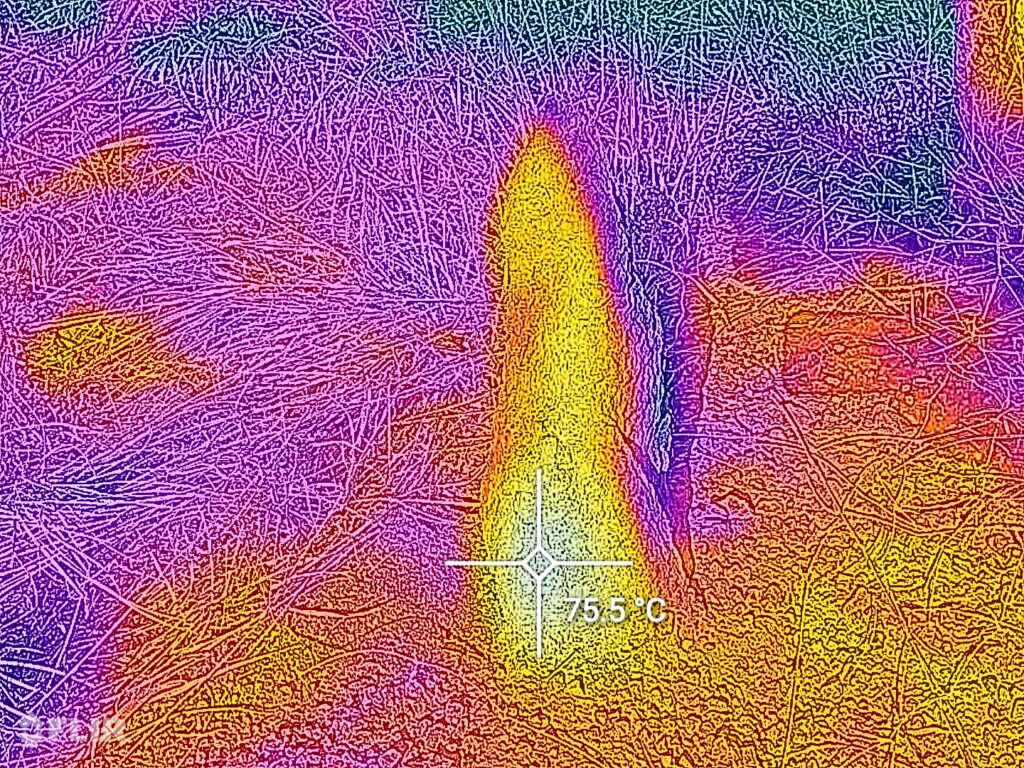
The Tanami Desert is getting less rain this year compared to last, and air temperatures are reaching new extremes, with highs of 44°C and ground temperatures soaring to 75°C. This intense heat drastically limits the time both wildlife and I can spend outdoors. A thermal image of my boot shows surface temperatures nearing 60°C after walking, while nearby termite mounds register even higher ground temperatures — hot enough that it feels like my feet are being slowly boiled inside my boots. While I usually enjoy long hours out in the cooler weather, the past few months have made it tough to stick to my usual routine. And I’m not exaggerating; the following thermal images tell the story.
Thermal image of my boot after 10 minutes walk in the desert (~60°C)Thermal image of a termite mound (~75°C).
An Unexpected Encounter
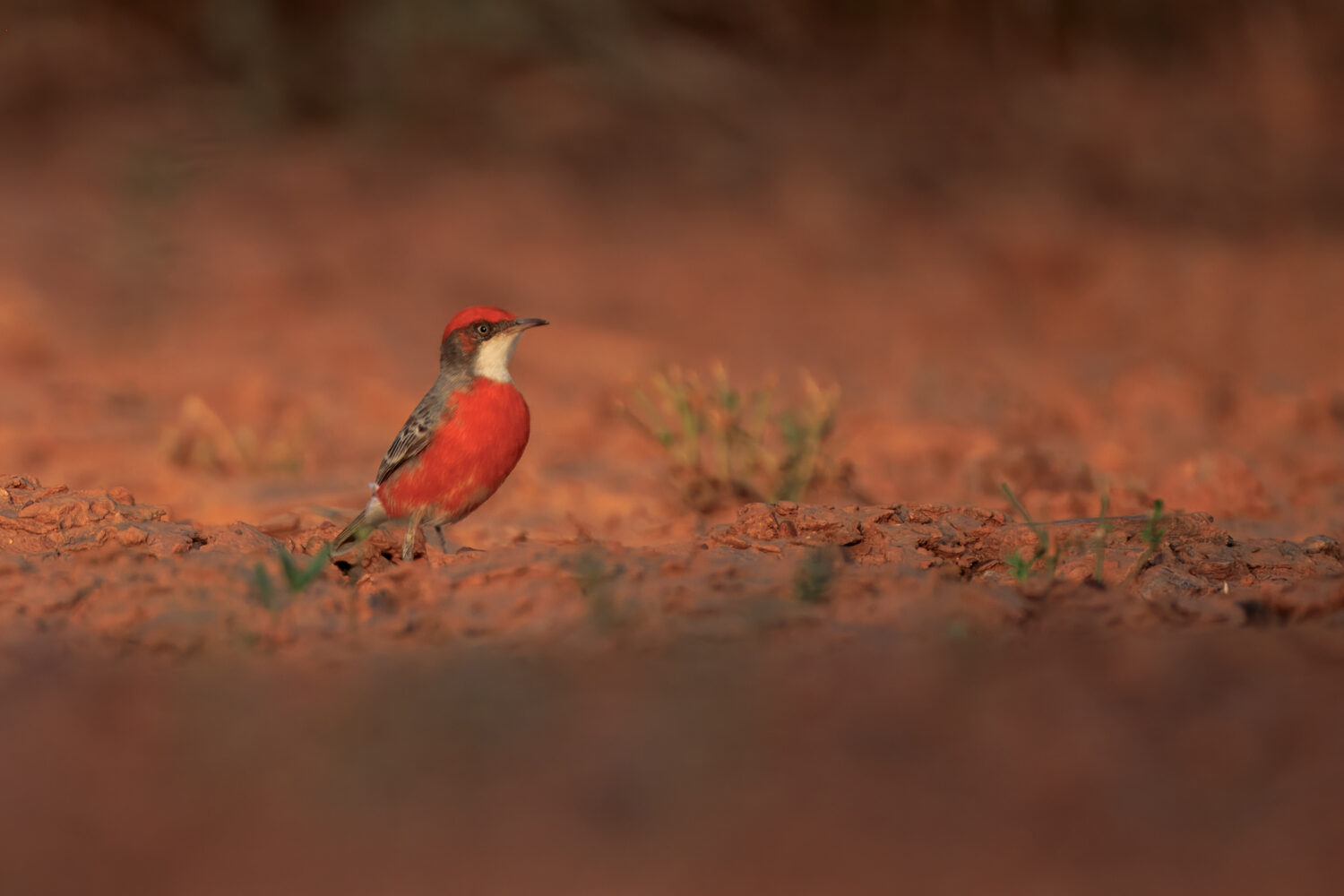
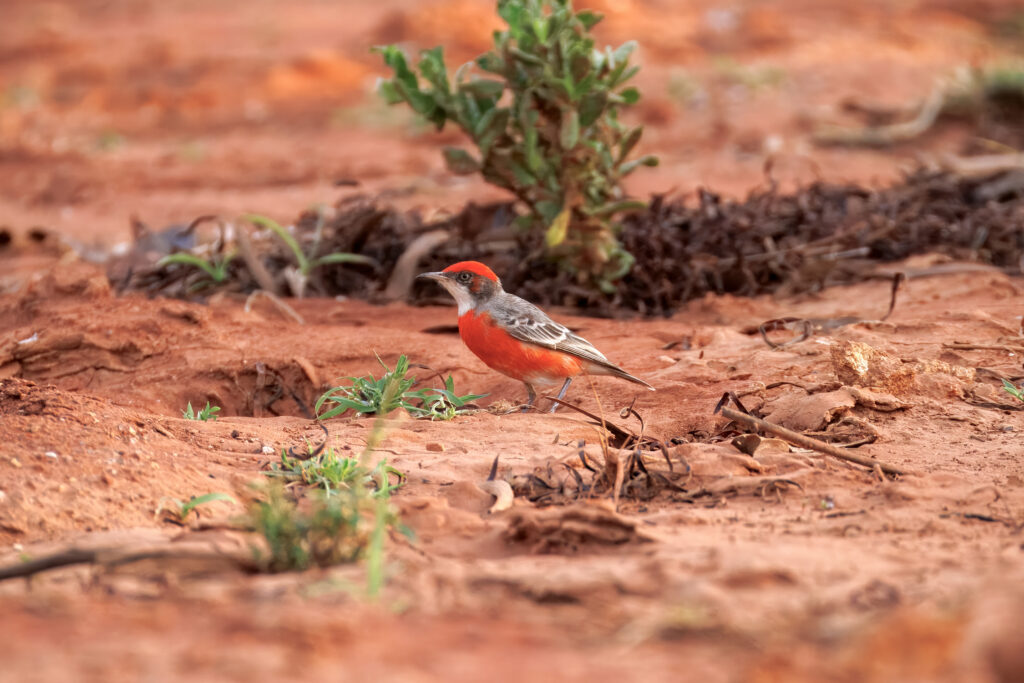
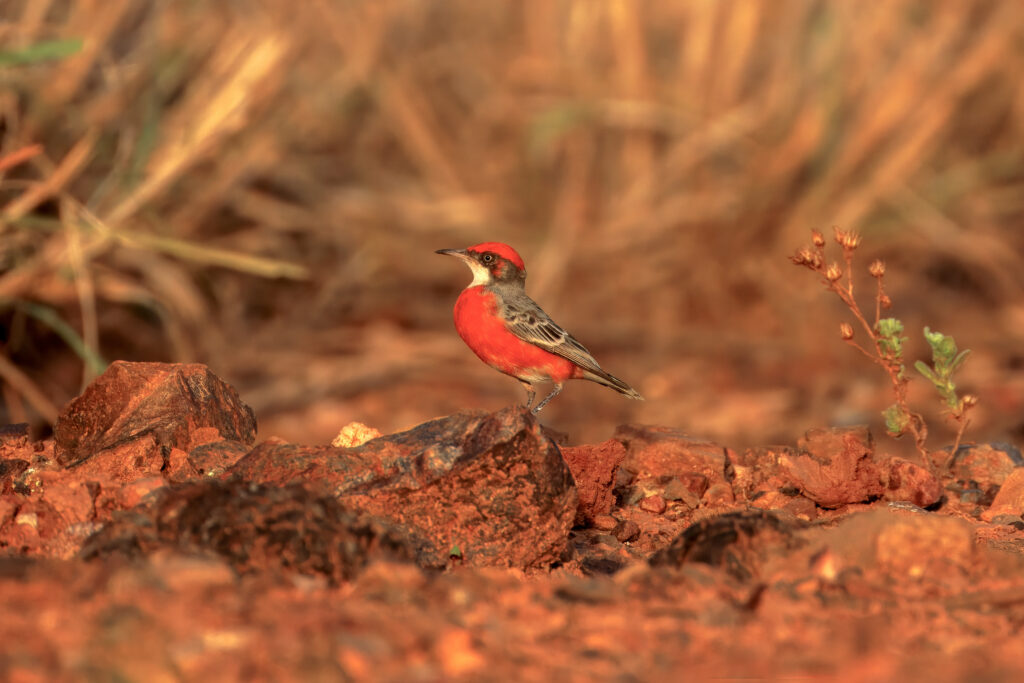
One early morning, I managed to get out before the heat rolled in, and I couldn’t believe my eyes when I spotted a bright red bird hopping along the ground. There aren’t many birds with such a striking colour, and it immediately grabbed my attention. It was a Crimson Chat. I’d seen one last year and assumed they’d just pass through the desert without stopping, like some migratory birds do. I thought if you were lucky enough to spot them, it would only be for a short window—just a couple of days. But I’m happy to admit I was wrong. To my surprise, the Crimson Chats are ground-dwellers, more like pipits than the tree-perching birds I expected. This changed everything, and I realised I had been searching in the wrong places.
The Allure of the Crimson Chat
As someone who loves capturing vibrant red tones in my photos, I was thrilled at the chance to spend more time with these incredibly bright and captivating birds—ones that never seem to lose their charm through the lens.
The Challenge of Capturing the Chats
I now understand why photographing them on the ground is such a challenge. First, they’re incredibly active and rarely stop moving, making it hard for even the most advanced autofocus systems to keep up. Second, they prefer areas with dense spinifex grass, which makes getting an eye-level shot nearly impossible. The spinifex, which is everywhere, constantly blocks clear views. Lastly, the intense heat haze that often hangs over the ground also makes it difficult to get sharp, focused shots.
A Stroke of Luck
Earlier in the season, I was lucky to find some controlled burns had cleared areas of the spinifex, opening up small gaps through which I was able to get clearer views and photographs.
And then—look at those colours! I’m still in awe of the vivid sight of these birds.
The Female Crimson Chat
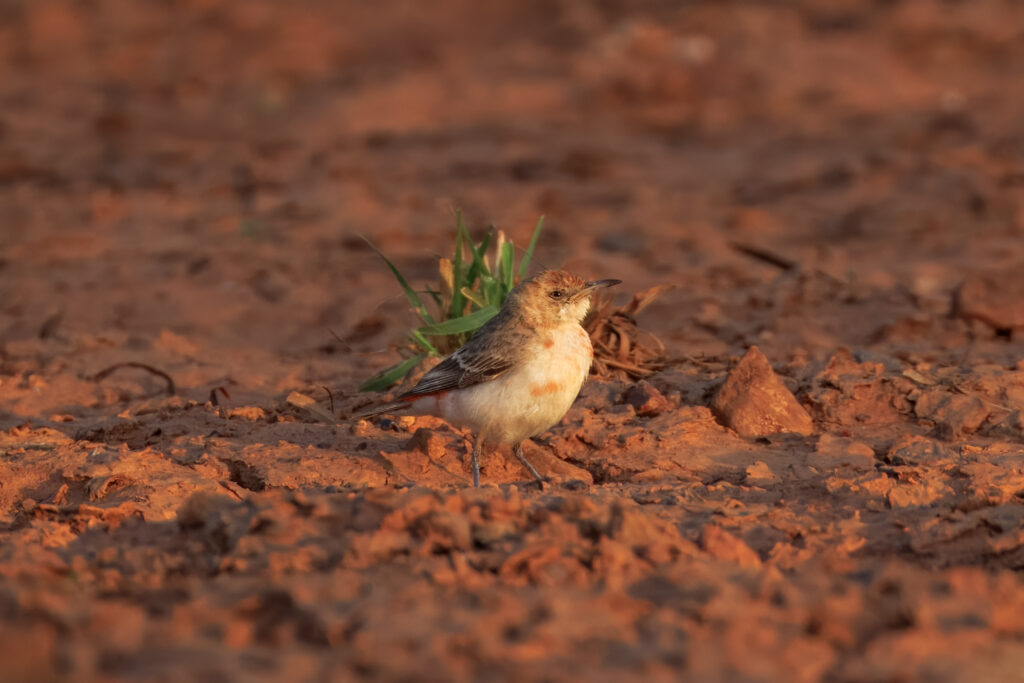
In the next photo, you’ll see the female Crimson Chat, and you’ll notice the stark difference in colouration. While the males are bright and eye-catching, the females are much more subdued. This is likely an evolutionary trait to help them blend in while nesting and avoid drawing attention.
A Game of Hide and Seek
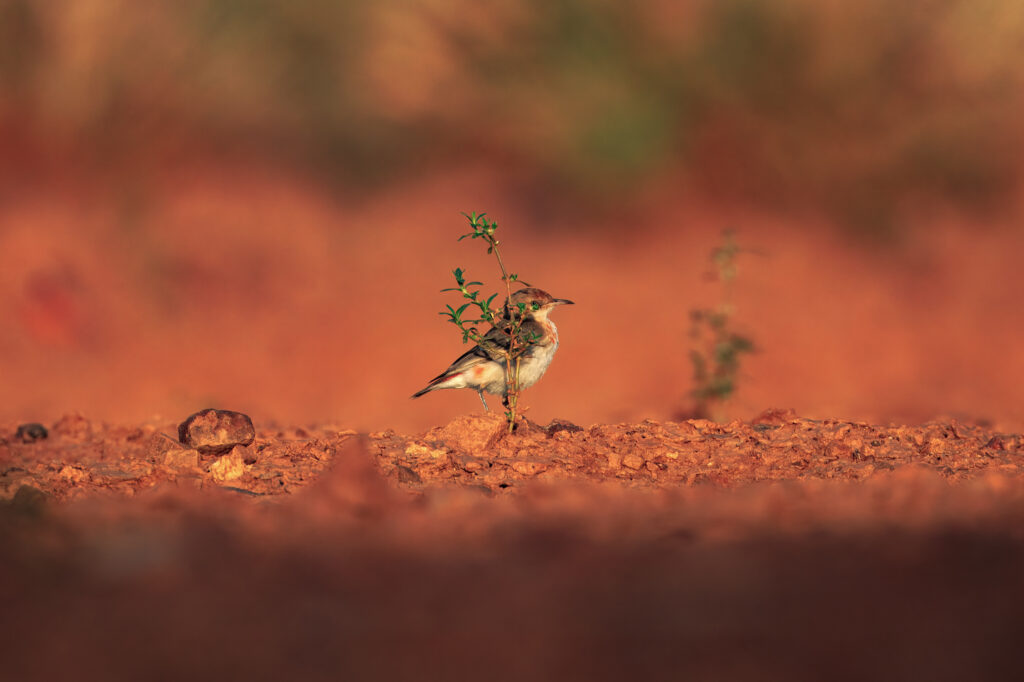
One memorable encounter involved a bit of “hide and seek” with a female. I tracked her until she darted behind a small bush and disappeared from view. If you can spot her in the photo, I’d love to hear your thoughts in the comments below!
Laughs and Learnings: Fun Facts about Crimson Chats
The “Bouncy” bird. Crimson Chats are often described as “bouncy” birds. Instead of walking or running like most other birds, they hop around on the ground, much like a little kangaroo. This hopping behaviour is cute and comical to witness, especially when they bounce energetically from one spot to the next as if they’re on a spring-loaded trampoline!
The “Flamboyant” Males. Male Crimson Chats really know how to stand out, often flaunting their vibrant red plumage like they’re on a runway. They practically scream, “Look at me!” when they’re trying to attract a mate, but ironically, their bold appearance makes them an easy target for predators. It’s like they’ve dressed for a party but forgot it’s a survival game. Talk about a fashion risk!
The “Chatty” Socialites. Though their calls are not overly loud or frequent, when a group of Crimson Chats does decide to have a “chat,” it’s like they’re gossiping in a birdie huddle. It’s almost like they’re trying to decide who’s got the best feathers or who’s won the title of the most stylish bird in the desert. Their calls sound like little whispers—birds seem to gossip as much as humans!
The “Oops, I’m a Ground Bird!” Moment. Crimson Chats can be hilariously awkward when it comes to tree hopping. Though they’re mostly ground-dwellers, they’re technically capable of hopping up onto low branches, but their attempts often look pretty funny, as if they’re not quite sure what they’re doing. They tend to look slightly confused about the whole “perching” thing, almost like they’re saying, “I don’t think I belong here… do I?”
As the year draws to a close, it’s a natural time for reflection. Like many others, I find myself looking back—this time through the lens of my photography journey.
How I Select My Best Images Each Year
Whenever I capture an image I consider truly high quality, I place it into a dedicated folder reserved for what I regard as my best work of the year. Over time, this has averaged out to around a dozen images annually.
A Year Shaped by Challenging Conditions
This year was both challenging and rewarding. The main obstacles came from the weather: months of persistent rain followed by periods of extreme heat. Neither condition is particularly friendly to nature photography. And yet, despite these challenges, I managed to capture a strong collection of images I’m genuinely proud of.
The Difficulty of Choosing Just One Photograph
For this article, I wanted to share just one photograph. I assumed choosing a single image would be straightforward—but I quickly realised it wasn’t. One image might stand out because of the species, another because of the story it tells, and yet another for the sheer rarity of the moment or the time and planning invested. Each has its own significance.
Let’s Get to the Image
That said, I know most of you are here to see a photograph, not to read an endless introduction—so let’s get to it.
My Top Photograph of 2025: Plumed Honeyeaters
Below is my top-ranked image of the year, capturing a remarkable interaction between three plumed honeyeaters. Two birds stand atop a branch, intently focused on a third individual dangling upside down beneath them, suspended by a single leg. What makes this moment especially intriguing is that one of the perched birds appears to be standing on the hanging bird’s leg, giving the impression that it may be trying to prevent it from falling.
Whether this is a rare glimpse into cooperative behaviour, a split-second of chaos, or simply a piece of accidental bushland comedy is open to interpretation. The clean background and unusual body positions draw the eye and invite the viewer to linger, making this image stand out as my personal favourite of the year.
Your Interpretation of the Moment
I’d love to hear your thoughts. Do you see a dramatic rescue, a moment of mischief, or something else entirely? What story does this photograph tell you?
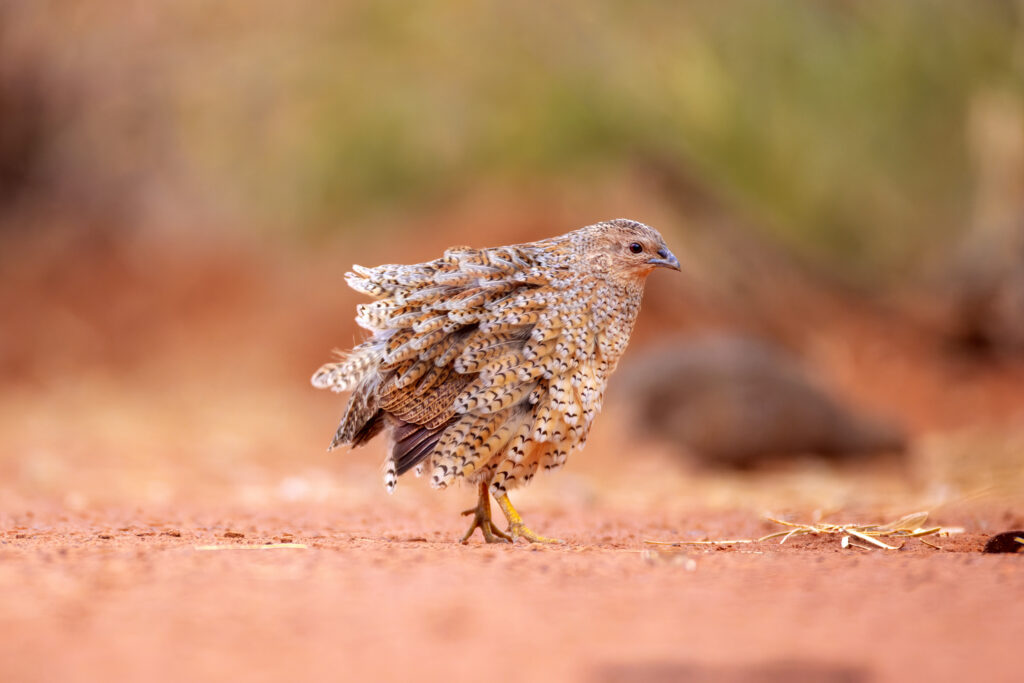
The “Hop-and-Sprint” Dance. Brown Quails don’t really fly much—they prefer to “run” for cover. But when they do decide to take to the air, it’s more of a comical, short burst of flight. Imagine a chicken trying to take off—it’s more of a “hop-and-sprint” move than a graceful glide. Yet, despite their awkward takeoff, they can cover quite a distance in that short burst.
Master of the Stealth Mode. These quails have perfected the art of stealth. When threatened, they will often freeze in place, blending seamlessly into the undergrowth, almost like they’ve mastered the ninja technique of “if I can’t see you, you can’t see me.” It’s uncanny how well they can hide in plain sight. You might think they’re just a pile of leaves until one suddenly hops up with a “surprise, I’ve been here all along!” moment.
SocialMediaStarsintheMaking. If Brown Quails had Instagram, their feed would be full of selfies from the grass. They’re very social birds and love to hang out in groups, often interacting with each other like a quirky, little bird gang. You might catch them in the wild, huddling together in a “circle of trust” or squabbling over snacks like they’re competing for the last chip at a party.
The“Peekaboo”Master. Brown Quails love to play peekaboo. Their heads bobbing up and down over small mounds or tall grass is like the bird version of playing hide-and-seek. If you’re lucky enough to catch one of these curious little creatures peering out at you, it feels like you’re the subject of their secret wildlife game.
The Elusive Quail
Photographing quails is no easy task. These birds are masters of stealth—rarely flying, and instead quietly moving through dense vegetation, almost invisible to the eye. If they spot you first, they freeze in place, blending seamlessly into their surroundings and making them incredibly hard to detect. More often than not, they explode into flight from right under my feet just as I’m about to step on them. After a short, noisy burst through the air, they land again and vanish into the grass, sprinting away before I can even raise my camera.
Missed Shots and Blurry Backsides
Capturing photos of quails—especially the rarer species—often comes down to instinct, luck, and a bit of pre-planning. My usual method involves pre-focusing about 20 metres ahead and firing from the hip the moment they flush. As you might imagine, this approach typically results in shots of blurry backsides disappearing into the distance. Not exactly a gallery-worthy result—but sometimes it’s all you get.
They Came to Me
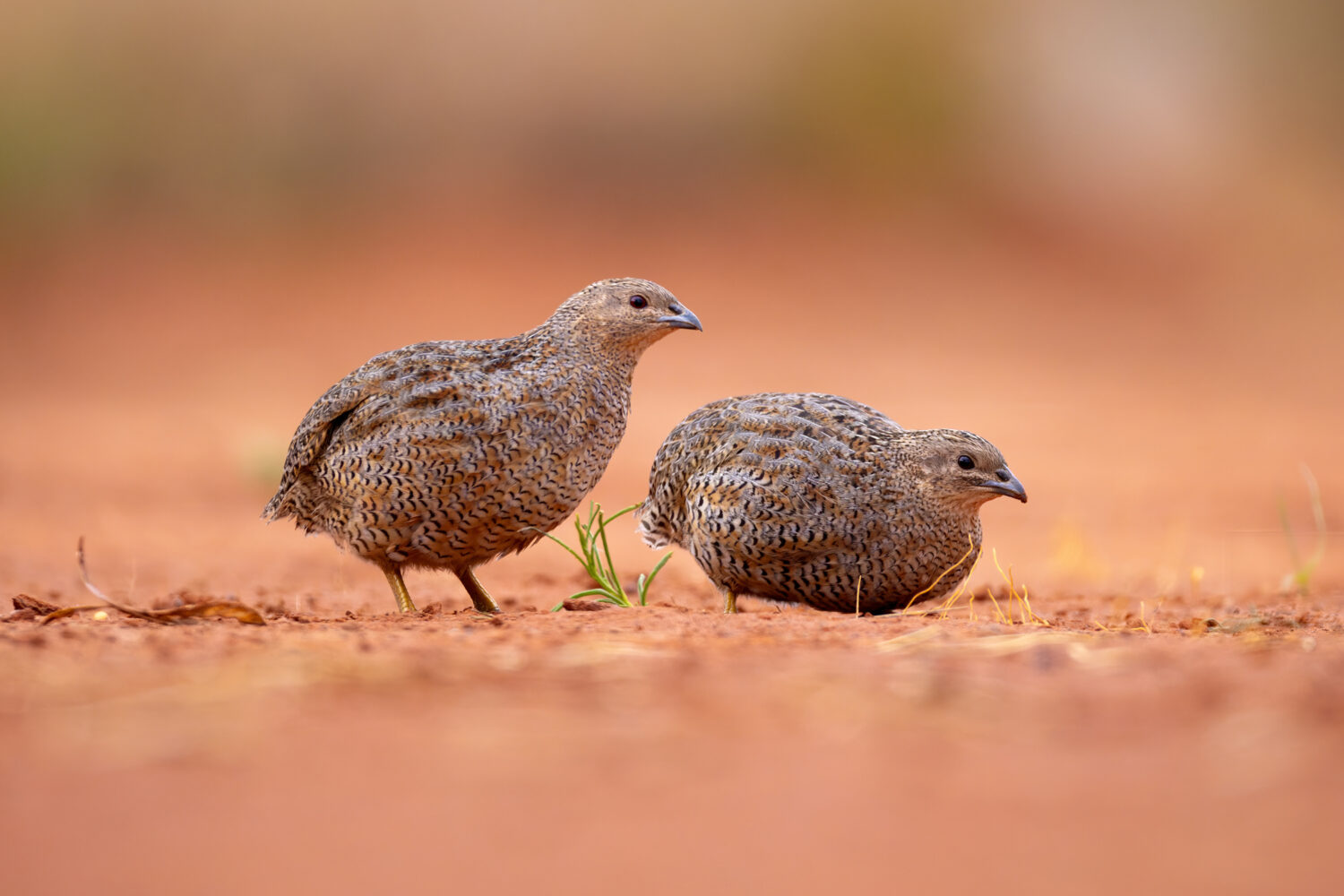
But on the day I captured the following images, something truly special happened. I first spotted a small group of Brown Quails wandering toward me from about 50 metres away. Without hesitation, I dropped to the ground, hoping to become just another lump in the landscape. To my amazement, the quails kept coming. They were busy doing their little bird business—picking at the ground, socialising, and seemingly unaware of my presence.
Hidden in Plain Sight
Lying there, completely still, I found myself with a front-row seat to their natural world. They interacted with each other calmly and casually, behaving as if I wasn’t there at all. It was the kind of moment every wildlife photographer hopes for—when your presence goes unnoticed, and the animals simply live their lives around you.
Quail Romance Unfolds
Then, something even more extraordinary happened. One of the males fluffed up his feathers and began a hilarious little performance—stomping rapidly in place and inching his way toward a nearby female. His antics were accompanied by soft, rhythmic calls. It was a Brown Quail’s mating display, and I was lucky enough to witness it from just metres away.
The image below captures the moment: a fluffed-up, determined male in the foreground, with the outline of the unimpressed female watching from the background. A quirky, rare scene from the secret lives of these shy birds.
Just Out of Focus
But the encounter didn’t end there. The group continued its slow, deliberate march toward me until they were only about 10 metres away… and still coming. Eventually, they wandered so close they were inside the minimum focusing distance of my lens—just four metres. At that point, I couldn’t shoot anymore without backing up, which I didn’t want to risk.
So I did the only thing that felt right—I slowly lowered my camera and watched.
Eye to Eye with Quails
By now, the birds had clearly noticed me. But instead of panicking, they did something completely unexpected—they climbed a small rise just in front of me and started peering at me with their quirky little heads. One by one, they popped up over the mound, tilting their heads side to side with what looked like genuine curiosity.
I nearly laughed out loud. The situation was so surreal, I even found myself gently nudging my lens forward, trying to coax them back into focus range—like that would work! But the quails had other plans.
Gone Like Ghosts
After a brief but thoughtful inspection of the strange human in the grass, the little family turned and sprinted off into the vegetation with astonishing speed and precision. In the blink of an eye, they were gone—vanished back into the wild as quickly as they had appeared.
A Memory to Keep Forever
Moments like these are what make wildlife photography so endlessly rewarding. It’s not always about the perfect photo. Sometimes, it’s about the connection—the shared moment, however brief, between you and the animal. This encounter is now one of those treasured memories I’ll carry with me forever.
Your Turn!
Have you ever had a surprising or magical wildlife encounter like this? I’d love to hear your stories—feel free to share them in the comments below!