After several years working in and out of Papua New Guinea, 2021 marked a shift back to spending more time at home in Australia – and with that came a whole new chapter of birding. From the lush tropics of Cairns to the rugged beauty of Groote Eylandt, the year unfolded as a welcome rediscovery of familiar landscapes and an introduction to new ones.
Settling Back Into Local Habitats
Some days were spent watching the spectacled monarch flit through shaded gullies or the Australasian grebe bobbing calmly on still water. One of the gentlest highlights was seeing dusky moorhen chicks tottering across lilypads, their tiny feet slipping and scrambling as the adults kept a close, protective watch nearby. The shining flycatcher and sacred kingfisher added flashes of blue and black to the mangroves, while the striated heron, ever elusive, continued its habit of appearing only when it felt like cooperating.
Coastal Encounters and a Rare Visitor
Along the coast, the year delivered its own surprises. The black‑naped tern was one of the most memorable — captured in a moment that looked almost angelic, wings spread wide as it swooped in with a tiny fish to feed its chicks. Nearby, the eastern reef heron stalked tidal flats with quiet precision. The standout visitor, though, was the semipalmated plover – a true out‑of‑hemisphere wanderer and the only bird to arrive in Australia from so far abroad that year. The Australasian darter, dramatic as always, spread its wings to dry in the sun as though posing for the camera.
Tropical Highlights and Familiar Echoes
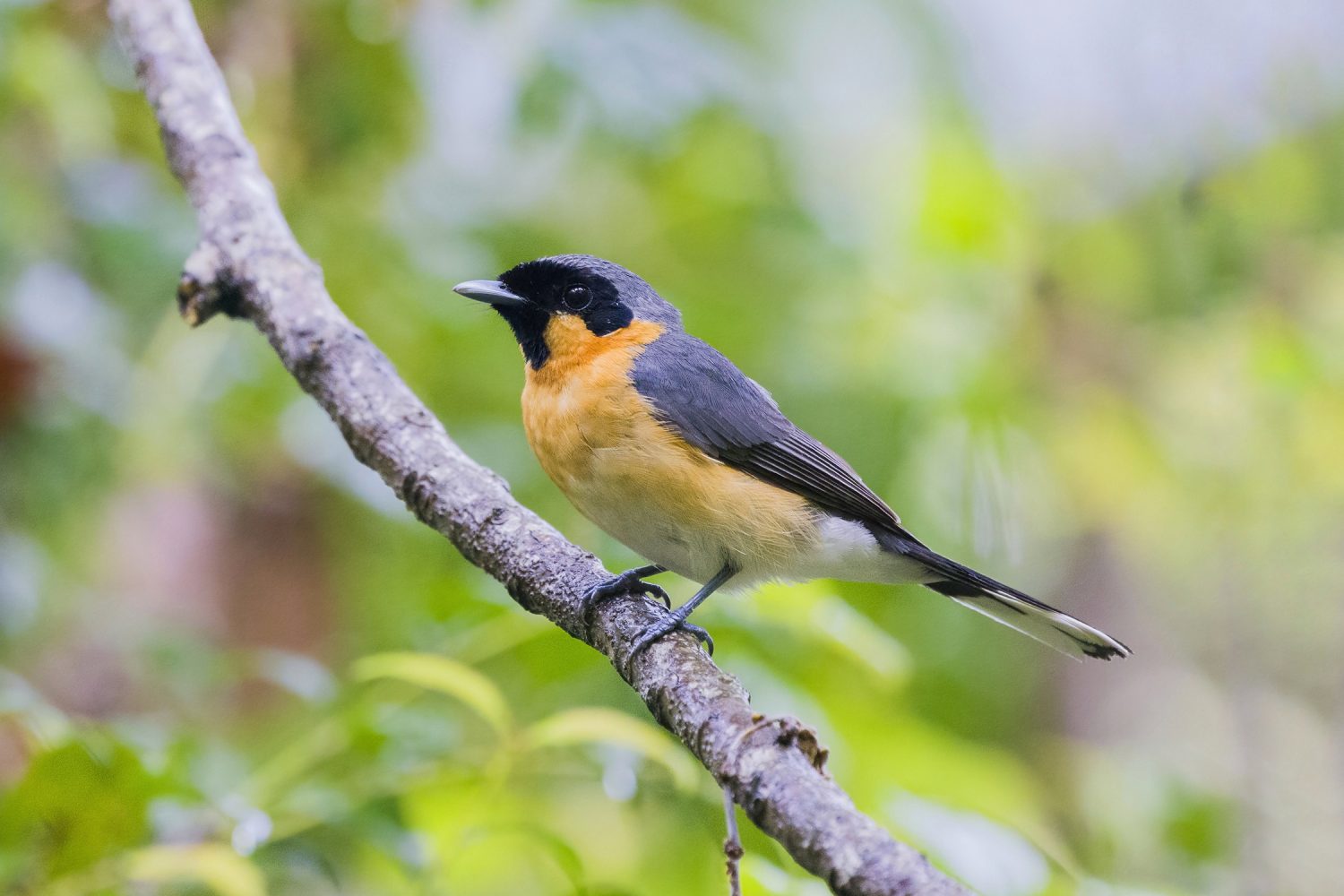
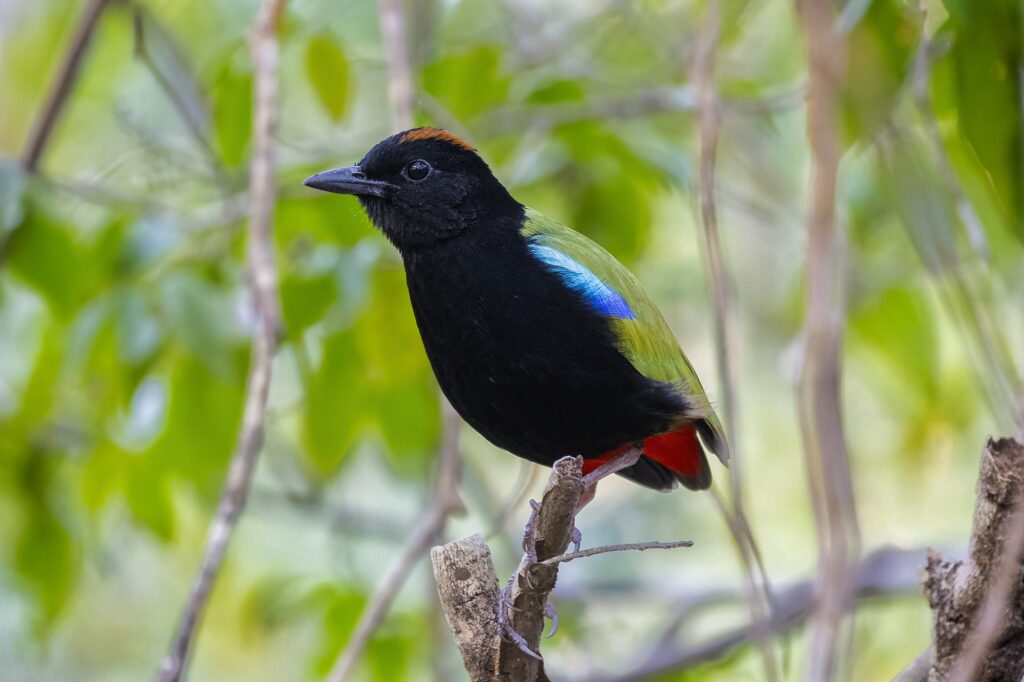
Further north, the tropics offered some of the year’s most memorable encounters. The rainbow pitta glowed like a jewel in the undergrowth, while the blue‑faced honeyeater made its presence known with its bold colours and loud calls. The mangrove golden whistler added a warm splash of colour to the dense green, each moment a reminder of how vibrant and varied Australia can be when you take the time to slow down and look closely.
A Tapestry of Places and Moments
Threaded together, these moments form a tapestry of habitats, climates, and personalities – a reminder that returning home doesn’t mean slowing down. Sometimes it simply means seeing your own backyard with fresh eyes.
The Gallery Ahead
Below is the collection of photos that shaped my 2021 birding journey – a mix of familiar species, rare visitors, and unforgettable encounters from Cairns, Groote Eylandt, and everywhere in between. A few highlights already have their own dedicated write‑ups, including the semipalmated plover, the rainbow pitta, and the great bowerbird, where I’ve shared the full stories behind how those images came together. I hope you enjoy browsing through the gallery, and I’d love to hear which image stands out to you.
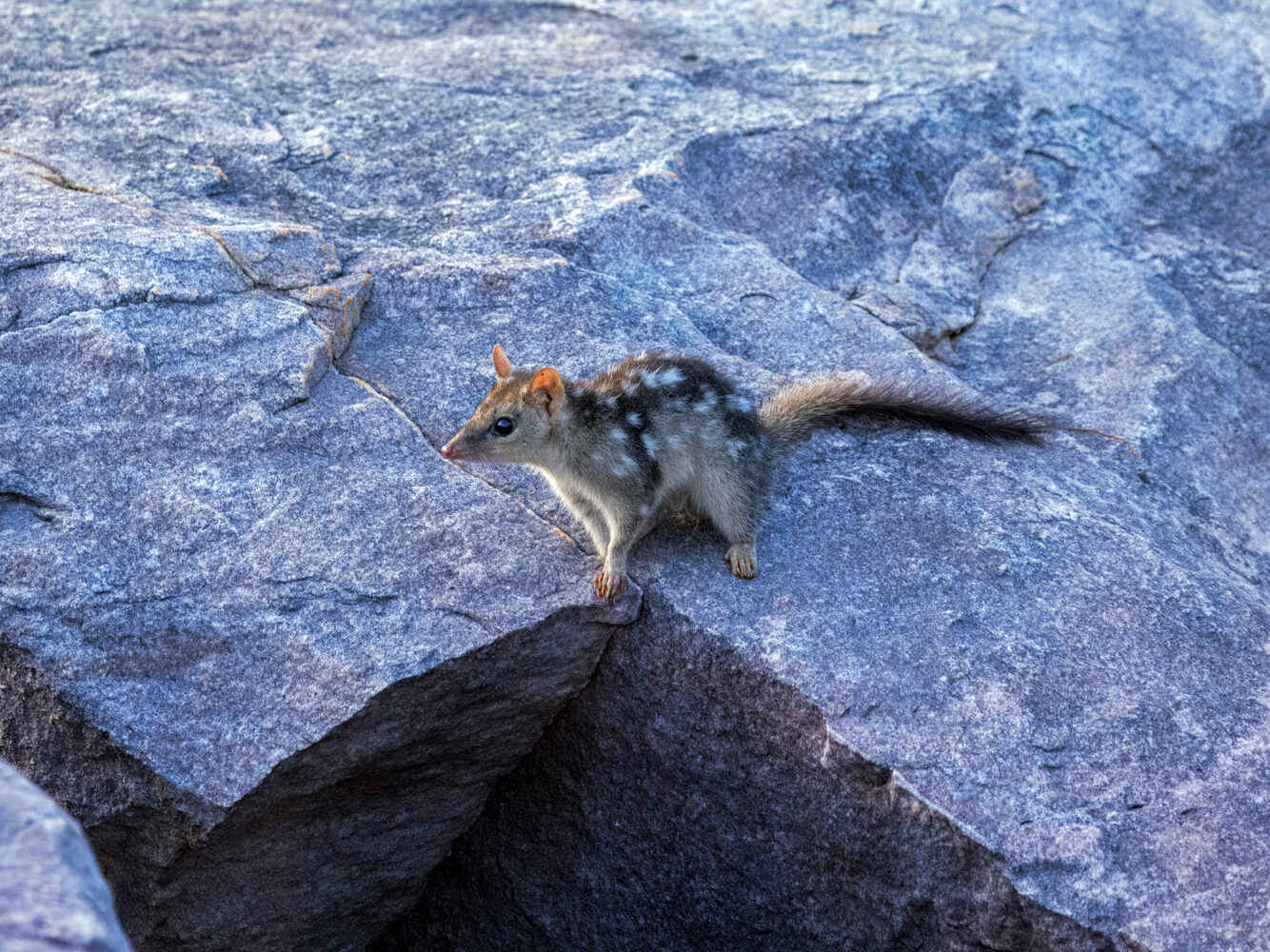
The Australian bush changes after dark. As the heat fades and the night insects begin their chorus, a small spotted predator emerges from the rocks and hollow logs. The northern quoll is quick, curious, and surprisingly fierce for its size. Photographing this elusive marsupial means entering a world most people never see—one of midnight hunts, agile climbs, and a creature fighting to survive in a rapidly changing landscape.
Fun Facts about Northern Quoll
They’re Australia’s tiny “tiger cats” – Despite their small size (about the length of a ruler plus a tail), northern quolls are fierce predators. Their reddish-brown fur covered in white spots has earned them nicknames like “native tiger cat.”
They’re carnivorous marsupials – Unlike kangaroos or koalas, quolls are meat-eaters. A northern quoll’s diet can include:
insects
spiders
small reptiles
birds
small mammals
They’re opportunistic hunters and excellent climbers.
Males live shockingly short lives – One of the most dramatic facts: male northern quolls die after their first breeding season. During mating season they go into a hormone-driven frenzy—often mating with multiple females for hours at a time, barely eating or sleeping. The stress leads to immune collapse and death, meaning most males live only about one year.
They’re night explorers – Northern quolls are nocturnal, spending their nights roaming rocky outcrops, forests, and savannas in search of food. During the day they sleep in tree hollows, rock crevices, or termite mounds.
Their feet are built for climbing – They have rough pads and sharp claws, allowing them to scale trees, cliffs, and even buildings surprisingly well.
Cane toads are one of their biggest threats – The arrival of the invasive Cane Toad has devastated many northern quoll populations. Quolls try to eat them but are poisoned by the toads’ powerful toxins. Conservation programs now train quolls to avoid toads by giving them small, nausea-inducing meals made from toads so they learn the taste is bad.
Females have only six teats – a female quoll typically gives birth to 20–30 tiny young, but she only has six teats, so only the strongest six survive to develop in the pouch.
They once lived across northern Australia – Today they’re mostly found in northern parts of Australia, especially rocky habitats across regions like Northern Territory, Western Australia, and Queensland.
They’re endangered in the wild – Because of threats like cane toads, feral cats, habitat loss, and fire, the northern quoll is listed as endangered. Conservation groups and zoos are working hard to protect them.
Dusk in Quoll Country
While working in the Northern Territory, I was lucky enough to spend time on Groote Eylandt, one of the few places where northern quolls still thrive. Photographing them required patience more than anything else. I would arrive at a likely spot before sunset and sit quietly, trying not to move while the bush gradually shifted from day to night. Although these little predators are technically nocturnal, they sometimes emerge a few minutes before the sun actually disappears. On several evenings a curious quoll would appear while there was still plenty of light, which meant I was able to capture a few rare daylight photos of these normally night-active animals.
Where Quolls Still Rule
One reason Groote Eylandt is such an important refuge for the Northern Quoll is the absence of the invasive Cane Toad. Across much of northern Australia, cane toads have devastated quoll populations because the animals attempt to prey on them and are poisoned by their powerful toxins. Groote Eylandt, however, remains one of the few places where toads have never established a population. Strict biosecurity controls on incoming ships and cargo help prevent them from reaching the island. Without this deadly invader, northern quolls here can still live much as they once did across the mainland—roaming the landscape as one of the area’s small but dominant predators.
Moments with a Northern Quoll
The photos below capture a few moments I was lucky enough to witness while observing northern quolls on Groote Eylandt. Watching these small predators emerge from the rocks, sniff the air, and cautiously explore their surroundings was an unforgettable experience. Every encounter felt slightly different—sometimes just a quick appearance before they vanished into the bush, other times a curious individual lingering long enough for a few frames. If you’ve ever seen or photographed a Northern Quoll yourself, I’d love to hear about it. Feel free to leave a comment and share your own experience or tips for spotting these incredible animals in the wild.
Tucked away in the lush monsoon forests of the Northern Territory, the rainbow pitta is one of Australia’s most dazzling yet discreet birds. Its jewel-bright colours flash like a surprise in the shadows, offering photographers a rare reward for patience and quiet footsteps. While their beauty is undeniable, rainbow pittas are far more than a pretty subject—they’re agile ground foragers, meticulous nest-builders and fascinating characters of the Top End’s tropical ecosystems. In this article, I’ll take you behind the scenes of my recent encounters with these vibrant little forest dwellers and share the photographs that tell their story.
Interesting facts about the Australian rainbow pitta
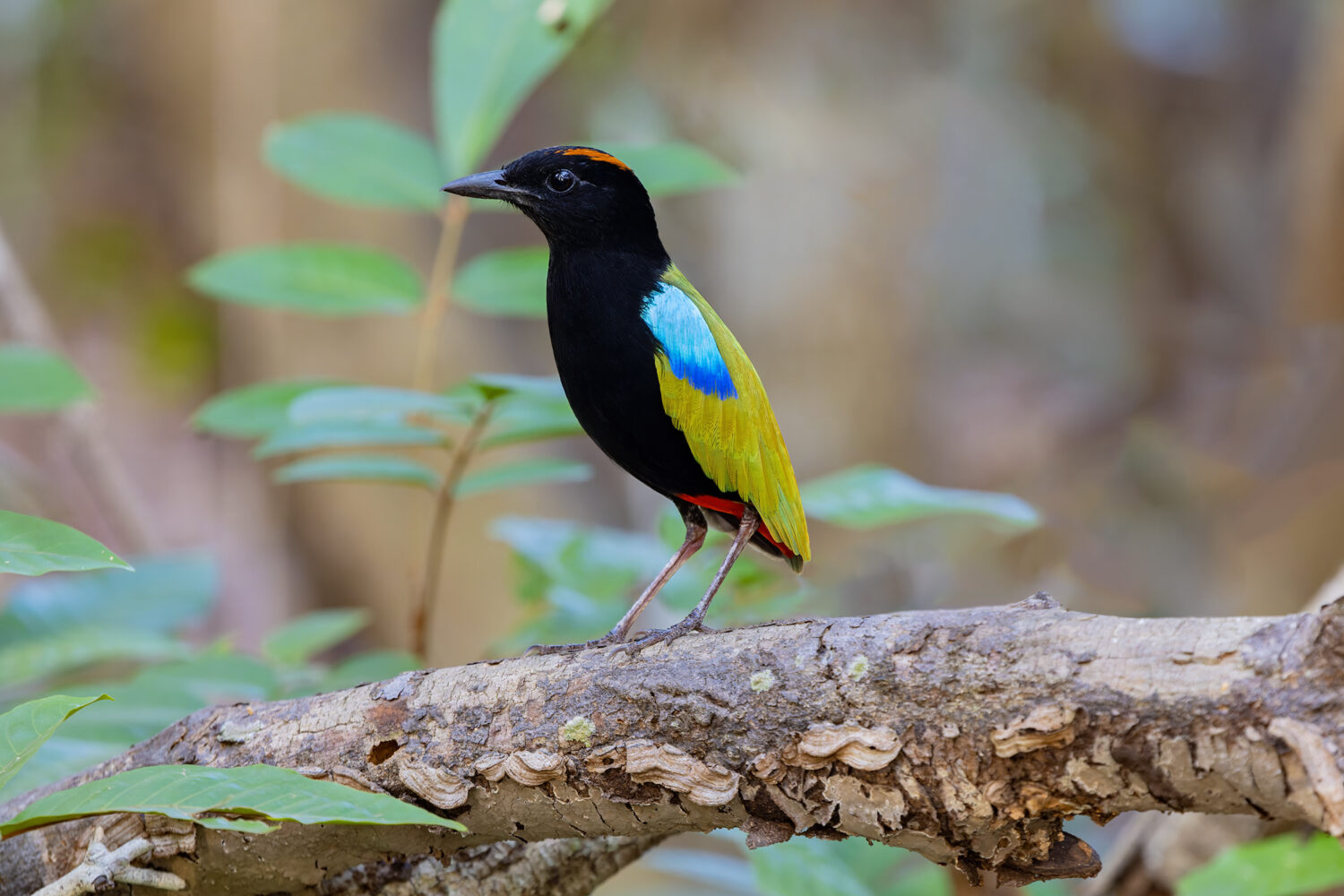
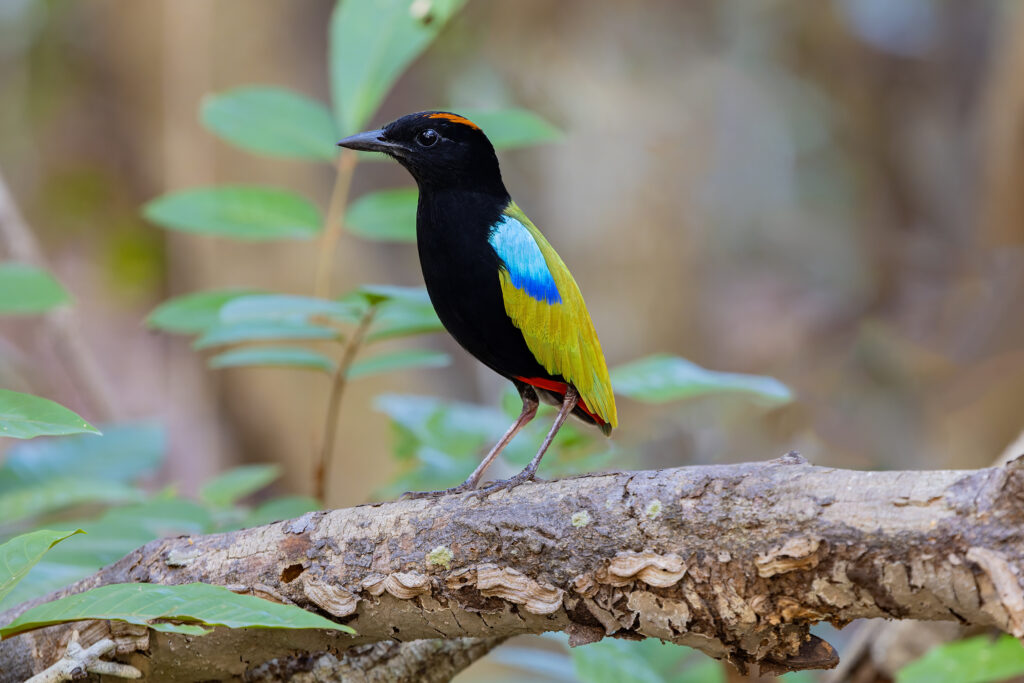
Brilliant plumage – Despite foraging in dim forest undergrowth, rainbow pittas sport a striking combo of emerald-green wings, a velvety black head, a cobalt patch on the shoulder and a vivid scarlet rump.
Northern Territory locals – They’re found almost exclusively in the Top End, especially around Darwin, Kakadu and the Tiwi Islands, making them one of Australia’s more regionally restricted birds.
Master nest-builders – Rainbow pittas create dome-shaped nests with side entrances, often built close to the ground and lined with soft materials like moss and fine roots.
Secretive behaviour – Although colourful, they’re surprisingly elusive and prefer skulking through leaf litter rather than showing off in the open.
Diet of opportunity – They feed on insects, earthworms, snails, spiders and the occasional small skink, which they often bash against a log or rock before eating.
Seasonal singers – Their distinctive “teow-teow” call is most often heard during the Wet, especially at dawn when the forest resonates with bird song.
Short, powerful hops – Rather than flying long distances, rainbow pittas rely on strong legs to hop rapidly along the forest floor.
Monsoon forest specialists – They thrive in dense monsoon vine thickets, coastal rainforest patches and riparian forests that offer shelter, leaf litter and consistent moisture.
Solitary by nature – Outside of breeding season, rainbow pittas are mostly solitary, each bird maintaining and defending a small territory.
Discovery
I accidentally discovered these birds in the mangrove forest along the beach while working on Groote Eylandt. Rainbow pittas are one of my favourite subjects—I could never tire of photographing them. Being arguably the most beautiful bird on the island, I decided to spend time observing it, trying to capture the image I had envisioned: a clean background with minimal clutter.
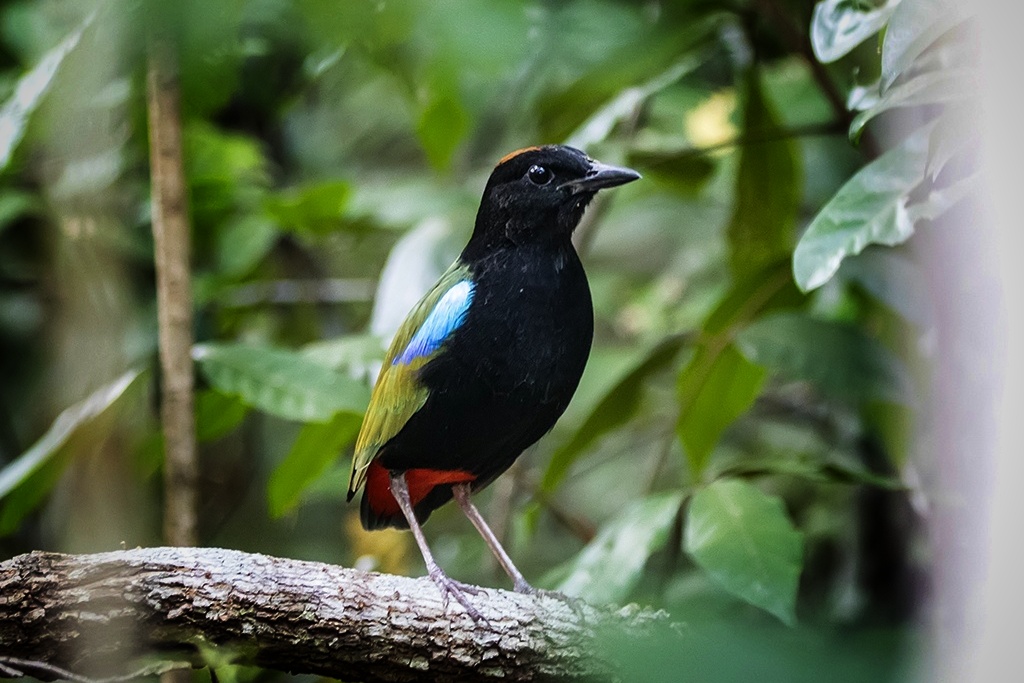
Below is my first photo of the rainbow pitta. You can see just how congested and dark its environment was, making every shot a real challenge.
A Shy Jewel of the Forest
Its home was the densest part of the forest, full of broken branches and low shrubs, with hardly any sunlight reaching the forest floor. Even during the brightest part of the day, the technical challenges were immense. The bird’s plumage itself presented a puzzle: glossy metallic wing patches set against deep black feathers. Expose for the black, and the shiny patches blow out; expose for the metallic sheen, and the rest plunges into shadow.
Technical Challenges
The first challenge was figuring out whether it ever ventured into slightly more open, sunlit areas—but the pitta was steadfast in its routine, never straying from its preferred paths. It took days of careful observation to understand its movements and timing. This knowledge allowed me to position myself ahead of its arrival, quietly watching for any opportunity to photograph it on a suitable branch. Such spots were rare: after days of crawling through the undergrowth, I finally found a small, roughly circular clearing about two metres across. I positioned myself outside it, hoping the bird would eventually enter and offer a frameable shot.
Three Months to Success
After a couple of weeks, I managed some photos, but none met my vision.
I kept returning, day after day, and it took three months before I finally captured images I am proud to share. During this time, I discovered a humorous side effect: as I crawled the forest photographing other birds—bowerbirds, whistlers, gerygones, kingfishers—local birdwatchers noticed my submissions on eBird, but they never saw me as I was spending all my time inside the dense bush, looking for pitta. Curious about the mysterious photographer with a long lens, they eventually spotted me after my project was complete, and one day, a stranger stretched out his hand and said, “Hello, Alex.” He had pieced together my identity from my posts and sightings. That simple encounter sparked a friendship born from shared passion—a reminder of the unexpected connections wildlife photography can create.
The Trials Behind the Shot
This project demanded more time and effort than any other photo I’ve taken. I was scratched by bushes, bitten by mozzies and green ants, and even was bitten right in the eye when I accidentally knocked an ant nest onto my back. Despite the hardships, the experience is unforgettable. The time, patience, and persistence required to capture this bird will always shine in my memory like a jewel—the ultimate testament to nature’s splendour.
This is what a final image look like.
Reflections on a Rainbow Jewel
Working with the rainbow pitta taught me that patience, observation, and respect for a bird’s natural rhythms are just as important as skill behind the lens. It reminded me that the best wildlife photographs are not just about capturing a moment—they’re about understanding the creature, its habitat, and its story. Every scratch, mosquito bite, and muddy crawl became part of the experience, making the final image far more meaningful. Seeing the pitta appear in that tiny clearing, just as I had imagined, was a rare and humbling reward. Nature has a way of rewarding persistence, and this bird—vibrant, elusive, and utterly enchanting—will remain a highlight of my photographic journey for years to come.
I’d love to hear your thoughts! If you’ve ever spent time observing or photographing elusive wildlife, or have tips for capturing tricky subjects like the rainbow pitta, please share your experiences in the comments below.
If you’ve ever wandered through the northern tropics of Australia—across Queensland, the Northern Territory, or Western Australia—you might stumble upon one of nature’s most fascinating architects: the Great Bowerbird. Despite their rather plain appearance at first glance, these birds are anything but ordinary.
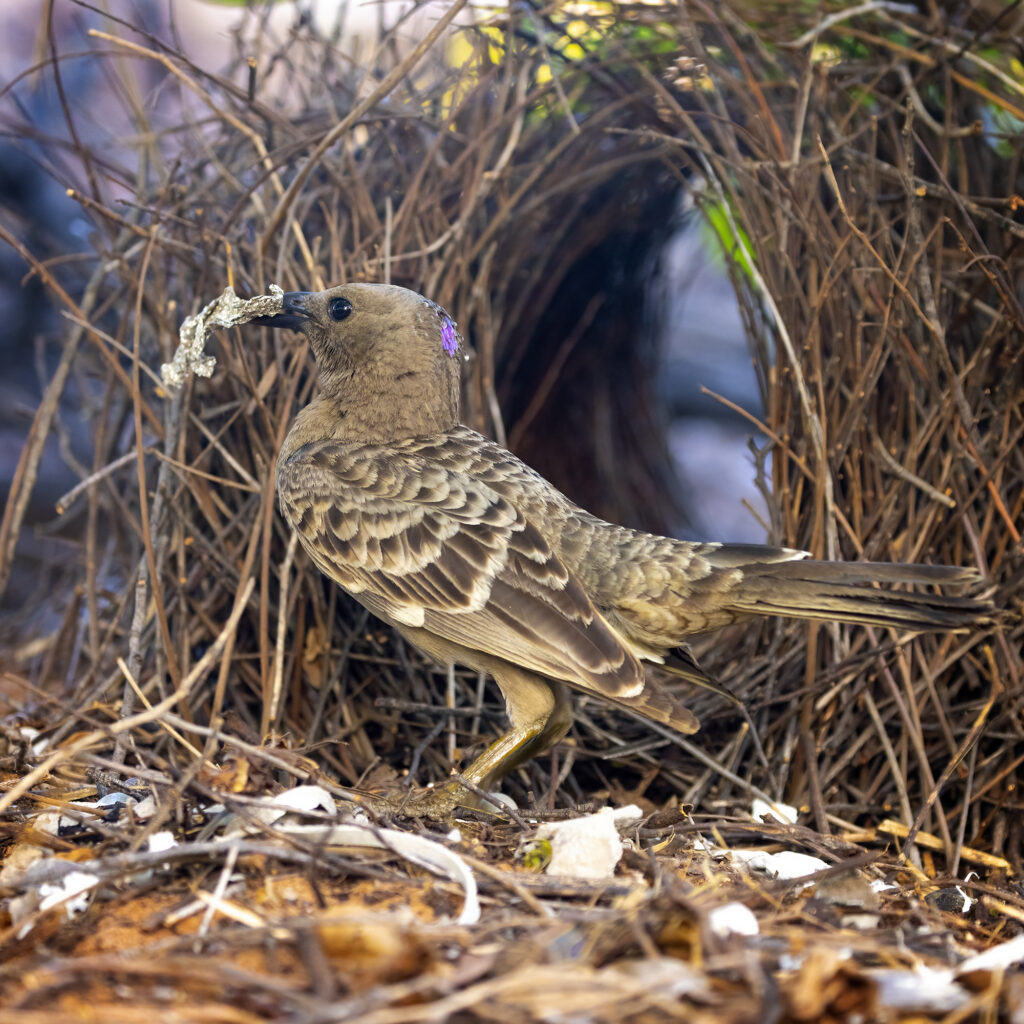
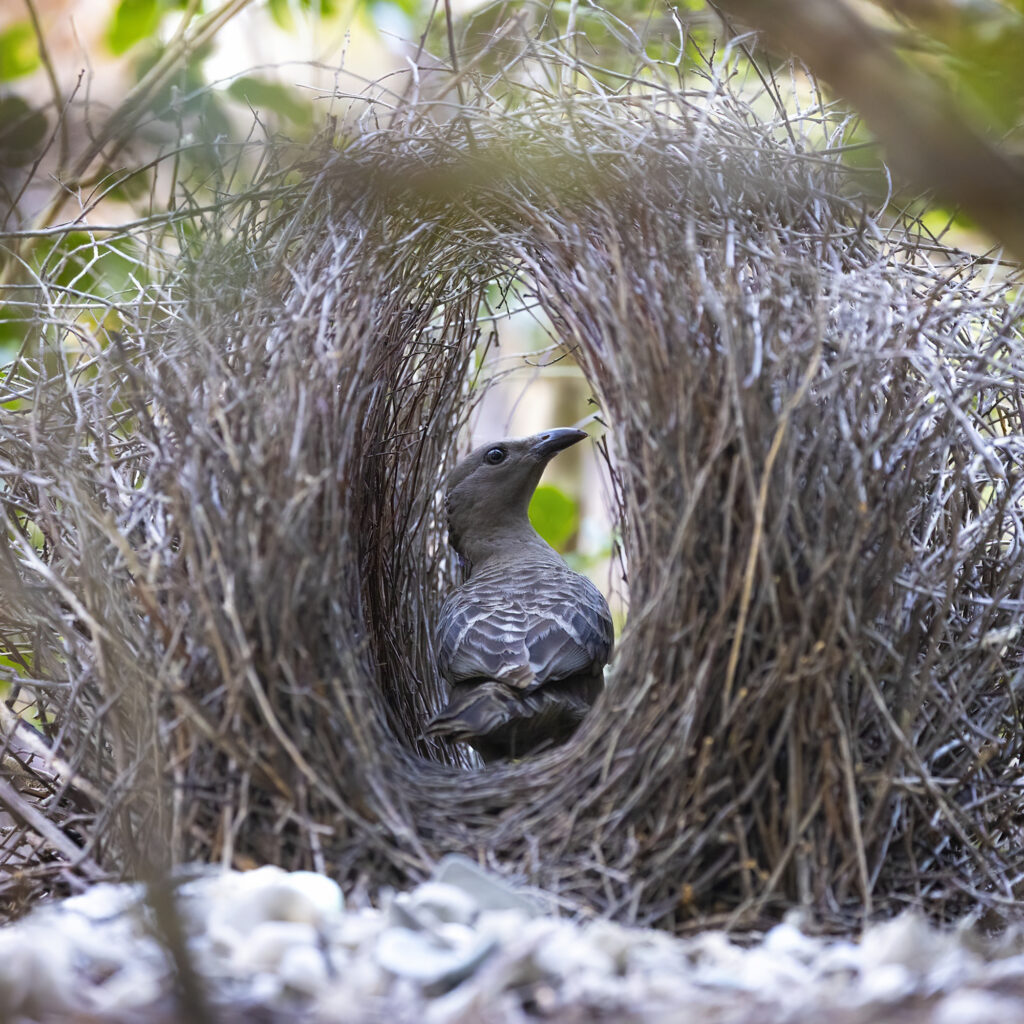
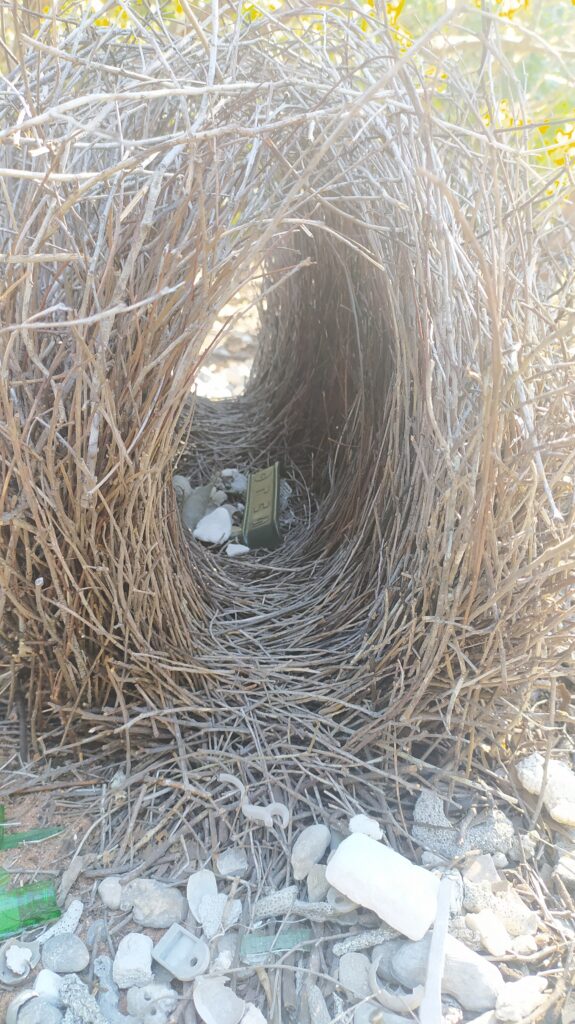
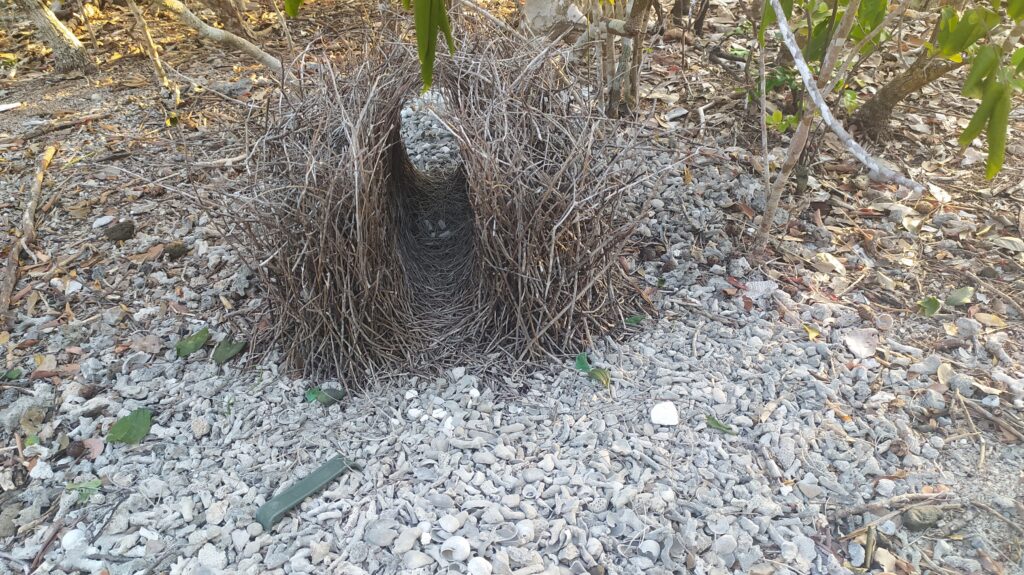
Male Great Bowerbirds are renowned for their extraordinary courtship behaviour. Instead of relying on feathers or song alone, they build and maintain complex structures known as bowers—not for nesting, but purely to impress a potential mate. These bowers, made from twigs and carefully arranged, are decorated with objects in colours the birds prefer—white, silver, and green being the favourites of this species. The dedication is remarkable: they spend weeks (sometimes months) perfecting their creation, constantly rearranging and replacing items, often stealing prized decorations from neighbouring bowers. It’s a game of constant one-upmanship in the bird world.
And while it might not sound fair, once mating occurs, the female is left to handle nesting and chick-rearing alone. The male, on the other hand, stays committed to the performance—tending his bower, calling loudly, and hoping to impress another visitor.
Here’s the cool twist:
The male arranges these objects to create a forced perspective illusion—like a visual trick! He places smaller objects closer to the entrance and larger ones farther away, making the path look more symmetrical and impressive from the female’s viewpoint. It’s one of the few known examples of non-human animals using perspective in visual displays.
If the female is impressed? She mates with him. If not? She leaves—and he may rearrange things for the next try!
Chasing Bowers: My Journey Begins
Great Bowerbirds don’t occur where I live, so observing them in the wild meant venturing into the heart of their territory. My first encounter with a bower was purely accidental. I spotted a strange pile of twigs littered with green and white objects—it looked like a mess at first glance, but something about it caught my eye. Then I saw the bird.
That was the beginning of a six-month-long photographic adventure.
From there, I began to find more and more bowers—some clearly abandoned, some full of activity. While they’re relatively easy to locate thanks to the males’ loud and persistent calls during mating season, photographing them proved far more challenging. Most bowers are cleverly hidden under dense bushes, shielded from predators—and, inconveniently, from camera lenses.
To give you an idea of what the bower is, the materials collected, and how they’re arranged, take a look at some photos below.
To be honest, I’m not sure what materials birds collected before human influence, but nowadays they mostly gather items produced by humans—such as chalk, beer can tabs, styrofoam, and various plastic bits and pieces.
An Ideal Observation Spot
One day I got lucky. One particular bower I found was not only active but perfectly positioned. It had a clear view from one side and was oriented with its “gate” facing the sun—ideal for natural lighting. I returned to this spot over and over, quietly watching as the male brought in fresh decorations, rearranged key items, and performed elaborate displays.
Moments Captured Through the Lens
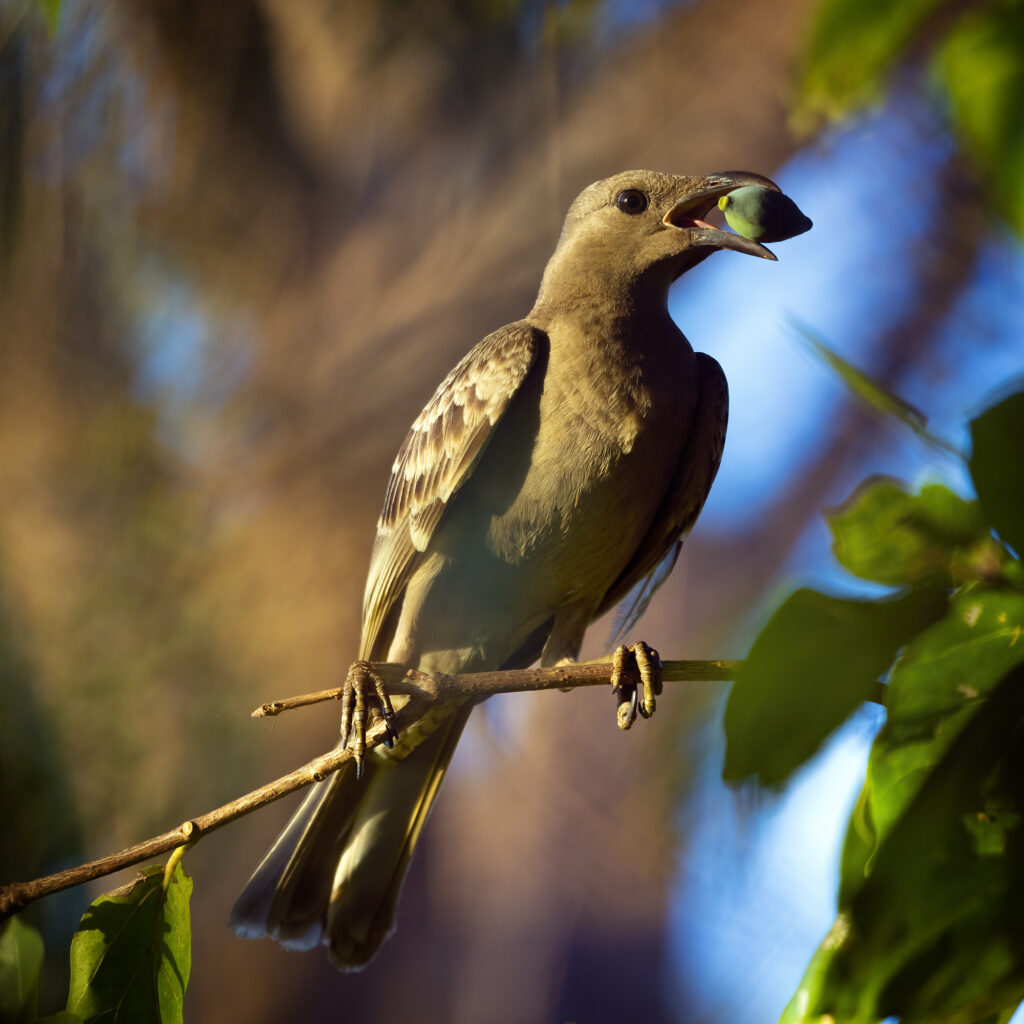
Below is one of my favourite images from this journey—a male perched low with a green seed in his beak, clearly about to place it carefully within the bower. Such a small object, but of great significance.
Another photo shows a male repositioning a piece of silver foil. These aren’t just random objects; they are part of a carefully curated selection. Over time, I noticed something fascinating: young males seem to favour white items, but as they age, their bowers begin to include more green. Perhaps a sign of growing maturity—or refined taste.
One particularly striking image shows a male walking proudly through the heart of his bower, doing a bit of housekeeping. These birds are meticulous.
A Surprise Encounter
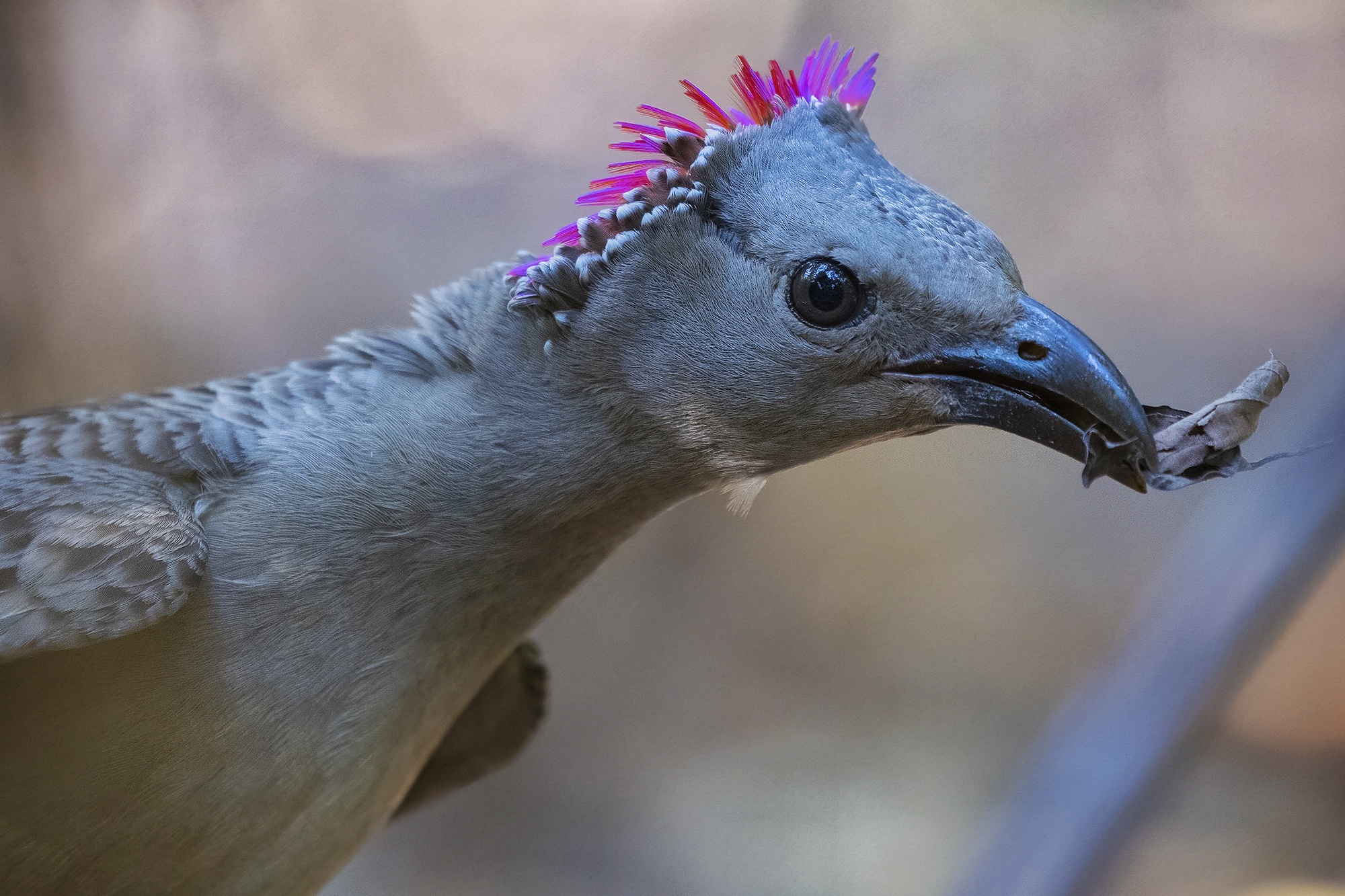
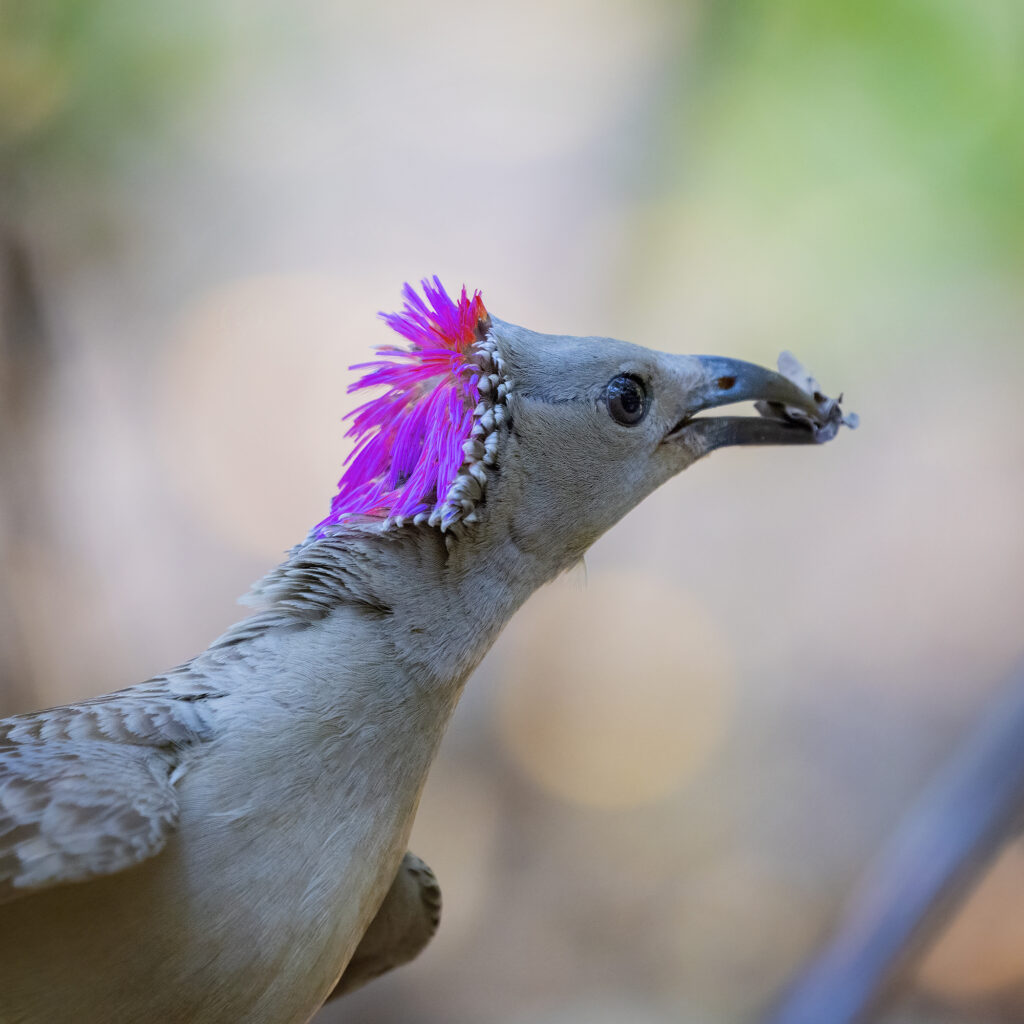
One day, while crawling silently through the underbrush toward a newly discovered bower, I accidentally crunched some dry leaf litter. Moments later, a male appeared, fluffing his head feathers and clutching a leaf—clearly part of his display. He strode straight toward me, bold and fearless. I didn’t even have time to zoom out. What I captured were tight portraits—close-ups of his display feathers, radiant in hues of purple normally hidden. They reminded me of the vivid colours of sea anemones—a brilliant, fleeting glimpse of nature’s drama.
The Curious Case of the Green Bin Handle
Another day brought a story that still makes me smile. I found a bower featuring a green plastic handle from a wheelie bin lid placed proudly right in the centre. It was clearly the bird’s most treasured item. But the next day, it was gone. Someone—some bird—had stolen it.
A few days later, I discovered the same handle at another bower over 500 metres away. Wanting to make things right, I returned it to the original bower. That night, I couldn’t sleep. What if I’d given it to the wrong bird?
Luckily, the bush provided a solution. I came across a broken bin nearby, with another loose handle. This time, I placed it near the second bower. The following day, it had been moved into the bower’s centre. My offering was accepted. I like to think both birds got to keep their prize in the end.
A Remarkable Reset: Witnessing the Resilience of Bowerbirds
After taking a break from the field, I returned to revisit the same bower I had observed weeks earlier — the one perfectly oriented to catch the sun’s rays just right. To my surprise, the entire structure had been rotated by 90 degrees. It was clear the original had been completely destroyed and then rebuilt from scratch. Witnessing this remarkable reset was a powerful reminder of the resilience and adaptability of these incredible birds. Nature’s creativity truly never ceases to amaze.
Final Thoughts
Australia is home to ten species of bowerbirds, each with their own quirks and decorating preferences. Some don’t maintain their bowers year-round, making them much harder to find, but I’m determined to photograph them all. The more time I spend out bush, the more I discover—and the more stories I have to share.
This experience with the Great Bowerbirds has been a highlight in my journey as a wildlife photographer. These birds are not just clever—they’re creative, competitive, and captivating.
I’ll be dedicating future blog entries to other bowerbird species as I encounter them, so stay tuned. If you enjoyed this read, make sure to check back, and feel free to reach out or share your own stories in the comments.