Australia’s Blossoming Diversity
Australia is a land of countless climate zones and an incredible diversity of life forms. This richness is especially evident in its flowering plants. As a wildlife photographer, each season I find it impossible to walk past a blossoming bush or tree without stopping in admiration.
From Flowers to Feathers
Although I’ve always appreciated the beauty of flowers, flower photography has never been my main passion. As many of you know, I specialise in bird photography. However, I began to realise that when such stunning flowers are in bloom, any bird landing on them could create a truly striking image. Over time, I started targeting certain blossoms, waiting patiently for the moment a bird would land and complete the scene I had in mind. This approach has led to a collection of photographs I’m genuinely proud of.
Rainbow Lorikeets on Yellow Penda Blossoms
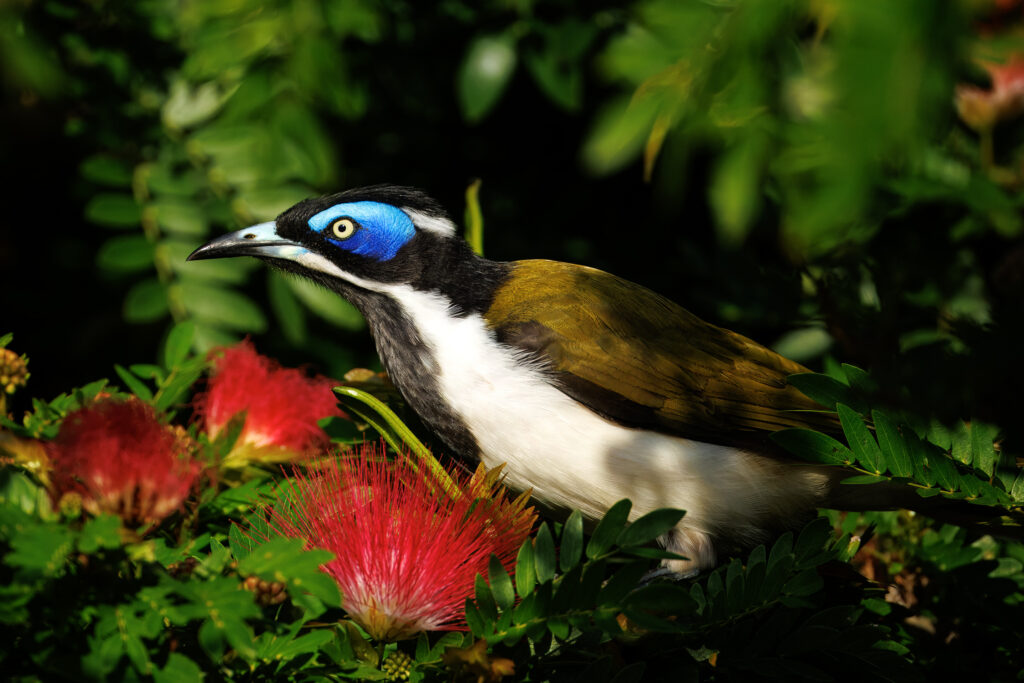
The first image I’d like to share features a Rainbow Lorikeet posing beautifully on the vivid yellow blossoms of the Yellow Penda. These flowers don’t last long—perhaps a week at most—and their delicate blooms are easily ruined by rain or strong winds. After missing several seasons in a row, I made sure to dedicate enough time to this year’s bloom and captured as many visiting species as possible. You’ll find photos of the Blue-faced Honeyeater enjoying the blossoms.
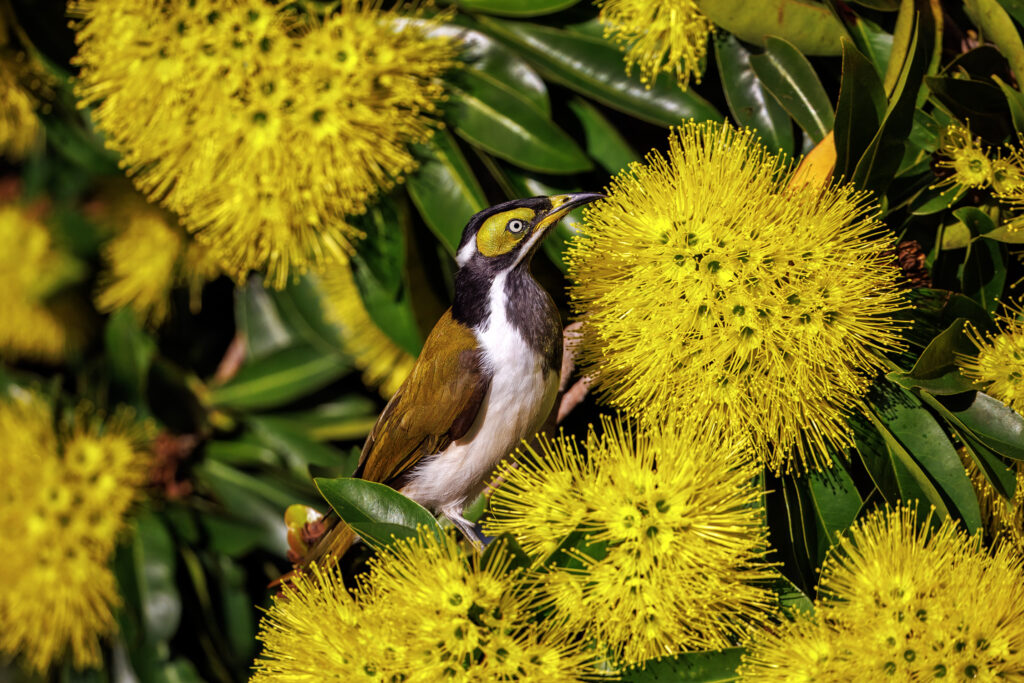
🌼 Yellow Penda (Xanthostemon chrysanthus)
Queensland’s floral gem: The Yellow Penda is native to tropical North Queensland and is sometimes called the “Townsville Gold.”
A magnet for wildlife: Its bright yellow, pom-pom-like flowers are rich in nectar, attracting lorikeets, honeyeaters, butterflies and bees.
Tough but fleeting: Despite being a hardy tree that thrives in heat, the flowers only last about a week — making your timing with photography absolutely crucial!
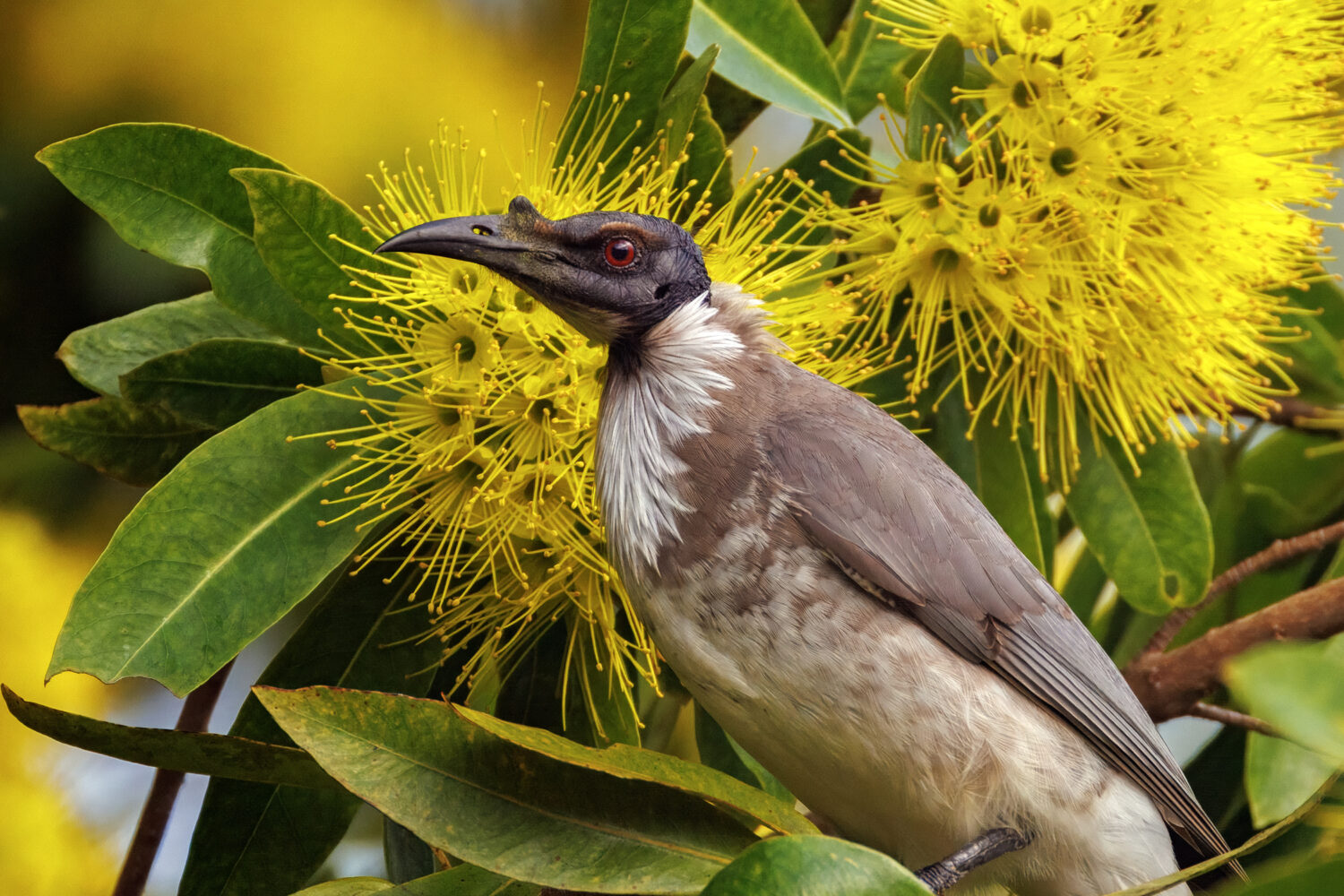
🐦 Noisy Friarbird (Philemon corniculatus)
The bald one: With its featherless black head and long curved bill, it’s often nicknamed the “Leatherhead.”
Big personality: True to its name, the Noisy Friarbird is loud and bossy, often chasing away smaller birds from its favourite nectar sources.
Team player: Despite the noise, they’re important pollinators — carrying pollen from flower to flower as they feed.
Blue Gum Blooms and Lorikeet Colours
Next, I turned my lens toward the blossoms of the Blue Gum eucalyptus tree. Here, once again, the Rainbow Lorikeet took centre stage. The bright greens and blues of the bird against the creamy white gum blossoms make for a vibrant and quintessentially Australian scene.
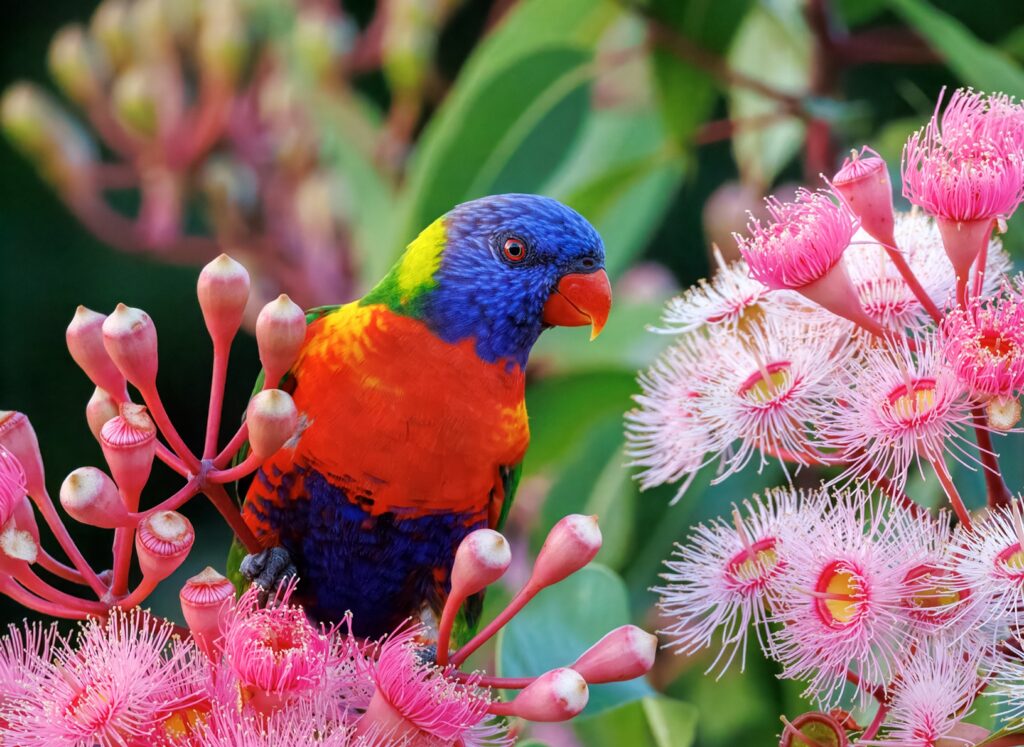
🌿 Blue Gum (Eucalyptus globulus and other Eucalyptus spp.)
An Aussie icon: Blue Gums are among the most recognisable eucalypts, with smooth blue-grey bark and creamy white flowers.
Sweet scent, strong flavour: The nectar not only draws birds but is also used by bees to make a distinct, strong-flavoured honey.
Koala café: While lorikeets love the blossoms, koalas are more interested in the leaves — they can eat up to a kilo a day!
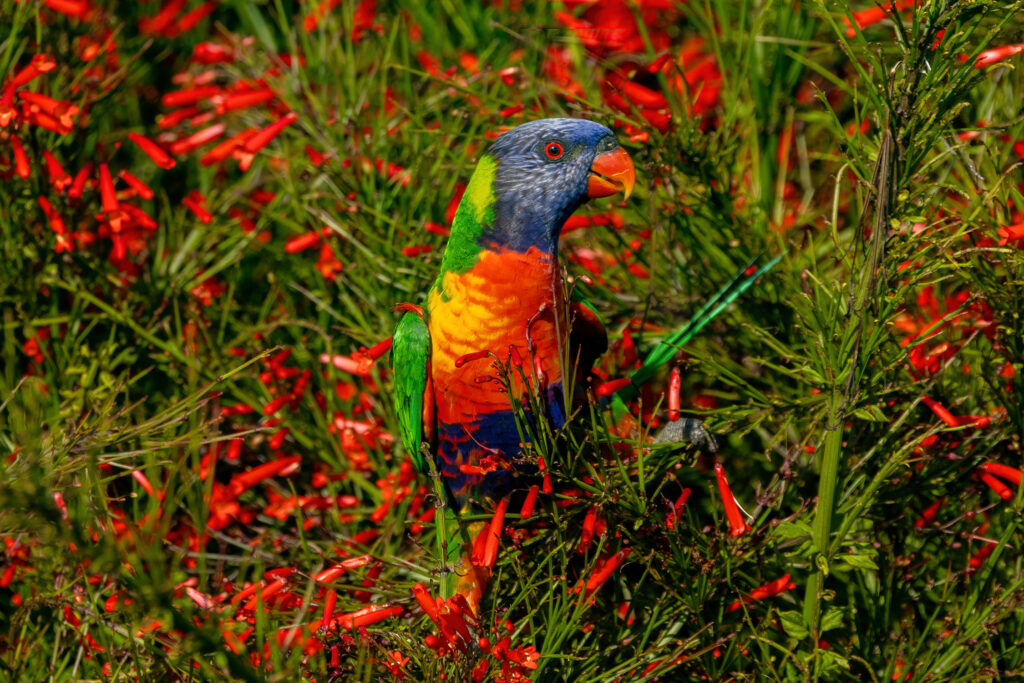
🦜 Rainbow Lorikeet (Trichoglossus moluccanus)
Nature’s paint palette: Their rainbow plumage — green, blue, orange, and red — isn’t just for show; it helps them blend into the colourful blossoms they feed on.
Brush-tipped tongues: Lorikeets have special bristle-like tongues that act like paintbrushes, perfect for sipping nectar from flowers.
Chatty neighbours: They’re highly social and noisy — if you’ve ever been near a flowering gum in the morning, you’ve likely heard their cheerful squawks!
Honeyeaters Among the Mulla-Mullas
My next set of photos comes from the Australian outback, where the Pink Mulla-mullas bloom for much of the winter season. These stunning flowers are a magnet for honeyeaters, and I was fortunate enough to capture Grey-headed Honeyeaters feeding among the pink spikes. The contrast between the dusty outback landscape and the bursts of pink made for a captivating composition.
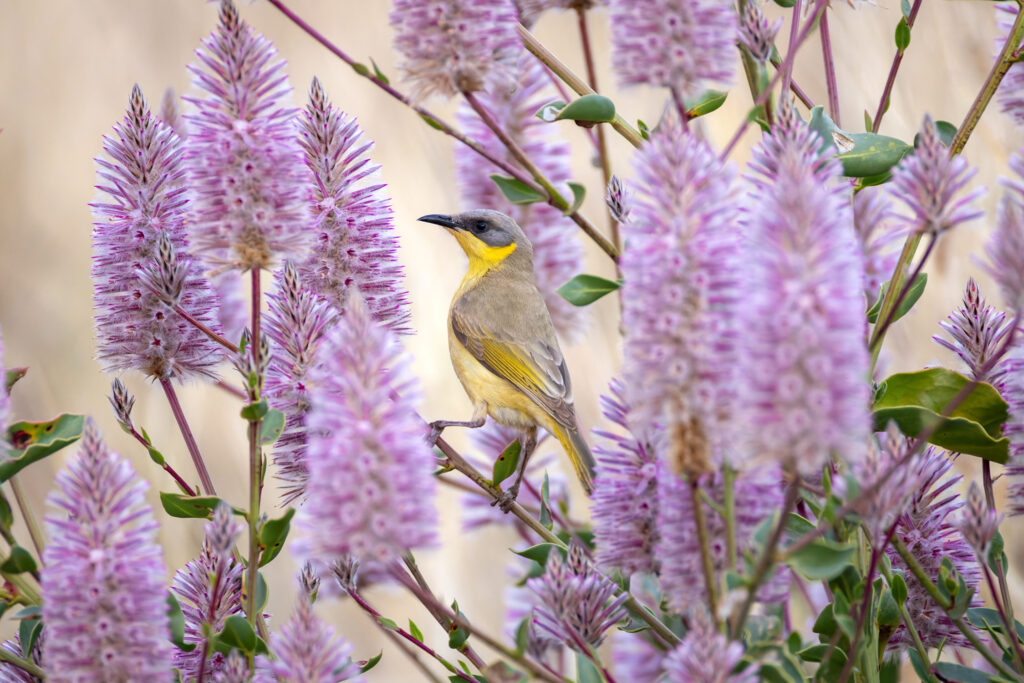
🌸 Pink Mulla-Mulla (Ptilotus exaltatus)
Desert beauty: These fluffy, pink-purple flower spikes are a familiar sight in the arid heart of Australia, especially after rain.
Outback survivor: Mulla-mullas can tolerate extreme heat and drought, often colouring the red desert plains for months.
Not just pretty: Indigenous Australians traditionally used parts of the plant for soothing burns and wounds.
🪶 Grey-headed Honeyeater (Ptilotula keartlandi)
Outback specialist: Found mainly in Australia’s inland deserts and dry woodlands, it’s well adapted to the heat.
Social drinkers: They often visit waterholes in small flocks, particularly in the morning and late afternoon.
Flower fanatics: Like most honeyeaters, they have a brush-tipped tongue for collecting nectar — and play a big role in pollinating desert plants.
🎵 Singing Honeyeater (Gavicalis virescens)
Desert songbird: Common across much of Australia, they’re named for their clear, melodious call.
Flexible feeders: From nectar to insects to fruit, these honeyeaters adapt to whatever’s available — one reason they thrive in harsh environments.
Territorial tunes: Males use their songs to defend feeding territories, often perched proudly atop a flowering shrub.
Mystery Blossoms and Curious Lorikeets
The final couple of photos once again feature lorikeets, but this time I must admit—I have no idea what plants they’re perched on! If you recognise them, please drop a comment below and let me know. I always enjoy learning more about Australia’s incredible flora from fellow nature lovers.
Join the Conversation
This collection will continue to grow as I explore new regions and seasons. For now, I’d love to hear from you—which of these photos is your favourite? Leave a comment below and let’s celebrate Australia’s unique beauty together.