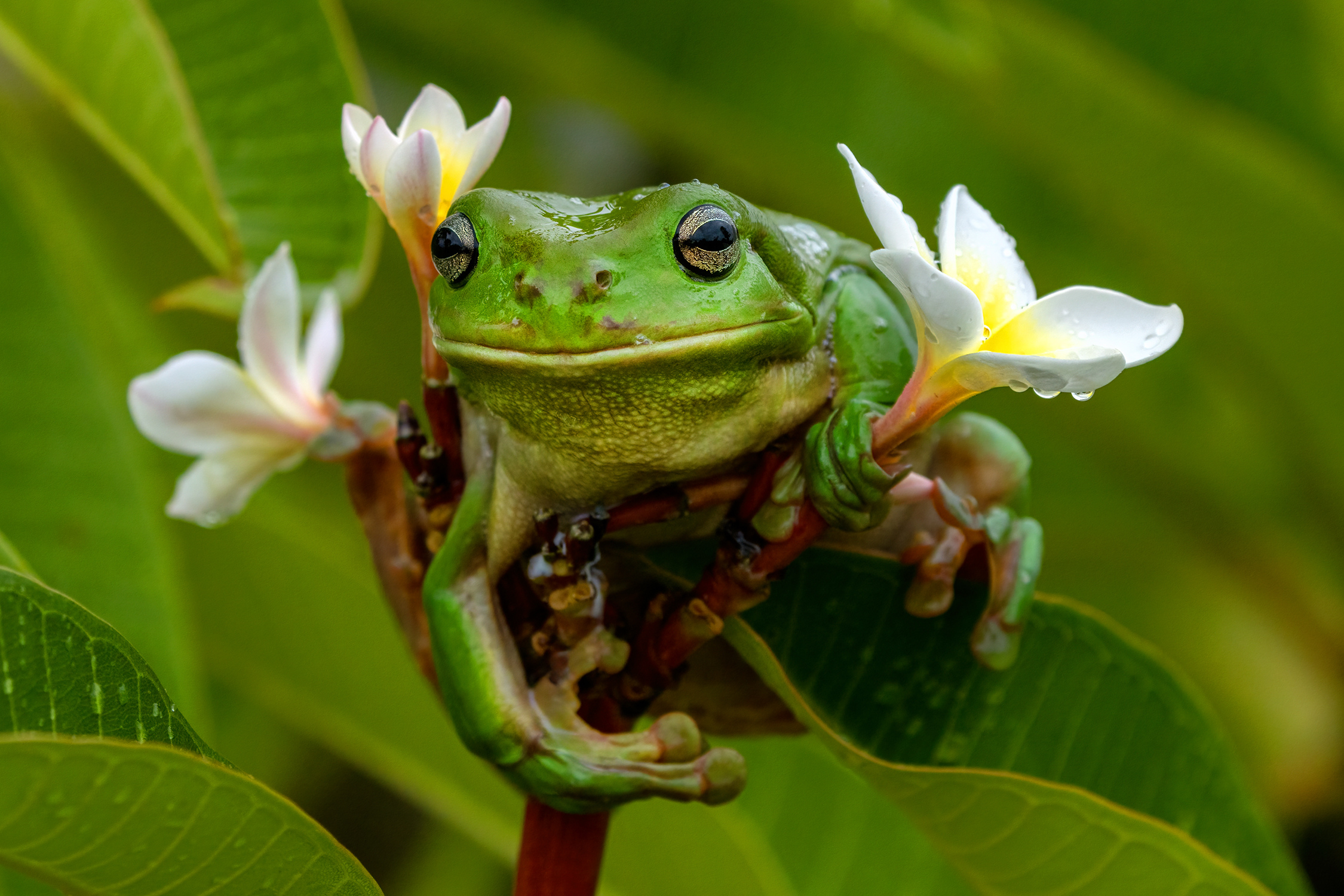
As a wildlife photographer, I’m often drawn to subjects that blur the line between the delicate and the resilient—and few flowers do this better than the plumeria. Known for their fragrance, vivid colours, and symbolic weight in many cultures, plumerias are not just beautiful—they’re storytellers. When I first arrived in Australia, it was their striking form and intoxicating scent that caught my attention immediately. There was something almost surreal about the way they held light and stood out against the tropical green, and I knew straight away I had to start photographing them. In this article, I’m sharing some of my favourite types I’ve captured, each with its own mood and charm, often just after the rain, when the petals glisten and the world feels briefly still.
A Few Fascinating Facts About Plumerias
- Scent Without Reward: Plumerias are most fragrant at night, designed to attract moths, yet they offer no nectar. The trickery is part of their survival strategy.
- Cultural Symbols: In Hawai‘i, plumerias are worn behind the ear to signal relationship status. In India and Southeast Asia, they’re symbols of immortality and devotion.
- Tough and Adaptable: Plumeria trees are surprisingly hardy. They can survive drought, salt, and even being uprooted, storing water in their thick, fleshy stems.
- More Than Just Species: While there are official species like Plumeria rubra , many hybrids are known only by their poetic names—selections that live more in gardens and collections than in botany textbooks.
- Brittle but Resilient: Plumeria branches are famously easy to snap—so much so that gardeners often propagate them simply by breaking off a limb and planting it straight into the soil. But inside those branches is a sticky, white sap that can irritate the skin and is considered mildly toxic. It’s the plant’s own natural defence system, and a reminder that even the most beautiful things in nature often come with a layer of protection.
The Plumerias I’ve Photographed
🌺 Plumeria Rubra
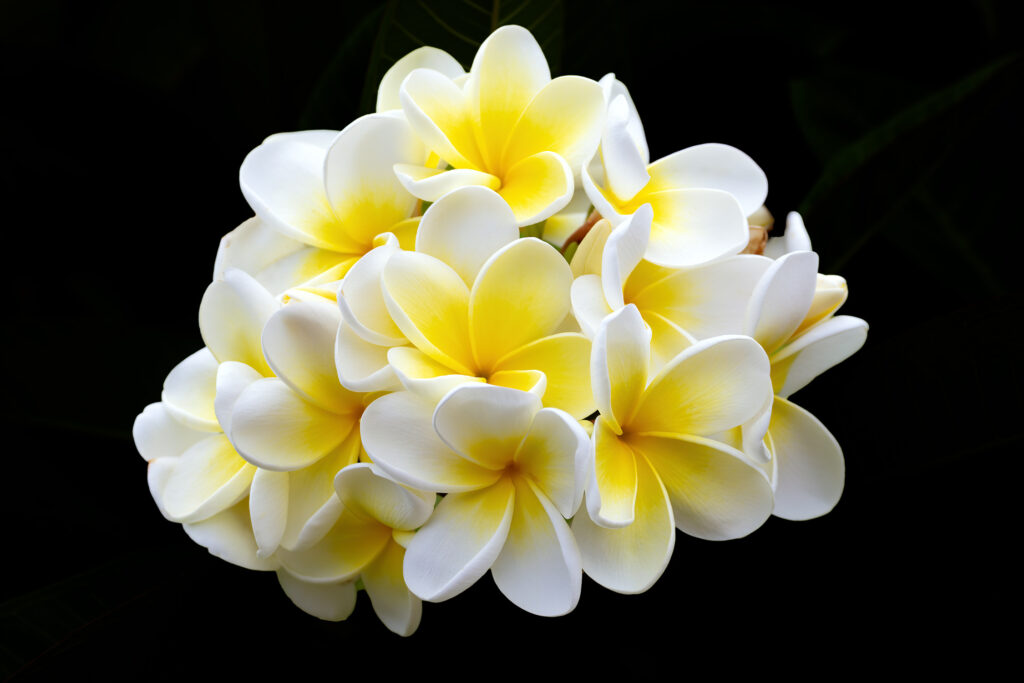
The Classic Beauty
This is the most familiar and widespread type I’ve encountered. The flowers come in a range of bold reds, pinks, and oranges, with broad, overlapping petals and a heady, sweet fragrance. I’ve photographed these both on clear days and after rain—each version telling its own story. The water droplets tend to bring out a richness in the colours that I love.
🌼 White Plumeria (Plumeria alba)
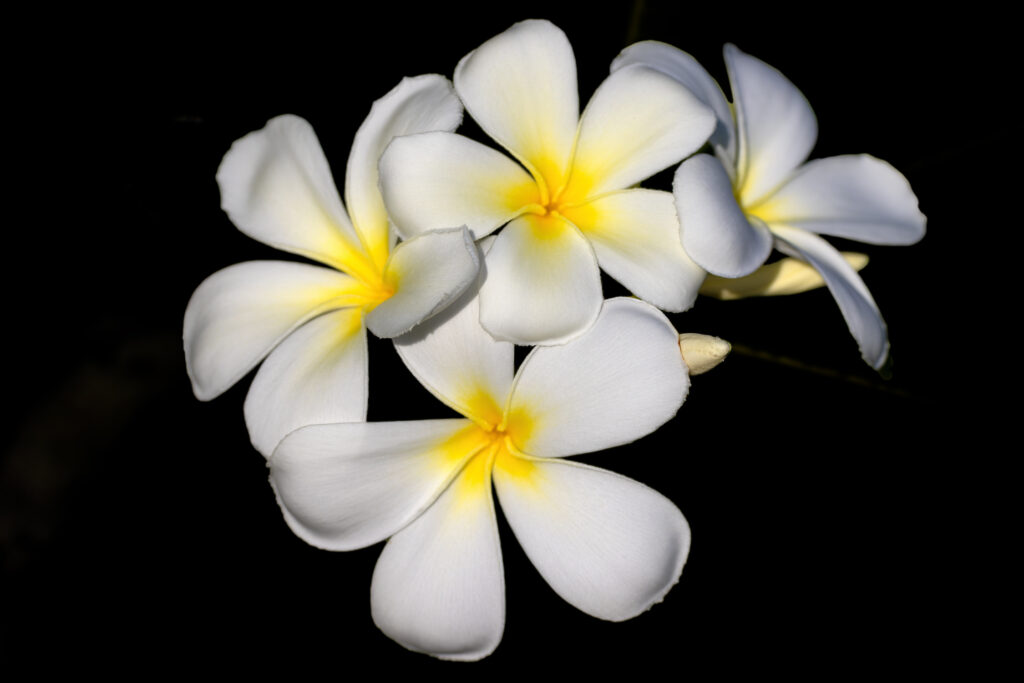
The Pure and Subtle Muse
With bright white petals and yellow throats, this variety stands out for its quiet elegance. The simplicity of its form and the creamy scent make it one of my favourites to photograph in soft, natural light. It has a certain stillness that always draws my lens.
🏵️ Golden Sunrise
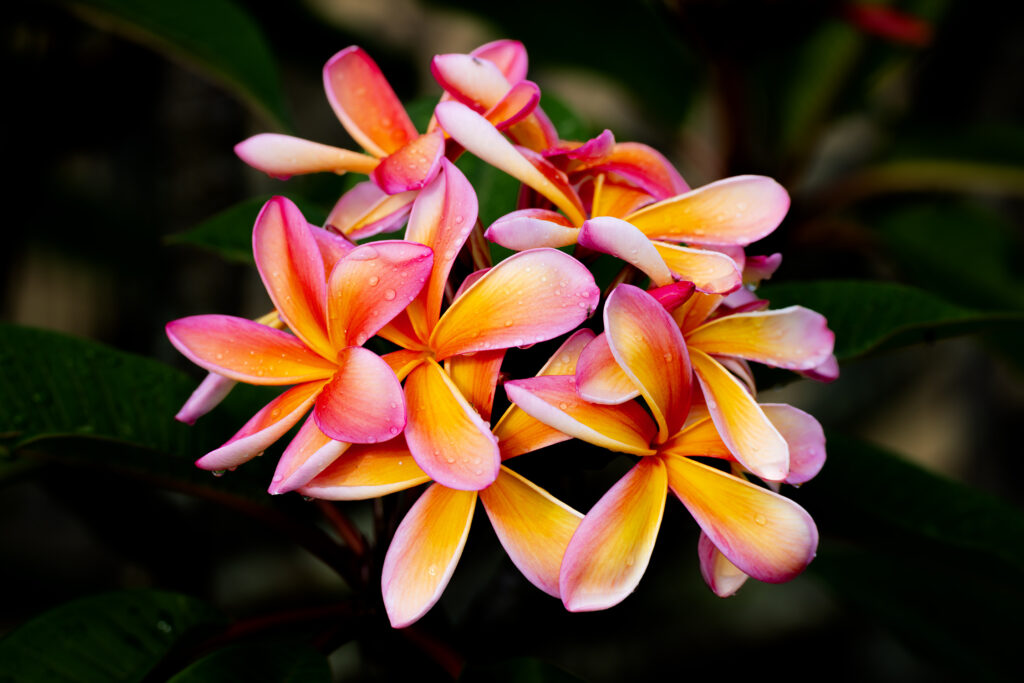
The Radiant Hybrid
Golden Sunrise is a cultivar known more among collectors and growers than in official botanical circles. Its golden and orange hues seem to radiate warmth, especially when the petals are wet from a passing shower. I’ve captured this one both in sunlight and rain—it’s a flower that always feels alive.
🪷 Pink Beauty
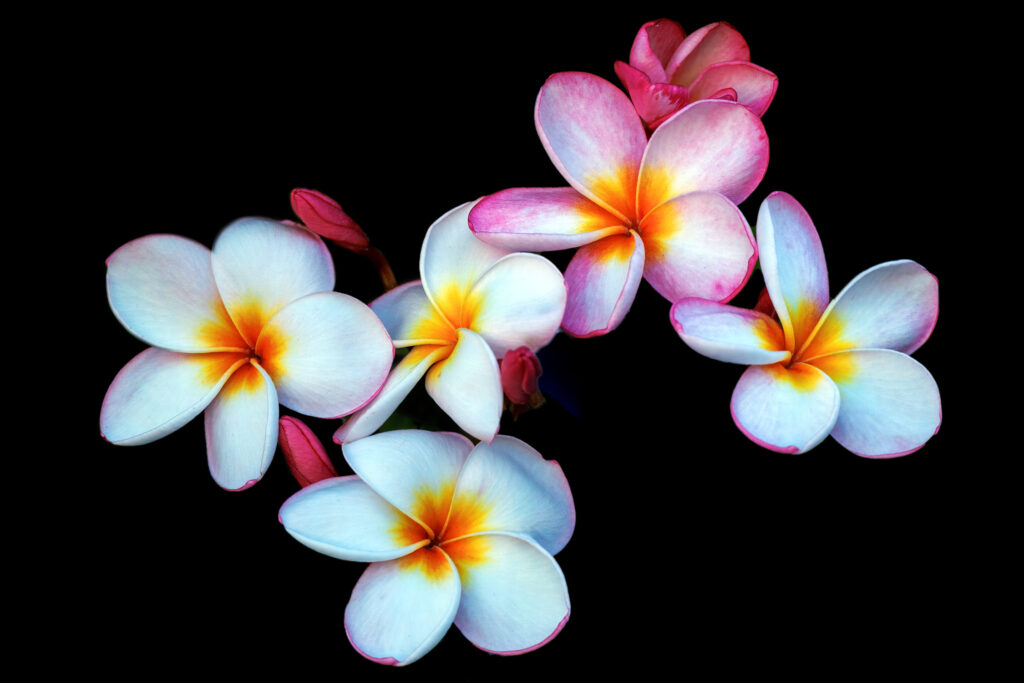
Delicate Yet Bold
This variety features soft pink tones that sometimes shade into blush or deeper rose at the centre. It has a romantic, graceful presence. I found it particularly striking during overcast light, when the pink seems even softer and more delicate.
🌸 Starburst Red
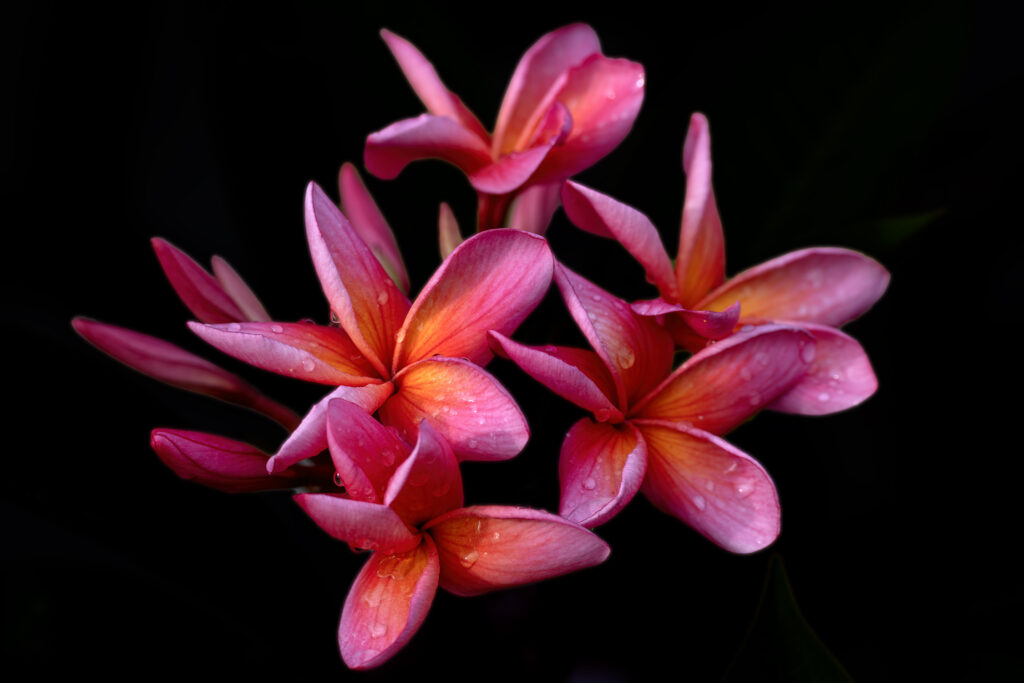
The Showstopper
This one has a vibrant red centre that bursts outward into petal tips, almost like a floral firework. I only managed to capture one image of this variety, and it happened to be in the rain. The petals looked even more intense against the moisture-darkened background.
🐸 A Quiet Guest: The Green Tree Frog
One of the most memorable shots I’ve taken features a green tree frog resting among the plumeria blooms. It wasn’t planned—I just happened to notice it tucked between the petals, perfectly content. The contrast of its bright green skin against the soft tones of the flower made for a composition that felt both peaceful and intimate. It reminded me why I do what I do: to find those quiet moments where nature pauses and reveals something gentle and unexpected.